
Synopsis
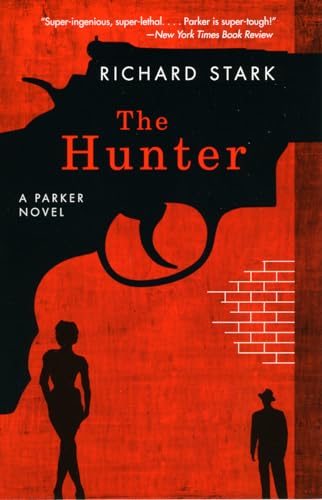
Where it all begins: The first book in the action-packed classic crime series starring Parker, the heister who can't be stopped
Richard Stark's Parker novels are the hardest of hard-boiled, classic crime novels where the heists are huge, the body counts are high, and the bad guys usually win.
The Parker novels have been a huge influence on countless writers and filmmakers, including Quentin Tarantino, Stephen King, George Pelecanos, Colson Whitehead, Lucy Sante, John Banville, and many more. Their stripped-down language and hard-as-nails amorality create an unforgettable world where the next score could be the big one, but your next mistake could also be your last. There's nothing else like them.
The Hunter is where it all begin. It opens with Parker's woman shooting him just above the belt and leaving him for dead. She and his partner torch the house, with Parker in it, and take the money he had helped them steal. It all went down just the way they'd planned, except for one thing: Parker didn't die.
From there, our ruthless antihero roars into New York City, seeking revenge on the woman who betrayed him and on the man who took his money, stealing and scamming his way to redemption. The volume that kickstarted Parker's half-century career of larceny—and inspired the classic 1967 motion picture Point Blank, starring Lee Marvin—The Hunter is as thrilling today as it was when it was first published. Pick up your first Parker novel and you won't stop until you're read them all.
"synopsis" may belong to another edition of this title.
About the Author
Richard Stark was one of the many pseudonyms of Donald E. Westlake (1933-2008), a prolific author of noir crime fiction. In 1993 the Mystery Writers of America bestowed the society’s highest honor on Westlake, naming him a Grand Master.
Reviews
*Starred Review* It’s been 50 years since the first, furious appearance of Parker as he walked across the George Washington Bridge into Manhattan—after trudging all the way across the country, hell-bent on revenge. Written pseudonymously by Donald E. Westlake, a pro’s pro well known for his later, lighter fare, this series about a tough, pent-up professional thief, a “bastard” who slaps women and makes them like it, is, on the one hand, unreconstructed, unrepentant, hard-boiled tough-guy pulp. On the other hand, it’s terrific. It may be a period piece to some, but it’s also been hugely influential, impressing writers from Elmore Leonard to John Banville, and Max Allan Collins to Dan Simmons. Hollywood has taken note, too: filmed versions include Point Blank (1967) and Payback (1999). And Darwyn Cooke’s magnificent graphic-novel adaptations (beginning with Richard Stark’s Parker: The Hunter, 2009) have brought the series to a whole new audience. But whether you find Parker’s approach to relationships infuriating or amusing, the author’s way with words is always powerful. As Parker relentlessly slaps, punches, glowers, and kills his way to the mobster who betrayed him and stole his woman, the prose hits as hard as two huge, bare-knuckled fists. And the structure throws a left hook, too. Halfway through the book, with Parker closing the room on his prey, Stark detours back to the beginning of the story. Still, when revenge has finally been served, it’s not enough. Not satisfied with killing one mobster, Parker declares war on the entire Mob, setting the stage for two dozen novels over the next four decades. (Westlake died in 2008, at the age of 75.) University of Chicago Press, an unlikely publisher, has done crime-fiction fans a great service by returning the first 20 Parker novels to print. The covers should be better, but it’s the pages inside that count. --Keir Graff
Excerpt. © Reprinted by permission. All rights reserved.
The Hunter
By RICHARD STARKThe University of Chicago Press
Copyright © 1962 Richard StarkAll right reserved.
ISBN: 978-0-226-77099-4
Chapter One
When a fresh-faced guy in a Chevy offered him a lift, Parker told him to go to hell. The guy said, "Screw you, buddy," yanked his Chevy back into the stream of traffic, and roared on down to the tollbooths. Parker spat in the right-hand lane, lit his last cigarette, and walked across the George Washington Bridge.The 8 a.m. traffic went mmmmmm, mmmmmm, all on this side, headed for the city. Over there, lanes and lanes of nobody going to Jersey. Underneath, the same thing.
Out in the middle, the bridge trembled and swayed in the wind. It does it all the time, but he'd never noticed it. He'd never walked it before. He felt it shivering under his feet, and he got mad. He threw the used-up butt at the river, spat on a passing hubcap, and strode on.
Office women in passing cars looked at him and felt vibrations above their nylons. He was big and shaggy, with flat square shoulders and arms too long in sleeves too short. He wore a gray suit, limp with age and no pressing. His shoes and socks were both black and both holey. The shoes were holey on the bottom, the socks were holey at heel and toe.
His hands, swinging curve-fingered at his sides; looked like they were molded of brown clay by a sculptor who thought big and liked veins. His hair was brown and dry and dead, blowing around his head like a poor toupee about to fly loose. His face was a chipped chunk of concrete, with eyes of flawed onyx. His mouth was a quick stroke, bloodless. His suit coat fluttered behind him, and his arms swung easily as he walked.
The office women looked at him and shivered. They knew he was a bastard, they knew his big hands were born to slap with, they knew his face would never break into a smile when he looked at a woman. They knew what he was, they thanked God for their husbands, and still they shivered. Because they knew how he would fall on a woman in the night. Like a tree.
The office men drove by, clutching their steering wheels, and hardly noticed him. Just a bum walking on the bridge. Didn't even own a car. A few of them saw him and remembered themselves before they'd made it when they didn't have a car. They thought they were empathizing with him. They thought it was the same thing.
Parker walked across the bridge and turned right. He went down that way one block to the subway hole. All down the street ahead of him were the blacktop and the sidewalks and the gray apartment buildings and the traffic lights at every intersection going from red to green to red. And lots of people, on the move.
He trotted down the steps into the subway hole. The spring sun disappeared, and there were fluorescent lights against cream-shaded tile. He went over to the subway-system map and stood in front of it, scratching his elbow and not looking at the map. He knew where he wanted to go.
The downtown train pulled in, already crowded, and the doors slid back. More people pushed on. Parker turned, yanked open the No ADMITTANCE door and went on through. Somebody behind him shouted, "Hey!" Ahead, the subway doors slid at each other. He jumped, ran into the people standing in the car, and the doors met behind him.
He went all the way downtown, got out at Chambers and walked over to the Motor Vehicle Bureau on Worth. On the way, he panhandled a dime from a latent fag with big hips and stopped in a grimy diner for coffee. He bummed a cigarette from the counter girl. It was a Marlboro. He twisted off the filter, threw it on the floor, and stuck the cigarette between his bloodless lips. She lit it for him, leaning over the counter toward him with her breasts high, like an offering. He got the cigarette fired, nodded, dropped the dime on the counter, and went out without a word.
She looked after him, face red with rage, and threw his dime into the garbage. Half an hour later, when the other girl said something to her, she called her a bitch.
Parker went on to the Motor Vehicle Bureau and stood at the long wooden table while he filled out a driver's license form with one of the old-fashioned straight pens. He blotted the form, folded it carefully, and stuck it into his wallet, which was brown leather and completely empty and beat to hell.
He left the Bureau and walked over to the post office, where the federal government was in charge and they had ball-point pens. He took out the license and stood hunched over it, sketching with small quick strokes in the space reserved for the state stamp. The ball-point pen had ink of almost the right color, and Parker's memory of the stamp was clear.
When he was finished, it looked all right for anybody who didn't inspect it closely. It just looked as though the rubber stamp hadn't been inked well enough or had been jiggled when it was pressed to the paper or something. He smudged the damp ink a bit more with his finger, licked the finger clean, and returned the license to his wallet. Then he crumpled and bent the wallet in his hands before putting it back in his hip pocket.
He walked up to Canal Street and went into a bar. It was dark in there, and clammy. The barman and his one customer stopped mumbling down at the end of the bar and looked at him, their expressions like those of fish looking out through the glass wall of a tank.
He went on down, ignoring them, and pushed open the spring door to the men's room. It slammed behind him.
He washed his face and hands in cold water without soap, because there wasn't any hot water and there wasn't any soap. He got his hair wet and pushed it around with his fingers until it looked all right. He stroked his palm up his jawline and felt the stubble, but it didn't show bad yet.
Taking his tie from his inside jacket pocket, he ran it taut through his fingers, to get the wrinkles out of it, and put it on. The wrinkles still showed. He had a safety pin attached to the lining of his jacket. He took it and pinned the tie to the shirt, where it wouldn't show. Pulled down that way, and with the jacket closed, it looked pretty good. And you couldn't see that the shirt was dirty any more.
He wet his fingers at the sink again, and forced the approximation of a crease into his pant legs, stroking down again and again until a vague line showed and stayed there. Then he looked at himself in the mirror.
He didn't look like any Rockefeller, but he didn't look like a bum either. He looked like a hard worker who never got out of the mailroom. Good enough. It would have to do.
He got out the driver's license one last time and dropped it on the floor. He squatted beside it, and patted the license here and there on the floor till it was reasonably dirty. Then he crumpled it some more, brushed the excess dirt off, and put it back in his wallet. One last rinsing of his hands, and he was ready to leave.
The bartender and his customer stopped mumbling again as he went by, but he didn't notice. He went back out into the sunlight and headed uptown and west, looking for just the right bank. He needed a bank that would have a lot of customers of the type he was faking.
When he found the one he wanted, he paused for a second and concentrated on rearranging his face. He stopped looking mean and he stopped looking mad. He kept working at it, and when he was sure he looked worried he went on into the bank.
There were four desks to his left, two of them occupied by middle-aged men in business suits. One of them was talking with an old woman in a cloth coat who was having trouble with English. Parker went straight over to the other and added a smile to the worried expression.
"Hello," he said, making his voice softer than usual. "I got a problem, and maybe you can help me. I've lost my checkbook, and I can't remember my account number."
"No problem at all," said the man, with a professional smile. "If you'll just give me your name...."
"Edward Johnson," said Parker, giving him the name he'd put on the license. He hauled his wallet out. "I've got identification. Here." He handed over the license.
The man looked at it, nodded, handed it back. "Fine," he said. "That was a special account?"
"That's right."
"One minute, please." He picked up his phone, talked into it for a minute, and waited, smiling reassurance at Parker. Then he talked a few seconds more and looked puzzled. He capped the phone mouthpiece with his hand and said to Parker, "There's no record of your account here. Are you sure it's a special account? No minimum balance?"
"Try the other kind," said Parker.
The man continued to look puzzled. He talked into the phone a while longer, then hung up, frowning. "There's no record of any account at all under that name."
Parker got to his feet. He grinned and shrugged. "Easy come, easy go," he said.
He walked out, and the man at the desk kept staring after him, frowning.
In the fourth bank he tried, Edward Johnson had a special checking account. Parker got the account number and the present balance, and a new checkbook to replace the one he'd lost. Edward Johnson only had six hundred dollars and change in his account. Parker felt sorry for him.
He left the bank, went into a men's clothing store, and bought a suit and a shirt and a tie and socks and shoes. He paid by check. The clerk compared the signature with the one on his driver's license, and called the bank to see if he had enough cash in his account to cover the check. He did.
He carried the packages up to the bus terminal on 40th Street, and went up to the men's room. He didn't have a dime to open a stall door, so he crawled under it, pushing his packages ahead of him. He changed into the new clothes, transferred his wallet and checkbook, and left all the old clothes in the stall.
He walked north till he came to a leather goods shop. He bought a hundred and fifty dollars' worth of good luggage, a matched set of four pieces. He showed the driver's license for identification, and they didn't even call the bank. Two blocks he carried the luggage, and then he got thirty-five dollars for it at a pawn shop. He went crosstown, and did it twice more-luggage to pawn shop-and got another eighty dollars.
He took a cab up to 96th Street and Broadway, and worked up and down Broadway for a while, this time buying watches and pawning them. Then he went to Lexington Avenue, midtown, and did it some more. Four times all told, somebody called the bank to see if he had enough money in his account. Not once was his driver's license questioned as valid identification.
By three o'clock, he had a little over eight hundred dollars. He used one more check, to buy a medium-sized suitcase of excellent quality, and then he spent half an hour shopping, paying cash for his purchases. He bought a razor and lather and lotion, a toothbrush and paste, socks and underwear, two white shirts, three ties, a carton of cigarettes, a pint of hundred-proof vodka, a comb and brush set, and a new wallet. Everything except the wallet went into the suitcase.
When the suitcase was full, he quit shopping and went to a good restaurant for a steak. He undertipped, and ignored the waiter's dirty look as he went out, still carrying the suitcase. He took a cab to a medium-priced hotel, where they believed his driver's license and didn't make him pay in advance. He got a room and bath, and overtipped the bellboy.
He stripped out of the new clothes and took a bath. His body was hard and rangy and scarred. After the bath, he sat up naked in bed and slowly drank the pint of vodka straight from the bottle, grinning at the far wall. When the bottle was empty, he threw it at the wastebasket and fell asleep.
Chapter Two
Parker closed the door behind him, and waited for the girl to get up off the floor. She looked up at him and her face went very white, and against the whiteness flared the ugly red mark where he had hit her.She breathed his name and he said, "Get up. Cover yourself " He sounded disgusted. She didn't have anything on under the blue robe, and when she'd fallen the robe had dropped open below the waist. Her belly was white, but her legs were golden brown.
"You'll kill me," she said. There was no strength in her voice at all. It had the dull echoless quality of hopeless fear.
"Maybe not," he said. "Get up. Make coffee." He kicked her ankle gently. "Move it."
She slid backward along the floor, then rolled half over, her blond hair falling into her face, and struggled shakily to her feet.
At one point, she was bent far over, her back to him, palms and knees on the floor. He looked at her, and felt a sudden physical desire, like a knife twisting low in his abdomen. He leaned forward and smacked her backside instead. It didn't help.
He watched her. She straightened, keeping her back to him, and adjusted the robe, then walked through the apartment to the kitchen. He followed her.
It was an expensive apartment in an expensive building on an expensive block in the East Sixties. Inside the front door was a foyer, with a mirror and a table and a closet and an oriental rug. To the left, two steps led down between potted plants to the living room. More plants were spotted along the walls. There was other furniture, but the room was dominated by a long black coffee table and a longer white sofa.
In the right-hand wall, glass-paned double doors led to a dining room. Of the very few dining rooms left in Manhattan, this was one of the last. It was done like a traditional dining room, with the warm, wood table and chairs, the side tables, the glass-doored shelving lined with tumblers and brandy snifters and pilsner glasses, even the yellow-bulbed chandelier hanging over the table.
Another right turn from the dining room led to the kitchen. There was a swinging door. The girl pushed through it, and Parker followed her. He sat down at the table and looked up at the white-faced black-fingered clock on the white wall. Nearly five-thirty. The kitchen window showed black, but dawn wasn't too far away.
The girl opened a cupboard door and took down an electric coffee maker. She had to hunt around for the cord. Her face was expressionless, her movements neither slow nor fast, but she carefully kept from looking at him, and when she found the cord she dropped it on the floor.
Stooping to pick it up, she exposed her breasts to him. They were pale, like her belly, full, red tipped, soft looking. She didn't even know she'd done it. She was afraid for her life. She wasn't thinking about her body at all.
While the coffee was making, she stood gazing unseeing at the pot. He had to tell her when it was ready.
She got him a cup. He said, "Get two." She did, and poured them coffee, and sat down across from him not looking at him.
"Lynn," he said. His voice was harsh, but soft.
She raised her eyes, as though they were being hauled up by pulleys. She looked at him. "I had to," she whispered.
He said, "Where's Mal?"
She shook her head. "Gone. Moved out."
"Where?"
"I don't know. Honest to God."
"When?"
"Three months ago."
He sipped at the coffee. It was stronger than he liked, but that was all right. He shouldn't have come here.
Four in the morning, at the hotel, all of a sudden he'd been awake. And with the vodka still strong in him. So he'd come straight here.
It was just as well Mal was gone. When he met up with Mal, he didn't want any vodka in him.
He lit a cigarette, drank more coffee. He said, "Who pays the rent?"
"Mal," she said.
He got to his feet without a word, stepped swiftly through the swinging door to the dining room. He looked to the left, through the glass doors into the living room, then moved to his right, and shoved open the other door. He reached quickly in and switched on the light.
The bedroom was empty. He strode across and checked the bathroom, and it was empty, too.
Back in the bedroom, he noticed Lynn standing in the doorway, looking at him. He opened the closet. Dresses and skirts and blouses and sweaters. Women's shoes on the floor. He went over to the dresser, looked quickly through the drawers. Only female things.
He shook his head. He looked at her, still watching him from the doorway. "You live alone?"
She nodded.
"And Mal pays the rent?"
"Yes."
"All right. Let's go back to the kitchen."
Again, she led the way. He switched off the bedroom light and followed.
They finished their coffee in silence, and then he said, "Why?"
She jumped, startled, as shaken up as if a firecracker had gone off next to her ear. She gaped at him, and slowly her eyes focused, and she said, "What? I don't-I don't know what you mean."
He waved a hand, impatiently. "The rent," he said.
(Continues...)
Excerpted from The Hunterby RICHARD STARK Copyright © 1962 by Richard Stark. Excerpted by permission.
All rights reserved. No part of this excerpt may be reproduced or reprinted without permission in writing from the publisher.
Excerpts are provided by Dial-A-Book Inc. solely for the personal use of visitors to this web site.
"About this title" may belong to another edition of this title.
Other Popular Editions of the Same Title

Search results for The Hunter: A Parker Novel

Stock Image
The Hunter A Parker Novel Park
Published by
University Of Chicago Press, 2008
ISBN 10: 0226770990
ISBN 13: 9780226770994
Used
Softcover
Seller: World of Books (was SecondSale), Montgomery, IL, U.S.A.
Seller rating 5 out of 5 stars

Condition: Very Good. Item in very good condition! Textbooks may not include supplemental items i.e. CDs, access codes etc. Seller Inventory # 00105122633
Stock Image
The Hunter A Parker Novel Park
Published by
University Of Chicago Press, 2008
ISBN 10: 0226770990
ISBN 13: 9780226770994
Used
Softcover
Seller: World of Books (was SecondSale), Montgomery, IL, U.S.A.
Seller rating 5 out of 5 stars
Condition: Good. Item in good condition. Textbooks may not include supplemental items i.e. CDs, access codes etc. Seller Inventory # 00105880998
Stock Image
The Hunter: A Parker Novel
Published by
University of Chicago Press (edition Reprint), 2008
ISBN 10: 0226770990
ISBN 13: 9780226770994
Used
Paperback
Seller: BooksRun, Philadelphia, PA, U.S.A.
Seller rating 5 out of 5 stars
Paperback. Condition: Very Good. Reprint. It's a well-cared-for item that has seen limited use. The item may show minor signs of wear. All the text is legible, with all pages included. It may have slight markings and/or highlighting. Seller Inventory # 0226770990-8-1
Seller Image
The Hunter: A Parker Novel
Published by
University of Chicago Press, 2008
ISBN 10: 0226770990
ISBN 13: 9780226770994
Used
Softcover
Seller: Goodwill Books, Hillsboro, OR, U.S.A.
Seller rating 5 out of 5 stars
Condition: good. Signs of wear and consistent use. Seller Inventory # GICWV.0226770990.G
Stock Image
The Hunter: A Parker Novel (Parker Novels)
Published by
University of Chicago Press, 2008
ISBN 10: 0226770990
ISBN 13: 9780226770994
Used
paperback
Seller: The Maryland Book Bank, Baltimore, MD, U.S.A.
Seller rating 5 out of 5 stars
paperback. Condition: Good. Reprint. Corners are slightly bent. Used - Good. Seller Inventory # 3-YY-3-0231
Stock Image
Hunter (Revised)
Published by
University of Chicago Press September 2008, 2008
ISBN 10: 0226770990
ISBN 13: 9780226770994
Used
Trade Paperback
Seller: Firefly Bookstore, Kutztown, PA, U.S.A.
Seller rating 5 out of 5 stars
Trade Paperback. Condition: Used Very Good. Front and back covers have light edge and corner wear. Spine intact with no creasing or warping. Binding is tight and intact, pages clean and unmarked. Firefly sells new and used books through our store front. We try to add a detailed description to as many titles as possible. If you have questions regarding this title, please contact us. Photos available on request. Seller Inventory # 517850
Stock Image
The Hunter: A Parker Novel (Parker Novels)
Published by
University Of Chicago Press, 2008
ISBN 10: 0226770990
ISBN 13: 9780226770994
Used
Paperback
Seller: Book Alley, Pasadena, CA, U.S.A.
Seller rating 4 out of 5 stars

Paperback. Condition: Good. Good. Used with wear but is still in solid reading condition. NO markings to text. Pasadena's finest new and used bookstore since 1992. Seller Inventory # mon0000789611
Seller Image
Hunter
Published by
University of Chicago Press, 2008
ISBN 10: 0226770990
ISBN 13: 9780226770994
New
Softcover
Seller: GreatBookPrices, Columbia, MD, U.S.A.
Seller rating 5 out of 5 stars
Condition: New. Seller Inventory # 5957043-n
Stock Image
The Hunter: A Parker Novel (Parker Novels)
Published by
University of Chicago Press, 2008
ISBN 10: 0226770990
ISBN 13: 9780226770994
New
Softcover
Seller: Lakeside Books, Benton Harbor, MI, U.S.A.
Seller rating 5 out of 5 stars
Condition: New. Brand New! Not Overstocks or Low Quality Book Club Editions! Direct From the Publisher! We're not a giant, faceless warehouse organization! We're a small town bookstore that loves books and loves it's customers! Buy from Lakeside Books! Seller Inventory # OTF-Y-9780226770994
Seller Image
Hunter
Published by
University of Chicago Press, 2008
ISBN 10: 0226770990
ISBN 13: 9780226770994
Used
Softcover
Seller: GreatBookPrices, Columbia, MD, U.S.A.
Seller rating 5 out of 5 stars
Condition: As New. Unread book in perfect condition. Seller Inventory # 5957043