
Synopsis
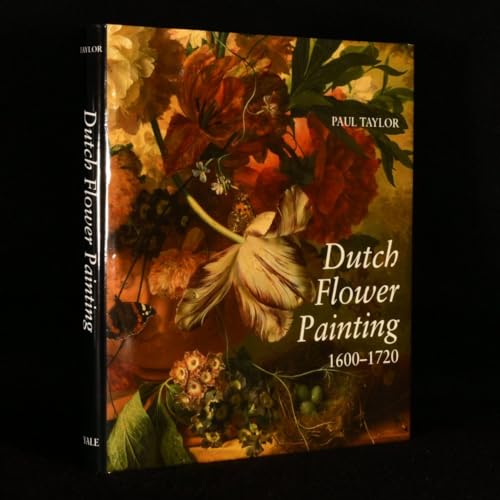
At the time of the great tulip speculation of the 1630s in Holland, the most desirable tulip bulbs were auctioned for more money than the most expensive houses in Amsterdam. At the same time flower paintings which were remarkable for their apparent realism were produced all over Holland and purchased by Dutch families as enduring substitutes for the real thing. This beautiful book reveals the fascinating genesis and growth of a whole genre of paintings that has rarely been studied.
Paul Taylor begins by discussing Holland's 'tulipomania' and its effect on the way people thought about floral still lifes. He then considers the religious messages associated with the flower paintings, exploring how religious writers spoke of flowers as moral signposts from God and how some flower paintings were meant to remind viewers of the transience of earthly existence. Flower paintings were not bought only as records of luxury objects or for moral edification, however. They were also enjoyed as works of art, as masterpieces of illusion, composition and colour harmony, so Taylor analyses the art-theoretical writings of the time in order to understand how artists and connoisseurs responded to flower pieces. He concludes by analysing the paintings themselves, tracing the development and refinement of the actual practice of flower painting.
"synopsis" may belong to another edition of this title.
Reviews
This scholarly work examines 17th-century Dutch flower painting within the contexts of symbolism, political and economic events, religion, art criticism, and the art market. Detailed discussions use 17th-century sources to explore the significance of these paintings to their cultural contemporaries. Attractive reproductions, most of them in color, serve to illustrate the points that are made in the text. Interested lay readers are likely to enjoy the reproductions and discussions of individual painters. Because much of the book concentrates on fairly narrow interpretive issues, however, it will be of primary interest to scholars and students of the period. Recommended for specialized collections.?Kathryn Wekselman, MLn., Cincinnati
Copyright 1995 Reed Business Information, Inc.
"About this title" may belong to another edition of this title.
Search results for Dutch Flower Painting, 1600-1720

Stock Image
Dutch Flower Painting, 1600-1720
Seller: Book Alley, Pasadena, CA, U.S.A.
Seller rating 4 out of 5 stars

hardcover. Condition: Good. Dust Jacket Condition: very good. A very good hardcover in a very good dust jacket. No markings. Seller Inventory # mon0000785525
Seller Image
Dutch Flower Painting 1600-1720
Seller: Midway Book Store (ABAA), St. Paul, MN, U.S.A.
Seller rating 5 out of 5 stars

Hardcover. Condition: Like new. Dust Jacket Condition: Fine. Small quarto, 28 cm x 25 cm, 227 pp. There is some wear on the top of the dust jacket and some shelf wear on the back cover of the dust jacket. There is also a slight curl on the top of the spine on the dust jacket.There are several prints throughout. Seller Inventory # 90251
Stock Image
Dutch Flower Painting, 1600-1720. SIGNED BY PAUL TAYLOR.
Published by
Newhaven / Yale University Press,, 1995
ISBN 10: 0300053908
ISBN 13: 9780300053906
Used
Hardcover
Signed
Seller: Antiquariat Willi Braunert, München, Germany
Seller rating 4 out of 5 stars
4°, cloth, dustjacket. 227 pp Good copy. Sprache: Englisch Gewicht in Gramm: 0. Seller Inventory # 22544
Buy Used
US$ 112.28
US$ 30.98 shipping
Ships from Germany to U.S.A.
Ships from Germany to U.S.A.
Quantity: 1 available
Stock Image
Dutch Flower Painting, 16001720
Seller: Anybook.com, Lincoln, United Kingdom
Seller rating 5 out of 5 stars
Condition: Good. This is an ex-library book and may have the usual library/used-book markings inside.This book has hardback covers. In good all round condition. No dust jacket. Please note the Image in this listing is a stock photo and may not match the covers of the actual item,1450grams, ISBN:0300053908. Seller Inventory # 5787070
Buy Used
US$ 115.77
US$ 41.55 shipping
Ships from United Kingdom to U.S.A.
Ships from United Kingdom to U.S.A.
Quantity: 1 available
Stock Image
Dutch Flower Painting 1600-1720.
Published by
New Haven & London: Yale University Press, 1995., 1995
ISBN 10: 0300053908
ISBN 13: 9780300053906
Used
Hardcover
First Edition
Seller: Ted Kottler, Bookseller, Redondo Beach, CA, U.S.A.
Seller rating 4 out of 5 stars
Hardcover. Condition: Near Fine. Dust Jacket Condition: Near Fine. 1st Edition. viii, 227 pp; 118 illus. (46 color plates; 72 black & white illus.). Original cloth, 4to. Near Fine, in near fine dust jacket. Seller Inventory # 19222
Stock Image
Dutch Flower Painting 16001720
Seller: Anybook.com, Lincoln, United Kingdom
Seller rating 5 out of 5 stars
Condition: Poor. This is an ex-library book and may have the usual library/used-book markings inside.This book has hardback covers. In poor condition, suitable as a reading copy. Dust jacket in good condition. Please note the Image in this listing is a stock photo and may not match the covers of the actual item,1550grams, ISBN:9780300053906. Seller Inventory # 3711894
Buy Used
US$ 125.50
US$ 44.64 shipping
Ships from United Kingdom to U.S.A.
Ships from United Kingdom to U.S.A.
Quantity: 1 available
Stock Image
Dutch Flower Painting, 1600-1720
Published by
Yale University Press, New Haven, CT, 1995
ISBN 10: 0300053908
ISBN 13: 9780300053906
Used
Hardcover
Seller: Lost Books, AUSTIN, TX, U.S.A.
Seller rating 5 out of 5 stars
Hard cover. 227 p. Audience: General/trade. Very good in very good dust jacket. Seller Inventory # Alibris.0016672
Stock Image
Dutch Flower Painting, 1600-1720
Seller: Mooney's bookstore, Den Helder, Netherlands
Seller rating 4 out of 5 stars
Condition: Very good. Seller Inventory # E-9780300053906-2-2
Buy Used
US$ 185.88
US$ 17.16 shipping
Ships from Netherlands to U.S.A.
Ships from Netherlands to U.S.A.
Quantity: 1 available
Seller Image
Dutch Flower Painting 1600-1720
Seller: Diatrope Books, Berkeley, CA, U.S.A.
Seller rating 5 out of 5 stars
Hardcover. Condition: Very Good. Dust Jacket Condition: very good. Unmarked. Dust jacket (unclipped) under clear mylar cover. Extensively illustrated with gorgeous color plates. This beautiful book reveals the fascinating genesis and growth of Dutch flower painting. Paul Taylor discusses Holland`s "tulipomania" and its effect on the way people thought about floral still lifes, considers the aesthetic and religious meanings of these paintings, and concludes by analyzing the paintings themselves, tracing the development and refinement of the actual practice of flower painting. Measures 10x11 inches. Notes. Bibliographic references. Index. 227pp. Seller Inventory # 32853
Seller Image
Dutch Flower Painting, 1600-1720
Published by
Yale University Press, 1995
ISBN 10: 0300053908
ISBN 13: 9780300053906
Used
Hardcover
First Edition
Seller: Studio Books and Music, CAMBRIDGE, United Kingdom
Seller rating 5 out of 5 stars
Hardcover. Condition: Near Fine. 1st Edition. A wonderful copy. In unread condition. There is a little yellowing to the page edges - see pics. Seller Inventory # ABE-1768141413658
Buy Used
US$ 238.49
US$ 22.49 shipping
Ships from United Kingdom to U.S.A.
Ships from United Kingdom to U.S.A.
Quantity: 1 available