
Synopsis
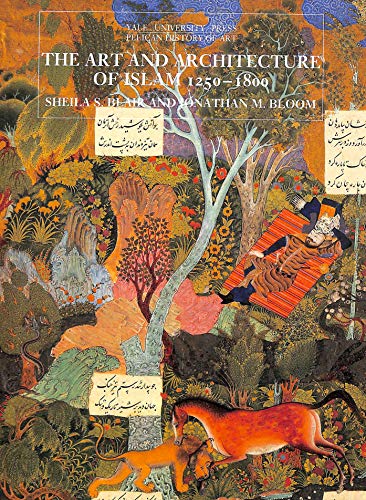
Virtually all the masterpieces of Islamic art - the Alhambra, the Taj Mahal, and the Tahmasp Shahnama - were produced during the period from the Mongol conquests in the early thirteenth century to the advent of European colonial rule in the nineteenth. This beautiful book surveys the architecture and arts of the traditional Islamic lands during this era.
Conceived as a sequel to the The Art and Architecture of Islam: 650-1250, by Richard Ettinghausen and Oleg Grabar, the book follows the general format of the first volume, with chronological and regional divisions and architecture treated separately from the other arts. The authors describe over two hundred works of Islamic art of this period and also investigate broader social and economic contexts, considering such topics as function, patronage, and meaning. They discuss, for example, how the universal caliphs of the first six centuries gave way to regional rulers and how, in this new world order, Iranian forms, techniques, and motifs played a dominant role in the artistic life of most of the Muslim world; the one exception was the Maghrib, an area protected from the full brunt of the Mongol invasions, where traditional models continued to inspire artists and patrons. By the sixteenth century, say the authors, the eastern Mediterranean under the Ottomans and the area of northern India under the Mughals had become more powerful, and the Iranian models of early Ottoman and Mughal art gradually gave way to distinct regional and imperial styles. The authors conclude with a provocative essay on the varied legacies of Islamic art in Europe and the Islamic lands in the nineteenth and twentieth centuries.
"synopsis" may belong to another edition of this title.
About the Author
Sheila Blair has taught at Pahlavi University in Shiraz, the University of Pennsylvania, and Dartmouth College.
Reviews
Intended as a standard text, this volume by the area editors of Islam for The Dictionary of Art (1980. 3d ed.) is a sequel to Richard Ettinghausen and Oleg Grabar's now classic The Art and Architecture of Islam: 650-1250 (Viking, 1988). Organized simply by chronology (with sections on 1250-1500 and 1500-1800) and then by geography (Iran and Central Asia, the Middle East and North Africa, Asia Minor, and India), the text focuses separately on architecture and "the arts." Each chapter concentrates on a limited number of significant objects, discussing not only stylistic and aesthetic issues but also addressing the social, historical, and economic contexts of those works. Although this book is densely written in a manner typical of survey texts and lacking the richly colored glossy reproductions of a coffee-table tome, its comprehensive coverage entitles it to become part of any library with the slightest interest in art.
Eugene C. Burt, Art Inst. of Seattle Lib.
Copyright 1995 Reed Business Information, Inc.
"About this title" may belong to another edition of this title.
Other Popular Editions of the Same Title

Search results for The Art and Architecture of Islam, 1250-1800

Seller Image
The Art and Architecture of Islam, 1250-1800
Seller: Bay State Book Company, North Smithfield, RI, U.S.A.
Seller rating 5 out of 5 stars

Condition: good. The book is in good condition with all pages and cover intact, including the dust jacket if originally issued. The spine may show light wear. Pages may contain some notes or highlighting, and there might be a "From the library of" label. Boxed set packaging, shrink wrap, or included media like CDs may be missing. Seller Inventory # BSM.10TDU
Stock Image
The Art and Architecture of Islam, 1250-1800
Seller: Recycle Bookstore, San Jose, CA, U.S.A.
Seller rating 4 out of 5 stars

Hardcover. Condition: Very Good. Dust Jacket Condition: Very Good. Yale University Press, 1995. Book has mild rubbing/smudging to black cloth covers, light warping to front cover top edge near outer corner/edge, a small gap between top area binding and spine cover, slight waviness to textblock. otherwise in very good condition, binding is intact with no missing pages, pages remain bright and unmarked; some modest cosmetic wear but an overall sturdy copy with clean interiors. On the lower end of very good. Dust jacket has mild rubbing, mild wear to edges with warping to front side top edge. in very good condition, now in archival cover. Seller Inventory # 1025961
Stock Image
THE ART AND ARCHITECTURE OF ISLAM, 1250-1800
Seller: AVON HILL BOOKS, Cambridge, MA, U.S.A.
Seller rating 5 out of 5 stars
Hardcover. Condition: As New. Dust Jacket Condition: As New. Housed in near-fine condition plain white light cardboard slipcase. Color and b/w illustrations throughout. Due to size, ships witin US only and only by media rate mail. ; Small 4to 9" - 11" tall; 368 pp. Seller Inventory # 58116
Stock Image
The Art and Architecture of Islam 1250-1800
Seller: Moe's Books, Berkeley, CA, U.S.A.
Seller rating 4 out of 5 stars
Hard cover. Condition: Very good. Dust Jacket Condition: Good. Jacket is worn along the bottom edge and is slightly rubbed, otherwise jacket is in good condition. Cover boards are in great condition with no visible flaws apart from some ight handling wear. Binding is tight and inside is clean and unmarked. Seller Inventory # 2048372
Stock Image
Art and Architecture of Islam, 1250-1800
Published by
Yale University Press September 1994, 1994
ISBN 10: 0300058888
ISBN 13: 9780300058888
Used
Hardcover
Seller: Hennessey + Ingalls, Los Angeles, CA, U.S.A.
Seller rating 4 out of 5 stars
Hardcover. Condition: Used - Like New. Virtually all the masterpieces of Islamic art - the Alhambra, the Taj Mahal, and the Tahmasp Shahnama - were produced during the period from the Mongol conquests in the early thirteenth century to the advent of European colonial rule in the nineteenth. This beautiful book surveys the architecture and arts of the traditional Islamic lands during this era. Conceived as a sequel to the The Art and Architecture of Islam: 650-1250, by Richard Ettinghausen and Oleg Grabar, the book follows the general format of the first volume, with chronological and regional divisions and architecture treated separately from the other arts. The authors describe over two hundred works of Islamic art of this period and also investigate broader social and economic contexts, considering such topics as function, patronage, and meaning. They discuss, for example, how the universal caliphs of the first six centuries gave way to regional rulers and how, in this new world order, Iranian forms, techniques, and motifs played a dominant role in the artistic life of most of the Muslim world; the one exception was the Maghrib, an area protected from the full brunt of the Mongol invasions, where traditional models continued to inspire artists and patrons. By the sixteenth century, say the authors, the eastern Mediterranean under the Ottomans and the area of northern India under the Mughals had become more powerful, and the Iranian models of early Ottoman and Mughal art gradually gave way to distinct regional and imperial styles. The authors conclude with a provocative essay on the varied legacies of Islamic art in Europe and the Islamic lands in the nineteenth and twentieth centuries. BEAUTIFUL COPY!!! wrapped in complimentary Brodart dust jacket protector. Seller Inventory # 316177
Stock Image
The Art and Architecture of Islam, 1250-1800
Published by
Yale University Press, New Haven, CN, 1994
ISBN 10: 0300058888
ISBN 13: 9780300058888
Used
Hardcover
First Edition
Seller: Ragabooks, Palo Alto, CA, U.S.A.
Seller rating 5 out of 5 stars
Hard Cover. Condition: Fine. Dust Jacket Condition: Fine. First Edition. Pelican History o art. 1st prtg, no others listed on copyright pg. black cloth, unclipped color photo illus dj, all exc unread, as new cond, bright & pristine; 400 color & b/w txt illus, maps, 348 pp. Size: 9"-11.5". Seller Inventory # RB3675
Stock Image
The Art and Architecture of Islam 1250 - 1800
Published by
Yale University Press, New Haven CT, 1994
ISBN 10: 0300058888
ISBN 13: 9780300058888
Used
Hardcover
Seller: Chequamegon Books, Washburn, WI, U.S.A.
Seller rating 5 out of 5 stars
Hardcover. part of the Pelican History of Art series. 348 pages. priority and international shipping will be more than our standard rates, please inquire. ; 8 3/4 x 11 1/2 " Near Fine in Near Fine dust jacket. Seller Inventory # 58961
Stock Image
The Art and Architecture of Islam 1250-1800.
Published by
New Haven and London: Yale University Press, 1994
ISBN 10: 0300058888
ISBN 13: 9780300058888
Used
Hardcover
Seller: Antiquariat Thomas Haker GmbH & Co. KG, Berlin, Germany
Seller rating 5 out of 5 stars
Cloth. Condition: Gut. 364 pages. Good. Ex-library with usual markings. Clean pages. Without dust jacket. Sprache: Englisch Gewicht in Gramm: 1999. Seller Inventory # 886327
Buy Used
US$ 24.57
US$ 34.95 shipping
Ships from Germany to U.S.A.
Ships from Germany to U.S.A.
Quantity: 1 available
Stock Image
The Art and Architecture of Islam, 1250-1800
Published by
Yale University Press, New Haven, 1994
ISBN 10: 0300058888
ISBN 13: 9780300058888
Used
Hardcover
First Edition
Seller: Don Kelly Books, London, United Kingdom
Seller rating 3 out of 5 stars

Hardcover. Condition: As New. Dust Jacket Condition: As New. 1st Edition. 348pp. 400 colour and b&w illustrations. Seller Inventory # 34032
Buy Used
US$ 41.57
US$ 18.40 shipping
Ships from United Kingdom to U.S.A.
Ships from United Kingdom to U.S.A.
Quantity: 1 available
Stock Image
The Art and Architecture of Islam, 1250-1800
Published by
Yale University Press, New Haven, 1994
ISBN 10: 0300058888
ISBN 13: 9780300058888
Used
Hardcover
First Edition
Seller: Don Kelly Books, London, United Kingdom
Seller rating 3 out of 5 stars
Hardcover. Condition: As New. Dust Jacket Condition: As New. 1st Edition. 348pp. 400 colour and b&w illustrations. Seller Inventory # 29639
Buy Used
US$ 41.57
US$ 18.40 shipping
Ships from United Kingdom to U.S.A.
Ships from United Kingdom to U.S.A.
Quantity: 1 available