
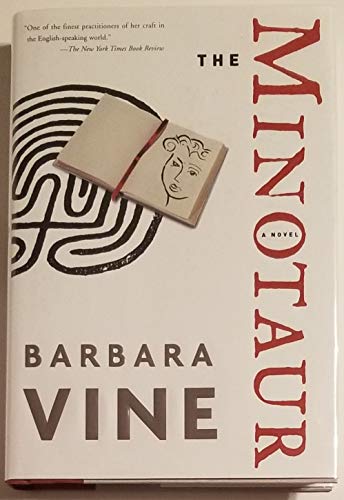
Synopsis
As soon as Kerstin Kvist arrives at remote, ivy-covered Lydstep Old Hall in Essex, she feels like a character in a gothic novel. A young nurse fresh out of school, Kerstin has been hired for a position with the Cosway family, residents of the Hall for generations. She is soon introduced to her “charge,” John Cosway, a thirty-nine-year-old man whose strange behavior is vaguely explained by his mother and sisters as part of the madness that runs in the family.
Weeks go by at Lydstep with little to mark the passage of time beyond John’s daily walks and the amusingly provincial happenings that engross the Cosway women, and Kerstin occupies her many free hours at the Hall reading or making entries into her diary. Meanwhile, bitter wrangling among Julia Cosway and her four grown daughters becomes increasingly evident. But this is just the most obvious of the tensions that charge the old remote estate, with its sealed rooms full of mystery. Soon Kerstin will find herself in possession of knowledge she will wish she’d never attained, secrets that will propel the occupants of Lydstep Old Hall headlong into sexual obsession, betrayal, and, finally, murder.
Also available in a Random House Large Print edition and as an eBook
"synopsis" may belong to another edition of this title.
About the Author
Barbara Vine is the author of such acclaimed novels as A Dark-Adapted Eye, Anna’s Book, Grasshopper, and The Blood Doctor. She has won many awards for literary accomplishment, including three Edgar Awards and four Gold Daggers.
Reviews
Twenty years ago, a great storyteller split herself in two: Ruth Rendell moved over to make room for Barbara Vine. As Rendell, she has continued her Inspector Wexford series and added to a long list of stand-alone thrillers. As Vine, she has written a dozen novels -- the latest being The Minotaur -- that stretch the mystery genre's boundaries until only a hair-splitter can say where it leaves off and "serious" literature begins. (To complete the picture, a third persona now inhabits this complex woman; having been made a life peer, she is Baroness Rendell of Babergh.) Still going strong in her mid-seventies, Rendell/Vine has more than 50 novels to her credit -- a record of quantity and quality that calls to mind the prolific Anthony Trollope (one of whose novels Rendell has introduced for Penguin Classics).
Typically in a Vine production, whodunit is less momentous than how in the world it could have happened -- how a mildly unstable situation could have gotten so out of hand that murder capped it off. The first book published under the Vine nom de plume, A Dark-Adapted Eye (1986), is a cardinal example. Before reading a single word of the text, you can learn that one Vera Hillyard was hanged for murder -- the dust jacket says so. Then the book takes off in another direction: As we watch, fascinated, Vine shows how a particular combination of unorthodox family structure, character flaws and circumstances led the very conventional Vera to kill someone to whom she had long been close. Deservedly, A Dark-Adapted Eye won an Edgar Award for best mystery of the year.
The Minotaur resembles A Dark-Adapted Eye in conjuring up a genteel English milieu that breeds violence. The new book opens with a chance encounter between two women, one of whom once worked as a nurse in the other's house, Lydstep Old Hall -- a name that suits its down-at-the-heels grandeur. Hidden behind a webbing of Virginia creeper, the hall was the residence of the Cosways, who lacked the funds to keep it up properly. Among other features, the estate was reputed to have a maze. Only after the narrator, Kerstin Kvist, arrived from her native Sweden to take up her post did she learn that this was an internal puzzle, laid out inside the Hall's vast library. Her patient, John Cosway, was the minotaur of the title -- the monster at the heart of the labyrinth. Or so, at least, his family considered him.
Now married to an Englishman, Kerstin explains all this in the long flashback that takes up most of the book. A chance encounter has summoned up the past, specifically the late 1960s, when she showed up at Lydstep Old Hall like a callow but educated young lady in a Brontë novel. She joined a family of sniping women -- a mother and her four adult daughters -- along with one man, their brother John, kept heavily medicated because he was thought to be schizophrenic. It didn't take Kerstin long to suspect that John's chief problem was the medication itself. Under a provision of his late father's will, the estate was John's in trust, and the women seemed to be using his eccentricities -- above all, an abhorrence of being touched -- as an excuse to keep him drugged into submission. (Savvy readers will figure out, even before Nurse Kerstin, that John was not crazy but autistic.)
While John slept a lot and otherwise avoided the female Cosways, they were busy feeding upon internecine scandals and rivalries. For example, it was common knowledge that the youngest daughter was the illegitimate child of Mrs. Cosway and the family physician, the very one whose prescription kept John subdued. Two other daughters were feuding over a local artist, who slept with whichever one he was in the mood for -- never mind that the elder was engaged to the clergyman whose church they all attended. These rancid affairs nurtured what Kerstin considered a peculiarly English blend of jealousy and hypocritical moralizing, and she was caught in the middle. It got so bad that hostility reached her even from behind, so to speak. After a particularly tense moment with Ida, one of the sisters, Kerstin thought: "Backs can be as eloquent as faces and hers, round-shouldered, slack under the floral cotton overall and moth-holed gray sweater, the muscles giving one nervous twitch, told me she had nothing to say to me and would welcome my departure." Away from the prevailing malevolence, Kerstin and John carved out a friendship. She treated him like an adult, and he warmed to her insofar as his condition permitted -- much to Mrs. Cosway's disapproval.
How the dynamics of this backbiting family resolved themselves is the burden of Kerstin's story. Elegant and gripping, The Minotaur flags just at the end because that bookish labyrinth doesn't live up to the role that the title seems to promise for it. But even a less-than-celestial Vine is far superior to the average mystery.
Reviewed by Dennis Drabelle
Copyright 2006, The Washington Post. All Rights Reserved.
British master Vine (aka Ruth Rendell) explores life among the Cosways, a country gentry clan that makes the Wuthering Heights crowd look wholesome. Kerstin Kvist, a young Swedish nurse, takes a job at Lydstep Old Hall caring for John Cosway, a mathematical prodigy now labeled by his family as schizophrenic. In addition to John, there are four obsessive sisters ruled by their scarecrow-like matriarch. Gradually, Kerstin suspects that John is being drugged so that his mother and sisters can remain in their estate under the terms of a disputed trust. Vine creates a family and village, Windrose, so vivid you're tempted to book a B and B and investigate things yourself. Some scenes involving John's behavior—his fits and his family's reactions—seem abrupt to the point of being bizarre, but Vine is describing a man hijacked from rationality, through a narrator whose first language isn't English. When murder finally happens, it's simultaneously shocking yet inevitable. Though less elegantly written than 2002's The Blood Doctor, this delivers a more palpable, and thus satisfying, crime. (Mar.)
Copyright © Reed Business Information, a division of Reed Elsevier Inc. All rights reserved.
Barbara Vine is the pen name of Ruth Rendell. It's odd to think that such an acclaimed and public figure as Rendell (who has won almost every mystery award in the genre) would assume a pen name, until you notice the differences in the novels appearing under the Rendell and Vine names. Rendell writes precision mysteries, as spare and gaunt as an iron fence. But Vine is Rendell's exuberant other half. Vine thrillers are almost rococo in the expanse of plot and character, skirting close to self-indulgence at times. In the latest Vine, a Swedish nurse named Kirstin Kvist looks back at the central mystery of her life, something that happened back in the 1960s, when she journeyed to crumbling Lydstep Old Hall in Essex, England, to care for a melancholy 39-year-old man with a puzzling ailment. The tale starts as a medical mystery, with Kvist trying to determine what is wrong with the heir to the family fortune. It segues into a Victorian novel of manners when Kvist discovers a plot to wrest the fortune away, a plot that predictably leads to murder. This is very satisfying reading, a sort of blend of Edgar Allan Poe and Anthony Trollope. Readers of both Rendell and Vine will love this expansive excursion. Connie Fletcher
Copyright © American Library Association. All rights reserved
Excerpt. © Reprinted by permission. All rights reserved.
1
I am a cartoonist. We are thin on the ground, we women cartoonists; it’s still thought of as a man’s job, and there are even fewer of my sort who aren’t English and never went to art school. Over the close-on thirty years that I have been contributing a couple of cartoons to each issue of a weekly news magazine, I have drawn Harold Wilson and Willy Brandt, Mao Zedong and Margaret Thatcher (hundreds of times), John Major, Neil Kinnock, David Beckham, and Tony Blair (nearly sixty times). People say I can catch a likeness with a few strokes and squiggles; they know who it’s supposed to be before they read the caption or the balloon coming out of a character’s mouth. But I was no child artist prodigy, I don’t remember learning anything about art at school and for years all I ever drew was a Dog Growing for my small niece and nephew.
I’ll tell you about the Dog Growing because you may want to make one for your own children. You take a sheet of paper; a letter-sized sheet, cut vertically in half, will do very well. Then you fold it in half again and fold the folded-over piece back on itself to make an inch-wide pleat. Flatten it out again and draw a dog across the folds. It’s best to make it a dachshund or a basset hound because it should have a long stretch of body between forelegs and hindlegs. Then refold your paper into its pleat. The dog now has a short body but when the child opens the pleat the dog grows into a dachshund. Of course, when you get practiced at it, you can make a Giraffe’s Neck Growing or a Turkey Growing into an Ostrich. Children love it and that was all I ever drew all through my teens and when I was at university.
I was going to be a nurse and then I was going to teach English. I never considered drawing as a career because you can’t make a living out of a Dog Growing. It was in the late sixties when I came to England, fresh from the University of Lund and my English degree and with a fairly humble nursing qualification. I had a job lined up and a place to live, but my real motive in coming was to renew my love affair with Mark Douglas.
We had met at Lund, but when he graduated he had to go home and all his letters urged me to follow him. Get a job in London, get a room. Everyone in London, he wrote, lives in a bedsitter. I did the next best thing and got a job in Essex, near the main line from Liverpool Street to Norwich. The family who was employing me was called Cosway, and the house they lived in, Lydstep Old Hall. I had never in my life seen anything like that house.
It was very large yet it hardly looked like a house at all, more a great bush or huge piece of topiary work. When I first saw it in June it was entirely covered, from end to end and from foundation to the line of the roof, in intensely green Virginia creeper. I could see it was oblong and that its roof was almost flat but if there were architectural features such as balconies, railings, recessed columns, stonework, none showed through the mass of glossy green. Windows alone peeped out of this leafy wrapping. It was a rather windy day and, because the breeze set all the hundreds of thousands of leaves shivering, there was an illusion that the house itself moved, shrank, expanded, and subsided again.
“Be like living inside a tree,” said the taxi man as I was paying him. “You’d think all that stuff would damage the brickwork. I wouldn’t fancy it. Friends of yours, are they?”
“Not yet,” I said.
Lydstep Old Hall was the first thing I ever drew. Apart from Dogs Growing, that is. I drew it that night, from memory as I was inside the house, and that is how I have drawn everything ever since.
DE Mark’s sister-in-law Isabel Croft got me the job. She had been at school with the youngest Cosway girl. “Zorah won’t be living at home any longer,” she said when I asked her to tell me about the family. “I don’t really know who will. Ida, certainly. She housekeeps for them. Her other two sisters I never knew well. They may have married or gone to live elsewhere. The house actually belongs to John.”
“The one I’m to have charge of? He’s schizophrenic, is that right?”
“I don’t know,” she said. “ ‘Charge’ is rather a strange word to use.”
“Mrs. Cosway’s,” I said, “not mine.”
“I never heard a name for what’s wrong with John,” Isabel said. “It rather puzzles me—but there, I expect Mrs. Cosway knows what she’s talking about. There’s a trust to administer the estate. It’s a strange business, something to do with the way Mr. Cosway left things in his will. I don’t suppose you want to know the details. His marriage had gone wrong, I think, and he and Mrs. Cosway hardly spoke to each other in his last years. Mrs. Cosway was always nice to me, but she is rather a difficult woman. Well, you’ll see. The house is very big, but they keep some of the rooms shut up.”
I asked her what she was going to say about being puzzled. She hadn’t finished her sentence.
“I was going to say I wouldn’t have thought John needed looking after. You’ve been a nurse and he didn’t need a nurse when I knew him. Of course he sometimes behaved strangely, but he never did any harm. But I don’t really know.”
There were so many things she didn’t say. Most of them she simply knew nothing about. The Cosways were good at keeping things hidden—from other people and one another.
DE In the novels of the nineteenth century which I had read while studying English, girls taking posts in country families are always met at the nearest station by some old retainer with a pony and trap. No such offer had been made to me. The Cosways had neither retainer nor pony and the one car they possessed was used by Ella Cosway to go to work. I took a taxi. There were always taxis outside Colchester station and still are for all I know. The route it followed has been much built up since then and the old road has become a three-lane highway. We drove along winding lanes, some of them narrow, for part of the way following the valley of the River Colne, passing the gates of several great houses. I had read a little about the architecture of Essex and knew that the county lacked building stone. Wood, brick, chalk, and flint were the materials used and another material called pudding stone, oblong and rounded pebbles of flint, much used in the construction of churches and of some walls. But the most important material of all was timber and I gazed out of the taxi window, happy to see the information I had read of confirmed in mansions and farmhouses built of tiny Tudor bricks with weatherboarding and half-timbering. Of course it aroused my expectations of what the house I was going to would be like, for Isabel had never described it. It might have a moat, as some did, part of its roof might be thatched, its windows mullioned and its woodwork bare and unstained. And then there was the maze.
“In the grounds, do you mean?” I’d said to her. “Made of hedges?”
But she only laughed and said, “You’ll see.”
My excited anticipation made me ask the driver how much farther it was, and when he said two miles, I had to restrain myself from telling him to hurry up. We bypassed the village but no matter where you were within five miles of Windrose you could hardly fail to see the church, All Saints, its tall rose-red tower a landmark which drew and held your eyes. The Great Red Tower of Windrose, people called it, and some said the name of the village came from its color. Lydstep Old Hall was about half a mile farther on, at the top of a long hill. We approached it along a cart track which the taxi man called a “drive” and which had been graveled over where it opened out and the house was reached. There was no sign of a maze in this part of the grounds, only grass and ancient oak trees and holly.
The front door, of weathered oak, was of course set back, a rectangular hole deep in the green canopy. Now they were close to my eyes, I saw how large each shiny leaf was and, when one brushed my face, felt how cool it was to the touch. You can sometimes only tell an artificial houseplant from a real one by touching its leaves, and then there’s no doubt. The imitation one feels stiff and dead while the real seems to breathe and yield under your fingers. The leaf that touched my cheek was like that.
I rang the bell and a woman came to the door. You may have seen her picture in the papers and on the television, though there weren’t many of these and it was so long ago. None of the photographs of family members were good likenesses. The drawing I made of her was nearer, though perhaps it’s vain of me to say so. At first I thought she must be an employee. She looked about fifty and wore one of those crossover overalls, the staple of sitcom dailies.
She held out her hand and said, “I am Ida Cosway. How do you do?”
The hand she gave me was hard and callused, red and work- damaged.
“Kerstin Kvist,” I said and followed her into the hallway, humping my two suitcases.
No description of the inside of that house appeared in the papers and I shan’t describe it now. Later on I will give some idea of how it was. I shall just say now that this hallway was the oldest part, an ancient vestige of a house which may have dated back to before Tudor times and which Ella Cosway told me had stood on this spot when the Battle of Agincourt was fought. The fine timbering I hoped to see showed on the plastered walls and low ceilin...
"About this title" may belong to another edition of this title.
Other Popular Editions of the Same Title

Search results for The Minotaur: A Novel

Stock Image
The Minotaur: A Novel
Seller: World of Books (was SecondSale), Montgomery, IL, U.S.A.
Seller rating 5 out of 5 stars

Condition: Good. Good condition ex-library book with usual library markings and stickers. Seller Inventory # 00104609171
Stock Image
The Minotaur: A Novel
Published by
Shaye Areheart Books (edition First Edition), 2006
ISBN 10: 0307237605
ISBN 13: 9780307237606
Used
Hardcover
First Edition
Seller: BooksRun, Philadelphia, PA, U.S.A.
Seller rating 5 out of 5 stars
Hardcover. Condition: Very Good. First Edition. With dust jacket. It's a well-cared-for item that has seen limited use. The item may show minor signs of wear. All the text is legible, with all pages included. It may have slight markings and/or highlighting. Seller Inventory # 0307237605-11-1-29
Stock Image
The Minotaur: A Novel
Seller: BookHolders, Towson, MD, U.S.A.
Seller rating 5 out of 5 stars
Condition: Good. [ No Hassle 30 Day Returns ][ Ships Daily ] [ Underlining/Highlighting: NONE ] [ Writing: NONE ] [ Edition: First ] Publisher: Shaye Areheart Books Pub Date: 3/21/2006 Binding: Hardcover Pages: 352 First edition. Seller Inventory # 1781401
Seller Image
The Minotaur: A Novel
Seller: Greenworld Books, Arlington, TX, U.S.A.
Seller rating 5 out of 5 stars
Condition: very_good. Fast Free Shipping â" Very Good condition book with a firm cover and clean pages. Shows normal use and some light wear or limited notes markings. A solid, nice copy to enjoy. Seller Inventory # GWV.0307237605.VG
Stock Image
The Minotaur: A Novel
Seller: ThriftBooks-Atlanta, AUSTELL, GA, U.S.A.
Seller rating 5 out of 5 stars
Hardcover. Condition: Very Good. No Jacket. Missing dust jacket; May have limited writing in cover pages. Pages are unmarked. ~ ThriftBooks: Read More, Spend Less. Seller Inventory # G0307237605I4N01
Stock Image
The Minotaur: A Novel
Seller: ThriftBooks-Atlanta, AUSTELL, GA, U.S.A.
Seller rating 5 out of 5 stars
Hardcover. Condition: Good. No Jacket. Former library book; Pages can have notes/highlighting. Spine may show signs of wear. ~ ThriftBooks: Read More, Spend Less. Seller Inventory # G0307237605I3N10
Stock Image
The Minotaur: A Novel
Seller: Wonder Book, Frederick, MD, U.S.A.
Seller rating 5 out of 5 stars
Condition: Very Good. Very Good condition. Good dust jacket. A copy that may have a few cosmetic defects. May also contain light spine creasing or a few markings such as an owner's name, short gifter's inscription or light stamp. Seller Inventory # Z10A-03154
Stock Image
The Minotaur
Published by
Crown Publishing Group, The, 2006
ISBN 10: 0307237605
ISBN 13: 9780307237606
Used
Hardcover
Seller: Better World Books, Mishawaka, IN, U.S.A.
Seller rating 5 out of 5 stars
Condition: Fine. Used book that is in almost brand-new condition. May contain a remainder mark. Better World Books: Buy Books. Do Good. Seller Inventory # 56599456-6
Stock Image
The Minotaur
Published by
Crown Publishing Group, The, 2006
ISBN 10: 0307237605
ISBN 13: 9780307237606
Used
Hardcover
Seller: Better World Books, Mishawaka, IN, U.S.A.
Seller rating 5 out of 5 stars
Condition: Good. Former library copy. Pages intact with minimal writing/highlighting. The binding may be loose and creased. Dust jackets/supplements are not included. Includes library markings. Stock photo provided. Product includes identifying sticker. Better World Books: Buy Books. Do Good. Seller Inventory # 3172474-75
Stock Image
The Minotaur
Seller: Library House Internet Sales, Grand Rapids, OH, U.S.A.
Seller rating 4 out of 5 stars

Hardcover. Condition: Good. Dust Jacket Condition: Good. Swedish nurse Kirsten Kvist has no idea what to expect when she takes a job with the Cosway family at their estate deep in the Essex countryside, but she discovers a divided family in which secrets, sexual obsession, and betrayal lead to murder. Former library book. Mylar protector included. Moderate shelf wear. Noticable fading due to exposure to sunlight. Please note the image in this listing is a stock photo and may not match the covers of the actual item. Ex-Library. Seller Inventory # 123621853