
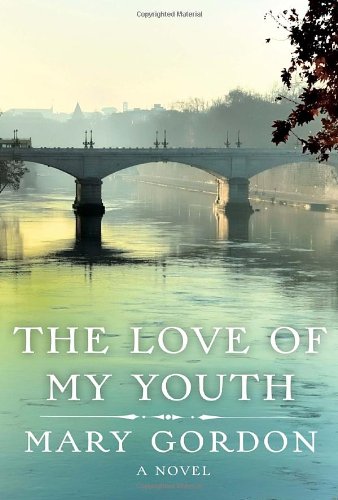
Synopsis
From the acclaimed author of Pearl and Final Payments comes a beautifully choreographed novel about first lovers meeting again after more than thirty years and reimmersing themselves in their shared past.
Miranda and Adam, high-school sweethearts now in their late fifties, arrive by chance at the same time in Rome, a city where they once spent a summer deeply in love, living together blissfully. At an awkward reunion, the two—who parted in an atmosphere of passionate betrayal in the 1960s and haven’t seen each other since—are surprised to discover that they may have something to talk about. Both have their own guilt, their sense of who betrayed whom, and their long-held interpretation of the events that caused them not to marry and to split apart into the lives they’ve led since—both are married to others, with grown children. For the few weeks they are in Rome, Adam suggests that they meet for daily walks and get to know each other again. Gradually, as they take in the pleasures of the city and the drama of its streets, they discover not only what matters to them now but also more about what happened to them long ago.
Miranda and Adam are masterfully portrayed characters, intent upon understanding who they are in relation to who they were. A story about what first love means and how it is shattered, and the lessons old lovers may still have to share with each other many years later, The Love of My Youth is also a poignant look back at the hopes and dreams of a generation and what became of them.
"synopsis" may belong to another edition of this title.
About the Author
Mary Gordon is the author of six previous novels, two memoirs, a short-story collection, and Reading Jesus, a work of nonfiction. She has received many honors, among them a Lila Wallace–Reader’s Digest Writers’ Award, a Guggenheim Fellowship, an O. Henry Award, an Academy Award for Literature from the American Academy of Arts and Letters, and the Story Prize. She is the State Writer of New York. Gordon teaches at Barnard College and lives in New York City.
Reviews
Thoughtful and moving, Gordon's latest captures the ardor and vulnerability of young love and the cautious circumspection of middle age. Miranda and Adam began a love affair in high school that endured through college only to end in a painful betrayal. When a mutual friend brings them together in present-day Rome, they haven't seen each other in more than three decades. Adam's ambitions to be a concert pianist never came to pass, and Miranda, once convinced that political activism could change the world, is now an epidemiologist. Both have married and raised children, but Rome still holds passionate memories for them. Though wary, they meet for daily walks, and Gordon's vividly detailed descriptions make Rome a palpable presence. Miranda and Adam tentatively reveal to each other the events of their lives, touching on aspirations, disillusionments, ideals, and desires, and these conversations set the pace of Gordon's novel. Only when Miranda is about to leave Rome are they able to fully express their emotions and achieve catharsis. Gordon's (Pearl) restraint is admirable, gradually exposing the differences in character that spelled the inevitable demise of this relationship. An accumulation of detail breathes life into her characters, and the writer's affection for this beloved, eternal city is endearing. (Apr.)
(c) Copyright PWxyz, LLC. All rights reserved.
*Starred Review* Miranda and Adam were each other�s first love, but they�ve had no contact for 30 years. Their heady reunion takes place in Rome, a city of myths and ghosts Adam knows well, allowing him to show Miranda, there for an environmental health conference, the sights and allowing Gordon to make the most of gorgeous settings redolent with ancient secrets and sorrows. The ensuing intense conversations between Miranda and Adam are so psychologically intricate and complexly metaphysical and aesthetic that they seem impossibly theatrical. And yet, as the novel deepens in extended flashbacks, their intoxicating exchanges become exquisitely involving. We learn that their blissful love bloomed when they were 16 in the mid-1960s and slowly withered during their twenties as Adam devoted himself to becoming a great pianist and Miranda searched for a way to help make the world a better place. The more they talk on their Roman rambles, the more the reader burns to know what finally drove them apart. In her first novel since Pearl (2005), virtuoso and versatile Gordon offers brilliantly fresh takes on family conflicts, women�s lives, war, and global suffering while ingeniously meshing classic love stories with modern mores, and ecstasy with wisdom, to create an enthralling drama of innocent passion, crushing tragedy, and the careful construction of stable, nurturing lives. HIGH-DEMAND BACKSTORY: Gordon is a major writer, and her alluring novel will be supported by a big media push and national tour. --Donna Seaman
Excerpt. © Reprinted by permission. All rights reserved.
October 7, 2007
“I hope it won’t be strange or awkward. I mean, what seemed strange to me, or would seem strange, is not to do it. Because in a way it is strange, isn’t it, really, the two of you in Rome at the same time, the both of you phoning me the same day?”
Irritation bubbles up in Miranda. Had Valerie always been so garrulous? So vague? Had she, Miranda, always found her so annoying—the qualifications, the emendations, laid down, thrown out like straw on a road to muffle the noise of passing carriages when there’d been a death in the house? Where did that come from? Some novel of the nineteenth century. The early twentieth. And now it is the twenty-first, the first decade nearly done for. There’s no point in thinking this way, focusing on Valerie’s habits of speech and diction. As if that were the point. The point is simply: she must decide whether or not to go.
It has been nearly forty years since she has seen him. Or to be exact—and it is one of the things she values in herself, her ability to be exact—thirty-six years and four months. She saw him last on June 23, 1971. The day had changed her.
Adam tries to remember if he had ever been genuinely fond of Valerie. What he can recall is that, of Miranda’s many friends, Valerie was the one who seemed most interested in him. The one who asked him questions and then listened to his answers, who assumed he had a life whose details might be worthy of her attention. 1966, ’67, ’68, ’69, ’70, ’71. A time when he spent his days trying to determine the perfect fingering, the ideal tempo, for a Beethoven sonata, a Bach partita. A way of spending time that Miranda’s friends considered almost criminally beside the point. The point was stopping the war. Stopping racism. Stopping poverty. Diminishing the injustice of the world.
In those days, he couldn’t speak to anyone about his pain over the fact that Miranda seemed entirely taken up by the problems of the world. The things that absorbed him no longer captured her attention. Not that he ever wanted to capture her attention; her attention was not a bird he was trying to snare, a fish he was netting. For that was what he loved most about Miranda: her mind’s speed, but not only her mind, her quickness in everything. Darting, swooping, leaping, thrilling to him, who moved so slowly, whose every gesture was considered. Those who criticized his playing of the piano accused him of being incapable of lightness. She was a bright thing, a shimmering thing, a kingfisher, a dragonfly. Thirty-six years later she would be no longer young. Had she kept her quickness? Her lightness? Which would he have preferred, that she had kept or lost them?
Is that why he’s agreed to it, to seeing her after all these years, at this dinner Valerie has arranged? Out of simple curiosity? Along with lacking lightness, he has been charged with lacking curiosity. But perhaps both had always been untrue. That curiosity has in this instance triumphed over shame: this must be a sign of strength. For if his soul is, as he’d learned in Sunday school, a clear vessel that could be blackened by his sins, what he did to Miranda was among the blackest. When he told himself he couldn’t have helped it, that he had done the best, the only thing he could have done under the circumstances, the words rang false. He would be tempted to say that to her now, but he would never say it. He is hoping there will be no need. That they will see each other once again, no longer young but healthy, prosperous, intact. That he will see the proof: that he did not destroy her.
##
She stands before the spotted mirror. A dime-sized pool of expensive moisturizer—rose scented, ordered especially from a Romanian cosmetician in New York—spreads in the heat of her palm. Miranda wonders what Adam looks like. She tries on a long black skirt, throws it impatiently on the bed, then Nile green silk pants with wide legs. She tries on the black skirt again. Then a violet knit top, which she rejects because it emphasizes her breasts. Once a vexation to her on account of their smallness, her breasts had done all right with age. She’s glad he won’t be seeing her naked. Or in a bathing suit. Well, she is nearly sixty now, and her body shows the marks of bearing two strong healthy sons. Her legs, which, he had said, caused him a desire that was painful in its intensity when he saw them in her first miniskirt—September 1965—but which she’d always thought too thick, too straight, these had gone flabby. She’s tried—swimming, running, yoga—but nothing really helps. Most of the time she doesn’t think of it, she doesn’t really care. It’s one of the benefits of age: such things have lost their power to scald.
She’s blonde now; he would not be accustomed to thinking of her as a blonde, and her hair is short, boyish. In the time they knew each other her hair had hung down her back at one point almost to her waist. Her hair was brown then, a light brown; he’d called it honey colored. She’d parted it in the middle or braided it into a single plait. Then she remembers: he did see her, briefly, with boyish hair. She doesn’t like to think about that time.
She looks at the lines around her eyes, her mouth. Her face has not ceased to please her, but it could never be the face that he had loved.
##
He has read about her. An article he found in a doctor’s office. “Does Your Office Make You Sick?” Sick buildings. She is an epidemiologist specializing in environmental threats. Her subspecialty: molds.
He thought that such work seemed ill suited to her. Quiet, painstaking work. Requiring patience, which she’d always lacked. But then he remembered: it was only with people that she was impatient. With the physical world, she held her quickness in check; she could spend hours looking, sorting.
He wonders how she does her work. Does she go around old buildings, masked, accompanied by young acolytes collecting things in closed containers, tiny bits of plaster prized from the walls with tweezers? He can imagine her sitting at a microscope, one eye glued to a lens, silent, looking. Or perhaps no one uses microscopes anymore. He knows nothing. Valerie told him—he was grateful that he didn’t have to ask—that she is married. A doctor, an Israeli; he is, Valerie said, something important in the California Department of Public Health. He learned this only days ago. Before that, if anyone asked, he wouldn’t have been able to answer the question, What has become of her?
She would know nothing of what has become of him. She would never have read anything about him; he has done nothing that would have placed his name before the public. A music teacher in a private school. Director of the chorus. One day, he might be known as the father of his daughter, if she continues her early promise on the violin. But up to now, it would be accurate to say he’s done nothing worthy of note.
##
Miranda has heard something, vaguely, some tragedy about Adam’s wife. A suicide. She was not, to her shame, sorry. She would not ask details of Valerie. Even to say the woman’s name, even after all these years, would be an offense against her pride, and this, too, had seemed to her excessive. But it was an impulse she could not give up.
Bitterness.
Pride.
Grievance.
Of course it would be better to be free of them. Of course.
##
Ridiculous to feel it still all these years later. A sense of betrayal. A sense of abandonment. Two-thirds of her life. Sixty-six and two-thirds percent. She had had a thorough training in statistics; numbers are her friend, they have often made her point, they’ve told the truth, they’ve uncovered poisonous equivocations. How many years has it been since she’d even thought of Adam? And—what was her name. HER. She looks in the mirror and castigates herself for her own falseness, a falseness all the more ridiculous because it is for no one’s benefit but her own. She would never forget the name. That name. Beverly. Bev.
##
She tries the black skirt on again. Perhaps the white shirt would make her face too pale. Above all she must appear to have, over the years, flourished. A rose-pink camisole, then, and a jacket: small pink and white flowers against a background of black silk. Yes, that’s right. As a young woman she would never have worn pink, disliking what the shade suggested: weakness, girlishness. But she has grown to like pink. No one, she is certain now, would think of her as weak. Or take her for a girl.
##
Adam stands before the mirror that attaches to the front of his armadio, a looming and reproachful piece, reminding him of its glorious pedigree, hinting reproachfully of his current status (American and not wellborn), an interloper, taking the place of his betters because of Yankee dollars and the slow steady erosion of the values of the lovely past. The people who own the apartment can only afford to keep it because they rent it out most of the year. They live somewhere cheaper. Adam had asked Valerie not to tell him the details.
He moves closer to the mirror so that he can focus, not on his body, but on his thinning hair. No one could say that he was going bald—he is grateful for that—but his hair has lost its luxuriance and, once jet black, is gray now, and he keeps it cropped short to conceal the diminishment (yes, he’s admitted to himself it is a vanity, this effort at concealment). When he...
"About this title" may belong to another edition of this title.
Other Popular Editions of the Same Title

Search results for The Love of My Youth: A Novel

Stock Image
The Love of My Youth: A Novel
Seller: World of Books (was SecondSale), Montgomery, IL, U.S.A.
Seller rating 5 out of 5 stars

Condition: Very Good. Item in good condition. Textbooks may not include supplemental items i.e. CDs, access codes etc. Seller Inventory # 00042060035
Stock Image
The Love of My Youth: A Novel
Seller: World of Books (was SecondSale), Montgomery, IL, U.S.A.
Seller rating 5 out of 5 stars
Condition: Good. Item in good condition. Textbooks may not include supplemental items i.e. CDs, access codes etc. Seller Inventory # 00071784011
Seller Image
The Love of My Youth: A Novel
Seller: Zoom Books East, Glendale Heights, IL, U.S.A.
Seller rating 5 out of 5 stars
Condition: good. Book is in good condition and may include underlining highlighting and minimal wear. The book can also include "From the library of" labels. May not contain miscellaneous items toys, dvds, etc. . We offer 100% money back guarantee and 24 7 customer service. Seller Inventory # ZEV.0307377423.G
Stock Image
The Love of My Youth : A Novel
Published by
Knopf Doubleday Publishing Group, 2011
ISBN 10: 0307377423
ISBN 13: 9780307377425
Used
Hardcover
Seller: Better World Books, Mishawaka, IN, U.S.A.
Seller rating 5 out of 5 stars
Condition: Good. First Edition first Printing. Former library copy. Pages intact with minimal writing/highlighting. The binding may be loose and creased. Dust jackets/supplements are not included. Includes library markings. Stock photo provided. Product includes identifying sticker. Better World Books: Buy Books. Do Good. Seller Inventory # GRP67757629
Stock Image
The Love of My Youth: A Novel
Seller: ThriftBooks-Atlanta, AUSTELL, GA, U.S.A.
Seller rating 5 out of 5 stars
Hardcover. Condition: Good. No Jacket. Former library book; Pages can have notes/highlighting. Spine may show signs of wear. ~ ThriftBooks: Read More, Spend Less. Seller Inventory # G0307377423I3N10
Stock Image
The Love of My Youth: A Novel
Seller: Tangled Web Mysteries and Oddities, Kennebuunkport, ME, U.S.A.
Seller rating 5 out of 5 stars
hardcover. Condition: Very Good. First Edition. . Providing superior service since 2001. Dropshippers heartily welcomed. Seller Inventory # 118934
Stock Image
The Love of My Youth: A Novel
Seller: HPB-Diamond, Dallas, TX, U.S.A.
Seller rating 5 out of 5 stars
hardcover. Condition: Very Good. Connecting readers with great books since 1972! Used books may not include companion materials, and may have some shelf wear or limited writing. We ship orders daily and Customer Service is our top priority! Seller Inventory # S_428347858
Stock Image
The Love of My Youth: A Novel
Seller: HPB-Emerald, Dallas, TX, U.S.A.
Seller rating 5 out of 5 stars
hardcover. Condition: Very Good. Connecting readers with great books since 1972! Used books may not include companion materials, and may have some shelf wear or limited writing. We ship orders daily and Customer Service is our top priority! Seller Inventory # S_463401106
Stock Image
Love of My Youth
Published by
Pantheon Books April 2011, 2011
ISBN 10: 0307377423
ISBN 13: 9780307377425
Used
Hardcover
Signed
Seller: Isle of Books, Bozeman, MT, U.S.A.
Seller rating 4 out of 5 stars

Hardcover. Condition: Very Good. Dust Jacket Condition: Good. Signed by author. Nice condition. Small scratch on jacket front cover. Signed By Author. Seller Inventory # 577536
Stock Image
The Love of My Youth: A Novel
Published by
Pantheon Books, New York, NY, 2011
ISBN 10: 0307377423
ISBN 13: 9780307377425
Used
Hardcover
Seller: Hourglass Books, Vancouver, BC, Canada
Seller rating 5 out of 5 stars
Hardcover. Condition: Very Good. Dust Jacket Condition: Very Good, Not Price Clipped. American First. Complete number line from 1 to 9; some edge wear to boards and dust jacket; otherwise a solid, clean copy with no marking or underlining; collectible condition. Book. Seller Inventory # 012184