
Synopsis
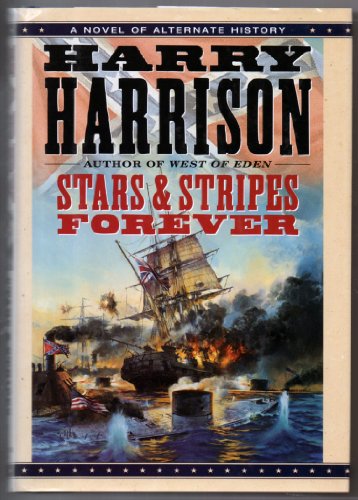
In this astounding epic of alternate history--a powerful blend of fact, fiction, and strategic possibilities--Harry Harrison poses a provocative what if scenario that would have changed the outcome of the U.S. Civil War--and the course of history. The result is an exciting, action-packed, hugely entertaining novel of war and weaponry on both sides of the Atlantic.
On November 8, 1861, in the Bahama Channel close to Cuba, a U.S. navy warship stopped a British packet, boarded her, and seized two Confederate emissaries on their way to England to seek backing for their cause. England responded with rage . . . and with calls for a war of vengeance. The looming crisis was defused by the peace-minded Prince Albert.
But what if fate had intervened? Imagine how his absence during this critical moment might have changed everything. For lacking Albert's calm voice of reason, Britain now seizes the opportunity to attack and conquer a crippled, war-torn America.
Ulysses S. Grant is poised for an attack that could smash open the South's defenses. In Washington, Abraham Lincoln sees a first glimmer of hope that this bloody war might soon end. But then disaster strikes: English troops have invaded from Canada.
With most of the Northern troops withdrawn to fight the new enemy, General William Tecumseh Sherman and his weakened army stand alone against the Confederates. At sea, the wooden American navy faces the threat of the British iron battleship H.M.S. Warrior.
As Queen Victoria and her prime minister, Lord Palmerston, seek total destruction, Confederate president Jefferson Davis and President Lincoln must make crucial decisions under fierce pressure. Stars and Stripes Forever asks--and then fascinatingly answers--a central question: Could a divided, bloodied America have defeated England, or would the United States have ceased to exist for all time?
"synopsis" may belong to another edition of this title.
About the Author
Harry Harrison is famous for many major works of speculative literature, including The Stainless Steel Rat series, Make Room! Make Room! (the basis for the movie Soylent Green), and the West of Eden trilogy. He has won the Nebula Award, the Prix Jules Verne, and the Premio Italia. He lives in Ireland.
From the Back Cover
"HARRY HARRISON IS ONE OF SCIENCE FICTION'S MOST PROLIFIC AND ACCOMPLISHED CRAFTSMEN."
--New York Times Book Review
From the Inside Flap
unding epic of alternate history--a powerful blend of fact, fiction, and strategic possibilities--Harry Harrison poses a provocative what if scenario that would have changed the outcome of the U.S. Civil War--and the course of history. The result is an exciting, action-packed, hugely entertaining novel of war and weaponry on both sides of the Atlantic.
On November 8, 1861, in the Bahama Channel close to Cuba, a U.S. navy warship stopped a British packet, boarded her, and seized two Confederate emissaries on their way to England to seek backing for their cause. England responded with rage . . . and with calls for a war of vengeance. The looming crisis was defused by the peace-minded Prince Albert.
But what if fate had intervened? Imagine how his absence during this critical moment might have changed everything. For lacking Albert's calm voice of reason, Britain now seizes the opportunity to attack and conquer a crippled, war-torn America.
Ulysses S. Grant is pois
Reviews
Admirers of Harrison's West of Eden trilogy or his magisterial Dark Ages collaboration with John Holm won't be pleased by this disappointing novel of an alternate Civil War. Neither will buffs of that conflict or military historians accustomed to work at the level occupied by Harry Turtledove. Harrison's premise is that an actual historical event (the seizure of two Confederate diplomats from the British steamer Trent) leads to open war between Britain and the North. The British then attack Confederate territory by mistake, whereupon North and South join forces to give the British a royal shellacking, eventually driving them from the continent (the French Canadians form an independent republic). Harrison has thrown in some original touches, such as leading roles for John Stuart Mill and William Tecumseh Sherman. Many of the other historical characters are well handled and the burgeoning military technology of the area is explored in some detail. But the British are so consistently depicted as gross bunglers and their leaders (including a Queen Victoria straight out of Kitty Kelley) as Anglophobic stereotypes that all of Harrison's homework ends up supporting what is hardly above the level of an idiot plot. This appears to be the first of a series. Illustrations. Author tour.
Copyright 1998 Reed Business Information, Inc.
Another alternate-world workout from the veteran Ireland-resident American author, following his splendid Dark Ages trilogy (concluded with King and Emperor, 1996). This time, Harrison travels the high-traffic American Civil War thoroughfare. Here, as in real-world history, the Civil War is already under way when the captain of a US warship removes two Confederate bigwigs from a British vessel in international waters. Thereafter, matters diverge: in reality, a furious and minatory British diplomatic retort was toned down by Queen Victoria's beloved Prince Consort, Albert; in Harrison's version, Albert dies before he can rewrite the dispatch, leaving President Lincoln facing a senseless war with Britain. Meanwhile, thanks to several key changes in personnel, the Union's armed forces gain better equipment and grow stronger. In due course, British forces, massing in Canada, invade: predictably so, since their inflexible and conservative tactics are designed to wage not merely the previous war of 1812 but the Revolutionary War. At the same time, the iron-built Monitor and the ironclad Virginia duly clash in Hampton Roads, rendering almost the entire British Navy obsolete. Finally, a British force sent to break the Union blockade of the Gulf Coast accidentally attacks and destroys a Confederate stronghold, leaving the British commander-in-chief, the Duke of Cambridge, with no alternative (as he sees it) but to mount a full scale invasion of the CSA as well. Naturally, when attacked by a common enemy, the USA and CSA set aside their differences to deal with this new threat. Expect sequels. The best alternate worlds - such as Ward Moore's Bring the Jubilee - branch off from reality at a single, precise point. Harrison's, though, involves a string of what-ifs, each more improbable than the one before. The Civil War scenario has wide, guaranteed appeal, yet savvy readers will recognize wish-fulfillment, no matter how cleverly disguised as docudrama. (Author tour) -- Copyright ©1998, Kirkus Associates, LP. All rights reserved.
Excerpt. © Reprinted by permission. All rights reserved.
There, in the center of London, his statue sits in Imperial Roman splendor, toga-garbed and carved in finest marble. Prince Albert, consort to Queen Victoria, his memory enshrined in what is probably the ugliest monument in the world; the Albert Memorial.
He was a kind man and much loved by the Queen; he brought her true happiness. But did this Saxon prince, who never lost his thick German accent, ever do anything of any importance? Other than father the future king.
He certainly did. He averted war with the United States.
In 1861 the American Civil War was still in its first murderous year. Britain and France, to the dismay of the North, were planning to recognize the South as a separate nation. Now the British steam packet Trent was taking the two newly appointed Confederate commissioners, James M. Mason and John Slidell, to England to represent President Jefferson Davis.
On the eighth of November 1861 the Trent was stopped at sea by the USS San Jacinto. When her commanding officer, Captain Wilkes, found that there were two rebels aboard the Trent he had them arrested on the spot and removed from the British ship.
England was aroused, furious. The War of 1812, when Britain had been at war with the newly established United States of America, was still fresh in memory. With the Northern blockade of the Confederate ports biting deep, there was little cotton from the South and the weaving mills of the North were facing bankruptcy. The Prime Minister, Lord Palmerston, saw the boarding of a British ship and the seizing of the passengers as a deliberate insult to Britain's sovereignty. The Foreign Minister, Lord John Russell, echoed the public sentiment when he sent a dispatch to President Lincoln ordering him to release the men immediately--or suffer the consequences. British troops and thousands of rifles were dispatched to Canada and troops massed on the United States border.
Enter the peaceful Prince Albert. Already terminally ill with lung congestion--which was in reality typhoid fever caught from the foul water supply and drains of Windsor Castle--he did a rewrite of the dispatch, ameliorating the language and giving Lincoln a face-saving way out. Queen Victoria approved of the changes and it was sent to Washington.
On December 26 President Lincoln ordered that the two Confederate commissioners be released.
Sadly, Prince Albert would never know that he had averted what very well could have been a tragic confrontation. He had died on the fourteenth of the same month.
But consider for a moment what would have happened if he had not changed the fatal dispatch.
What if Lincoln had been forced by the strong language to ignore the ultimatum?
What if the British invasion of the United States had gone forward?
What if there had been war?
NOVEMBER 8, 1861
The USS San Jacintorocked gently in the calm seas of the South Atlantic; blue water below, blue sky above. The fire in her boiler was banked and only a trickle of smoke rose up from her high funnel. The Bahama Channel was only fifteen miles wide at this point, near the Parador del Grande lighthouse, a bottleneck through which all the island traffic funneled. Captain Charles D. Wilkes stood on the bridge of the American warship, hands clasped behind his back, staring grimly toward the west.
"Smoke in sight," the lookout stationed in the crow's nest called out. "East southeast."
The captain did not move as Lieutenant Fairfax repeated the sighting. The ship that he was waiting for would be coming from the west--should be coming soon if his calculations were correct. If the reports from the Union spies in Cuba could be believed, the men he was seeking should be on board. The chase so far had been a frustrating one; all about the Caribbean. The wanted men had been one step ahead of him ever since he had sailed from Florida. This would be his last chance to apprehend them. If he were wrong, and the Trent did not take this passage between the islands, she would now be safely on her way back to England and the pair would have escaped.
The decision he had made to station his ship here in the Old Bahama Channel was based completely on speculation. If the two men had indeed boarded the Trent, and if the steam packet had left Havana as scheduled--and if she took this course to St. Thomas, why then she should be here by noon at the latest. He started to reach for his watch, then stopped, not wanting to reveal eagerness or doubt before the crew. Instead he squinted up at the sun; surely it was close to the meridian. He clasped his hands even tighter behind his back and the scowl deepened on his face.
Five minutes went by--they could have been five hours--before the lookout called out again.
"Steamer ahoy! Just off the port bow."
"Raise steam," the captain ordered. He slammed his fist on the rail. "That's the Trent, I know that is the Trent. Have the drums beat to quarters."
Lieutenant Fairfax repeated the commands. In the engine room the boiler doors clanged open and the stokers hurled shovel load after shovel load of coal onto the fire. The deck thudded with the sound of running feet. Fairfax relaxed a little when he saw the slightest of smiles on the captain's lips. Wilkes was a hard man to serve under at any time, gruff and bad-tempered at being passed over so often for command. Sixty-two years old and seemingly doomed to remain forever behind his desk as chairman of the Lighthouse Board. Only the outbreak of war had saved him from that. Dispatched to Fernando Po to bring back this veteran wooden steamer to the Philadelphia Naval Yard, he had violated his orders as soon as they had reached Florida and heard about the search that was going on. He never for an instant considered going to the navy yard, not while two traitors were still at large! He needed no orders to apprehend them--just as he had needed no orders from his superiors in the long-gone days when he explored and m
apped the frozen Antarctic wilderness. He had little faith in the official chain of command and was always happier working alone.
The deck vibrated as the screw turned and a small wave foamed at the bow. Fairfax had his glass pointed at the approaching ship, hesitated to speak until he was absolutely sure.
"That is the Trent, sir, I know her lines well. And it is just as you said, eleven-forty, just before noon." There was more than a little awe in his voice; Wilkes nodded.
"Our English cousins are good at punctuality, Lieutenant. They are not good at much else." He had been a fourteen-year-old midshipman when the British Shannon had half destroyed the first ship he ever sailed in, the Chesapeake. Captain Lawrence, mortally wounded by musket fire, had died in his arms. He had never forgotten the dying man's last words--"Don't give up the ship." Yet despite the captain's order the colors had been struck and the ship had surrendered so that he, and the surviving crew members, ended up in a filthy British jail. He had never lost his hatred of the British since then.
"Hoist the flag," he ordered. "As soon as they can see it signal her to stop engines and prepare for boarding."
The helmsman brought the ship about in a smooth turn until they were sailing on a parallel course close to the steam packet.
"She's not slowing, sir," Fairfax said.
"A solid shot across her bows should induce her master to take proper action."
Moments later the gun boomed out; the Trent had to have seen it but they chose to ignore it.
"Very well," Captain Wilkes said. "Fire the pivot gun."
This gun was loaded with an explosive shell that burst close beside the British packet's bow. As the white cloud of smoke dispersed the bow wave on the Trent died away as her engines stopped. Captain Wilkes nodded grim approval.
"Lower the boat, Lieutenant Fairfax. You will take a squad of marines with you, muskets and bayonets. Use them if needs be. You know whom we are looking for."
"I do indeed, sir."
Wilkes watched in silence as the oars dipped and the boat pulled smartly toward the other ship. He betrayed none of the doubts that racked him. The broken orders, the desperate pursuit, the guesses and decisions, were part of the past. But everything he had done would be worth it if the wanted men were aboard. If they weren't ... He preferred not to think of the consequences.
As soon as the boarding ladder was dropped, Fairfax climbed up to the Trent's deck. Wilkes could clearly see him talking to an officer there. Then he turned about to face the American warship and took a white kerchief from his sleeve. Moved it in the agreed signal from chin to waist and back again.
They were aboard!
Eustin pushed through the cabin door and slammed it behind him.
"What is happening?" Madam Slidell asked. He just shook his head and ran across the cabin to the adjoining chamber, pushed into it.
"It's us--the Yankees are after us!" He stammered as he spoke, face pale with fear.
"Did they mention our names?"
"They did, Sir, said they were after John Slidell and William Murray Mason. Didn't mention me nor Macfarland. But the officer, he did talk some about you gentlemen's assistants so they know that we're aboard."
Slidell did not like this. He rubbed at his big, red nose angrily, stomped the length of the cabin and back. "They just can't do this, stop a British ship at sea, board her--this sort of behavior--it cannot be done."
"Easy to say, John," Mason said. "But as I live and breathe it sure looks like it has been done. Now we must think of the papers we are carrying, our warrants--the letters from Jefferson Davis. All the letters to the English and Scotch shipyards about the privateers they...
"About this title" may belong to another edition of this title.
Other Popular Editions of the Same Title

Search results for Stars and Stripes Forever

Stock Image
Stars and Stripes Forever
Seller: World of Books (was SecondSale), Montgomery, IL, U.S.A.
Seller rating 5 out of 5 stars

Condition: Good. Item in good condition. Textbooks may not include supplemental items i.e. CDs, access codes etc. Seller Inventory # 00088495043
Stock Image
Stars and Stripes Forever
Seller: World of Books (was SecondSale), Montgomery, IL, U.S.A.
Seller rating 5 out of 5 stars
Condition: Acceptable. Item in acceptable condition! Textbooks may not include supplemental items i.e. CDs, access codes etc. Seller Inventory # 00090580317
Stock Image
Stars and Stripes Forever
Published by
Random House Publishing Group, 1998
ISBN 10: 0345409337
ISBN 13: 9780345409331
Used
Hardcover
First Edition
Seller: Better World Books, Mishawaka, IN, U.S.A.
Seller rating 5 out of 5 stars
Condition: Good. 1st. Former library copy. Pages intact with minimal writing/highlighting. The binding may be loose and creased. Dust jackets/supplements are not included. Includes library markings. Stock photo provided. Product includes identifying sticker. Better World Books: Buy Books. Do Good. Seller Inventory # 5258224-6
Stock Image
Stars and Stripes Forever
Published by
Random House Publishing Group, 1998
ISBN 10: 0345409337
ISBN 13: 9780345409331
Used
Hardcover
First Edition
Seller: Better World Books, Mishawaka, IN, U.S.A.
Seller rating 5 out of 5 stars
Condition: Good. 1st. Pages intact with minimal writing/highlighting. The binding may be loose and creased. Dust jackets/supplements are not included. Stock photo provided. Product includes identifying sticker. Better World Books: Buy Books. Do Good. Seller Inventory # GRP98448533
Stock Image
Stars and Stripes Forever
Published by
Random House Publishing Group, 1998
ISBN 10: 0345409337
ISBN 13: 9780345409331
Used
Hardcover
First Edition
Seller: Better World Books: West, Reno, NV, U.S.A.
Seller rating 5 out of 5 stars
Condition: Good. 1st. Pages intact with minimal writing/highlighting. The binding may be loose and creased. Dust jackets/supplements are not included. Stock photo provided. Product includes identifying sticker. Better World Books: Buy Books. Do Good. Seller Inventory # GRP98448533
Stock Image
Stars and Stripes Forever
Seller: HPB-Diamond, Dallas, TX, U.S.A.
Seller rating 5 out of 5 stars
hardcover. Condition: Very Good. Connecting readers with great books since 1972! Used books may not include companion materials, and may have some shelf wear or limited writing. We ship orders daily and Customer Service is our top priority! Seller Inventory # S_462978604
Stock Image
Stars and Stripes Forever
Published by
Del Rey (edition First Edition), 1998
ISBN 10: 0345409337
ISBN 13: 9780345409331
Used
Hardcover
First Edition
Seller: BooksRun, Philadelphia, PA, U.S.A.
Seller rating 5 out of 5 stars
Hardcover. Condition: Very Good. First Edition. With dust jacket. It's a well-cared-for item that has seen limited use. The item may show minor signs of wear. All the text is legible, with all pages included. It may have slight markings and/or highlighting. Seller Inventory # 0345409337-11-1-29
Stock Image
Stars and Stripes Forever
Seller: HPB-Ruby, Dallas, TX, U.S.A.
Seller rating 5 out of 5 stars
hardcover. Condition: Very Good. Connecting readers with great books since 1972! Used books may not include companion materials, and may have some shelf wear or limited writing. We ship orders daily and Customer Service is our top priority! Seller Inventory # S_456899026
Stock Image
Stars and Stripes Forever (Stars & Stripes Forever)
Seller: Wonder Book, Frederick, MD, U.S.A.
Seller rating 5 out of 5 stars
Condition: Good. Good condition. Good dust jacket. A copy that has been read but remains intact. May contain markings such as bookplates, stamps, limited notes and highlighting, or a few light stains. Seller Inventory # L19C-00887
Stock Image
Stars and Stripes Forever
Seller: St Vincent de Paul of Lane County, Eugene, OR, U.S.A.
Seller rating 5 out of 5 stars
Condition: Very Good. hardcover 100% of proceeds go to charity! May have signs of use, wear and minor cosmetic defects. Seller Inventory # 2BB-05-3205