
Synopsis
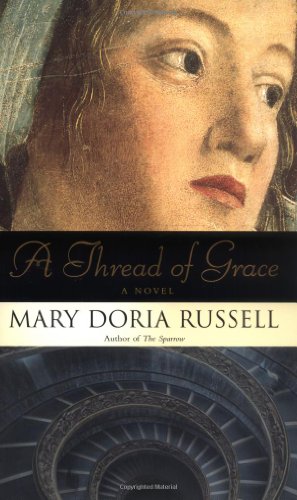
Set in Italy during the dramatic finale of World War II, this new novel is the first in seven years by the bestselling author of The Sparrow and Children of God.
It is September 8, 1943, and fourteen-year-old Claudette Blum is learning Italian with a suitcase in her hand. She and her father are among the thousands of Jewish refugees scrambling over the Alps toward Italy, where they hope to be safe at last, now that the Italians have broken with Germany and made a separate peace with the Allies. The Blums will soon discover that Italy is anything but peaceful, as it becomes overnight an open battleground among the Nazis, the Allies, resistance fighters, Jews in hiding, and ordinary Italian civilians trying to survive.
Mary Doria Russell sets her first historical novel against this dramatic background, tracing the lives of a handful of fascinating characters. Through them, she tells the little-known but true story of the network of Italian citizens who saved the lives of forty-three thousand Jews during the war’s final phase. The result of five years of meticulous research, A Thread of Grace is an ambitious, engrossing novel of ideas, history, and marvelous characters that will please Russell’s many fans and earn her even more.
"synopsis" may belong to another edition of this title.
About the Author
The author of prize-winning research in paleoanthropology, Mary Doria Russell has written two previous novels, The Sparrow and Children of God. She lives with her husband and son in Cleveland, Ohio.
Reviews
Mary Doria Russell is a talented writer of large ambition. To juggle some two dozen principal characters, and as many more minor ones, is daring; so is her willingness to combine them in transactions that are truly bizarre. Imagine that during World War II, a German military doctor, Werner Schramm, crushed by remorse, confesses to an Italian priest that he has murdered 91,867 people. Imagine that the ailing Schramm, having deserted, is nursed in hiding by a rabbi's wife, and that he argues with her about euthanasia for "defective children," when she is still mourning a beloved Mongoloid daughter. And finally imagine that when the priest to whom he confessed, Don Osvaldo Tomitz, is horribly tortured by the Gestapo for not giving up the Jews he is hiding, it is Schramm who brings him peace.
Russell's powerful writing makes such improbable connections not merely dramatic but plausible.
In the folklore of World War II, compared with other combatants, Italy has conspicuously lacked heroes, its fighting qualities widely derided. "What do Italians call half a million men with their hands in the air? The army!" That is a joke told here by Germans bitter after Italy withdrew from the war in 1943. This novel -- based on the historical record -- challenges that impression, at least for the mountainous northwest corner of Italy from 1943-45. The story is thickly populated with Italian heroes -- Jews, Catholics, Communists and partisans. They include priests, nuns, peasants and border guards willing to risk, and forfeit, their lives to save Jews from deportation to Nazi death camps. Deportations had accelerated when the Germans occupied Italy to stop the advancing Allied forces.
Until Mussolini caved in to Hitler in 1938 and began persecuting Jews himself, Italian Jews had better reason than their German co-religionists to feel secure from fascist racism. Jews had been planted in Italian soil since the dawn of Christianity, when 10 percent of the population of the Roman Empire was Jewish, their earliest synagogues predating the Vatican. For their courageous fighting in World War I, Jews were declared full citizens by King Victor Emanuel III. In heavy irony, we learn this from an SS officer instructing his subordinates on the difficulty of rooting out Jews for deportation, given the loyalty of non-Jewish Italians.
If this sounds like too much history lesson and too little novel, that is far from the case. One can excuse a few strands of dialogue heavy with exposition because Russell has an astonishing story to tell -- full of action, paced like a rapid-fire thriller, in tense, vivid scenes that move with cinematic verve. At times I felt there was an overabundance of characters to keep track of (the cast list at the beginning is essential), but they are worth our attention. There is Claudette, a sulky, self-centered Jewish teenager fleeing from Belgium, transformed into wife, mother, partisan fighter. There is Santino, the Sicilian infantryman and border guard who falls in love as he guides her family across the mountains and ultimately demonstrates heart-breaking nobility. There is Lidia, a sardonic, aristocratic Jewish woman, full of irony and love for her son, Renzo, an alcoholic former fighter pilot riven with guilt for his role in Mussolini's slaughter of Abyssinians. Renzo is a witty chameleon, masquerading in several guises to outwit the Germans. In one of many deeply affecting scenes, he flirts with a sweet novice nun, Sister Corniglia, while distracting two frightened Jewish children with a brilliant story.
The use of the present tense in much of the narration accelerates the pace, and sometimes I felt hustled a little too quickly past these memorable events and characters, perhaps because A Thread of Grace lacks the singular hero and heroine of novelistic convention. A screenwriter would have to pump up the young lovers, Claudette and Santino, to make leading roles worthy of star power. This is a book of ensemble heroism, extraordinarily rich in details of how the people -- city dwellers and mountain peasants -- live: their houses, their clothing, their food and how they prepare it, the landscape they live in.
Knowing so much about their material lives, we enter too little into the interior selves of these striking characters, leaving them merely sketched, given to act in situations of unbearable power that are strangely under-inhabited. As in the movies, we know them by what they do and the actions they take, often precipitously, unpremeditatedly; we do not fully know these people, and this being a rich novel, not a movie, we want to. Though lightly drawn and delineated by action, they invite deeper scrutiny.
I sense a tension in this writer, who seems torn between a desire to linger and explore her interesting creations more fully and a need to keep the action racing forward. The action wins. An addictive page-turner, A Thread of Grace satisfies our need to be reminded of how warmly inspiring humanity can be when it is moved to be generous, tolerant and forgiving.
Reviewed by Robert MacNeil
Copyright 2005, The Washington Post Co. All Rights Reserved.
In Thread of Grace, Russell-a Roman Catholic of Italian heritage who converted to Judaism-explores Italy’s response to German occupation, the fate of its Jews, and the actions of individuals. The story, which shifts to different (and sometimes unrelated) characters and subplots, alienated a few critics. Most, however, found that the depth of characterization forged a cohesive narrative and created complex layers of emotion, history, and horror that aptly represent wartime. Reviewers also forgave the ambiguous motives that seemed to drive the characters, who exhibit extreme behavior, from selfless to evil. Yet, by the end, readers will understand the old Hebrew saying, “No matter how dark the tapestry God weaves for us, there’s always a thread of grace.”
Copyright © 2004 Phillips & Nelson Media, Inc.
Starred Review. Busy, noisy and heartfelt, this sprawling novel by Russell—a striking departure from her previous two acclaimed SF thrillers, The Sparrow and Children of God—chronicles the Italian resistance to the Germans during the last two years of WWII. Three cultures mingle uneasily in Porto Sant'Andrea on the Ligurian coast of northwest Italy—the Italian Jews of the village, headed by the chief rabbi Iacopo Soncini; the Italian Catholics, like Sant'Andrea's priest Don Osvaldo Tomitz, who befriend and shelter the Jews; and the occupying Germans invited by Mussolini's crumbling regime. In the last camp is the drunken, tubercular Nazi deserter, Doktor Schramm, a broken man who confesses to Don Osvaldo that while working in state hospitals and Auschwitz, he was responsible for murdering 91,867 people. Meanwhile, Jewish refugees in southern France, including Albert Blum and his teenage daughter, Claudette, are fleeing across the Alps to Italy, hoping to find sanctuary there. Russell pursues numerous narrative threads, including the Blums' perilous flight over the mountains; Italian Jew Renzo Leoni's personal coming to terms with his participation in the Dolo hospital bombing during the Abyssinian campaign in 1935; the dangerous frenzy of the Italian partisans; and the bloody-mindedness of German officers resolved to carry out Hitler's murderous racial policy despite mounting evidence of its futility. The action moves swiftly, with impressive authority, jostling dialogue, vibrant personalities and meticulous, unexpected historical detail. The intensity and intimacy of Russell's storytelling, her sharp character writing and fierce sense of humor bring fresh immediacy to this riveting WWII saga.
Copyright © Reed Business Information, a division of Reed Elsevier Inc. All rights reserved.
Italian citizens saved more than 43,000 Jews during the last 20 months of World War II. Russell has transmuted this little-known history into an expansive, well-researched, and compelling novel. As the story opens, the mountainous region of northwest Italy has been relatively untouched by WWII, and even Jews have been safe. When Italy breaks with Germany in 1943 and pulls out of southern France, thousands of Jewish refugees cross the mountains in search of safety. But the German occupation of Italy poses a new threat. Even with the list that's provided, it can be hard to keep track of all the characters--Catholics and Jews, priests and rabbis, Germans and Italians, old and young, Nazis and Resistance fighters. But Russell is good at presenting the human story while never using the war merely as a backdrop for personal dramas. In fact, to mirror the arbitrary nature of survival during wartime, she has said that she flipped a coin to determine who among her characters would live and who would die. Mary Ellen Quinn
Copyright © American Library Association. All rights reserved
Excerpt. © Reprinted by permission. All rights reserved.
Greater Italy 1943 Anno Fascista XXII
8 September 1943
Porto Sant’Andrea, Liguria Northwestern Coast of Italy
A simple answer to a simple question. That’s all Werner Schramm requires.
“Where’s the church?” he yells, belligerent and sick—sicker yet when his shout becomes a swampy cough.
A small crowd gathers to appreciate the spectacle: a Waffen-SS officer, thin, fortyish, and liquored up. He props his hands against his knees, coughing harder. “La basilica!” he gasps, remembering the Italian. “San Giovanni—dove è?”
A young woman points. He catches the word campanile, and straightens, careful of his chest. Spotting the bell tower above a tumble of rooftops that stagger toward the sea, he turns to thank her. Everyone is gone.
No matter. Downhill is the path of least resistance for a man who’s drunk himself legless. Nearer the harbor, the honeyed light of the Italian Riviera gilds wrecked warehouses and burnt piers, but there’s not much bomb damage inland. No damned room for an explosion, Schramm thinks.
Jammed between the Mediterranean and the mountains, the oldest part of Porto Sant’Andrea doesn’t even have streets—just carrugi: passages barely wide enough for medieval carts. Cool and shadowy even at noon, these masonry ravines wind past the cobblers’ and barbers’ shops, apothecaries, vegetable stands, and cafés wedged at random between blank-walled town houses with shuttered windows.
Glimpses of the bell tower provide a sense of direction, but Schramm gets lost twice before stumbling into a sunny little piazza. He scowls at the light, sneezes, wipes his watering eyes. “Found you!” he tells the Basilica di San Giovanni Battista. “Tried t’hide, but it didn’ work!”
San Giobatta, the locals call this place, as though John the Baptist were a neighborhood boy, poor and charmless but held in great affection. Squatting on a granite platform, the dumpy little church shares its modest courtyard with an equally unimpressive rectory and convent, their builder’s architectural ambition visibly tempered by parsimony. Broad stripes of cheap black sandstone alternate with grudgingly thin layers of white Carrara marble. The zebra effect is regrettable.
Ineffective sandbags surround the church, its southeast corner freshly crumpled and blackened by an Allied incendiary bomb. A mob of pigeons waddle through the rubble, crapping and cooing. “The pope speaks lovely German,” Schramm informs them. “Nuncio to Berlin before he got his silly hat. Perhaps I ought to go to Rome and confess to Papa Pacelli!”
He laughs at his own impertinence, and pays for it with another coughing fit. Eyes watering, hands trembling, he drops onto the basilica staircase and pulls out the battered flask he keeps topped up and nestled near his heart. He takes small sips until brandy calms the need to cough, and the urge to flee.
Prepared now, he stands. Squares his shoulders. Advances resolutely on massive doors peopled with bronzed patriarchs and tarnished virgins. Curses with surprise when they won’t yield to his tug. “I want a pries’!” he yells, rapping on the door, first with his knuckles and then more insistently with the butt of his Luger.
Creaking hinges reveal the existence of a little wooden side door. A middle-aged nun appears, her sleeves shoved into rubber gauntlets, her habit topped by a grimy apron. Frowning at the noise, she is short and shaped like a beer keg. Her starched white wimple presses pudgy cheeks toward a nose that belongs on a propaganda Jew.
Christ, you’re homely.
Schramm wipes his mouth on his sleeve, wondering if he has spoken aloud. For years, words have threatened to pour out, like blood from his throat. He fears hemorrhage.
Shivering in the heat, he makes a move toward the door. The nun bars his way. “La chiesa è chiusa!” she says, but Schramm pushes past her.
The baptistry reeks of carbolic, incense, explosives, and charred stone. Three novices scour its limestone floor. The prettiest sits on her heels, her face smudged with soot from the firebomb’s damage. Calmly, she studies the Luger dangling in this German’s right hand. Behind him, Sister Beer Keg snaps her fingers. Eyes drop. Work resumes.
Schramm shoves the pistol into its holster, pulls off his campaign cap, and rubs a sweaty palm over cropped brown hair. The nave is empty apart from a single man who ambles down the center aisle, neck cranked back like a cormorant’s, hands clasped loosely behind his back. This personage studies the swirling seraphim and whey-faced saints above, himself an allegorical portrait come to life: Unconcern in a Silver-Gray Suit.
Distracted by the tourist, Schramm takes a step toward the confessionals and trips over a bucket of water. “Scheisse,” he swears, hopping away from the spill.
“Basta!” the fat nun declares, pulling him toward the door.
“Io need ein padre!” he insists, but his Italian is two decades old—the fading souvenir of a year in Florence. The Beer Keg shakes her head. Standing his ground, Schramm points at a confessional. “Un padre, understand?”
“La chiesa è chiusa!”
“I know the church is closed! But I need—”
“A strong black coffee?” the tourist suggests pleasantly. His German is Tyrolean, but there’s no mistaking the graceful confidence of an Italian male who employs a superb tailor. “A medical officer!” he says, noting the insignia on Schramm’s collar. “You speak the language of Dante most vigorously, Herr Doktor, but the people of this region generally use a Ligurian dialect, not the classical Italian you are—”
“Butchering,” Schramm supplies, with flat accuracy.
“Striving for, one might have said. With your permission, I can explain to Suora Marta that you’re seeking a priest who speaks German.”
Schramm listens hard, but their dialect is as thick as an Austrian’s head, and he gives up until the tourist translates. “Suora tells me Archbishop Tirassa’s assistant speaks excellent German. Confessions, however, will not be heard again until Saturday.” When Schramm begins to protest, the Italian holds up a conciliatory hand. “I shall point out that in time of war, the angel of death is more capricious than usual. Preparation for his arrival should not be delayed.”
The man’s voice becomes a soothing melody of persuasion and practicality. Schramm watches Suora Marta’s face. She reminds him of his mother’s sister, a Vincentian nun equally short and dumpy and ugly. “Like Papa used t’say, ‘Christ’ll take what nobody else wants.’ ”
“And so there is hope, even for pigs like you,” the nun replies.
Schramm’s jaw drops. A stunned laugh escapes his interpreter. Eyes fearlessly on Schramm’s own, Suora Marta removes her rubber gloves and apron. Without hurry, she untucks her habit, straightens her gown, folds her outer sleeves back to the proper cuff length. Hands sliding beneath her scapular, she gives Schramm one last dirty look before gliding away with chubby dignity.
Schramm tips a mouthful of brandy down his throat. “Verdammte Scheisse! Why didn’ you tell me she speaks German?”
“I didn’t know! As a general rule, however, courtesy has much to recommend it in any language. This is a small port, but many of us have a working knowledge of German,” the man continues, deflecting the conversation ever so slightly. “We’ve done a fair amount of business with Venezia Giulia since 1918—. Pardon! No doubt you would call the region Adriatisches Küstenland.”
“Mus’ cost a fortune for new stationery every time the border moves,” Schramm remarks, offering the brandy.
“Printers always prosper.” The Italian raises the flask in salute and takes a healthy swallow. “If you won’t be needing me anymore . . . ?”
Schramm nods, and the man strolls off toward an alcove, pausing to admire a fresco of the Last Judgment that Schramm himself finds unnecessarily vivid. Searching for a place to sit, Schramm gets a fix on some pews near the confessionals, takes another sip from the flask. “No retreat!” he declares. Probably aloud.
The tourist’s slow circuit of the church is punctuated by murmurs of dismay. A fifteenth-century baptismal font is damaged. A colorful jumble of shattered glass lies beneath a blown-out window. “Verdamm’ Tommies,” Schramm mutters. “British claim’re only bombing military sites, but Hamburg is rubble! Dehousing the workers, that’s what they call it. Terrorflieger, we call it. Leverkusen, München. Köln, Düsseldorf. Rubble, all of them! Did you know that?”
“We hear only rumor these days, even with the change in government,” the Italian replies, declining comment on Mussolini’s recent fall from power.
Schramm waves his flask at the damage before taking another pull. “RAF pilots’re so fugging inaggurate—” Schramm tries again. “They are so . . . fucking . . . inaccurate.” Satisfied with his diction, he swivels his head in the direction of his new friend. “They call it a hit if they aim at a dock and smash a church!”
“Very sloppy,” the Italian agrees. “A shocking lack of professional pride!”
Slack-jawed, Schramm’s skull tips back of its own accord. He stares at the painted angels wheeling above ...
"About this title" may belong to another edition of this title.
Other Popular Editions of the Same Title

Search results for A Thread of Grace: A Novel

Stock Image
A Thread of Grace: A Novel
Seller: World of Books (was SecondSale), Montgomery, IL, U.S.A.
Seller rating 5 out of 5 stars

Condition: Very Good. Item in very good condition! Textbooks may not include supplemental items i.e. CDs, access codes etc. Seller Inventory # 00096977540
Stock Image
A Thread of Grace: A Novel
Seller: World of Books (was SecondSale), Montgomery, IL, U.S.A.
Seller rating 5 out of 5 stars
Condition: Acceptable. Item in acceptable condition! Textbooks may not include supplemental items i.e. CDs, access codes etc. Seller Inventory # 00093683486
Stock Image
A Thread of Grace: A Novel
Seller: World of Books (was SecondSale), Montgomery, IL, U.S.A.
Seller rating 5 out of 5 stars
Condition: Good. Item in good condition. Textbooks may not include supplemental items i.e. CDs, access codes etc. Seller Inventory # 00095399939
Stock Image
A Thread of Grace: A Novel
Seller: SustainableBooks.com, Amherst, NY, U.S.A.
Seller rating 5 out of 5 stars
Condition: Poor. Book is Poor condition. Good for reading, not pretty to look at! The pages and cover are soiled and/or yellowed, worn throughout. Seller Inventory # 0375501843-2-6
Stock Image
A Thread of Grace: A Novel
Seller: More Than Words, Waltham, MA, U.S.A.
Seller rating 5 out of 5 stars
Condition: Good. . . Before placing your order for please contact us for confirmation on the book's binding. Check out our other listings to add to your order for discounted shipping. All orders guaranteed and ship within 24 hours. Seller Inventory # BOS-L-08c-01394
Stock Image
A Thread of Grace: A Novel
Seller: BookHolders, Towson, MD, U.S.A.
Seller rating 5 out of 5 stars
Condition: Good. [ No Hassle 30 Day Returns ][ Ships Daily ] [ Underlining/Highlighting: NONE ] [ Writing: NONE ] [ Edition: First ] Publisher: Random House Pub Date: 2/1/2005 Binding: Hardcover Pages: 430 First edition. Seller Inventory # 6818412
Stock Image
A Thread of Grace: A Novel
Seller: Half Price Books Inc., Dallas, TX, U.S.A.
Seller rating 5 out of 5 stars
Hardcover. Condition: Very Good. Connecting readers with great books since 1972! Used books may not include companion materials, and may have some shelf wear or limited writing. We ship orders daily and Customer Service is our top priority! Seller Inventory # S_408449206
Stock Image
A Thread of Grace: A Novel
Seller: HPB-Movies, Dallas, TX, U.S.A.
Seller rating 4 out of 5 stars

hardcover. Condition: Very Good. Connecting readers with great books since 1972! Used books may not include companion materials, and may have some shelf wear or limited writing. We ship orders daily and Customer Service is our top priority! Seller Inventory # S_444344782
Stock Image
A Thread of Grace: A Novel
Seller: HPB-Emerald, Dallas, TX, U.S.A.
Seller rating 5 out of 5 stars
Hardcover. Condition: Very Good. Connecting readers with great books since 1972! Used books may not include companion materials, and may have some shelf wear or limited writing. We ship orders daily and Customer Service is our top priority! Seller Inventory # S_448519014
Stock Image
A Thread of Grace: A Novel
Seller: HPB-Ruby, Dallas, TX, U.S.A.
Seller rating 5 out of 5 stars
Hardcover. Condition: Very Good. Connecting readers with great books since 1972! Used books may not include companion materials, and may have some shelf wear or limited writing. We ship orders daily and Customer Service is our top priority! Seller Inventory # S_456115804