
Synopsis
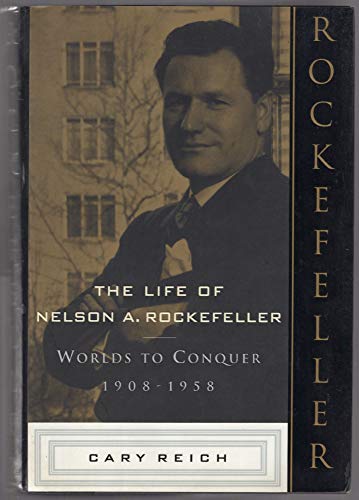
A triumph of the biographer's art, The Life of Nelson A. Rockefeller is the first full-length biography of one of the most powerful, magnetic, fascinating figures on the twentieth-century stage.
Of all the great American dynastic families, few could match the combined wealth, power, and influence of the Rockefellers. And of all the Rockefellers, none was more determined to use these advantages than Nelson A. Rockefeller.
Nelson was never content to live off the fame and fortune due him as a Rockefeller. His imperious grandfather, John D. Rockefeller, and intimidating father, John Jr., set standards and boundaries that Nelson blithely ignored. He pushed for position within the family, and then broke a family taboo by taking his ambition to the forbidden world of politics. A devoted family man, he took many lovers with an almost casual sense of droit du seigneur. He surrounded himself with brilliant, devoted subordinates; he flattered and cajoled more powerful people who would also end up serving his needs.
Handsome, ferociously energetic, charming, and ruthless, Rockefeller had a rapacious appetite for life--and for power--that showed itself in the stunning breadth of his activities and in the daring of his ideas. Nelson's sunny, optimistic demeanor masked a Machiavellian mind. At a young age he wrested control of the Rockefeller Center project from his father's minions, turned the Museum of Modern Art into a world-class institution, used a midlevel bureaucratic position during World War II to run the affairs of an entire continent; through pure ego and drive he bent the United Nations conference to his will and redirected the path of history. Nelson A. Rockefeller's fierce drive to achieve would have a profound effect on a city, a state, a nation, and the world.
Cary Reich's masterful biography, eight years in the making, brings this awesome figure to life. Reich enjoyed unprecedented access to the Rockefeller family archives, scrutinized FBI and FOIA files, and interviewed over three hundred individuals for the book, including many who had never spoken about Rockefeller for the record. This two-volume work (the second to appear in 1997) will surely stand alongside the works of Robert Caro, Doris Kearns Goodwin, and David McCullough.
Cary Reich is the author of Financier: The Biography of AndrÚ Meyer. He is the former executive editor of Institutional Investor and has written numerous portraits of the powerful and the wealthy. He is the recipient of numerous journalism awards, including the Overseas Press Award, the Deadline Club Award, and the John Hancock Award for Excellence in Business and Financial Journalism. He lives in New York City.
"synopsis" may belong to another edition of this title.
From the Inside Flap
the biographer's art, The Life of Nelson A. Rockefeller is the first full-length biography of one of the most powerful, magnetic, fascinating figures on the twentieth-century stage.
Of all the great American dynastic families, few could match the combined wealth, power, and influence of the Rockefellers. And of all the Rockefellers, none was more determined to use these advantages than Nelson A. Rockefeller.
Nelson was never content to live off the fame and fortune due him as a Rockefeller. His imperious grandfather, John D. Rockefeller, and intimidating father, John Jr., set standards and boundaries that Nelson blithely ignored. He pushed for position within the family, and then broke a family taboo by taking his ambition to the forbidden world of politics. A devoted family man, he took many lovers with an almost casual sense of droit du seigneur. He surrounded himself with brilliant, devoted subordinates; he flattered and cajoled more powerful peo
Reviews
"Looking at Nelson," Reich quotes a colleague as saying, "was like looking up close at an elephant. A lot of us saw a piece of the elephant, and some saw more of the elephant than others. But none of us saw the entire elephant." This elephantine first part of a two-volume life will have readers eager for the other half. No hagiographer, Reich (Financier: The Biography of Andre Meyer) sees "rampant ambition" propelling John D. Jr.'s second son, who refused to be merely one of his father's viceroys in the Rockefeller empire. To leverage his patrimony into external power and influence, he employed a personal engine "perpetually in overdrive," his confidence and his energy nourished by near royal status, extramarital sexual success, pep pills and tranquilizers, and unlimited money. Rockefeller's wealth would buy the industrious and talented staff that could develop ambitious schemes and sustain his frenetic pace in marketing them. In his 20s he was already master of the "awesome limestone forest" that was Rockefeller Center, and the Museum of Modern Art was his personal fiefdom. In his 30s and 40s, in and out of public service, he engineered Roosevelt's wartime Good Neighbor policy in Latin America, ran the Point Four postwar economic program for developing nations, devised U.N. Article 51, which would make collective assistance to invaded South Korea legal, helped create a huge Cabinet department for human services. Yet Rockefeller was increasingly frustrated by his ineffectuality in appointive positions among those he considered political pygmies. At 50, at the close of Reich's absorbing biography, Rockefeller runs for political office for the first time, as the Republican gubernatorial candidate for New York, an office he would hold from 1959 to 1973, in a populist makeover that has him dreaming even of the presidency. Artfully constructed, veined with grand themes, based on prodigious research including more than 350 interviews, this is a definitive portrait. Photos not seen by PW.
Copyright 1996 Reed Business Information, Inc.
Public interest in politicians and government figures often fades quickly after their death, and Nelson Rockefeller (he died in 1979) has not proved an exception. Despite his many terms as governor of New York, his tenure as vice president, and his many years in important governmental and philanthropic posts, he is today remembered, if at all, as the personification of liberal Republicanism. Financial journalist and veteran biographer Reich offers here a dense and definitive biography that describes Rockefeller's life until his first election as governor of New York in 1958; a second volume planned for next year will finish the story. The book's intimidating length and the rather pedestrian nature of many of Rockefeller's public tasks during this period of his life belie the many fascinations of this book. Reich captures Rockefeller's expansive personality through the liberal use of anecdote, reminiscence, and correspondence. General readers will be attracted by the accounts of Rockefeller's voracious sexuality and his minglings with the intellectual and political elite of the day. Highly recommended.
-?Fritz Buckallew, Univ. of Central Oklahoma Lib., Edmond
Copyright 1996 Reed Business Information, Inc.
Not content to sit on his inheritance, Nelson Rockefeller was forever on the political make and brashly unapologetic about his ambition. Reich's hefty work briskly covers Rockefeller's career and peccadilloes through his election as New York's governor. From the abundant archival material, Reich skillfully arranges an energetic, self-propelling narrative. Rockefeller's propensity to be the bouncy center of attention was exhibited during his school years and into his social and business circles in the 1930s, when he presided over the Museum of Modern Art and Rockefeller Center. But collecting rent checks and patronizing the arts were too prosaic for him. Reich archly tells how Rockefeller networked his way into the Roosevelt administration, and later, how he adroitly cultivated Republicans as a means of launching his own political career. Reich ends this volume with the multimillionaire's election as Governor of New York in 1958. An astute, sardonic, and darn good biographer, Reich has set up strong expectations for volume 2, to be published next year, which will cover Rockefeller's governorship and his frustrated presidential aspirations during the 1960s and 1970s. Gilbert Taylor
Excerpt. © Reprinted by permission. All rights reserved.
What a great President he would have been! How he would have ennobled us! What an extraordinary combination of strength and humanity, decisiveness and vision!
--Henry Kissinger, "Words of Commemoration," Memorial Service for Nelson Aldrich Rockefeller, February 2, 1979
He irritated the shit out of a lot of people. It was a combination of things: all that wealth, that opportunism, that arrogance, rolled up together.... Sure, there are other arrogant politicians, there are other rich politicians, there are other opportunistic politicians. But where do you get such a gorgeous combination of them as in this one figure?
--William Rusher, conservative commentator and publisher
More than a decade and a half after his death, and two decades after he departed public life, the invocation of Nelson A. Rockefeller's name still conjures up a host of powerful, distinct images.
First, there is the image of his progressive and profligate New York governorship, with Rockefeller as a latter-day Cheops, building such monuments as the State University and the billion-dollar South Mall in the capital, introducing a multitude of far-reaching programs, and bequeathing to the state's taxpayers an awesome mountain of debt.
Then there is the storied "Rocky": garrulous, backslapping, eye-winking, offering a gravely "Hi ya, fella" to one and all and tossing any manner of ethnic treats down his cast-iron gullet. And, in vivid counterpoint to that, there is the imperial Nelson Rockefeller, commanding limitless wealth, presiding over his magnificent Georgian manor house in the very private 3,500-acre family preserve in Westchester--merely one of his five residences--and assembling one of the twentieth century's great private art collections.
And, of course, for many, the image that first comes to mind is the one engendered by his mysterious, much-gossiped-about demise: that of a lusty septuagenarian, meeting his maker while, apparently, in hysteria libidinosa with a lady almost half a century his junior.
In history, Rockefeller has left his mark as the perennial Man Who Would Be President, an object lesson in the limits of what money can buy. No politician of his era, it is commonly agreed, was better equipped, by temperament and background, for the presidency; none had as formidable a machine at hand to realize his dream. But three times he tried, and three times he failed. In the end, the closest he would come to the White House was a brief lame-duck turn at the Vice Presidency.
But probably the most enduring and pervasive view of Rockefeller is steeped in irony, for it is the one cherished by his adversaries, American conservatives, for whom it has been a precious talisman passed on from one generation of the right wing to the next: the Rockefeller of "Rockefeller Republicanism," that reviled and discredited amalgam of tax-and-spend big government liberalism and avid internationalism. It is a totem of seemingly undiminished potency, as witness its use as a conservative rallying cry against the prospective presidential candidacy of General Colin Powell, a reputed Rockefeller Republican. "If he should get the nomination," warned one conservative activist, "it would be as if Ronald Reagan had never lived and Nelson Rockefeller never died." (Another conservative spokesman saw fit to remind his audience that Rockefeller, the general's supposed ideological mentor, was "a conspicuous philanderer.")
This power, the power to fire up the most incendiary political passions at the mere mention of his name, is ample testimony to the grip that Nelson Rockefeller--vintage progressive, unabashed spender, master builder, thwarted presidential contender, "conspicuous philanderer"--continues to hold on the popular imagination. One way or another, he is still with us.
He was born into awesome wealth, a fortune so vast that his very family name was synonymous with stupendous sums. And yet, throughout his life, he exhibited the relentless drive of the self-made man: he was every bit the go-getter, a patrician Sammy Glick. Asked once by an interviewer what he would have done if he hadn't been born into fortune, Rockefeller instantly replied, "I would think of making one." Possessed of boundless reserves of energy, soaring ambition, and an unshakable will, Rockefeller would have achieved great things regardless of his material circumstances. "He was interested in accomplishing," reflects his brother David, "and he spent a lot of time in seeing where he wanted to go, and then developing a strategy to get there. In other words, things did not happen by accident in his life."
"His life was dedicated to moving ahead," says his onetime aide William Alton, who had known Rockefeller since boyhood. "There was always a mission, something to be done. He was always building, building, building."
Those associated with Rockefeller over the years tend to describe him in terms usually reserved for hustlers from the Lower East Side tenements. "He was a fighter, a real scrapper right from the start," remarks commentator Thomas Braden, who first came into Rockefeller's orbit in the late 1940s. "It's hard to believe that a guy with all the natural advantages Nelson had would be remembered as someone who overcame obstacles, but that's how I remember him. That was his strength, the thing I always admired."
Every domain he entered was a new world to conquer, every realm something to be subjugated to his will--starting with his very own family. From his earliest years he strove to dominate the Rockefeller empire. While his siblings were great strivers in their own right--one the world's preeminent commercial banker, another among America's most successful venture capitalists, another a philanthropist of global renown and the prime mover behind Lincoln Center--rarely did any of them dare to challenge his supremacy.
And as it was for the Rockefellers, so it would be, for almost a generation, for the state of New York. "Nothing stands in Rockefeller's way," his political contemporary U.S. Senator Jacob Javits would say. "Nothing. He always gets what he wants."
And so, too, would it be for the coterie of men and women--many of them illustrious figures in their own right--who would serve Nelson Rockefeller. No less a personage than Henry Kissinger--who owed much of his ascension in public life to Rockefeller's sponsorship--would complain that "the problem with Nelson was that he was such a dominant personality, and he tended to draw you into his orbit, and he tended to become all-consuming. So it was very hard to keep your identity with him."
"I think Rockefeller got interested in politics," opines his longtime conservative foe, National Review publisher William Rusher, "because it was one of the few things in the world that resisted his approach."
Surely precious little else did. In Nelson Rockefeller's world, no gratification was ever deferred for long, no whim ever went unsatisfied--be it in art, in automobiles, in real estate, or in women. Expressing admiration for a rare replication in tapestry of one of Picasso's masterworks, he thought it would be grand if the artist's other masterpieces were similarly rendered for him in cloth--with the artist himself supervising, of course. Picasso obliged. Coveting a yellow Phantom Five Rolls-Royce, and finding that the company had made only one and it wasn't for sale, he bought a gray Phantom instead and contrived to paint it yellow. When the manufacturer refused to go along, Rockefeller had his agents hire a former Royal Air Force intelligence operative to sneak into the Rolls-Royce garage and scratch a paint chip from the yellow vehicle, so that the exact shade could be analyzed and reproduced.
Flying one night over Mount Rushmore in his private plane, Rockefeller asked his traveling companion, "Have you ever seen Mount Rushmore?" When the man said no, Rockefeller said, "Just a minute," and picked up a phone on the plane. Suddenly, beneath them, the presidential likenesses were bathed in spotlights.
Then there was the time Rockefeller played host to the national conference of governors and decided to fÛte his guests at the Metropolitan Museum of Art--in the days when parties at the august institution were strictly forbidden. A Rockefeller assistant met with museum director Thomas Hoving, and, the aide recalls, "Hoving kept telling us how impossible it was, you can't possibly put chafing dishes there, and all that. Finally, I told Hoving that as far as Nelson was concerned, nothing was impossible. And he just sighed and said, 'Well, if that's what Nelson wants...'"
Having his way in all things, he seemed like a veritable King of New York. Never did he approach his private plane on the tarmac when it wasn't poised for takeoff, propeller churning. Never on a rainy day did he have to ask for his topcoat; no sooner did he raise his arms than the coat would be slipped over them. "Rockefeller was a royal presence," admits one of his political foes. "The whole aura was overwhelming." And not just for New York pols. Once, the Earl of Mountbatten, mentor of Prince Philip and Prince Charles, became embroiled in a vigorous dispute with Rockefeller at his Pocantico Hills estate. "But, Your Majesty," Mountbatten remonstrated, before he caught himself.
The grandeur of Rockefeller's surroundings--the Manhattan triplex whose fireplaces were decorated by Matisse and LÚger, the Pocantico Hills estate with its Calders, Moores, and David Smiths filling the porches and manicured lawns, the Seal Harbor, Maine, residence hovering over the granite outcroppings like a great beached schooner--added further to the regal aura. Even other Rockefellers stood in awe. On one occasion brother David was touring the private underground gallery architect Philip Johnson designed...
"About this title" may belong to another edition of this title.
Search results for The Life of Nelson A. Rockefeller

Stock Image
The Life of Nelson A. Rockefeller
Seller: Gulf Coast Books, Cypress, TX, U.S.A.
Seller rating 5 out of 5 stars

hardcover. Condition: Fair. Seller Inventory # 038524696X-4-33088177
Stock Image
The Life of Nelson A. Rockefeller
Seller: Evergreen Goodwill, Seattle, WA, U.S.A.
Seller rating 5 out of 5 stars
hardcover. Condition: Good. Seller Inventory # mon0000635372
Stock Image
The Life of Nelson A. Rockefeller
Seller: SustainableBooks.com, Amherst, NY, U.S.A.
Seller rating 5 out of 5 stars
Condition: Poor. Book is Poor condition. Good for reading, not pretty to look at! The pages and cover are soiled and/or yellowed, worn throughout. Seller Inventory # 038524696X-2-6
Stock Image
Nelson Rockefeller
Seller: World of Books (was SecondSale), Montgomery, IL, U.S.A.
Seller rating 5 out of 5 stars
Condition: Acceptable. Item in acceptable condition! Textbooks may not include supplemental items i.e. CDs, access codes etc. Seller Inventory # 00101106756
Stock Image
The Life of Nelson A. Rockefeller
Seller: HPB-Diamond, Dallas, TX, U.S.A.
Seller rating 5 out of 5 stars
hardcover. Condition: Very Good. Connecting readers with great books since 1972! Used books may not include companion materials, and may have some shelf wear or limited writing. We ship orders daily and Customer Service is our top priority! Seller Inventory # S_462824552
Stock Image
The Life of Nelson A. Rockefeller
Published by
Doubleday (edition First Edition), 1996
ISBN 10: 038524696X
ISBN 13: 9780385246965
Used
Hardcover
First Edition
Seller: BooksRun, Philadelphia, PA, U.S.A.
Seller rating 5 out of 5 stars
Hardcover. Condition: Fair. First Edition. The item might be beaten up but readable. May contain markings or highlighting, as well as stains, bent corners, or any other major defect, but the text is not obscured in any way. Seller Inventory # 038524696X-7-1
Seller Image
The Life of Nelson A. Rockefeller
Seller: -OnTimeBooks-, Phoenix, AZ, U.S.A.
Seller rating 5 out of 5 stars
Condition: good. A copy that has been read, remains in good condition. All pages are intact, and the cover is intact. The spine and cover show signs of wear. Pages can include notes and highlighting and show signs of wear, and the copy can include "From the library of" labels or previous owner inscriptions. 100% GUARANTEE! Shipped with delivery confirmation, if you're not satisfied with purchase please return item! Ships via media mail. Seller Inventory # OTV.038524696X.G
Stock Image
The Life of Nelson A. Rockefeller
Seller: ThriftBooks-Dallas, Dallas, TX, U.S.A.
Seller rating 5 out of 5 stars
Hardcover. Condition: Good. No Jacket. Former library book; Pages can have notes/highlighting. Spine may show signs of wear. ~ ThriftBooks: Read More, Spend Less. Seller Inventory # G038524696XI3N10
Stock Image
The Life of Nelson A. Rockefeller
Seller: ThriftBooks-Atlanta, AUSTELL, GA, U.S.A.
Seller rating 5 out of 5 stars
Hardcover. Condition: As New. No Jacket. Pages are clean and are not marred by notes or folds of any kind. ~ ThriftBooks: Read More, Spend Less. Seller Inventory # G038524696XI2N00
Stock Image
The Life of Nelson A. Rockefeller
Seller: Half Price Books Inc., Dallas, TX, U.S.A.
Seller rating 5 out of 5 stars
hardcover. Condition: Very Good. Connecting readers with great books since 1972! Used books may not include companion materials, and may have some shelf wear or limited writing. We ship orders daily and Customer Service is our top priority! Seller Inventory # S_467580818