
Items related to Cat's Eye
Synopsis
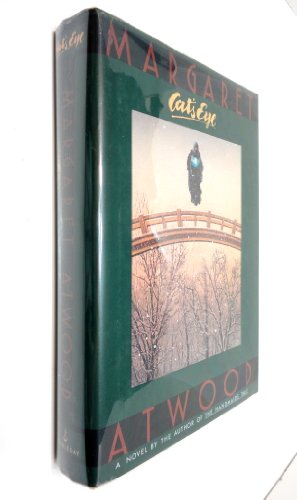
Cat's Eye is the story of Elaine Risley, a controversial painter who returns to Toronto, the city of her youth, for a retrospective of her art. Engulfed by vivid images of the past, she reminisces about a trio of girls who initiated her into the fierce politics of childhood and its secret world of friendship, longing, and betrayal. Elaine must come to terms with her own identity as a daughter, a lover, an artist, and a woman--but above all she must seek release from her haunting memories. Disturbing, hilarious, and compassionate, Cat's Eye is a breathtaking novel of a woman grappling with the tangled knot of her life.
"synopsis" may belong to another edition of this title.
About the Author
MARGARET ATWOOD is the author of more than twenty-five books, including fiction, poetry, and essays. Her most recent works include the bestselling novels Alias Grace and The Robber Bride and the collections Wilderness Tips and Good Bones and Simple Murders. She lives in Toronto
From the Inside Flap
Eye is the story of Elaine Risley, a controversial painter who returns to Toronto, the city of her youth, for a retrospective of her art. Engulfed by vivid images of the past, she reminisces about a trio of girls who initiated her into the fierce politics of childhood and its secret world of friendship, longing, and betrayal. Elaine must come to terms with her own identity as a daughter, a lover, an artist, and a woman--but above all she must seek release from her haunting memories. Disturbing, hilarious, and compassionate, Cat's Eye is a breathtaking novel of a woman grappling with the tangled knot of her life.
Reviews
YA-- When Elaine Risley returns to her hometown, Toronto, for a retrospective show of her paintings, she finds more than critical acclaim. Local streets, long-gone landmarks, and elements in the paintings themselves trigger memories of her transient childhood traveling across Canada with her entomologist father; of adolescence marred by the cruel teasing of three friends; and of love affairs with her first art teacher and mentor, and with Jon, her first husband. In addition, Elaine is haunted by thoughts of her chief tormentor/best friend, Cordelia, whom she last saw years ago in a mental institution. Atwood's focus on the inner landscape of Elaine's youth and early adult years will appeal to older teenagers.
- Alice Conlon, University of Houston
Copyright 1989 Reed Business Information, Inc.
Herself the daughter of a Canadian forest entomologist, Atwood writes in an autobiographical vein about Elaine Risley, a middle-aged Canadian painter (and daughter of a forest entomologist) who is thrust into an extended reconsideration of her past while attending a retrospective show of her work in Toronto, a city she had fled years earlier in order to leave behind painful memories. Most pointedly, Risley reflects on the strangeness of her long relations with Cordelia, a childhood friend whose cruelties, dealt lavishly to Risley, helped hone her awareness of our inveterate appetite for destruction even while we love, and are understood as characteristically femininea betrayal of other women that masks a ferocious betrayal of oneself. Atwood's portrayal of the friendship gives the novel its fraught and mysterious center, but her critical assessment of Cordelia and the "whole world of girls and their doings" also takes the measure of a coercive, conformist society (not quite as extreme as in the futuristic The Handmaid's Tale ). Emerging "the stronger" for her latecoming understanding of herself, Risley in the final pages rises above the ties that bound her, transcendently alive to the possibilities of "light, shining out in the midst of nothing." BOMC main selection.
Copyright 1989 Reed Business Information, Inc.
When artist Elaine Risley returns to her native Toronto for a retrospective of her work, she is nearly overcome by the pungent memories of childhood. These memories are not so pleasant, for as Atwood observes with deadly accuracy: "Little girls are cute and small only to adults. To one another they are not cute. They are life-sized." Having spent her early childhood on the road with her entomologist father--and only her brother as playmate--she is initially stymied by these life-sized terrors; she is more at ease with boys than with the calculated cruelties of girls. Indeed, many readers will identify painfully with Atwood's deft descriptions of the betrayals, exclusions, and power plays of Elaine's friends. The consequences for Elaine--suddenly evident even in her art--must now be annulled through vivid recall. Childhood's particular anguish has been told before, but Atwood is exceptional in her steady, dry-eyed revelation of the truth.
- Barbara Hoffert, "Library Journal"
Copyright 1989 Reed Business Information, Inc.
"About this title" may belong to another edition of this title.
Search results for Cat's Eye

Stock Image
Cat's Eye
Seller: World of Books (was SecondSale), Montgomery, IL, U.S.A.
Seller rating 5 out of 5 stars

Hardback. Condition: Good. The classic far-future novel about the telepathic bond of friendship between human and animal from the grande dame of science fiction and fantasy. Exiled after his home planet was turned into a military outpost following an interstellar war, Troy Horan is relocated to the planet of Korwar. Under the watchful eye of the police state, he lives in the slums in a restricted area for sub-citizens. He works as a day laborer in an interplanetary pet shop and has no idea why the Terran animals have been imported to Korwar--or why he has the ability to silently communicate with them, especially the kinkajou. But a murder forces him to flee with his animal friends into the Wild, where mysterious, sealed ruins conceal Korwar's most fiercely guarded secret. With no one he can trust and an entire government under siege, Troy leads his extraordinary band of warriors in a final bid for freedom none of them may survive. This action-packed, classic outsider story will be enjoyed by readers of all ages. Seller Inventory # 00103088472
Stock Image
Cat's Eye
Seller: World of Books (was SecondSale), Montgomery, IL, U.S.A.
Seller rating 5 out of 5 stars
Hardback. Condition: Fair. The classic far-future novel about the telepathic bond of friendship between human and animal from the grande dame of science fiction and fantasy. Exiled after his home planet was turned into a military outpost following an interstellar war, Troy Horan is relocated to the planet of Korwar. Under the watchful eye of the police state, he lives in the slums in a restricted area for sub-citizens. He works as a day laborer in an interplanetary pet shop and has no idea why the Terran animals have been imported to Korwar--or why he has the ability to silently communicate with them, especially the kinkajou. But a murder forces him to flee with his animal friends into the Wild, where mysterious, sealed ruins conceal Korwar's most fiercely guarded secret. With no one he can trust and an entire government under siege, Troy leads his extraordinary band of warriors in a final bid for freedom none of them may survive. This action-packed, classic outsider story will be enjoyed by readers of all ages. Seller Inventory # 00081326057
Seller Image
Cat's Eye
Seller: Zoom Books East, Glendale Heights, IL, U.S.A.
Seller rating 5 out of 5 stars
Condition: very_good. Book is in very good condition and may include minimal underlining highlighting. The book can also include "From the library of" labels. May not contain miscellaneous items toys, dvds, etc. . We offer 100% money back guarantee and 24 7 customer service. Seller Inventory # ZEV.0385260075.VG
Seller Image
Cat's Eye
Seller: Zoom Books Company, Lynden, WA, U.S.A.
Seller rating 5 out of 5 stars
Condition: very_good. Book is in very good condition and may include minimal underlining highlighting. The book can also include "From the library of" labels. May not contain miscellaneous items toys, dvds, etc. . We offer 100% money back guarantee and 24 7 customer service. Seller Inventory # ZBV.0385260075.VG
Stock Image
Cat's Eye
Seller: Orion Tech, Kingwood, TX, U.S.A.
Seller rating 5 out of 5 stars
Hardcover. Condition: Fair. Seller Inventory # 0385260075-4-18731449
Seller Image
Cat's Eye
Seller: Dream Books Co., Denver, CO, U.S.A.
Seller rating 5 out of 5 stars
Condition: good. Gently used with minimal wear on the corners and cover. A few pages may contain light highlighting or writing, but the text remains fully legible. Dust jacket may be missing, and supplemental materials like CDs or codes may not be included. May be ex-library with library markings. Ships promptly! Seller Inventory # DBV.0385260075.G
Seller Image
Cat's Eye
Seller: Used Book Company, Egg Harbor Township, NJ, U.S.A.
Seller rating 5 out of 5 stars
Condition: Good. Former library copy. Shows moderate signs of wear and previous use. Can include notes/highlighting. A portion of your purchase benefits nonprofits! - Note: Edition & format may differ from what is shown in stock photo & item details. May not include supplementary material (toys, access code, dvds, etc). Seller Inventory # 584ZST0002T0_ns
Stock Image
Cat's Eye
Seller: New Legacy Books, Annandale, NJ, U.S.A.
Seller rating 5 out of 5 stars
hardcover. Condition: Good. The dust jacket is in rough shape, shows significant wear. Fast shipping and order satisfaction guaranteed. A portion of your purchase benefits Non-Profit Organizations, First Aid and Fire Stations! Seller Inventory # mon0000055579
Seller Image
Cat's Eye
Seller: Greenworld Books, Arlington, TX, U.S.A.
Seller rating 5 out of 5 stars
Condition: good. Fast Free Shipping â" Good condition. It may show normal signs of use, such as light writing, highlighting, or library markings, but all pages are intact and the book is fully readable. A solid, complete copy that's ready to enjoy. Seller Inventory # GWV.0385260075.G
Stock Image
Cat's Eye
Seller: More Than Words, Waltham, MA, U.S.A.
Seller rating 5 out of 5 stars
Condition: Good. A sound copy with only light wear. Overall a solid copy at a great price! Seller Inventory # BOS-Q-14c-01314