
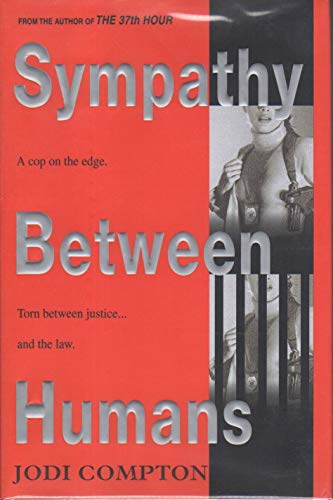
Synopsis
Jodi Compton’s debut, The 37th Hour, was hailed as “compelling” (San Francisco Chronicle), “intelligent” (New York Times Book Review), and “the debut of a world-class mystery writer” (Denver Post). Now Compton delivers a new novel featuring Detective Sarah Pribek, one of the most singular and complex characters in suspense fiction today.
On the streets of Minneapolis, Sarah has worked everything from vice to missing persons. But six months after the death of a small-town criminal in rural Minnesota, Sarah is still protecting the identity of a killer. And now a zealous D.A.’s investigator has come to town, determined to make an arrest. With her ex-partner half a world away and her husband in prison, only Sarah remains to face the consequences of last fall. Surrounded by colleagues who know her to be the suspect in a murder, Sarah keeps her demons at bay by involving herself in the troubles of strangers. Seventeen-year-old Aidan Hennessy was banished from his family by his father. Now Aidan’s twin sister is desperately searching for the brother she hasn’t seen in years. Although the case is out of Sarah’s jurisdiction, she sees a reflection of herself in the troubled, damaged family, and agrees to investigate.
As she probes into their tangled history, Sarah begins to realize that the mystery of the Hennessys runs deeper than it appears. Then Sarah’s lieutenant gives her a simpler assignment: Track down a doctor rumored to be practicing medicine without a license in a housing project. But in Cicero Ruiz, Sarah finds a tough, wounded survivor whose moral code challenges her own ideas about justice…and whose hard-won life would be destroyed by an arrest.
Now juggling two very different cases, both requiring a delicate balancing act between professional honor and personal feelings, Sarah soon has even more at stake. Caught up in a cat-and-mouse game with the investigator who wants to end her career, crossing one ethical line after another, Sarah increasingly fears that a misstep on her part will end not only in her disgrace, but in the death of one of those she has promised herself to protect.
With its fascinating heroine and its brilliantly interwoven mysteries, Sympathy Between Humans is storytelling at its finest from one of the most original and daring writers in suspense fiction today.
"synopsis" may belong to another edition of this title.
About the Author
Jodi Compton lives in California. She is the author of the acclaimed novel The 37th Hour, which also features Detective Sarah Pribek and is available in paperback from Dell.
Reviews
Compton’s second police procedural reintroduces the emotionally unstable Sarah Pribek and advances the storyline from The 37th Hour. Once again, Compton delivers a compelling plot and fully-realized characters with convincing problems of the mind and heart—as one character notes, "the mathematics of the human psyche." Disarmingly complex, the novel asks tough questions about law and morality; Sarah, for better or for worse, takes matters into her own hands when the law does not deliver justice. Only the Detroit Free Press cited an unbelievable missing child case and challenged the idea that permeates the novel—that breaking the law is bad only if the intentions are, too. Loose ends may bother some readers, but there will be more to come from this intelligent author and her protagonist.
Copyright © 2004 Phillips & Nelson Media, Inc.
As Compton's first-rate sequel to her impressive debut (The 37th Hour) begins, Minneapolis detective Sarah Pribek of the Hennepin County Sheriff's Department struggles to forget the incident that left her ex-partner in exile in Europe and her husband in prison. Unsentimental, often unyielding, Pribek works her cases: playing decoy for vice, saving the life of a drowning immigrant boy, tracking down a doctor practicing without a license and making inquiries about a teenage girl's runaway twin brother, all while an ambitious district attorney, among others, believes that Pribek, not her husband, killed rapist-murderer Royce Stewart. Like the first Pribek novel, this is more than a simple police procedural, despite its "just the facts" narrative. Parallels between the life of the missing boy and the detective's own adolescence prompt painful memories, while Pribek's evolving relationship with the unlicensed doctor, a wheelchair-bound tenement hero far more attractive and complicated than her informant suggested, prompts her to re-examine the limitations of the law. This multilayered, touching tale of crimes and misdemeanors prompts reader and detective alike to calculate "the mathematics of the human psyche." If it only occasionally achieves the emotional impact of its predecessor, it confirms without a doubt that Compton is a gifted creator of flawed, believable characters—foremost among them her hard-nosed, warmhearted detective.
Copyright © Reed Business Information, a division of Reed Elsevier Inc. All rights reserved.
Once again, lone-wolf Hennepin County sheriff's detective Sarah Pribek feels her way through a world in which everyone has a story (and almost everyone has an unusual name). There is teenager Marlinchen Hennessy, who seeks Sarah's help in finding her absent brother, Aidan, and winds up under the detective's reluctant guardianship, or good-hearted paraplegic Cicero Ruiz, whom Sarah investigates for practicing medicine without a license in the projects and who becomes her very own personal physician. Sarah herself is dogged by suspicions and criminal implications from her first case (The 37th Hour, 2003). In a narrative with much more backstory than story, the compassionate Pribek gradually intuits her way through layers of memory, deception, and personal revelation until everything falls into place in a cluster of last-minute emergencies. After the initial hook, thrill-seeking action readers may be frustrated by the leisurely pace and haphazard plotting, but fans of the sinuous, character-driven puzzlers of Minette Walters, Ruth Rendell, or Thomas H. Cook will find Compton a promising new voice in psychological suspense. David Wright
Copyright © American Library Association. All rights reserved
Excerpt. © Reprinted by permission. All rights reserved.
chapter 1
It was late afternoon on Spain's Atlantic coast, the sun turning golden in the lower layers of atmosphere over the water. At the ocean's edge ran a seawall, not a barrier of rocks but a solid stone wall that broke the gentle surf. A section had been cut away to let water feed into a bathing pool, a dark-watered rectangle about half the size of a swimming pool, submerged stone benches cut all around the sides.
It was like something an ancient Roman city builder might have created, both simple and decadent. Egalitarian, as well. There were no fences, and locals seemed as welcome to come here as the well-heeled vacationers. Sunbathers came in to cool off, and children swam, darting across and back from one bench to another, like birds changing roosts in an aviary.
Genevieve Brown had brought me here, Gen who'd once been my partner in the Hennepin County Sheriff's Department. On the job she'd been measured and cautious, and I'd expected the same from her here. But she'd taken the lead, stepping down onto the bench and immediately from there into the center of the pool, tucking her knees to let the water cradle her cupped body as her dark, shoulder-length hair made a cloud around her head.
Now Genevieve sat next to me on one of the benches, her face tipped up into the sun. Her skin seemed already to be turning a warm, creamy brown. Genevieve was of Southern European extraction, and while she'd never been a sun worshipper, her skin would tan in the weakest early-spring rays.
"This is nice," I said, raising my face into the late-afternoon sunlight. Already the salt water was drying on my face, tightening the skin. I wondered if my face would have a faint salt glaze, a shimmer under light, if I decided not to rinse in fresh water afterward.
"You're overdue for some good times," Genevieve said. "Last year was . . . difficult."
It was an understatement. Last spring Genevieve's daughter had been murdered, and last fall I lost my husband to prison. At the end of that extraordinarily bad year, Genevieve had quit the Sheriff's Department, reconciled with her estranged husband, Vincent, and gone to live in his adopted home of Paris.
We'd talked about me coming to visit, of course, almost from her first transatlantic call in December. Five months had passed, though, before I did. Five months of snow and subzero temperatures, of heating my car's engine with an extension cord and myself with bad squad-room coffee, of the double shifts and extra assignments I'd volunteered for. Then I'd taken Gen up on this invitation, to meet her down the coast.
"Have you heard anything about the Royce Stewart investigation?" Gen asked, her voice casual. It was the first she'd mentioned it.
"I heard a little about it early on, in December," I said, "but then nothing happened. I think it's stalled."
"That's good," she said. "I'm happy for you."
I hadn't told Genevieve about the investigation into Stewart's death, much less that I'd been suspected of the murder. That was curious. If I hadn't told her, who had? She'd said she wasn't in touch with anyone else from her old life in Minnesota.
"Who told you I was under suspicion?" I asked.
"Nobody," Gen said. "It just stands to reason."
A small drop of seawater fell from my wet hair onto my shoulder. "Why does it stand to reason?" I asked.
"Because you killed him," she said.
I looked quickly at the trio of women sitting at the other end of the bathing pool, but they gave no sign they'd heard.
Quietly, I said, "Is that supposed to be some kind of a joke? I didn't kill Royce Stewart. You did."
"No, Sarah," Genevieve said softly. "It was you, remember? I would never do something like that." Her eyes darkened with pity and concern.
"This isn't funny," I said, my voice low and stiff. But I knew this wasn't some mean-spirited joke on her part. Her tone communicated nothing but compassion. It said that her heart was breaking for her friend and partner.
"I'm sorry," she said, "but someday, everyone's going to know what you did."
A siren went off beyond the horizon, piercing and almost electronic in its pitch, relentless in its one-note anxiety.
"What's that noise?" Genevieve said.
I opened one eye to see the glowing digits of my clock radio, the source of the electronic wail, then raised my hand and squelched the alarm. It was late afternoon in Minneapolis; I'd been sleeping before my shift. Through the windows of my bedroom, the elms of Northeast Minneapolis cast greenish shadows on the warped wooden floor; they were in the early leaf of spring. It was early May; that much was true.
Also true: Genevieve was in Europe, and my husband, Shiloh, a cop once recruited by the FBI, was in prison. All this is because of what happened last year in Blue Earth. You might have read about it, if you follow the news, but you didn't read all of it.
At the root of everything that happened in Blue Earth was a man named Royce Stewart, who'd raped and murdered Genevieve's daughter, Kamareia, and gotten off on a technicality. Months later, Shiloh had gone to Blue Earth, intending to run down Stewart in a stolen truck. But Shiloh had found himself incapable of murder. It was Genevieve who, in a chance encounter, had stabbed Stewart in the neck and burned down the tiny shack he'd lived in.
It was Shiloh who'd gone to prison, though, for stealing the truck, while Genevieve, her crime unwitnessed by anyone but me, had gone to Europe to start a new life. I didn't blame her for that. My husband was already behind bars; I didn't want my old friend there, too.
It wasn't until Genevieve was virtually on the plane for France that I'd been tipped off that I was a suspect in Stewart's death. Disturbing as it was, it made sense. I was the one who'd been in Blue Earth, looking for my husband. It was me who had been seen having unfriendly words with Stewart in a bar, just before his death.
Two Faribault County detectives came to the Cities to interview me, recording my carefully rehearsed, evasive answers. They didn't appear convinced by anything I'd said.
I didn't tell Genevieve what was happening, because I feared she'd fly home to bail me out by confessing. Nor did I seek Shiloh's counsel, because at the prison his mail was almost certainly being monitored, and it was impossible to explain the situation without referring to Genevieve's guilt.
But a strange thing happened, or rather, didn't happen. One month passed, then two, but I was never arrested, nor even questioned again. The investigation seemed to have stalled.
Then the Star Tribune ran its investigative piece.
the suspect's death, the headline had read, with an extended sub-headline below: Royce Stewart was suspected of killing a Hennepin County detective's daughter. Seven months later, he died in a suspicious late-night fire. A former MPD cop has confessed to planning his murder, but not to carrying it out. While the case is still technically open, the answers may have gone up in flames.
It was the Star Tribune piece that had mentioned what all the other stories hadn't:
In an unexplained sidelight, several documents note that Shiloh's wife, Hennepin County Detective Sarah Pribek, was in Blue Earth the night Stewart died. Faribault County officials have refused to answer questions about whether Pribek is suspected of involvement in the death and the house fire.
Just two sentences, but they acknowledged at last the rumor that had been circulating in Minneapolis's law-enforcement community for months. The Monday morning after the article ran, there was a very awkward silence when I arrived at work.
What bothered me most was this, though: after the Strib story ran, I saw something in the eyes of the young male rookies when they looked at me. I saw respect. They believed I'd killed Royce Stewart, and they thought better of me for it.
It would have been an easier burden to bear if it had been shared by my ex-partner and my husband. I didn't blame them for not being here. Genevieve had been wise to get away, safely out from under the growing cloud of suspicion and speculation. And Shiloh, of course, had been imprisoned; he was not gone by choice. But I felt their absence every day. They were more than my immediate family. They were my history here in Minneapolis. Shiloh and Genevieve had known each other before I'd met either of them. That was why, even when the three of us weren't together on a daily or even a weekly basis, there had been a web of interconnectedness between us that gave me a sense of stability. Without them, I had lost something deeper than daily companionship, something I felt the lack of in conversations with co-workers that were polite and pleasant and nothing more than that.
As two months turned into three, four, and five, still I wasn't charged with anything, and I realized that the investigation was stalled, perhaps forever. But I understood something else: if I would never be outright accused of Stewart's murder, neither would I ever be exonerated. At work I sensed a silent verdict: probably guilty by reason of persistent rumor. My lieutenant did not assign me another partner. The major-crimes and missing-persons work that Gen and I had done dried up, replaced with interim and odd assignments. Like the one I had tonight.
"Excuse me, have you seen this boy?"
A middle-aged woman was showing a photograph around on the avenue where I was working. She was flagging down passersby, trying to find someone who'd seen a runaway teenager.
Out of professional interest, I moved to intercept the woman. She registered me coming and turned to make eye contact. Then her face quickly shut down and she turned away. She didn't see a kind, interested stranger, much less a...
"About this title" may belong to another edition of this title.
Other Popular Editions of the Same Title

Search results for Sympathy Between Humans

Stock Image
Sympathy Between Humans
Seller: World of Books (was SecondSale), Montgomery, IL, U.S.A.
Seller rating 5 out of 5 stars

Condition: Very Good. Item in very good condition! Textbooks may not include supplemental items i.e. CDs, access codes etc. Seller Inventory # 00087431062
Stock Image
Sympathy Between Humans
Seller: World of Books (was SecondSale), Montgomery, IL, U.S.A.
Seller rating 5 out of 5 stars
Condition: Good. Item in good condition. Textbooks may not include supplemental items i.e. CDs, access codes etc. Seller Inventory # 00085002845
Stock Image
Sympathy Between Humans
Seller: More Than Words, Waltham, MA, U.S.A.
Seller rating 5 out of 5 stars
Condition: Very Good. A bright, square, and overall a nice copy. Seller Inventory # BOS-Q-14g-01408
Stock Image
Sympathy Between Humans
Published by
Delacorte Press (edition ), 2005
ISBN 10: 0385337140
ISBN 13: 9780385337144
Used
Hardcover
Seller: BooksRun, Philadelphia, PA, U.S.A.
Seller rating 5 out of 5 stars
Hardcover. Condition: Fair. The item might be beaten up but readable. May contain markings or highlighting, as well as stains, bent corners, or any other major defect, but the text is not obscured in any way. Seller Inventory # 0385337140-7-1
Stock Image
Sympathy Between Humans
Published by
Random House Publishing Group, 2005
ISBN 10: 0385337140
ISBN 13: 9780385337144
Used
Hardcover
Seller: Better World Books, Mishawaka, IN, U.S.A.
Seller rating 5 out of 5 stars
Condition: Good. Pages intact with minimal writing/highlighting. The binding may be loose and creased. Dust jackets/supplements are not included. Stock photo provided. Product includes identifying sticker. Better World Books: Buy Books. Do Good. Seller Inventory # 38979244-75
Stock Image
Sympathy Between Humans
Published by
Random House Publishing Group, 2005
ISBN 10: 0385337140
ISBN 13: 9780385337144
Used
Hardcover
Seller: Better World Books, Mishawaka, IN, U.S.A.
Seller rating 5 out of 5 stars
Condition: Very Good. Pages intact with possible writing/highlighting. Binding strong with minor wear. Dust jackets/supplements may not be included. Stock photo provided. Product includes identifying sticker. Better World Books: Buy Books. Do Good. Seller Inventory # 38451700-6
Stock Image
Sympathy Between Humans
Seller: Wonder Book, Frederick, MD, U.S.A.
Seller rating 5 out of 5 stars
Condition: Very Good. Very Good condition. Very Good dust jacket. A copy that may have a few cosmetic defects. May also contain light spine creasing or a few markings such as an owner's name, short gifter's inscription or light stamp. Seller Inventory # U00B-05560
Stock Image
Sympathy Between Humans
Seller: Wonder Book, Frederick, MD, U.S.A.
Seller rating 5 out of 5 stars
Condition: As New. Like New condition. Like New dust jacket. A near perfect copy that may have very minor cosmetic defects. Seller Inventory # N03O-00473
Stock Image
Sympathy Between Humans
Seller: Wonder Book, Frederick, MD, U.S.A.
Seller rating 5 out of 5 stars
Condition: Good. Good condition. Very Good dust jacket. A copy that has been read but remains intact. May contain markings such as bookplates, stamps, limited notes and highlighting, or a few light stains. Seller Inventory # E21A-11385
Stock Image
Sympathy Between Humans
Seller: ThriftBooks-Dallas, Dallas, TX, U.S.A.
Seller rating 5 out of 5 stars
Hardcover. Condition: Very Good. No Jacket. May have limited writing in cover pages. Pages are unmarked. ~ ThriftBooks: Read More, Spend Less. Seller Inventory # G0385337140I4N00