
Synopsis
When Holly Winter accepts her friend's challenge to write about something other than dogs, her presumed subject is the story of Hannah Duston, an early settler of Massachusetts who was captured by Native Americans, escaped, and
lived to tell the tale.
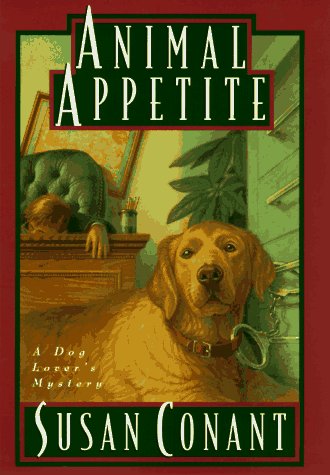
Soon enough, however, Holly is diverted by the much more contemporary death of one Jack Winter Andrews (no relation, as it turns out), who was purportedly poisoned in the office of his small publishing company eighteen years before--while his pet golden retriever, chained to his desk, looked on. Whether drawn by the coincidence of Andrews's middle name, or the siren call of a dog's involvement (however peripheral), Holly is compelled to find out more about the publisher's demise. Was it suicide, as the police had determined? Or murder, as his widow--and many others--insist?
In the end, Holly is unable to unravel all the threads of Hannah Duston's life, but she does manage to solve the mystery of Jack Andrews's death. Though not before the murderer succeeds in killing again, and almost sends Holly, along with her two beloved Alaskan malamutes, Rowdy and Kimi, to the same horrible fate.
And, of course, interwoven with Holly's sleuthing are the delightful tidbits of canine lore, purebred dog-fancy gossip, and training tips that Susan Conant's many fans have come to expect and love. In fact, as Holly discovers, the late Jack Andrews's second, secret life centered around--what else--showing dogs!
"synopsis" may belong to another edition of this title.
From the Inside Flap
inter accepts her friend's challenge to write about something other than dogs, her presumed subject is the story of Hannah Duston, an early settler of Massachusetts who was captured by Native Americans, escaped, and<br>lived to tell the tale.<br><br>Soon enough, however, Holly is diverted by the much more contemporary death of one Jack Winter Andrews (no relation, as it turns out), who was purportedly poisoned in the office of his small publishing company eighteen years before--while his pet golden retriever, chained to his desk, looked on. Whether drawn by the coincidence of Andrews's middle name, or the siren call of a dog's involvement (however peripheral), Holly is compelled to find out more about the publisher's demise. Was it suicide, as the police had determined? Or murder, as his widow--and many others--insist?<br><br>In the end, Holly is unable to unravel all the threads of Hannah Duston's life, but she does manage to solve the mystery of Jack Andrews's death. &
Reviews
YA. To win a bet with a friend that she can write about something other than dogs, Holly Winter begins in-depth research into the life of Hannah Dunston, a local 17th-century heroine who turns out to have been a murderer. Clues into Hannah's past lead to the murder of Jack Winter Andrews 18 years ago and the mysterious circumstances of finding his golden retriever tied to his desk at the crime scene. Holly diligently searches through libraries and other people's cluttered basements to discover the identity of Jack's killer, the location of his illegitimate son, and Holly's own tie to Hannah Dunston. Conant adeptly weaves Andrews's murder together with the legend of Hannah Dunston, resulting in an intriguing mesh of converging facts. The author keeps readers entertained between major breakthroughs in the story by relating all sorts of pointers about dogs in general, and more specifically Holly's own malamutes, who play a role in solving the crime. Holly comes across as self-assured, independent, and knowledgeable, and all of the other characters are precisely drawn through subtle details and expertly manipulated facts. During the last chapters, the suspense and tension build rapidly, although the twist at the end is somewhat convenient. Readers who enjoy the dogs in Virginia Lanier's series will also enjoy Conant's mysteries.?Pam Johnson, Fairfax County Public Library, VA
Copyright 1997 Reed Business Information, Inc.
Conant, who has delighted dog-lovers in the first nine volumes of this specialty series perhaps to the point of alienating everyone else, displays in entry ten an invigorating diversification of interest. Dog-columnist Holly Winter is dared by a therapist friend to write something about--quelle horreur!- people. Her research takes her all around Harvard Yard as she looks into the history of Massachusetts settler Hannah Duston, a tribal captive who proved handier with a hatchet than Lizzie Borden. Simultaneously, Holly explores the ten-year-old murder of a local publisher--benign Jack Winter Andrews of Damned Yankee Press--and observes her two projects becoming as entangled as malamutes Rowdy and Kimi during a food fight. Stud Rites (1996) was set claustrophobically within a dog show. This time, Conant gives us a cool, merry, and informative look at academic Cambridge and a scene of sexual misunderstanding that goes from low comedy to something like tragedy. Conant still tends to overexplain jokes and her detective is still irritatingly full of pet-grooming advice. But there are human beings here and some very welcome human drama as our author slips her leash. -- Copyright ©1997, Kirkus Associates, LP. All rights reserved.
The 18-year-old murder of a book publisher interested in showing dogs sidetracks Holly Winter from her research into the life of a New England woman abducted by Indians. She finally solves the case but nearly gets killed in the process. For all those dog-loving readers.
Copyright 1997 Reed Business Information, Inc.
Excerpt. © Reprinted by permission. All rights reserved.
I first encountered Hannah Duston on a bleak November Sunday afternoon when my car died in the dead center of Haverhill, Massachusetts. A handsome woman of monumental build, Hannah towered above me. She wore a long, flowing dress with sleeves to the wrists. Her hair fell in waves over broad shoulders and down a muscular back. With her right hand, she maintained what looked like a familiar grasp on a hatchet. Her left arm was outstretched to point an index finger of apparent accusation at my two Alaskan malamutes, who were relieving themselves within the precincts of the Grand Army of the Republic Park. The dogs ignored her. Rowdy, my male, continued to anoint a nearby tree, and Kimi, in the manner of dominant females, lifted her leg on a Civil War cannon directly ahead of Hannah, who stood frozen in her rigid, athletic pose. Although Hannah had every right to object--my dogs were, after all, on her turf--she said nothing. Finding her bland expression impossible to read, I studied the massive stone base on which she stood:
HANNAH DUSTON WAS CAPTURED BY THE INDIANS IN HAVERHILL THE PLACE OF HER NATIVITY.
MAR. 15, 1697
A bas-relief showed a house from which two women were being led by a pair of men depicted as just what the words said, Indians, as opposed, for example, to Native Americans.
With the dogs now on short leads, I moved to Hannah's left, directly under her pointing finger. Here, eight children clustered behind a man on horseback. He aimed a gun at a half-naked and befeathered figure. I read:
HER HUSBAND'S DEFENSE OF THEIR CHILDREN AGAINST THE PURSUING SAVAGES.
Continuing my counterclockwise circuit, I found beneath Hannah Duston's back a trio of people in colonial dress, two women and a boy, and on the ground outside a wigwam, ten prostrate forms rendered in a manner that would not have pleased the American Indian Movement. The words cut into the stone were:
HER SLAYING OF HER CAPTORS AT CONTOOCOOK ISLAND MAR. 30, 1697 AND ESCAPE.
The last bas-relief, the one located under Hannah's hatchet, simply showed two women and a boy in a canoe. The engraved words, too, were simple:
HER RETURN.
In 1697, Hannah Duston had been captured by Indians. She had slain her captors. She and two companions, a woman and a boy, had come back alive. I felt immediately drawn to Hannah: In her place, I thought, my own Kimi, my dominant female, would have done the same. I felt ashamed to find myself the helpless damsel who waited for Triple A under the shadow of Hannah's bronze figure. My shame increased when my deliverer diagnosed the problem: The fuel gauge had broken. My car had run out of gas.
That same evening, when I'd finally reached Cambridge, fed the dogs, and unloaded half the firewood I'd been hauling back from my father's place in Owls Head, Maine, my friend and second-floor tenant, Rita, and I sat at my kitchen table splitting a pizza and drinking her contribution, an Italian red wine far better than anything I could have supplied, meaning, at the moment, anything costlier than tap water.
"It did seem to me," I told Rita, "that I was getting awfully good mileage." I chewed and swallowed.
Bizarre though this may sound, Rita was eating her pizza with a knife and fork, and from a plate, too, not from the carton. Furthermore, ever since her last trip to Paris, she's been keeping her fork in her left hand instead of transferring it to the right to get food to her mouth. Even when she was first learning the technique and accidentally stabbed her tongue with the tines, I didn't laugh except to myself. Ours is a friendship of opposites. You could tell at a glance. For instance, if you'd magically peered in at us sitting at that table, you'd have noticed that Rita's short, expensively streaked hair had been newly and professionally cut, whereas my unruly golden-retriever mop showed the signs of having been styled by a person, namely yours truly, with considerable experience in grooming show dogs. From Rita's brand-new navy blue cashmere sweater and coordinating pants, and my Alaskan Malamute National Specialty sweatshirt and holes-in-the-knees L.L. Bean jeans, you'd have drawn your own conclusions.
As you'd soon have guessed if you'd listened in, Rita is a clinical psychologist. A Cambridge psychotherapist. I train dogs. I also write about dogs, not just for fun but for a pittance that Dog's Life magazine passes off as money. Perhaps you've read my column? Holly Winter? So Rita and I deal with identical problems--mismatches, lost love, inappropriate conduct, needless suffering, failures of communication, and all the rest--but Rita gets paid more than I do because her job is a lot more complicated than mine. In Rita's profession, everyone is always fouled up. In my work, it's usually clear right away that an emotional block, a lack of moral fiber, or, in most cases, fathomless ignorance is causing the owner unwittingly to reinforce undesirable behavior in a potentially perfect dog, which is to say, almost any dog at all. In other words, even deep in her heart, Rita has to suspend judgment. I, too, can't go around voicing blame. Instead, I mouth the same shrink dictum Rita does: "It's not your fault, but it is your responsibility."
But I digress. This story is supposed to have almost nothing to do with dogs. So let's magically let you peer at us again and conclude what you will of us. Can you guess that I have a mad crush on my vet? That he, Steve Delaney, is my ardent lover? And that Rita, in her prolonged longing for a human male soul mate, constitutes consummate proof of the unutterable density of men? If you are perceptive, perhaps yes.
So, with European delicacy, Rita was carefully transferring morsels of crust from her fork to her mouth and, as usual, listening to my complaints, which moved from my foolishness about the gas gauge to the advanced age of my Ford Bronco to the failure of the proud yet humble profession of dog writing to pay enough to feed one human being, never mind myself and two big dogs. What I expected her to say in reply was the kind of thing she always says: She'd interpret dog writing as a symbolic representation of a withholding maternal imago, demand to know whether I'd been abruptly weaned, or inquire about some other such developmental crisis that it was thirty plus years too late to fix.
But she didn't. In fact, Rita astonished me by putting down her knife and fork, looking me directly in the eye, and asking a radically practical question: "Holly, has it ever occurred to you to take a
break from dogs and, for once, write about people instead?"
A large lump of mozzarella stuck in my throat. To save my life, I was forced to wash it down with a big slug of wine. "Well, yes, of course, Rita, but it's like what Robert Benchley said about exercise--sometimes I feel the impulse, but then I lie down, and the feeling passes."
"Has it ever occurred to you," Rita demanded, "that you are selling yourself short?"
I was suitably insulted. "Of course not!"
"Or that, by your own account, the book you want to write about the sled dogs of the Byrd expeditions will take you ten years to finish and will have a maximum possible readership of maybe two hundred people?"
I inched my chair back from the table. My eyes drifted to Rowdy and Kimi, whose ancestors went with Byrd to Antarctica. I looked back at Rita. "It's still worth doing."
"Or," she persisted, "that, in fact, your only practical alternatives are--"
"A real job," I finished. "No!"
"Or," Rita said gently, "economic dependence on someone else."
"I am NOT getting married! You are worse than Steve! And even if I did marry him, I would never, ever even think about marrying him or anyone else for--"
"Money," Rita said.
"Money," I echoed. "Rita, really! I am staggered that you would even suggest--"
"I was not suggesting anything, Holly. I was merely pointing out your options."
"Well, that one is totally unacceptable."
"Then," said Rita, swallowing a sip of wine, "you'd better get serious about expanding your readership."
"I am serious now!" I countered. "And I do not appreciate your condescending hints to the effect that I need to grow up!"
"What you are," Rita informed me, "is afraid you can't do it."
"Can't do what?"
"Write about people. Or, for that matter, anything else that has nothing whatsoever to do with dogs."
I dug my incisors into a juicy slice of pizza. When I'd finished ingesting it, I daubed my mouth with a paper napkin, drank more wine, and said defiantly, "That is not true! I write about dogs because, in case it isn't overwhelmingly obvious, dogs are what I'm interested in. Furthermore, as you know, I happen to be a person with a mission, namely, animal welfare."
Rita sipped her wine, cocked her head, and sighed lightly. "Well, isn't this just wonderful! Tell me, all of a sudden, are all of us free to earn our livings by pursuing our interests and following our missions? Do I, for example, get to ...
"About this title" may belong to another edition of this title.
Other Popular Editions of the Same Title

Search results for Animal Appetite

Stock Image
Animal Appetite
Published by
Doubleday Religious Publishing Group, The, 1997
ISBN 10: 0385477252
ISBN 13: 9780385477253
Used
Hardcover
First Edition
Seller: Better World Books, Mishawaka, IN, U.S.A.
Seller rating 5 out of 5 stars

Condition: Very Good. 1st. Pages intact with possible writing/highlighting. Binding strong with minor wear. Dust jackets/supplements may not be included. Stock photo provided. Product includes identifying sticker. Better World Books: Buy Books. Do Good. Seller Inventory # 11531153-75
Stock Image
Animal Appetite
Published by
Doubleday Religious Publishing Group, The, 1997
ISBN 10: 0385477252
ISBN 13: 9780385477253
Used
Hardcover
First Edition
Seller: Better World Books: West, Reno, NV, U.S.A.
Seller rating 5 out of 5 stars
Condition: Very Good. 1st. Former library copy. Pages intact with possible writing/highlighting. Binding strong with minor wear. Dust jackets/supplements may not be included. Includes library markings. Stock photo provided. Product includes identifying sticker. Better World Books: Buy Books. Do Good. Seller Inventory # 3235213-75
Stock Image
Animal Appetite
Seller: Wonder Book, Frederick, MD, U.S.A.
Seller rating 5 out of 5 stars
Condition: Good. Good condition. Very Good dust jacket. A copy that has been read but remains intact. May contain markings such as bookplates, stamps, limited notes and highlighting, or a few light stains. Bundled media such as CDs, DVDs, floppy disks or access codes may not be included. Seller Inventory # X13A-01030
Stock Image
Animal Appetite
Seller: Wonder Book, Frederick, MD, U.S.A.
Seller rating 5 out of 5 stars
Condition: Good. Good condition. Good dust jacket. A copy that has been read but remains intact. May contain markings such as bookplates, stamps, limited notes and highlighting, or a few light stains. Seller Inventory # Q20A-01017
Stock Image
Animal Appetite
Seller: HPB-Emerald, Dallas, TX, U.S.A.
Seller rating 5 out of 5 stars
hardcover. Condition: Very Good. Connecting readers with great books since 1972! Used books may not include companion materials, and may have some shelf wear or limited writing. We ship orders daily and Customer Service is our top priority! Seller Inventory # S_459671560
Stock Image
Animal Appetite
Seller: Camp Popoki LLC dba Cozy Book Cellar, Bellingham, MA, U.S.A.
Seller rating 5 out of 5 stars
Hardcover. Condition: Good. Hardcover. Good. Hardcover Book with Jacket. Book Club Edition. Seller Inventory # 537930
Stock Image
Animal Appetite
Seller: ThriftBooks-Reno, Reno, NV, U.S.A.
Seller rating 5 out of 5 stars
Hardcover. Condition: Very Good. No Jacket. May have limited writing in cover pages. Pages are unmarked. ~ ThriftBooks: Read More, Spend Less. Seller Inventory # G0385477252I4N00
Stock Image
Animal Appetite
Seller: ThriftBooks-Dallas, Dallas, TX, U.S.A.
Seller rating 5 out of 5 stars
Hardcover. Condition: Very Good. No Jacket. May have limited writing in cover pages. Pages are unmarked. ~ ThriftBooks: Read More, Spend Less. Seller Inventory # G0385477252I4N00
Stock Image
Animal Appetite
Seller: ThriftBooks-Atlanta, AUSTELL, GA, U.S.A.
Seller rating 5 out of 5 stars
Hardcover. Condition: Very Good. No Jacket. May have limited writing in cover pages. Pages are unmarked. ~ ThriftBooks: Read More, Spend Less. Seller Inventory # G0385477252I4N00
Stock Image
Animal Appetite
Published by
Doubleday, NY, 1997
ISBN 10: 0385477252
ISBN 13: 9780385477253
Used
Hardcover
First Edition
Seller: William Ross, Jr., Annapolis, MD, U.S.A.
Seller rating 5 out of 5 stars
Hardcover. Condition: Near Fine. Dust Jacket Condition: Fine. First Edition. First Edition, First Printing with full number line. Near Fine book in Fine dust jacket. All our books are bubble wrapped and shipped in a sturdy box with Delivery Confirmation. NO remainder mark, NO previous owner markings or inscriptions, NOT price clipped, NOT a Book Club Edition, NOT an Ex-Lib. Dust jacket covered in protective clear wrapper. Seller Inventory # 007712