
Items related to I Can't Wait on God
Synopsis
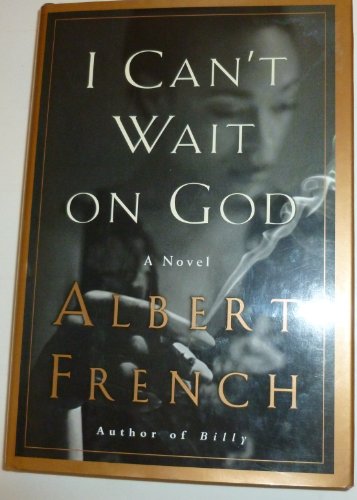
The crowded joys and familiar despair of poor, back-alley life in postwar Pittsburgh have a hold on most people there. Still, there are those who need to escape. Jeremiah Henderson and his woman, Willet Mercer, who keep to themselves and look far too pretty for their own good, have set their sights on New York City. As they learn, however, making good is easier said than done. Left with no choice but to give in to the pimp who'd like to try Willet on for size before selling her to his clientele, Jeremiah and Willet try to focus on the future. But in the last moments before letting the pimp have his way with her, Willet balks, stabbing him to death in the back of his parked Buick. If they are both horrified by what she's done, Jeremiah and Willet are nonetheless now flush with the pimp's fat wad of cash, his heavy rings, and his fancy car. And for a moment, it looks as if their dreams may finally come true. With New York on their minds and Pittsburgh behind them, they drive south to make one last stop outside Wilmington, North Carolina, where Willet intends to see the little boy she long ago abandoned.
Told over the course of five days and nights in the summer of 1950, as the Korean War is brewing, this is a story of crime, punishment, and loss that will never be forgotten. Carried along by the same voice and insight that have earned Albert French so much praise already, I Can't Wait on God is his most beautiful and important book to date.
"synopsis" may belong to another edition of this title.
About the Author
Albert French served four years in the U.S. Marines and later worked as a medical photographer and photojournalist. He is the founder of the Pittsburgh Preview Magazine, as well as the author of two previous novels, Billy and Holly, and the memoir Patches of Fire. He lives in Pittsburgh.
From the Trade Paperback edition.
From the Inside Flap
joys and familiar despair of poor, back-alley life in postwar Pittsburgh have a hold on most people there. Still, there are those who need to escape. Jeremiah Henderson and his woman, Willet Mercer, who keep to themselves and look far too pretty for their own good, have set their sights on New York City. As they learn, however, making good is easier said than done. Left with no choice but to give in to the pimp who'd like to try Willet on for size before selling her to his clientele, Jeremiah and Willet try to focus on the future. But in the last moments before letting the pimp have his way with her, Willet balks, stabbing him to death in the back of his parked Buick. If they are both horrified by what she's done, Jeremiah and Willet are nonetheless now flush with the pimp's fat wad of cash, his heavy rings, and his fancy car. And for a moment, it looks as if their dreams may finally come true. With New York on their minds and Pittsburgh behind them, they drive south to make one last stop outside Wilm
Reviews
A Spoon River complex of subplots and vignettes spills out of five summer days in a Truman-era Pittsburgh ghetto in French's elegiac third novel (after Billy and Holly). French introduces dozens of characters in this relatively short work, some for no more than a few pages. This large cast serves as a backdrop for two slender, essentially unrelated story lines that emerge from the cyclical rhythms and harsh details of back-alley life. Willet Mercer and her boyfriend, Jeremiah Henderson, strike out for New York with a bankroll and a Buick that belonged to a pimp she has murdered, but she insists that they first head for North Carolina to find the child she abandoned years ago. The second story concerns Mack Jack, a saxophone player who fears he has lost his musical ability. French poignantly captures Mack's frustration as he wanders the neighborhood in a stoic daze, trying to get his nerve back. The vignettes are skillfully drawn?whether of a minister who wears his "preachin suit" to his job cleaning downtown offices because he "wants folks to see who he is before he changes into his cleanin clothes," or of a rooster doomed one morning by its "kiss-my-ass-look." Sometimes the novel's sprawl of anecdote threatens to overwhelm the main plots (and the minor characters are sometimes more vivid than the protagonists), but French's mixture of nostalgia and horror ultimately makes for an evocative work that, alternately brilliant and melodramatic, brims with life. (Aug.) FYI: A paperback edition of French's Vietnam memoir, Patches of Fire, will be published simultaneously by Doubleday.
Copyright 1998 Reed Business Information, Inc.
The author of two previous novels (Billy, 1993; Holly, 1995) and a Vietnam memoir (Patches of Fire, 1997) returns to the Homewood section of Pittsburghfamiliar also to readers of John Edgar Widemanfor this tale of jazz, violence, and ghetto- porch culture. Panoramic in scope, and full of secondary characters, this Old-Schoolstyle narrative never fully coheres, but creates an indelible portrait of a back-alley neighborhood. Here, French captures the hum of hush talk that spreads like fire when a local hustler is robbed, gutted and thrown into the high weeds near the train tracks. Though the brutal white cops turn the community upside down, the regular folk know the culprits right away. Jeremiah Henderson, and his beautiful, high-yellow girlfriend, Willet Mercer, dream of New York City, and consider turning Willet out as a prostitute. When the much disliked Tommy Moses tries testing her, shes so disgusted that she slices him up. With Tommys pocketful of cash, and his big car, they head first to North Carolina, where Willet hopes to see the son she abandoned at childbirth, who lives with her mother. Meanwhile, back in Homewood, the locals go about their routines: elderly Mr. Allen surveys the scene from his porch, while the women pass news over the fences; Dicky Bird with his pushcart and drunk Bill Lovitt pick junk along the roadside; and Mack Jack, a tall and brooding sax player, roams the streets, living inside the sounds, and bedding a few local women. The novel cuts back and forth between Mack Jacks poetic interior life and Jeremiah and Willet on the road, creating a false expectation of some sort of convergence, but ends instead all too abruptly. Lots of set pieces reveal Frenchs narrative muscle, though the drug and jazz scenes cant beat the recently rediscovered period fictions of Clarence Cooper or Herbert Simmons. -- Copyright ©1998, Kirkus Associates, LP. All rights reserved.
Restless, aimless ambition set Jeremiah Henderson and Willet Mercer on a course that shakes the languid summer of a black community in the back alleys of Pittsburgh on the eve of the Korean War. A scheme to pimp Willet and earn enough money to move on to New York ultimately leads to murder when something in her won't let Willet succumb to the temptation of easy money. The couple flees in the victim's car, leaving behind a community gripped by the excitement of something having happened in the midst of a stifling summer and the disruption of white folks trampling the community in search of suspects. A trip back home to Wilmington, North Carolina, to see the child Willet abandoned years ago, leads to revelations of how her life came to such a desperate turn. French captures the rhythm of ordinary black speech and of ordinary listless summer days with extraordinary things going on. He creates deftly drawn characters, a striking sense of place and time, and the social strata of blacks and whites in the 1950s. The lives of the characters, in the urban back alleys of Pittsburgh and in the rural setting of Wilmington, are interwoven in this story of ambition and the search for redemption. Vanessa Bush
Homewood, PA, 1950. Where the "summer night air was always sticky kind of air, that had that stinkin mill smoke stuck all in it." Where "Gus Goins's place was down off the tracks, down in that alley behind Fiance St." It is a place very different from James Agee's "Knoxville: Summer 1915" but no less lyrical?only the rhythms are different, a blues beat as opposed to symphonic strains. For alley residents, the struggles and joys of "gettin on" are momentarily disrupted by the knifing of a local pimp. Using this death as his focal point, French explores the denizens' hopes, dreams, frustrations, and sorrows. For Willet, the perpetrator, whom the pimp was hoping to add to his stable, it brings, beyond access to cash and a car and the need to flee, a resolve to see the son she once abandoned?no matter what the cost. For Mack Jack the sax man, it's about reclaiming his musical voice; for Dicky Bird, it's about scrounging enough cash picking trash to be able to afford Gus's chicken and drink. In simple, eloquent strokes French brings the alley and its people to vibrant life. A marvelous exploration of the complexities of the human experience by a vastly talented if not yet widely known author (Billy, LJ 10/1/93); highly recommended for all libraries.?David W. Henderson, Eckerd Coll. Lib., St. Petersburg, FL
Copyright 1998 Reed Business Information, Inc.
Excerpt. © Reprinted by permission. All rights reserved.
Pittsburgh, 1950
Summer night air was always sticky kind of air, had that stinkin mill smoke stuck all in it. Them old freight trains comin into Pittsburgh would come around that curve, rumblin, rollin, and shakin them houses down over the hill from the tracks. Them folks livin down over the hill from the tracks was used to hearin them trains comin on by, used to hearin the dogs barkin and howlin at them trains. Sometimes when them trains make too much noise, some folks wake up, grunt, then turn on over and go back to sleep. But that train noise and that hot, sticky air would still be out there. Them summertime nights could be long nights, too, if it was real hot. Them nights could stick around long after that freight train took its noise with it and went on by.
Gus Goins's place was down off the tracks, down in that alley behind Fiance Street. Gettin up into Gus Goins's place didn't take any thought. Folks could find their way through that dark dirty path leadin up in there real easy and kept goin up in there all night long, especially durin them mill payday nights. Gus always had some kind of light hangin off that old shack porch of his. But before folks could get to that light, it be pitch black, stinkin, too, from them chicken coops Gus kept in the yards there. But folks found their way, slip, slide, and stumble til they got to where they were going, kept comin and goin all through the night. Them chickens never did get any sleep, they couldn't even hear them trains goin by for all that loud jukebox music comin out off that back alley shack.
Gus Goins didn't smile too much. He had one of them round, light-skinned faces and some dark shiny hair that he always kept greased down and combed real nice, but when he be sellin you somethin, he could grin then. Gus Goins sell you anything, you know you could always get some chicken anytime and that moonshine he be sellin bring folks back from their grave to get some more.
In that back room at Gus's, them cards and that money be just a-flyin. Bloodshot eyes be eyein too, lookin that cold-face black queen right in her eyes. Pete Turner was as black as any of them spades he was holdin, but had them ugly yellow teeth from all that cigar juice he keeps up in his mouth.
Al Johnson was a quick-talkin man, ask anybody anything at anytime, always up in somebody's face about somethin. Al Johnson is starin across that card table at Pete Turner, been starin at him for a while.
"What ya goin ta do?" Al Johnson done ask Pete Turner again. Pete Turner ain't answerin and ain't takin his eyes away from them cards he's holdin and starin at.
Al Johnson gets to rockin in his chair and sayin at the same time he's rockin, "What ya goin ta do, huh? Shit, damn, make ya play."
Wendell Hill is sittin at that card table, too. He's leanin back in his chair some and givin a little laugh and lookin over at Al Johnson. Then he's sayin, "Pete ain't got shit. Ya dones got the fool's money. Let the nigger have his time."
Out in that front room of Gus Goins's folks are just a-talkin and sippin on whatever they got in them paper cups. Cissy Hall been in there way before it got dark. She's tellin all she knows about anything she can think of. She done told Bertha Wilks all about that Lando Parks sneakin up there around Herman Stokes's place and tryin to mess around with that German white woman Herman brought back from the war. Cissy told Bertha, "He thinks ain't nobody seenin him standin over there in that empty lot tryin to get that woman to come out. Ah done seen dogs wit better sense than ta be standin out in the middle of broad daylight and thinkin they's hidin and can'ts nobody be seein what's they up ta. Any damn fool knows what's goin on."
Bobby Rose has that Indian-colored skin and that thick black curly hair. He used to try and tell folks his mama was full-blooded somethin. Folks be tellin him, "Man, git out of here wit that shit. Ya ain't nothin but some full-blooded Mississippi nigger. Ya need ta go back where ya come up here from."
He's tellin Olinda Harris, "Ya know ya's ain't meanin that." Then he's askin her, "Why ya doin me likes this fore, huh? Come on now, why don't ya be sweet likes ya can be, huh?"
Bobby Bose and Gus Goins's moonshine is about the same thing now. Them words comin from his mouth is just a-covered with that moonshine smell. Sometimes Bobby Rose ain't sayin nothin, just standin their and lookin down Olinda Harris's dress, tryin to see as far as he can see down there. But that moonshine still makin noises, make him moan and grunt a little.
Olinda Harris has them dark starin eyes and that brown skin that shines just like them buckeye nuts that be fallin off that tree up at the end of the alley. Sometimes folks be comin down the alley, be thinkin about things they be needin and things they ain't never goin to get. Sometimes they slow down a little, take a look at that pretty brown buckeye bustin out of that ugly green skin of its. Folks look down at it, give it a thought, let that thought take a few steps with them fore that need they carryin in their head smack at the inside of their skull.
Bobby Rose is still lookin at Olinda Harris. She's lookin back at him, cuttin her eyes at him, givin him some looks that make that moonshine splash up in his head. She's twenty and knows how she looks and what them looks can do for her.
Dicky Bird is sittin in the corner. Got him some chicken in his mouth and chewin as fast as he's talkin. He's talkin to Bill Lovit, but he don't know, and might not care if he did know, that Bill Lovit ain't listenin to a word he's sayin. Bill Lovit ain't been right since the fire. Sometimes he still gets to cryin. Folks say that's all right, say they'd cry too if they come home and find they house all burnt down and all them seven children burnt past knowin which one was which.
Dicky Bird is tellin Bill Lovit all about Miss Macune. Miss Macune lives up there at the far end of the alley. Folks don't see her much. She keeps herself in that big house all by herself since that man of hers died, and that's been some twenty years or more. Dicky Bird is sayin, "Ah wents on in there. Ah tells ya, that woman was talkin ta somebody the whole time Ah was in there. And it sure wasn't me, Ah tells ya that. And there weren't nobodies in there cept me. She wants me ta come back up there and gits them leaks she's got. Them pipes ain't nothin but rust. Ah tries and tell her that. Ya know, tells her she needin some new plummin in there. She gits ta talkin ta me and at the same time she talkin ta whoever ain't there. That's when Ah come on out of there."
Gus Goins's jukebox got to seemin like it was bouncin. Somebody want to hear somethin that would make them move, wanted to hear some drums beatin, hear that music that gets sweat to rollin. Olinda Harris gets to swayin with that drum beat. Bobby Rose tries to get closer to her, move with her sways, but she don't let him. That blue dress she's got on becomes a blur of color in his eyes.
The black, sticky, hot air of midnight is still, hoverin above Gus Goins's place in the alley. The beat of some drum and now the squeal of a horn get stuck in the air, squiggle there. Alley cats stray in the night, eyes glowin and tails curled. Gus Goins's chickens squat in them coops, quiver when them alley cats come by. That music is still jumpin. Olinda Harris's hips sway and roll. Dicky Bird is watchin and still chewin on that chicken, just about got them bones clean. Folks sittin back in the corner just watchin the night go by. They might take a little sip out their paper cup, give somebody close to them a little talk, then they get to starin at Olinda Harris or just starin at the nighttime goin by. Jeremiah Henderson is sittin way back in a dark corner, he's sippin from his cup, but he ain't watchin Olinda Harris or talkin to nobody. Folks know he keeps to himself, got that kind of stillness about him. He ain't got to say nothin for them to know he's there.
Back in that back room, Al Johnson has some sweat comin down in his eyes and is up in somebody's face. "What ya talkin about, huh? What ya talkin about, motherfucker? Ah want my motherfuckin money, man. What the fuck wrong wit ya? Ah wants my money."
Richard Norris is shoutin back at Al Johnson, "Man, ya goin ta git yer money. Ah done told ya, now gits out my face wit it."
Pete Turner done lost all the money he had and tries to borrow some more. Asks folks, "Lets me hold somin? Ah gits it back for ya fore the night's over."
Folks tell Pete Turner, "Ya gots ta be crazzy."
Mosquitoes were buzzin and bitin at anything in the light hangin out on that back porch when Pete Turner went on out the door. He went on past where the glow from the light failed to go any farther, then stumbled and slithered up the dark path that goes to the alley. Some cat curled its back up in the dark, hissed and vanished in the night, only leavin the brief death of its sound skirtin in the air.
Pete Turner reaches the alley, takes a few stumblin steps until he gets to one of them back alley fences. He stops, sways while the splashin sound of his urine hits the fence. He jerks away from the fence and starts up the alley, leavin some short grunts behind.
Olinda Harris has left, took her sweet ways on home. Bobby Rose still talkin about her, sayin, "Ya all just wait. Um goin ta get that, yeal."
Gus Goins's moonshine takes Bill Lovit on home, too. Takes him up the alley, then he cuts across Dunferline Street until he's on Susquehanna Street. The moonshine he's carryin in his gut begins to carry him as he passes through the lot still filled with ash and jagged burnt timber that been his house, reaches the shack he's built in what been his backyard. The moonshine whispers, too, tells the dark dead faces of his children to leave him be.
Jeremiah Henderson looks up and keeps starin into Dicky Bird's face while Dicky Bird's s...
"About this title" may belong to another edition of this title.
Search results for I Can't Wait on God

Stock Image
I Can't Wait on God
Seller: Your Online Bookstore, Houston, TX, U.S.A.
Seller rating 5 out of 5 stars

Hardcover. Condition: Good. Seller Inventory # 0385483643-3-25573237
Stock Image
I Can't Wait on God
Seller: World of Books (was SecondSale), Montgomery, IL, U.S.A.
Seller rating 5 out of 5 stars
Hardback. Condition: Good. Seller Inventory # 00101616718
Stock Image
I Can't Wait on God
Seller: BookHolders, Towson, MD, U.S.A.
Seller rating 5 out of 5 stars
Condition: Very Good. [ No Hassle 30 Day Returns ][ Ships Daily ] [ Underlining/Highlighting: NONE ] [ Writing: NONE ] [ Edition: Reprint ] Publisher: Doubleday Pub Date: 8/17/1998 Binding: Hardcover Pages: 256 Reprint edition. Seller Inventory # 6768036
Stock Image
I Can't Wait on God
Seller: Wonder Book, Frederick, MD, U.S.A.
Seller rating 5 out of 5 stars
Condition: As New. Like New condition. Like New dust jacket. A near perfect copy that may have very minor cosmetic defects. Seller Inventory # F27B-02239
Stock Image
I Can't Wait on God
Seller: World of Books Inc, Montgomery, IL, U.S.A.
Seller rating 4 out of 5 stars

Hardback. Condition: Good. Seller Inventory # CIN0385483643G
Stock Image
I Can't Wait on God
Seller: HPB-Movies, Dallas, TX, U.S.A.
Seller rating 5 out of 5 stars
Hardcover. Condition: Very Good. Connecting readers with great books since 1972! Used books may not include companion materials, and may have some shelf wear or limited writing. We ship orders daily and Customer Service is our top priority! Seller Inventory # S_220472351
Stock Image
I Can't Wait on God
Seller: St Vincent de Paul of Lane County, Eugene, OR, U.S.A.
Seller rating 5 out of 5 stars
Condition: Acceptable. PLEASE NOTE: FORMER LIBRARY COPY, MAY HAVE STICKERS AND INDENTIFYING STAMPS AND/OR MARKERS ON IT. Former Library book. hardcover 100% of proceeds go to charity! Acceptable reading copy with obvious signs of use, wear, and/or cosmetic issues. Item is complete and remains readable despite notable condition issues. Seller Inventory # 2DD-001-2727
Stock Image
I Can't Wait on God
Seller: ThriftBooks-Atlanta, AUSTELL, GA, U.S.A.
Seller rating 5 out of 5 stars
Hardcover. Condition: Fair. No Jacket. Readable copy. Pages may have considerable notes/highlighting. ~ ThriftBooks: Read More, Spend Less. Seller Inventory # G0385483643I5N00
Stock Image
I Can't Wait on God
Seller: ThriftBooks-Dallas, Dallas, TX, U.S.A.
Seller rating 5 out of 5 stars
Hardcover. Condition: Good. No Jacket. Pages can have notes/highlighting. Spine may show signs of wear. ~ ThriftBooks: Read More, Spend Less. Seller Inventory # G0385483643I3N00
Stock Image
I Can't Wait on God
Seller: ThriftBooks-Dallas, Dallas, TX, U.S.A.
Seller rating 5 out of 5 stars
Hardcover. Condition: Fair. No Jacket. Readable copy. Pages may have considerable notes/highlighting. ~ ThriftBooks: Read More, Spend Less. Seller Inventory # G0385483643I5N00