
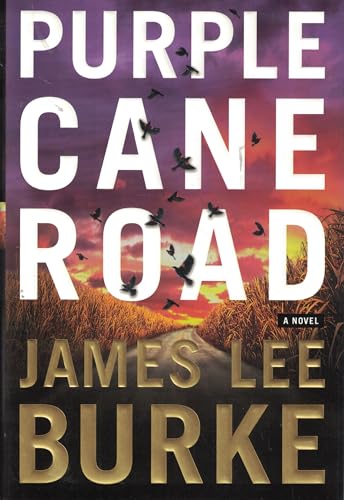
Synopsis
Dave Robicheaux has spent his life confronting the age-old adage that the sins of the father pass onto the son. But what has his mother's legacy left him? Dead to him since youth, Mae Guillory has been shuttered away in the deep recesses of Dave's mind. He's lived with the fact that he would never really know what happened to the woman who left him to the devices of his whiskey-driven father. But deep down, he still feels the loss of his mother and knows the infinite series of disappointments in her life could not have come to a good end.
While helping out an old friend, Dave is stunned when a pimp looks at him sideways and asks him if he is Mae Guillory's boy, the whore a bunch of cops murdered 30 years ago. The pimp goes on to insinuate that the cops who dumped her body in the bayou were on the take and continue to thrive in the New Orleans area.
Dave's search for his mother's killers leads him to the darker places in his past and solving this case teaches him what it means to be his mother's son. PURPLE CANE ROAD has the dimensions of a classic-passion, murder, and nearly heartbreaking poignancy-wrapped in a wonderfully executed plot that surpises from start to finish.
"synopsis" may belong to another edition of this title.
About the Author
One of ony two writers to win two Edgar Awards, JAMES LEE BURKE is the author of 19 previous novels, including The New York Times bestsellers Sunset Limited, Cimarron Rose, Cadillac Jukebox, Burning Angel, and Dixie City Jam. He lives with his wife in Missoula, Montana, and New Iberia, Louisiana.
From the Inside Flap
aux has spent his life confronting the age-old adage that the sins of the father pass onto the son. But what has his mother's legacy left him? Dead to him since youth, Mae Guillory has been shuttered away in the deep recesses of Dave's mind. He's lived with the fact that he would never really know what happened to the woman who left him to the devices of his whiskey-driven father. But deep down, he still feels the loss of his mother and knows the infinite series of disappointments in her life could not have come to a good end.
While helping out an old friend, Dave is stunned when a pimp looks at him sideways and asks him if he is Mae Guillory's boy, the whore a bunch of cops murdered 30 years ago. The pimp goes on to insinuate that the cops who dumped her body in the bayou were on the take and continue to thrive in the New Orleans area.
Dave's search for his mother's killers leads him to the darker places in his past and solving this case teaches him what it means to be his m
Reviews
HAfter the relatively lightweight Sunset Limited (1998), Cajun cop Dave Robicheaux returns in a powerhouse of a thriller that shows Burke writing near the peak of his form. Robicheaux faces his most personal case yet, when a pimp puts him on the trail of the truth behind his mother's long-ago disappearance. Meanwhile, he uncovers new evidence in the case of death-row inmate Letty Labiche, who took a mattock to the man who molested her as a child, state executioner Vachel Carmouche. Burke parades the usual cast of grotesques: feckless Louisiana governor Belmont Pugh; cold-blooded attorney general Connie Deshotel; sleazy police liaison officer Jim Gable, who "keeps the head of a Vietnamese soldier in a jar of chemicals"; and psychopathic hit man Johnny Remata, who acts as all-around avenging angel. Wife Bootsie's having had a fling with Gable drives Robicheaux into a jealous fury more than once, while daughter Alafair's flirtation with Johnny raises the temperature even higher. Old buddy Clete Purcell doesn't have a lot to do, other than to contribute to the general mayhem. Once Robicheaux learns that his mother fell afoul of a couple of New Orleans cops in the pay of the Giacano crime family, it's a simple matter of identifying the guilty pair and bringing them to justiceDor is it? Burke winds up an often convoluted and gratuitously violent plot with a dynamite ending that will leave readers feeling truly satisfied, if a bit shell-shocked. Major ad/promo; author tour. (Aug.)
Copyright 2000 Reed Business Information, Inc.
Another round of violence in New Iberia Parish leads sheriff's investigator Dave Robicheaux (Sunset Limited, 1998, etc.) to reopen the darkest mystery he's ever faced: the murder of his mother. The door into his past opens with startling suddenness. Letty Labiche has almost run through the legal obstacles keeping her from the death house for killing abusive ex-cop executioner Vachel Carmouche eight years ago when Dave learns that Little Face Dautrieve, a coke hooker from New Iberia, has been saving newspaper clippings on the case for her pimp, Zipper Clum. Braced by Dave and his friend Clete Purcel, a New Orleans shamus, Zipper blurts out the news that Mae Guillory, the mother who left Dave's father years before, had been drowned by a pair of cops back in 1967. The revelation acts like a starting gun for Dave--and for melancholy, hyperactive out-of-town trigger-man Johnny Remeta, whose killing of Zipper is only the first in a string of half a dozen new murders. Politely insisting that Dave's just like him, Remeta appoints himself Dave's guardian angel. Dave would love to see this sensitive killer dead before he ingratiates himself too deeply with Dave's teenaged daughter Alafair. But he needs every bit of Remeta's despised help, because his no-fists-barred attitude toward the cops will end by antagonizing every law officer in Louisiana, from New Orleans Vice cop Don Ritter and powerful City Hall insider Jim Gable, whom Zipper insisted had offered to let Little Face skate in return for regular sex for both of them, to state Attorney General Connie Deshotel, as Dave tears through the ranks looking for Mae's murderers.Though the links among felonies can be insultingly casual, and the mystery is no more mysterious than a ritual sacrifice, Burke's powerfully evoked world shows why the past, as Faulkner said, not only isn't dead; it isn't even past.Literary Guild selection/Mystery Guild main selection -- Copyright © 2000 Kirkus Associates, LP. All rights reserved.
Throughout Burke's long-running and widely acclaimed Dave Robicheaux series, the melancholy hero has defended the virtues of his vanishing Cajun way of life against the neon seductions of the modern urban world. Lately, though, Burke has played a fascinating variation on this theme. In the previous Robicheaux novel, Sunset Limited (1998), and now in this latest installment, the past itself has become suspect. There is great sadness in Robicheaux's personal history--the breakup of his parents' marriage, the death of his father in an oil-rig accident, the disappearance of his mother--but one of Dave's anchors in the stormy seas of his life has always been his abiding respect for his parents' fierce independence and unflinching integrity. Now a New Orleans lowlife has let it slip that Robicheaux's mother was a whore in her last days, before being killed by gangsters: "My mother's memory, the sad respect I always had for her, had been stolen from me." As Robicheaux attempts to reconstruct his mother's life and disprove the lowlife's allegations, the trail leads, as it nearly always does in a Burke novel, to powerful politicians with bent psyches and secret lives. This time, though, the stakes are higher, and Robicheaux's rage threatens to bring more grief down upon his loved ones. Even Dave's sidekick, Clete Purcell, never known for his caution, counsels restraint: "What you want is God's permission to paint the trees with bad guys. That ain't going to happen, big mon." Perhaps more so than any of his peers, Burke has kept his series alive by skillfully tweaking his formula just enough to add interest but never so much as to lose its essence. Robicheaux battling the past instead of the present is only the latest example of Burke's continuing ability to mix the fresh with the familiar in just the right way. Bill Ott
Copyright © American Library Association. All rights reserved
Maintaining freshness in a lengthy series may be difficult, but Burke deftly handles this challenge with his 11th entry featuring Dave Robicheaux, police detective and ordinary hero. During a shakedown, a local pimp informs Dave that he has knowledge of the circumstances surrounding the death of Dave's mother only to wind up murdered himself soon after. Having spent most of his life with his mother's death shrouded in mystery, Dave finally has an opportunity to learn of her end. To accomplish this, however, he must unravel a conspiracy to conceal the events of that fateful night, one involving several New Orleans cops, a conniving state attorney general, and a genius psychopath. More importantly, he must deal with the internal darkness exposed during his search and ultimately with what it means to be his mother's son. Burke is in top form, his words reading like poetry, his vivid descriptions effortlessly transporting the reader to Southern Louisiana. A superb and satisfying work showcasing one of the truly great mystery writers of our generation.
-DCraig L. Shufelt, Gladwin Cty. Lib., MI
Copyright 2000 Reed Business Information, Inc.
Excerpt. © Reprinted by permission. All rights reserved.
1
Years ago, in state documents, Vachel Carmouche was always referred to as the electrician, never as the executioner. That was back in the days when the electric chair was sometimes housed at Angola. At other times it traveled, along with its own generators, on a flatbed semitruck from parish prison to parish prison. Vachel Carmouche did the state's work. He was good at it.
In New Iberia we knew his real occupation but pretended we did not. He lived by himself, up Bayou Teche, in a tin-roofed, paintless cypress house that stayed in the deep shade of oak trees. He planted no flowers in his yard and seldom raked it, but he always drove a new car and washed and polished it religiously.
Early each morning we'd see him in a cafe on East Main, sitting by himself at the counter, in his pressed gray or khaki clothes and cloth cap, his eyes studying other customers in the mirror, his slight overbite paused above his coffee cup, as though he were waiting to speak, although he rarely engaged others in conversation.
When he caught you looking at him, he smiled quickly, his sun-browned face threading with hundreds of lines, but his smile did not go with the expression in his eyes.
Vachel Carmouche was a bachelor. If he had lady friends, we were not aware of them. He came infrequently to Provost's Bar and Pool Room and would sit at my table or next to me at the bar, indicating in a vague way that we were both law officers and hence shared a common experience.
That was when I was in uniform at NOPD and was still enamored with Jim Beam straight up and a long-neck Jax on the side.
One night he found me at a table by myself at Provost's and sat down without being asked, a white bowl of okra gumbo in his hands. A veterinarian and a grocery store owner I had been drinking with came out of the men's room and glanced at the table, then went to the bar and ordered beer there and drank with their backs to us.
"Being a cop is a trade-off, isn't it?" Vachel said.
"Sir?" I said.
"You don't have to call me 'sir' . . . You spend a lot of time alone?"
"Not so much."
"I think it goes with the job. I was a state trooper once." His eyes, which were as gray as his starched shirt, drifted to the shot glass in front of me and the rings my beer mug had left on the tabletop. "A drinking man goes home to a lot of echoes. The way a stone sounds in a dry well. No offense meant, Mr. Robicheaux. Can I buy you a round?"
The acreage next to Vachel Carmouche was owned by the Labiche family, descendants of what had been known as free people of color before the Civil War. The patriarch of the family had been a French-educated mulatto named Jubal Labiche who owned a brick factory on the bayou south of New Iberia. He both owned and rented slaves and worked them unmercifully and supplied much of the brick for the homes of his fellow slave owners up and down the Teche.
The columned house he built south of the St. Martin Parish line did not contain the Italian marble or Spanish ironwork of the sugar growers whose wealth was far greater than his own and whose way of life he sought to emulate. But he planted live oaks along the drives and hung his balconies and veranda with flowers; his slaves kept his pecan and peach orchards and produce fields broom-sweep clean. Although he was not invited into the homes of whites, they respected him as a businessman and taskmaster and treated him with courtesy on the street. That was almost enough for Jubal Labiche. Almost. He sent his children North to be educated, in hopes they would marry up, across the color line, that the high-yellow stain that limited his ambition would eventually bleach out of the Labiche family's skin.
Unfortunately for him, when the federals came up the Teche in April of 1863 they thought him every bit the equal of his white neighbors. In democratic fashion they freed his slaves, burned his fields and barns and corncribs, tore the ventilated shutters off his windows for litters to carry their wounded, and chopped up his imported furniture and piano for firewood.
Twenty-five years ago the last adult members of the Labiche family to bear the name, a husband and a wife, filled themselves with whiskey and sleeping pills, tied plastic bags over their heads, and died in a parked car behind a Houston pickup bar. Both were procurers. Both had been federal witnesses against a New York crime family.
They left behind identical twin daughters, aged five years, named Letty and Passion Labiche.
The girls' eyes were blue, their hair the color of smoke, streaked with dark gold, as though it had been painted there with a brush. An aunt, who was addicted to morphine and claimed to be a traiture, or juju woman, was assigned guardianship by the state. Often Vachel Carmouche volunteered to baby-sit the girls, or walk them out to the road to wait for the Head Start bus that took them to the preschool program in New Iberia.
We did not give his attentions to the girls much thought. Perhaps good came out of bad, we told ourselves, and there was an area in Carmouche's soul that had not been disfigured by the deeds he performed with the machines he oiled and cleaned by hand and transported from jail to jail. Perhaps his kindness toward children was his attempt at redemption.
Besides, their welfare was the business of the state, wasn't it?
In fourth grade one of the twins, Passion, told her teacher of a recurrent nightmare and the pain she awoke with in the morning.
The teacher took Passion to Charity Hospital in Lafayette, but the physician said the abrasions could have been caused by the child playing on the seesaw in City Park.
When the girls were about twelve I saw them with Vachel Carmouche on a summer night out at Veazey's ice cream store on West Main. They wore identical checkered sundresses and different-colored ribbons in their hair. They sat in Carmouche's truck, close to the door, a lackluster deadness in their eyes, their mouths turned down at the corners, while he talked out the window to a black man in bib overalls.
"I've been patient with you, boy. You got the money you had coming. You calling me a liar?" he said.
"No, suh, I ain't doing that."
"Then good night to you," he said. When one of the girls said something, he popped her lightly on the cheek and started his truck.
I walked across the shell parking area and stood by his window.
"Excuse me, but what gives you the right to hit someone else's child in the face?" I asked.
"I think you misperceived what happened," he replied.
"Step out of your truck, please."
"My cotton-pickin' foot. You're out of your jurisdiction, Mr. Robicheaux. You got liquor on your breath, too."
He backed his truck out from under the oak trees and drove away.
I went to Provost's and drank for three hours at the bar and watched the pool games and the old men playing bouree and dominoes under the wood-bladed fans. The warm air smelled of talcum and dried perspiration and the green sawdust on the floor.
"Have any locals pulled in Vachel Carmouche?" I asked the bartender.
"Go home, Dave," he said.
I drove north along Bayou Teche to Carmouche's home. The house was dark, but next door the porch and living room lights were on at the Labiche house. I pulled into the Labiche driveway and walked across the yard toward the brick steps. The ground was sunken, moldy with pecan husks and dotted with palmettos, the white paint on the house stained with smoke from stubble fires in the cane fields. My face felt warm and dilated with alcohol, my ears humming with sound that had no origin.
Vachel Carmouche opened the front door and stepped out into the light. I could see the twins and the aunt peering out the door behind him.
"I think you're abusing those children," I said.
"You're an object of pity and ridicule, Mr. Robicheaux," he replied.
"Step out here in the yard."
His face was shadowed, his body haloed with humidity in the light behind him.
"I'm armed," he said when I approached him.
I struck his face with my open hand, his whiskers scraping like grit against my skin, his mouth streaking my palm with his saliva.
He touched his upper lip, which had broken against his overbite, and looked at the blood on his fingers.
"You come here with vomit on your breath and stink in your clothes and judge me?" he said. "You sit in the Red Hat House and watch while I put men to death, then condemn me because I try to care for orphan children? You're a hypocrite, Mr. Robicheaux. Be gone, sir."
He went inside and closed the door behind him and turned off the porch light. My face felt small and tight, like the skin on an apple, in the heated darkness.
I returned to New Orleans and my problems with pari-mutuel windows and a dark-haired, milk-skinned wife from Martinique who went home with men from the Garden District while I was passed out in a houseboat on Lake Pontchartrain, the downdraft of U.S. Army helicopters flattening a plain of elephant grass in my dreams.
I heard stories about the Labiche girls: their troubles with narcotics; the bikers and college boys and sexual adventurers who drifted in and out of their lives; their minor roles in a movie that was shot outside Lafayette; the R&B record Letty cut in prison that made the charts for two or three weeks.
When I bottomed out I often included the girls in my prayers and regretted deeply that I had been a drunk when perhaps I could have made a difference in their lives. Once I dreamed of them cowering in a bed, waiting for a man's footsteps outside their door and a hand that would quietly twist the knob in the jamb. But in daylight I convinced myself that my failure was only a small contributing factor in the tragedy of their lives, that my guilt...
"About this title" may belong to another edition of this title.
Other Popular Editions of the Same Title

Search results for Purple Cane Road: A Novel

Stock Image
Purple Cane Road: A Novel (Dave Robicheaux Mysteries)
Seller: World of Books (was SecondSale), Montgomery, IL, U.S.A.
Seller rating 5 out of 5 stars

Condition: Very Good. Item in very good condition! Textbooks may not include supplemental items i.e. CDs, access codes etc. Seller Inventory # 00104766543
Stock Image
Purple Cane Road: A Novel (Dave Robicheaux Mysteries)
Seller: World of Books (was SecondSale), Montgomery, IL, U.S.A.
Seller rating 5 out of 5 stars
Condition: Acceptable. Item in acceptable condition! Textbooks may not include supplemental items i.e. CDs, access codes etc. Seller Inventory # 00103115573
Stock Image
Purple Cane Road: A Novel (Dave Robicheaux Mysteries)
Seller: World of Books (was SecondSale), Montgomery, IL, U.S.A.
Seller rating 5 out of 5 stars
Condition: Good. Item in good condition. Textbooks may not include supplemental items i.e. CDs, access codes etc. Seller Inventory # 00093712907
Stock Image
Purple Cane Road: A Novel (Dave Robicheaux Mysteries)
Seller: Orion Tech, Kingwood, TX, U.S.A.
Seller rating 5 out of 5 stars
Hardcover. Condition: Good. Seller Inventory # 0385488440-3-19667446
Seller Image
Purple Cane Road: A Novel
Seller: Zoom Books East, Glendale Heights, IL, U.S.A.
Seller rating 5 out of 5 stars
Condition: very_good. Book is in very good condition and may include minimal underlining highlighting. The book can also include "From the library of" labels. May not contain miscellaneous items toys, dvds, etc. . We offer 100% money back guarantee and 24 7 customer service. Seller Inventory # ZEV.0385488440.VG
Seller Image
Purple Cane Road: A Novel (Dave Robicheaux Mysteries)
Seller: Reliant Bookstore, El Dorado, KS, U.S.A.
Seller rating 5 out of 5 stars
Condition: acceptable. This book is a well used but readable copy. Integrity of the book is still intact with no missing pages. May have notes or highlighting. Cover image on the book may vary from photo. Ships out quickly in a secure plastic mailer. Seller Inventory # RDV.0385488440.A
Seller Image
Purple Cane Road: A Novel
Seller: Greenworld Books, Arlington, TX, U.S.A.
Seller rating 5 out of 5 stars
Condition: very_good. Fast Free Shipping â" Very Good condition book with a firm cover and clean pages. Shows normal use and some light wear or limited notes markings. A solid, nice copy to enjoy. Seller Inventory # GWV.0385488440.VG
Seller Image
Purple Cane Road: A Novel
Seller: Greenworld Books, Arlington, TX, U.S.A.
Seller rating 5 out of 5 stars
Condition: good. Fast Free Shipping â" Good condition. It may show normal signs of use, such as light writing, highlighting, or library markings, but all pages are intact and the book is fully readable. A solid, complete copy that's ready to enjoy. Seller Inventory # GWV.0385488440.G
Stock Image
Purple Cane Road: A Novel (Dave Robicheaux Mysteries)
Seller: Wonder Book, Frederick, MD, U.S.A.
Seller rating 5 out of 5 stars
Condition: Very Good. . Very Good dust jacket. Seller Inventory # E13G-00429
Stock Image
Purple Cane Road: A Novel (Dave Robicheaux Mysteries)
Seller: Wonder Book, Frederick, MD, U.S.A.
Seller rating 5 out of 5 stars
Condition: Very Good. Very Good condition. Very Good dust jacket. A copy that may have a few cosmetic defects. May also contain a few markings such as an owner's name, short gifter's inscription or light stamp. Seller Inventory # G06C-00570