
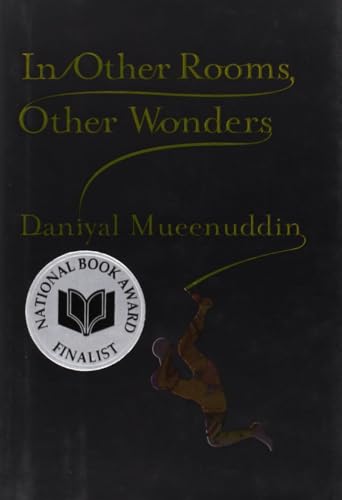
Synopsis
Finalist for the 2009 National Book Award in Fiction and the 2009 Los Angeles Times Art Seidenbaum Award for First Fiction: a major literary debut that explores class, culture, power, and desire among the ruling and servant classes of Pakistan.
Passing from the mannered drawing rooms of Pakistan’s cities to the harsh mud villages beyond, Daniyal Mueenuddin’s linked stories describe the interwoven lives of an aging feudal landowner, his servants and managers, and his extended family, industrialists who have lost touch with the land. In the spirit of Joyce’s Dubliners and Turgenev’s A Sportsman’s Sketches, these stories comprehensively illuminate a world, describing members of parliament and farm workers, Islamabad society girls and desperate servant women. A hard-driven politician at the height of his powers falls critically ill and seeks to perpetuate his legacy; a girl from a declining Lahori family becomes a wealthy relative’s mistress, thinking there will be no cost; an electrician confronts a violent assailant in order to protect his most valuable possession; a maidservant who advances herself through sexual favors unexpectedly falls in love.Together the stories in In Other Rooms, Other Wonders make up a vivid portrait of feudal Pakistan, describing the advantages and constraints of social station, the dissolution of old ways, and the shock of change. Refined, sensuous, by turn humorous, elegiac, and tragic, Mueenuddin evokes the complexities of the Pakistani feudal order as it is undermined and transformed.
"synopsis" may belong to another edition of this title.
About the Author
Daniyal Mueenuddin was brought up in Lahore, Pakistan and Elroy, Wisconsin. A graduate of Dartmouth College and Yale Law School, his stories have appeared in The New Yorker, Granta, Zoetrope, The Best American Short Stories 2008, selected by Salman Rushdie, and PEN/O. Henry Prize Stories 2010. For a number of years he practiced law in New York. He now lives on a farm in Pakistan’s southern Punjab.
From the Back Cover
Advance Praise for In Other Rooms, Other Wonders:
“Astonishing . . . reveals a writer who seems to combine the intimate rural rootedness and gentle humour of R.K. Narayan with the literary sophistication and stylishness of Jhumpa Lahiri. . . . In Other Rooms, Other Wonders is quite unlike anything recently published on the Indian side of the border, and throws the gauntlet down to a new generation of Indian writers. For the first time in this part of Asia, there is serious competition out there.”―William Dalrymple, Financial Times
“A stunning achievement. This superb collection ranges across a vast swath of contemporary Pakistan―from megacities to isolated villages, from feudal landlords to servant girls―and such is its narrative power that I couldn’t stop turning the page. Daniyal Mueenuddin is a writer of enormous ambition, and he has the prodigious talent to match.”―Mohsin Hamid, author of The Reluctant Fundamentalist
“A blazingly good writer. He brings to vivid and compelling life a country and its people.”―David Davidar, author of The Solitude of Emperors
“Daniyal Mueenuddin’s Pakistanis are like Chekhov’s Russians, so fully realized that we never wonder over what motivates them. They are living, breathing presences―sometimes brought so close that, I daresay, you hear the sounds of their breathing and the roll of gravel under their feet. In Other Rooms, Other Wonders brings us a new way of seeing the world, and it is one that we could not have anticipated.”―Elizabeth Evans, author of Carter Clay
Reviews
From The Washington Post's Book World/washingtonpost.com Reviewed by Michael Dirda Because of Salman Rushdie, Arundhati Roy and Rohinton Mistry, to mention just a few of the most prominent authors, American readers have long been able to enjoy one terrific Indian novel after another. But Daniyal Mueenuddin's In Other Rooms, Other Wonders is likely to be the first widely read book by a Pakistani writer. Mueenuddin spent his early childhood in Pakistan, then lived in the United States -- he attended Dartmouth and Yale -- and has since returned to his father's homeland, where he and his wife now manage a farm in Khanpur. These connected stories show us what life is like for both the rich and the desperately poor in Mueenuddin's country, and the result is a kind of miniaturized Pakistani "human comedy." In the original Comédie humaine, Balzac had the ingenious notion of tying his various novels together by using recurrent characters. Eugène de Rastignac is the protagonist of Le Père Goriot but is subsequently glimpsed in passing or sometimes just referred to in several other books. In like fashion, Mueenuddin interlaces eight stories, while also linking them to the household of a wealthy and self-satisfied landowner named K.K. Harouni. In "Saleema," for instance, Harouni's elderly valet, Rafik, falls into a heartbreaking affair with a young maidservant, and we remember this, with a catch in our throat, when in another story we see him bring in two glasses of whiskey on a silver tray. In "Our Lady of Paris," we discover that Harouni's nephew is madly in love with a young American woman named Helen; later on, we discover that he is married -- to an American named Sonya. Many of Mueenuddin's stories conform to a common dynamic: We learn about a character's past, then zero in on the central crisis of his or her life and, even while we expect more development, suddenly find everything wound up in a paragraph or two: "The next day two men loaded the trunks onto a horse-drawn cart and carried them away to the Old City." (Flaubert or Chekhov might have written that.) In other instances, even so minimal a resolution remains cloudy: Mueenuddin just stops, having given us all that we need to know about the future or lack of future in a love affair or a marriage. The epigraph to In Other Rooms, Other Wonders is a Punjabi proverb: "Three things for which we kill -- Land, women and gold." Throughout the book the Harounis are gradually selling off their ancestral lands to pay for business losses and a Eurotrash lifestyle. (Two of the patriarch's three daughters reside in Paris and London.) Nearly everyone in the book is more or less corrupt. In "Provide, Provide" we learn of the machinations of Jaglani, the manager of K.K. Harouni's estates in the Southern Punjab. When Jaglani "would receive a brief telegram, NEED FIFTY THOUSAND IMMEDIATELY," he would "sell the land at half price, the choice pieces to himself, putting it in the names of his servants and relatives. He sold to the other managers, to his friends, to political allies. Everyone got a piece of the quick dispersion. He took a commission on each sale." But even the immensely shrewd and politically powerful Jaglani has his weakness. He begins to sleep with his driver's sister, a young woman he employs to cook and clean for him: "Finally he could not deny to himself that he had fallen in love, for the first time in his life. He even acknowledged her aloof coldness, the possibility that she would mar his life. And yet he felt that he had risen so far, had become invulnerable to the judgments of those around him, had become preeminent in this area by the river Indus, and now he deserved to make this mistake, for once not to make a calculated choice, but to surrender to his desire." In Mueenuddin's Pakistan, happiness is usually short-lived. Jaglani's beloved develops a urinary-tract infection, then discovers she cannot bear children. A man finally achieves success, only to be diagnosed with cancer. When a party girl resolves to change her life, she discovers how hard it is to be virtuous. On every page there are wonderful, surprising observations and details: A judge says of his wife that "you need only see her disjoint a roast chicken to know the depths or heights of her carnality." The rich young Sohail Harouni suddenly recites from memory some poetry by James Merrill. An old caretaker builds a wooden cubicle that can be dismantled and simply carted away whenever he needs to move. In every instance, Mueenuddin convincingly captures the mindset or speech of any class, from the hardworking Nawab, a roustabout electrician with 11 daughters, to the flamboyantly decadent Mino, who imports tons of sand to his country estate for a "Night of the Tsunami" party. But my favorite character is the mysterious judicial clerk Mian Sarkar: "There is nothing connected with the courts of Lahore that he has not absorbed, for knowledge in this degree of detail can only be obtained by osmosis. Everything about the private lives of the judges, and of the staff, down to the lowest sweeper, is to him incidental knowledge. He knows the verdicts of the cases before they have been written, before they even have been conceived. He sees the city panoptically, simultaneously, and if he does not disclose the method and the motive and the culprit responsible for each crime, it is only because he is more powerful if he does not do so." Mian Sarkar -- half Sherlock Holmes, half Jeeves -- actually functions as a detective in "About a Burning Girl," and the result is the most light-hearted of Mueenuddin's stories. I was only sorry that he didn't include more about this "man of secret powers." Maybe he will in his next book. As should be clear, In Other Rooms, Other Wonders is a collection full of pleasures. I saw only a single improbability in it: At one point, a gorgeous young wife grows dissatisfied with her hard-working and high-minded husband's routine love-making. So she dons a pair of stockings and a garter belt and, otherwise naked, lies fetchingly in their candle-lit bedroom. The husband comes in, glances at her and says, "So that's how you wear those!" and then begins to trim a broken fingernail and talk about a problem on the farm. Not even a Princeton graduate, which he is, could be quite such a moron.
Copyright 2009, The Washington Post. All Rights Reserved.
Mueenuddin brings to bear on his stories his personal experience: the son of a Pakistani father and an American mother, he was educated in the United States and lives in Pakistan. Drawing comparisons to Flaubert, Chekov, and Balzac is a smart way to kick off a writing career. When not searching for analogs from the annals of literature, critics found plenty of superlatives to praise Mueenuddin's work, which effectively depicts a place and people plagued by class and ancestral tension and caught between the past and an uncertain future. While plenty of ugliness exists in the motives and petty schemes of his characters, Mueenuddin remains evenhanded, elegantly setting the stage for the tensions between power and poverty and all attendant human frailties to play out.
Copyright 2009 Bookmarks Publishing LLC
Starred Review. In eight beautifully crafted, interconnected stories, Mueenuddin explores the cutthroat feudal society in which a rich Lahore landowner is entrenched. A complicated network of patronage undergirds the micro-society of servants, families and opportunists surrounding wealthy patron K.K. Harouni. In Nawabdin Electrician, Harounis indispensable electrician, Nawab, excels at his work and at home, raising 12 daughters and one son by virtue of his cunning and ingenuity—qualities that allow him to triumph over entrenched poverty and outlive a robber bent on stealing his livelihood. Women are especially vulnerable without the protection of family and marriage ties, as the protagonist of Saleema learns: a maid in the Harouni mansion who cultivates a love affair with an older servant, Saleema is left with a baby and without recourse when he must honor his first family and renounce her. Similarly, the women who become lovers of powerful men, as in the title story and in Provide, Provide, fall into disgrace and poverty with the death of their patrons. An elegant stylist with a light touch, Mueenuddin invites the reader to a richly human, wondrous experience. (Feb.)
Copyright © Reed Business Information, a division of Reed Elsevier Inc. All rights reserved.
"About this title" may belong to another edition of this title.
Other Popular Editions of the Same Title

Search results for In Other Rooms, Other Wonders

Stock Image
In Other Rooms, Other Wonders
Seller: New Legacy Books, Annandale, NJ, U.S.A.
Seller rating 5 out of 5 stars

hardcover. Condition: Good. Fast shipping and order satisfaction guaranteed. A portion of your purchase benefits Non-Profit Organizations, First Aid and Fire Stations! Seller Inventory # mon0000082375
Stock Image
In Other Rooms Other Wonders
Seller: World of Books (was SecondSale), Montgomery, IL, U.S.A.
Seller rating 5 out of 5 stars
Condition: Good. Good condition ex-library book with usual library markings and stickers. Seller Inventory # 00103229669
Stock Image
In Other Rooms, Other Wonders
Seller: ThriftBooks-Dallas, Dallas, TX, U.S.A.
Seller rating 5 out of 5 stars
Hardcover. Condition: Good. No Jacket. Former library book; Pages can have notes/highlighting. Spine may show signs of wear. ~ ThriftBooks: Read More, Spend Less. Seller Inventory # G0393068005I3N10
Stock Image
In Other Rooms, Other Wonders
Seller: ThriftBooks-Atlanta, AUSTELL, GA, U.S.A.
Seller rating 5 out of 5 stars
Hardcover. Condition: Very Good. No Jacket. Missing dust jacket; May have limited writing in cover pages. Pages are unmarked. ~ ThriftBooks: Read More, Spend Less. Seller Inventory # G0393068005I4N01
Seller Image
In Other Rooms, Other Wonders
Seller: Goodwill Southern California, Los Angeles, CA, U.S.A.
Seller rating 5 out of 5 stars
Condition: good. Hardcover Book. Includes dustjacket. Seller Inventory # LACV.0393068005.G
Stock Image
In Other Rooms Other Wonders : Connected Stories
Published by
Norton & Company, Incorporated, W. W., 2009
ISBN 10: 0393068005
ISBN 13: 9780393068009
Used
Hardcover
First Edition
Seller: Better World Books, Mishawaka, IN, U.S.A.
Seller rating 5 out of 5 stars
Condition: Very Good. 1st Edition. Former library copy. Pages intact with possible writing/highlighting. Binding strong with minor wear. Dust jackets/supplements may not be included. Includes library markings. Stock photo provided. Product includes identifying sticker. Better World Books: Buy Books. Do Good. Seller Inventory # GRP104669141
Stock Image
In Other Rooms Other Wonders : Connected Stories
Published by
Norton & Company, Incorporated, W. W., 2009
ISBN 10: 0393068005
ISBN 13: 9780393068009
Used
Hardcover
First Edition
Seller: Better World Books, Mishawaka, IN, U.S.A.
Seller rating 5 out of 5 stars
Condition: Good. 1st Edition. Former library copy. Pages intact with minimal writing/highlighting. The binding may be loose and creased. Dust jackets/supplements are not included. Includes library markings. Stock photo provided. Product includes identifying sticker. Better World Books: Buy Books. Do Good. Seller Inventory # GRP101964268
Stock Image
In Other Rooms Other Wonders : Connected Stories
Published by
Norton & Company, Incorporated, W. W., 2009
ISBN 10: 0393068005
ISBN 13: 9780393068009
Used
Hardcover
First Edition
Seller: Better World Books, Mishawaka, IN, U.S.A.
Seller rating 5 out of 5 stars
Condition: Good. 1st Edition. Pages intact with minimal writing/highlighting. The binding may be loose and creased. Dust jackets/supplements are not included. Stock photo provided. Product includes identifying sticker. Better World Books: Buy Books. Do Good. Seller Inventory # 4619782-6
Seller Image
In Other Rooms, Other Wonders
Seller: -OnTimeBooks-, Phoenix, AZ, U.S.A.
Seller rating 5 out of 5 stars
Condition: good. A copy that has been read, remains in good condition. All pages are intact, and the cover is intact. The spine and cover show signs of wear. Pages can include notes and highlighting and show signs of wear, and the copy can include "From the library of" labels or previous owner inscriptions. 100% GUARANTEE! Shipped with delivery confirmation, if you're not satisfied with purchase please return item! Ships via media mail. Seller Inventory # OTV.0393068005.G
Stock Image
In Other Rooms, Other Wonders
Published by
W. W. Norton & Company, 2009
ISBN 10: 0393068005
ISBN 13: 9780393068009
Used
Hardcover
First Edition
Seller: Stuart W. Wells III, Norwalk, CT, U.S.A.
Seller rating 4 out of 5 stars

Hardcover. Condition: Near Fine. Dust Jacket Condition: Near Fine. 1st Edition. Original Price $24.95. Seller Inventory # 014431