
Synopsis
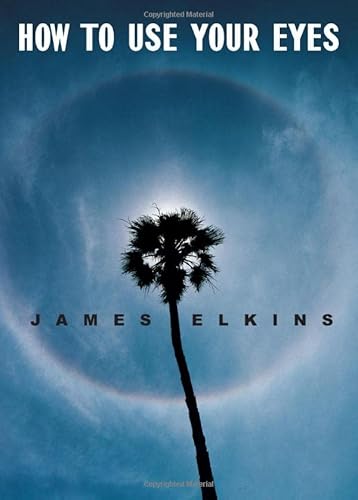
James Elkins's How to Use Your Eyes invites us to look at--and maybe to see for the first time--the world around us, with breathtaking results. Here are the common artifacts of life, often misunderstood and largely ignored, brought into striking focus. With the discerning eye of a painter and the zeal of a detective, Elkins explores complicated things like mandalas, the periodic table, or a hieroglyph, remaking the world into a treasure box of observations--eccentric, ordinary, marvelous.
"synopsis" may belong to another edition of this title.
About the Author
James Elkins is Professor at the School of the Art Institute of Chicago. He is the author of What Painting Is (1998) and Why Are Our Pictures Puzzles? (1999), both published by Routledge.
Reviews
How does one read an X-ray? What do the markings on a butterfly's wings mean? Why do the colors in a sunset always come in a certain order? Elkins (What Painting Is) answers these and other questions in this engaging guide to little-noticed and little-understood elements of the natural and technological worlds. "It's about stopping and taking the time to simply look," explains Elkins. If you learn to look at things in the right way, Elkins believes, the world around you "will gather before your eyes and become thick with meaning." Much of his book focuses on such "universally unnoticed" objects as twigs and stamps; in one chapter he demonstrates how to identify trees in winter by the leaf scars on their twigs, while in another he shows how stamp artistry reveals crucial details about the time and place of its use. Elkins also probes more esoteric subjects such as mandalas and Chinese characters (which are vastly more complicated than popularly thought in the West). This variety of topic seems intended to catch a wide array of reader interests, but it eventually feels like a thin pretext for discussing wildly dissimilar material. Still, most of the topics are interestingDespecially the chapter on "ice halos" (magical rainbow-like rings that form around the sun during the winter)Dand Elkins proves himself an enthusiastic, fun guide. With dozens of full-color photographs, this is a great book for the coffee table. (Nov)
Copyright 2000 Reed Business Information, Inc.
Elkins, associate professor of art history, theory and criticism at the School of the Art Institute of Chicago, says that our eyes are too good for us, taking in so many things that we tend to focus only on what is important at the moment. "What happens if we stop and take the time to look more carefully? Then the world unfolds like a flower, full of colors and shapes that we had never suspected." Whereupon he takes close looks at 31 things and at "nothing." (Looking at nothing, he observes, turns out to be quite hard to do: "Our eyes will not stop seeing, even when they have to invent the world from nothing.") Among the 31 things are an old painting (not for its picture but for its craquelure, which reveals much about the history of the painting), an x-ray, the periodic table and a sunset. The result is a book that is visually stunning and mentally stimulating.
Editors of Scientific American
How to Use Your Eyes is not a reference text, Elkins assures us in his preface. Instead, the author of What Painting Is (1998) has written a fascinating new book filled with gorgeous illustrations that would inspire us "to learn to see anything." It's a tall order, to be sure, but one that the author pulls off admirably. An empiricist at heart, Elkins is as likely to study the cracks in an oil painting as he is to contemplate its grand artistic design. Therefore, it is no surprise that, of the myriad things to see in the world, he has chosen to showcase 32 objects that we often encounter but somehow never take the time to examine closely--things as elemental as a blade of grass or a moth's wing; as mysterious as Egyptian hieroglyphics or a mandala; as deliberate as an engineering drawing. How to Use Your Eyes is a wondrous visual tour that Elkins hopes will help us "learn to use our eyes more concertedly until the details of the world slowly reveal themselves." Readers will be inspired to stop and smell--nay, see--the roses. Veronica Scrol
Copyright © American Library Association. All rights reserved
"About this title" may belong to another edition of this title.
Other Popular Editions of the Same Title

Search results for How to Use Your Eyes

Seller Image
How to Use Your Eyes
Seller: Bay State Book Company, North Smithfield, RI, U.S.A.
Seller rating 5 out of 5 stars

Condition: acceptable. The book is complete and readable, with all pages and cover intact. Dust jacket, shrink wrap, or boxed set case may be missing. Pages may have light notes, highlighting, or minor water exposure, but nothing that affects readability. May be an ex-library copy and could include library markings or stickers. Seller Inventory # BSM.143US
Seller Image
How to Use Your Eyes
Seller: Bay State Book Company, North Smithfield, RI, U.S.A.
Seller rating 5 out of 5 stars
Condition: good. The book is in good condition with all pages and cover intact, including the dust jacket if originally issued. The spine may show light wear. Pages may contain some notes or highlighting, and there might be a "From the library of" label. Boxed set packaging, shrink wrap, or included media like CDs may be missing. Seller Inventory # BSM.15PI8
Stock Image
How to Use Your Eyes
Seller: World of Books (was SecondSale), Montgomery, IL, U.S.A.
Seller rating 5 out of 5 stars
Condition: Good. Item in good condition. Textbooks may not include supplemental items i.e. CDs, access codes etc. Seller Inventory # 00102203988
Stock Image
How to Use Your Eyes
Published by
Taylor & Francis Group, 2000
ISBN 10: 0415922542
ISBN 13: 9780415922548
Used
Hardcover
First Edition
Seller: Better World Books: West, Reno, NV, U.S.A.
Seller rating 5 out of 5 stars
Condition: Good. 1st Edition. Former library copy. Pages intact with minimal writing/highlighting. The binding may be loose and creased. Dust jackets/supplements are not included. Includes library markings. Stock photo provided. Product includes identifying sticker. Better World Books: Buy Books. Do Good. Seller Inventory # 4610597-6
Stock Image
How to Use Your Eyes
Published by
Taylor & Francis Group, 2000
ISBN 10: 0415922542
ISBN 13: 9780415922548
Used
Hardcover
First Edition
Seller: Better World Books, Mishawaka, IN, U.S.A.
Seller rating 5 out of 5 stars
Condition: Good. 1st Edition. Pages intact with minimal writing/highlighting. The binding may be loose and creased. Dust jackets/supplements are not included. Stock photo provided. Product includes identifying sticker. Better World Books: Buy Books. Do Good. Seller Inventory # 5701790-6
Stock Image
How to Use Your Eyes
Seller: Half Price Books Inc., Dallas, TX, U.S.A.
Seller rating 5 out of 5 stars
Hardcover. Condition: Very Good. Connecting readers with great books since 1972! Used books may not include companion materials, and may have some shelf wear or limited writing. We ship orders daily and Customer Service is our top priority! Seller Inventory # S_457778855
Stock Image
How to Use Your Eyes
Seller: ThriftBooks-Dallas, Dallas, TX, U.S.A.
Seller rating 5 out of 5 stars
Hardcover. Condition: Very Good. No Jacket. Former library book; May have limited writing in cover pages. Pages are unmarked. ~ ThriftBooks: Read More, Spend Less. Seller Inventory # G0415922542I4N10
Seller Image
How to Use Your Eyes
Seller: Blue Vase Books, Interlochen, MI, U.S.A.
Seller rating 5 out of 5 stars
Condition: acceptable. The item is very worn but is perfectly usable. Signs of wear can include aesthetic issues such as scratches, dents, worn and creased covers, folded page corners and minor liquid stains. All pages and the cover are intact, but the dust cover may be missing. Pages may include moderate to heavy amount of notes and highlighting, but the text is not obscured or unreadable. Page edges may have foxing age related spots and browning . May NOT include discs, access code or other supplemental materials. Seller Inventory # BVV.0415922542.A
Stock Image
How to Use Your Eyes
Seller: HPB-Ruby, Dallas, TX, U.S.A.
Seller rating 5 out of 5 stars
Hardcover. Condition: Very Good. Connecting readers with great books since 1972! Used books may not include companion materials, and may have some shelf wear or limited writing. We ship orders daily and Customer Service is our top priority! Seller Inventory # S_450993822
Stock Image
How to Use Your Eyes
Seller: HPB-Emerald, Dallas, TX, U.S.A.
Seller rating 5 out of 5 stars
Hardcover. Condition: Very Good. Connecting readers with great books since 1972! Used books may not include companion materials, and may have some shelf wear or limited writing. We ship orders daily and Customer Service is our top priority! Seller Inventory # S_453189638