
Synopsis
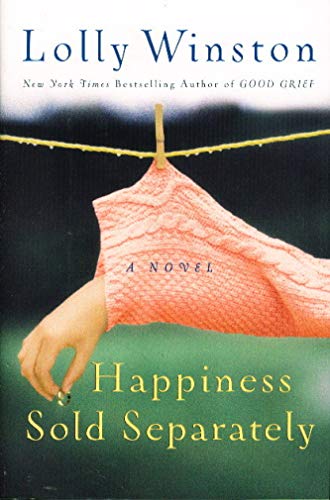
Discovering that she and her husband are unable to have children, Elinor Mackey finds her carefully ordered world falling apart in the wake of her husband's subsequent affair with a young mother, the woman's violent ex-boyfriend, and her own devotion to an oak tree. 200,000 first printing.
"synopsis" may belong to another edition of this title.
Reviews
Lolly Winston's warmhearted second novel is a natural crowd-pleaser that deserves critical respect as well. She tackles difficult subjects -- infidelity, infertility, a failing marriage and a troubled kid -- with honesty and empathy for her floundering protagonists. Her plain-spoken prose and a not-too-gritty resolution should make this a book-group favorite. But Winston doesn't court popular appeal with easy laughs or shallow reassurances; her characters feel genuine sorrow and suffer real damage.
In the first chapter, Elinor Mackey picks up the phone and hears her husband, Ted, talking to a woman who's obviously his lover. Emotionally exhausted after three years of fertility tests, intrauterine inseminations and in vitro fertilization, capped by an early miscarriage, Elinor can't summon up the energy to be angry: "Instead, she feels pity . . . and fatigue." Since the Mackeys decided to stop trying to have a baby shortly after Elinor turned 40, they have been drifting apart. While Elinor, a high-powered attorney in Silicon Valley, retreated to the laundry room during her off-work hours to obsessively wash and fold clothes, Ted, unable to comfort her, focused on shaping up his 45-year-old body. He met Gina, a fitness trainer, at the gym.
"I love you," Ted declares desperately when Elinor confronts him and Gina with their affair. She loves him, too, Elinor thinks. "But that's beside the point! Isn't it?" This combination of bitter statement softened by an almost after-the-thought question highlights one of Winston's principal gifts: her refusal to tidy up complicated feelings and conflicted human beings. Novels about a love triangle frequently falter because you can't understand what the two rivals see in the object of their affections, who's either a philandering creep or an indecisive idiot. Ted, by contrast, rings true and remains sympathetic because the author believably shows us why he cheated and why both women love him. He became a podiatrist because he likes helping people, and foot problems are mostly solvable; he doesn't like feeling helpless, so when his tenderness and supportiveness aren't enough to help Elinor through her grief, he's ripe for Gina's seduction.
Gina may have hooked Ted by being sexy, but she hangs onto him by being needy. He breaks up with her after Elinor finds out; he's sucked back into her life when he bumps into her at the Country Kitchen Café with the son he didn't know she had. Ten-year-old Toby, one of the book's best drawn personalities, is smart, motor-mouthed and difficult. Gina begs her former lover to tutor Toby through the transition to a demanding Silicon Valley school. Ted's drawn to the boy and "desperate to fill the gap between Gina and Toby, a gap he worries he's falling into." (Winston's characters are sometimes improbably well-informed about their motivations, even for well-educated, articulate people.) Unsurprisingly, he does fall, into the gap and back into Gina's arms.
Meanwhile Elinor has taken a sabbatical from work. "Somewhere along the way to becoming a successful businesswoman, [she] left her identity at the coat check," she muses, pulling on a long-discarded pair of jeans as part of her project to find out who she might really be. She flirts with various local men, relies increasingly on the friendship of her neighbor Kat and starts to research adoption. She and Ted reconcile, split up and reconcile again, prompted by plot developments it would be unfair to reveal. (Several are startling, but they're all credibly motivated and believably played out, with the partial exception of one violent scene near the end.)
Winston manages to maintain our sympathy for all three protagonists as Gina grows increasingly self-confident and assertive, Ted painfully grapples with being in love with two women, and Elinor finally reconnects with her husband by angrily telling their marriage counselor, "Maybe talking doesn't help." Stroking her hair, Ted sees for the first time in many months the shrewdly perceptive, darkly funny woman he married. When he thinks to himself, "She's doing that thing she used to do all the time, where she'd say exactly what he was thinking," it's one of the book's most touching and saddest moments. Winston sustains a tricky balancing act in her conclusion, which acknowledges loss yet affirms the possibility of growth and future happiness. Her low-key novel doesn't aspire to make big statements, but it's truthful, thoughtful and very appealing.
Reviewed by Wendy Smith
Copyright 2006, The Washington Post. All Rights Reserved.
After tackling the topic of sudden loss in her debut novel, Good Grief (***1/2 July/Aug 2004), Winston turns her attention to infertility and infidelity and addresses these two very sensitive subjects with kindness and grace. Though critics agree that the novel isn't earthshaking in either content or style, they find much to praise in Winston's thoughtful portrayals of the too-often-clichéd philandering husband, lonely wife, and needy mistress, as well as the descriptions of tender moments between Ted and Elinor even as they pragmatically "outsource" their sex life to fertility doctors and their love life to therapists. Reviewers cite Happiness as both a good book-club selection and an enjoyable solo read.
Copyright © 2004 Phillips & Nelson Media, Inc.
The marriage of Ted and Elinor Mackey, a yuppie podiatrist-lawyer couple in their early-40s living in Northern California, is pushed to the brink when Elinor learns that Ted is having an affair with his trainer, Gina Ellison. Elinor's reaction—pity—surprises her. Winston (Good Grief) adroitly makes it clear that Ted's affair is a symptom: infertility problems have caused years of emotional turmoil. And Gina's no bimbo: she has a loving but difficult relationship with Ted, complicated further by her young son, Toby, and his immediate attachment to Ted as a stable father figure. When Elinor confronts Ted and Gina, Ted quickly ends the affair; neither is sure if infidelity or infertility should end their marriage. During their separation, Elinor takes a sabbatical from her law firm and casually dates Noah Orch, a hunky but dull arborist. Ted haphazardly resumes his relationship with Gina. As he realizes that his connection to her is more than an escape from a bad marriage, all concerned have decisions to make. Winston has a real feel for the push and pull of a marriage in crisis, and delivers it in a brisk, funny, no-nonsense style that still comes off as respectful of the material. (Aug.)
Copyright © Reed Business Information, a division of Reed Elsevier Inc. All rights reserved.
Infertility and infidelity pack a potent--and potentially fatal--one-two punch to Elinor and Ted Mackey's once-idyllic marriage in Winston's perceptive and poignant exploration of marital commitment and liberation. Intelligent and successful, the Mackeys appear to have everything going for them except the ability to become parents and the agility to withstand the devastating emotional impact such a loss imposes on their relationship. Her hormones in a state of turbulent imbalance, Elinor becomes alternately volatile and withdrawn, driving Ted to seek refuge at the local gym, where his nubile personal trainer, Gina, is more than willing to provide the sympathy and support he craves. Madly in love with Ted, single-mother Gina has a secret weapon to eventually win him over: her ten-year-old son, Toby, whose open adoration of Ted may prove too hard for anyone to resist. Once again, Winston demonstrates a laserlike ability to focus on the inescapable reality of contemporary relationships, tempering her characters' abject pain with appealing good humor. Carol Haggas
Copyright © American Library Association. All rights reserved
"About this title" may belong to another edition of this title.
Other Popular Editions of the Same Title

Search results for Happiness Sold Separately

Stock Image
Happiness Sold Separately
Published by
Grand Central Publishing, 2006
ISBN 10: 0446533068
ISBN 13: 9780446533065
Used
Hardcover
Seller: World of Books (was SecondSale), Montgomery, IL, U.S.A.
Seller rating 5 out of 5 stars

Condition: Good. Item in good condition. Textbooks may not include supplemental items i.e. CDs, access codes etc. Seller Inventory # 00098024892
Stock Image
Happiness Sold Separately
Published by
Grand Central Publishing, 2006
ISBN 10: 0446533068
ISBN 13: 9780446533065
Used
Hardcover
Seller: World of Books (was SecondSale), Montgomery, IL, U.S.A.
Seller rating 5 out of 5 stars
Condition: Acceptable. Item in acceptable condition! Textbooks may not include supplemental items i.e. CDs, access codes etc. Seller Inventory # 00097318904
Stock Image
Happiness Sold Separately
Published by
Grand Central Publishing, 2006
ISBN 10: 0446533068
ISBN 13: 9780446533065
Used
Hardcover
Seller: World of Books (was SecondSale), Montgomery, IL, U.S.A.
Seller rating 5 out of 5 stars
Condition: Good. Item in good condition and has highlighting/writing on text. Used texts may not contain supplemental items such as CDs, info-trac etc. Seller Inventory # 00104019238
Stock Image
Happiness Sold Separately
Published by
Grand Central Publishing, 2006
ISBN 10: 0446533068
ISBN 13: 9780446533065
Used
Hardcover
Seller: World of Books (was SecondSale), Montgomery, IL, U.S.A.
Seller rating 5 out of 5 stars
Condition: Very Good. Item in very good condition! Textbooks may not include supplemental items i.e. CDs, access codes etc. Seller Inventory # 00024317691
Seller Image
Happiness Sold Separately
Published by
Grand Central Publishing, 2006
ISBN 10: 0446533068
ISBN 13: 9780446533065
Used
Hardcover
Seller: Reliant Bookstore, El Dorado, KS, U.S.A.
Seller rating 5 out of 5 stars
Condition: good. This book is in good condition with very minimal damage. Pages may have minimal notes or highlighting. The dust jacket is missing. Cover image on the book may vary from photo. Ships out quickly in a secure plastic mailer. Seller Inventory # RDV.0446533068.G
Stock Image
Happiness Sold Separately
Published by
Grand Central Publishing, 2006
ISBN 10: 0446533068
ISBN 13: 9780446533065
Used
Hardcover
Seller: More Than Words, Waltham, MA, U.S.A.
Seller rating 5 out of 5 stars
Condition: Good. . Former Library book. All orders guaranteed and ship within 24 hours. Before placing your order for please contact us for confirmation on the book's binding. Check out our other listings to add to your order for discounted shipping. Seller Inventory # WAL-R-3f-01923
Seller Image
Happiness Sold Separately
Published by
Grand Central Publishing, 2006
ISBN 10: 0446533068
ISBN 13: 9780446533065
Used
Hardcover
Seller: Goodwill of Colorado, COLORADO SPRINGS, CO, U.S.A.
Seller rating 5 out of 5 stars
Condition: very_good. Item may have minor cosmetic defects marks, wears, cuts, bends, crushes on the cover, spine, pages or dust cover. Shrink wrap, dust covers, or boxed set case may be missing. Item may contain remainder marks on outside edges, which should be noted in Product Details. Item may be missing bundled media. Seller Inventory # COLV.0446533068.VG
Stock Image
Happiness Sold Separately
Published by
Grand Central Publishing, 2006
ISBN 10: 0446533068
ISBN 13: 9780446533065
Used
Hardcover
Seller: Half Price Books Inc., Dallas, TX, U.S.A.
Seller rating 5 out of 5 stars
hardcover. Condition: Very Good. Connecting readers with great books since 1972! Used books may not include companion materials, and may have some shelf wear or limited writing. We ship orders daily and Customer Service is our top priority! Seller Inventory # S_400012218
Stock Image
Happiness Sold Separately
Published by
Grand Central Publishing, 2006
ISBN 10: 0446533068
ISBN 13: 9780446533065
Used
Hardcover
Seller: HPB Inc., Dallas, TX, U.S.A.
Seller rating 5 out of 5 stars
hardcover. Condition: Very Good. Connecting readers with great books since 1972! Used books may not include companion materials, and may have some shelf wear or limited writing. We ship orders daily and Customer Service is our top priority! Seller Inventory # S_456767326
Stock Image
Happiness Sold Separately
Published by
Grand Central Publishing, 2006
ISBN 10: 0446533068
ISBN 13: 9780446533065
Used
Hardcover
Seller: HPB-Emerald, Dallas, TX, U.S.A.
Seller rating 5 out of 5 stars
hardcover. Condition: Very Good. Connecting readers with great books since 1972! Used books may not include companion materials, and may have some shelf wear or limited writing. We ship orders daily and Customer Service is our top priority! Seller Inventory # S_464855059