
Synopsis
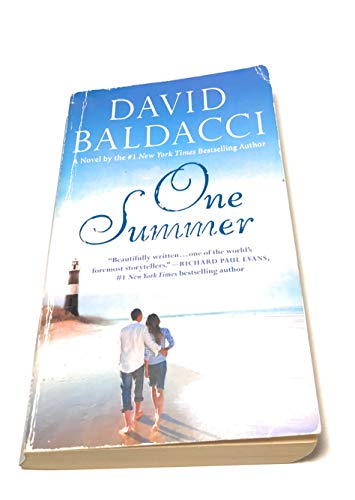
#1 bestselling author David Baldacci delivers a moving, family drama about learning to love again after terrible heartbreak and loss in this classic New York Times bestseller.
"Beautifully written." —Richard Paul Evans, #1 New York Times bestselling author of The Christmas Box
It's almost Christmas, but there is no joy in the house of terminally ill Jack and his family. With only a short time left to live, he spends his last days preparing to say goodbye to his devoted wife, Lizzie, and their three children. Then, unthinkably, tragedy strikes again: Lizzie is killed in a car accident. With no one able to care for them, the children are separated from each other and sent to live with family members around the country.
Just when all seems lost, Jack begins to recover in a miraculous turn of events. He rises from what should have been his deathbed, determined to bring his fractured family back together. Struggling to rebuild their lives after Lizzie's death, he reunites everyone at Lizzie's childhood home on the oceanfront in South Carolina. And there, over one unforgettable summer, Jack will begin to learn to love again, and he and his children will learn how to become a family once more.
"synopsis" may belong to another edition of this title.
About the Author
DAVID BALDACCI is a global #1 bestselling author, and one of the world's favorite storytellers. His books are published in over forty-five languages and in more than eighty countries, with 150 million copies sold worldwide. His works have been adapted for both feature film and television. David Baldacci is also the cofounder, along with his wife, of the Wish You Well Foundation, a nonprofit organization dedicated to supporting literacy efforts across America. Still a resident of his native Virginia, he invites you to visit him at DavidBaldacci.com and his foundation at WishYouWellFoundation.org.
Excerpt. © Reprinted by permission. All rights reserved.
One Summer
By David BaldacciGrand Central Publishing
Copyright © 2013 David Baldacci
All rights reserved.
ISBN: 978-0-446-58316-9All rights reserved.
CHAPTER 1
Jack Armstrong sat up in the secondhand hospital bed that had been wedged into acorner of the den in his home in Cleveland. A father at nineteen, he and hiswife, Lizzie, had conceived their second child when he'd been home on leave fromthe army. Jack had been in the military for five years when the war in theMiddle East started. He'd survived his first tour in Afghanistan and earned aPurple Heart for taking one in the arm. After that he'd weathered several toursof duty in Iraq, one of which included the destruction of his Humvee while hewas still inside. That injury had won him his second Purple. And he had a BronzeStar on top of that for rescuing three ambushed grunts from his unit and nearlygetting killed in the process. After all that, here he was, dying fast in hischeaply paneled den in Ohio's Rust Belt.
His goal was simple: just hang on until Christmas. He sucked greedily on theoxygen coming from the line in his nose. The converter that stayed in the cornerof the small room was on maximum production, and Jack knew that one day soon itwould be turned off because he'd be dead. Before Thanksgiving he was certain hecould last another month. Now Jack was not sure he could make another day.
But he would.
I have to.
In high school the six-foot-two, good-looking Jack had varsity lettered in threesports, quarterbacked the football team, and had his pick of the ladies. Butfrom the first time he'd seen Elizabeth "Lizzie" O'Toole, it was all over forhim in the falling-in-love department. His heart had been won perhaps evenbefore he quite realized it. His mouth curled into a smile at the memory ofseeing her for the first time. Her family had come from South Carolina. Jack hadoften wondered why the O'Tooles had moved to Cleveland, where there was noocean, a lot less sun, a lot more snow and ice, and not a palm tree in sight.Later, he'd learned it was because of a job change for Lizzie's father.
She'd come into class that first day, tall, with long auburn hair and vibrantgreen eyes, her face already mature and lovely. They had started going togetherin high school and had never been separated since, except long enough for Jackto fight in two wars.
"Jack; Jack honey?"
Lizzie was crouched down in front of him. In her hand was a syringe. She wasstill beautiful, though her looks had taken on a fragile edge. There were darkcircles under her eyes and recently stamped worry lines on her face. The glowhad gone from her skin, and her body was harder, less supple than it had been.Jack was the one dying, but in a way she was too.
"It's time for your pain meds."
He nodded, and she shot the drugs directly into an access line cut right belowhis collarbone. That way the medicine flowed directly into his bloodstream andstarted working faster. Fast was good when the pain felt like every nerve in hisbody was being incinerated.
After she finished, Lizzie sat and hugged him. The doctors had a long name forwhat was wrong with him, one that Jack still could not pronounce or even spell.It was rare, they had said; one in a million. When he'd asked about his odds ofsurvival, the docs had looked at each other before one finally answered.
"There's really nothing we can do. I'm sorry."
"Do the things you've always wanted to do," another had advised him, "but neverhad the chance."
"I have three kids and a mortgage," Jack had shot back, still reeling from thissudden death sentence. "I don't have the luxury of filling out some end-of-lifebucket list."
"How long?" he'd finally asked, though part of him didn't really want to know.
"You're young and strong," said one. "And the disease is in its early stages."
Jack had survived the Taliban and Al-Qaeda. He could maybe hold on and see hisoldest child graduate from college. "So how long?" he'd asked again.
The doctor said, "Six months. Maybe eight if you're lucky."
Jack did not feel very lucky.
He vividly remembered the morning he started feeling not quite right. It was anache in his forearm and a stab of pain in his right leg. He was a buildingcontractor by trade, so aches and pains were to be expected. But things sooncarried to a new level. His limbs would grow tired from three hours of physicallabor as opposed to ten. The stabs of pain became more frequent, and his balancebegan to deteriorate. His back finally couldn't make it up the ladder with thestacks of shingles. Then it hurt to carry his youngest son around after tenminutes. Then the fire in his nerves started, and his legs felt like an oldman's. And one morning he woke up and his lungs were like balloons filled withwater. Everything had accelerated after that, as though his body had simplygiven way to whatever was invading it.
His youngest child, Jack Jr., whom everyone called Jackie, toddled in andclimbed on his dad's lap, resting his head against his father's sunken chest.Jackie's hair was long and inky black, curled up at the ends. His eyes were thecolor of toast; his thick eyebrows nearly met in the middle, like a burly woolenthread. Jackie had been their little surprise. Their other kids were much older.
Jack slowly slid his arm around his two-year-old son. Chubby fingers gripped hisforearm, and warm breath touched his skin. It felt like the pierce of needles,but Jack simply gritted his teeth and didn't move his arm because there wouldn'tbe many more of these embraces. He slowly turned his head and looked out thewindow, where the snow was steadily falling. South Carolina and palm trees hadnothing on Cleveland when it came to the holidays. It was truly beautiful.
He took his wife's hand.
"Christmas," Jack said in a wheezy voice. "I'll be there."
"Promise?" said Lizzie, her voice beginning to crack.
"Promise."
CHAPTER 2Jack awoke, looked around, and didn't know where he was. He could feel nothing,wasn't even sure if he was still breathing.
Am I dead? Was this it?
"Pop-pop," said Jackie as he slid next to his father on the bed. Jack turned andsaw the chubby cheeks and light brown eyes.
Jack stroked his son's hair. Good, thick strands, like he used to have beforethe disease had stolen that too. Curious, Jackie tried to pull out the oxygenline from his father's nose, but he redirected his son's hand and cupped it withhis own.
Lizzie walked in with his meds and shot them into the access line. An IV driptook care of Jack's nutrition and hydration needs. Solid foods were beyond himnow.
"I just dropped the kids off at school," she told him.
"Mikki?" said Jack.
Lizzie made a face. Their daughter, Michelle, would be turning sixteen nextsummer, and her rebellious streak had been going strong since she'd become ateenager. She was into playing her guitar and working on her music, wearingjunky clothes, sneaking out at night, and ignoring the books. "At least sheshowed up for the math test. I suppose actually passing it would've been askingtoo much. On the bright side, she received an A in music theory."
Jackie got down and ran into the other room, probably for a toy. Jack watchedhim go with an unwieldy mixture of pride and sorrow. He would never see his sonas a man. He would never even see him start kindergarten. That cut against thenatural order of things. But it was what it was.
Jack had experienced an exceptionally long phase of denial after being told hehad little time left. That was partially because he had always been a survivor.A rocky childhood and two wars had not done him in, so he had initially feltconfident that despite the doctors' fatal verdict, his disease was beatable. Astime went by, however, and his body continued to fail, it had become clear thatthis battle was not winnable. It had reached a point where making the most ofhis time left was more important to him than trying to beat his head against animpenetrable wall. Most significantly, he wanted his kids' memories of his finaldays to be as positive as possible. Jack had concluded that if he had to dieprematurely, that was about as good a way to do so as there was. It beat beingdepressed and making everyone else around him miserable, waiting for him to die.
Before he'd gotten sick, Jack had talked to his daughter many times about makinggood life choices, about the importance of school, but nothing seemed to make adifference to the young woman. There was a clear disconnect now between fatherand daughter. When she'd been a little girl, Mikki had unconditionally loved herdad, wanted to be around him all the time. Now he rarely saw her. To her, itseemed to Jack, he might as well have been already dead.
"Mikki seems lost around me," he said slowly.
Lizzie sat next to him, held his hand. "She's scared and confused, honey. Someof it has to do with her age. Most of it has to do with ..."
"Me." Jack couldn't look at her when he made this admission.
"She and I have talked about it. Well, I talked and she didn't say much. She's asmart kid, but she really doesn't understand why this is happening, Jack. Andher defense mechanism is to just detach herself from it. It's not the healthiestway to cope with things, though."
"I can understand," said Jack.
She looked at him. "Because of your dad?"
He nodded and rubbed her hand with his fingers, his eyes moistening as heremembered his father's painful death. He took several long pulls on the oxygen."If I could change things, I would, Lizzie."
She rested her body next to his, wrapped her arms around his shoulders, andkissed him. When she spoke, her voice was husky and seemed right on the edge offailing. "Jack, this is hard on everyone. But it's hardest on you. You have beenso brave; no one could have handled—" She couldn't continue. Lizzie laidher head next to his and wept softly. Jack held her with what little strength hehad left.
"I love you, Lizzie. No matter what happens, nothing will ever change that."
He'd been sleeping in the hospital bed because he couldn't make it up the stairsto their bedroom even with assistance. He'd fought against that the hardestbecause as his life dwindled away he had desperately wanted to feel Lizzie'swarm body against his. It was another piece of his life taken from him, like hewas being dismantled, brick by brick.
And I am, brick by brick.
After a few minutes, she composed herself and wiped her eyes. "Cory is playingthe Grinch in the class play at the school on Christmas Eve, remember?"
Jack nodded. "I remember."
"I'll film it for you."
Cory was the middle child, twelve years old and the ham in the family.
Jack smiled and said, "Grinch!"
Lizzie smiled back, then said, "I've got a conference call in an hour, and thenI'll be in the kitchen working after I give Jackie his breakfast."
She'd become a telecommuter when Jack had gotten ill. When she had to go out, aneighbor would come over or Lizzie's parents would stop by to help.
After Lizzie left, Jack sat up, slowly reached under the pillow, and pulled outthe calendar and pen. He looked at the dates in December, all of which had beencrossed out up to December twentieth. Over three decades of life, marriage,fatherhood, defending his country, and working hard, it had come down to himmarking off the few days left. He looked out the window and to the streetbeyond. The snow had stopped, but he'd heard on the news that another wintryblast was expected, with more ice than snow.
There was a knock at the door, and a few moments later Sammy Duvall appeared. Hewas in his early sixties, with longish salt-and-pepper hair and a trim beard.Sammy was as tall as Jack, but leaner, though his arms and shoulders bulged withmuscles from all the manual labor he'd done. He was far stronger than most menhalf his age and tougher than anyone Jack had ever met. He'd spent twenty yearsin the military and fought in Vietnam and done some things after that around theworld that he never talked about. A first-rate, self-taught carpenter and all-around handyman, Sammy was the reason Jack had joined the service. After Jackleft the army, he and Sammy had started the contracting business. Lacking afamily of his own, Sammy had adopted the Armstrongs.
The military vets shared a glance, and then Sammy looked over all the equipmenthelping to keep his friend alive. He shook his head slightly and his mouthtwitched. This was as close as stoic Sammy ever came to showing emotion.
"How's work?" Jack asked, and then he took a long pull of oxygen.
"No worries. Stuff's getting done and the money's coming in."
Jack knew that Sammy had been completing all the jobs pretty much on his own andthen bringing all the payments to Lizzie. "At least half of that money is yours,Sammy. You're doing all the work."
"I got my Uncle Sam pension, and it's more than I need. That changes, I'll letyou know."
Sammy lived in a converted one-car garage with his enormous Bernese mountaindog, Sam Jr. His needs were simple, his wants apparently nonexistent.
Sammy combed Jack's hair and even gave him a shave. Then the friends talked fora while. At least Sammy said a few words and Jack listened. The rest of the timethey sat in silence. Jack didn't mind; just being with Sammy made him feelbetter.
After Sammy left, Jack lifted the pen and crossed out December twenty-first.That was being optimistic, Jack knew, since the day had really just begun. Heput the calendar and pen away.
And then it happened.
He couldn't breathe. He sat up, convulsing, but that just made it worse. Hecould feel his heart racing, his lungs squeezing, his face first growing red andthen pale as the oxygen left his body and nothing replenished it.
December twenty-first, he thought, my last day.
"Pop-pop?"
Jack looked up to see his son holding the end of the oxygen line that attachedto the converter. He held it up higher, as though he were giving it back to hisdad.
"Jackie!"
A horrified Lizzie appeared in the doorway, snatched the line from her son'shand, and rushed to reattach the oxygen line to the converter. A few momentslater, the oxygen started to flow into the line and Jack fell back on the bed,breathing hard, trying to fill his lungs.
Lizzie raced past her youngest son and was by Jack's side in an instant. "Oh myGod, Jack, oh my God." Her whole body was trembling.
He held up his hand to show he was okay.
Lizzie whirled around and snapped, "That was bad, Jackie, bad."
Jackie's face crumbled, and he started to bawl.
She snatched up Jackie and carried him out. The little boy was struggling tofree himself, staring at Jack over her shoulder, reaching his arms out to hisfather. His son's look was pleading.
"Pop-pop," wailed Jackie.
The tears trickled down Jack's face as his son's cries faded away. But then Jackheard Lizzie sobbing and pictured her crying her heart out and wondering whatthe hell she'd done to deserve all this.
Sometimes, Jack thought, living was far harder than dying.
CHAPTER 3Jack awoke from a nap late the next day in time to see his daughter opening thefront door, guitar case in hand. He motioned to her to come see him. She closedthe door and dutifully trudged to his room.
Mikki had auburn hair like her mother's. However, she had dyed it severaldifferent colors, and Jack had no idea what it would be called now. She wasshooting up in height, her legs long and slender and her hips and bosom fillingout. Though she acted like she was totally grown up now, her face was caught inthat time thread that was firmly past the little-girl stage but not yet a woman.She would be a junior in high school next year. Where had the time gone?
"Yeah, Dad?" she said, not looking at him.
He thought about what to say. In truth, they didn't have much to talk about.Even when he'd been healthy, their lives lately had taken separate paths.That was my fault, he thought. Not hers.
"Your A." He took a long breath, tried to smile.
She smirked. "Right. Music theory. My only one. I'm sure Mom told you that too.Right?"
"Still an A."
"Thanks for mentioning it." She looked at the floor, an awkward expression onher features. "Look, Dad, I gotta go. People are waiting. We're rehearsing."
She was in a band, Jack knew, though he couldn't recall the name of it just now.
"Okay, be careful."
(Continues...)
Excerpted from One Summer by David Baldacci. Copyright © 2013 David Baldacci. Excerpted by permission of Grand Central Publishing.
All rights reserved. No part of this excerpt may be reproduced or reprinted without permission in writing from the publisher.
Excerpts are provided by Dial-A-Book Inc. solely for the personal use of visitors to this web site.
"About this title" may belong to another edition of this title.
Other Popular Editions of the Same Title

Search results for One Summer

Stock Image
One Summer
Seller: World of Books (was SecondSale), Montgomery, IL, U.S.A.
Seller rating 5 out of 5 stars

Condition: Acceptable. Item in acceptable condition! Textbooks may not include supplemental items i.e. CDs, access codes etc. Seller Inventory # 00090113815
Stock Image
One Summer
Seller: World of Books (was SecondSale), Montgomery, IL, U.S.A.
Seller rating 5 out of 5 stars
Condition: Good. Item in good condition. Textbooks may not include supplemental items i.e. CDs, access codes etc. Seller Inventory # 00092085206
Stock Image
One Summer
Seller: Orion Tech, Kingwood, TX, U.S.A.
Seller rating 5 out of 5 stars
Mass Market Paperback. Condition: Good. Seller Inventory # 0446583162-3-18548126
Stock Image
One Summer
Seller: Your Online Bookstore, Houston, TX, U.S.A.
Seller rating 5 out of 5 stars
Mass Market Paperback. Condition: Fair. Seller Inventory # 0446583162-4-22153513
Stock Image
One Summer
Seller: Gulf Coast Books, Cypress, TX, U.S.A.
Seller rating 5 out of 5 stars
Mass Market Paperback. Condition: Good. Seller Inventory # 0446583162-3-21132228
Stock Image
One Summer
Seller: Gulf Coast Books, Cypress, TX, U.S.A.
Seller rating 5 out of 5 stars
Mass Market Paperback. Condition: Fair. Seller Inventory # 0446583162-4-22410465
Stock Image
One Summer
Seller: Orion Tech, Kingwood, TX, U.S.A.
Seller rating 5 out of 5 stars
Mass Market Paperback. Condition: Fair. Seller Inventory # 0446583162-4-23115131
Seller Image
One Summer
Seller: Zoom Books East, Glendale Heights, IL, U.S.A.
Seller rating 5 out of 5 stars
Condition: very_good. Book is in very good condition and may include minimal underlining highlighting. The book can also include "From the library of" labels. May not contain miscellaneous items toys, dvds, etc. . We offer 100% money back guarantee and 24 7 customer service. Seller Inventory # ZEV.0446583162.VG
Seller Image
One Summer
Seller: Zoom Books Company, Lynden, WA, U.S.A.
Seller rating 5 out of 5 stars
Condition: very_good. Book is in very good condition and may include minimal underlining highlighting. The book can also include "From the library of" labels. May not contain miscellaneous items toys, dvds, etc. . We offer 100% money back guarantee and 24 7 customer service. Seller Inventory # ZBV.0446583162.VG
Seller Image
One Summer
Seller: Zoom Books East, Glendale Heights, IL, U.S.A.
Seller rating 5 out of 5 stars
Condition: good. Book is in good condition and may include underlining highlighting and minimal wear. The book can also include "From the library of" labels. May not contain miscellaneous items toys, dvds, etc. . We offer 100% money back guarantee and 24 7 customer service. Seller Inventory # ZEV.0446583162.G