
Items related to The Inflammation Syndrome: Your Nutrition Plan for...
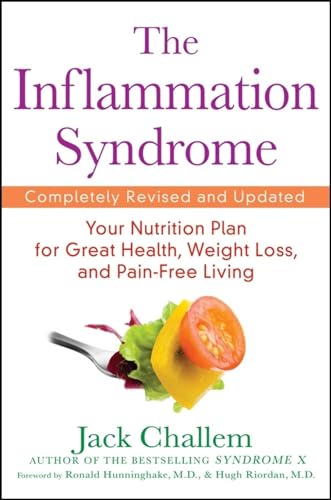
The Inflammation Syndrome: Your Nutrition Plan for Great Health, Weight Loss, and Pain-Free Living - Softcover
Synopsis
Completely revised and updated-Jack Challem's powerful plan to safely prevent and overcome inflammatory disorders
Inflammation is what happens when our body's own defenses turn on us-and it is a huge and growing problem. Written by the author of the groundbreaking Syndrome X, this essential updated edition of The Inflammation Syndrome draws on cutting-edge research conducted around the world to provide a revolutionary approach to healing inflammation-related problems through an easy-to-follow nutrition and supplement program.
- Includes new recommendations for individualized diet and supplement plans
- Presents fourteen steps for restoring dietary balance, plus recipes and menu plans
- Reveals the powerful role inflammation plays in a wide variety of common health conditions–from simple aches and pains to heart disease, obesity, diabetes, arthritis, asthma, and athletic injuries
- Features dramatic case histories and the latest information on dosage recommendations for anti-inflammation supplements such as fish oils, vitamins, and herbs
- Other books by Jack Challem: Syndrome X, The Food-Mood Solution, Feed Your Genes Right, and Stop Prediabetes Now
Read The Inflammation Syndrome and learn just how easy it can be to take charge of your diet and health.
"synopsis" may belong to another edition of this title.
About the Author
JACK CHALLEM is the author of many successful health books, including Syndrome X and Stop Prediabetes Now. Challem is the publisher and editor of The Nutrition Reporter, a newsletter that highlights the latest cutting-edge global nutritional research. He runs a private nutrition practice and lectures worldwide.
From the Back Cover
Now thoroughly updated with the latest crucial information?Jack Challem's powerful plan to safely prevent and overcome inflammatory disorders
Author of the groundbreaking Syndrome X, Jack Challem was the first nutrition expert to identify the Inflammation Syndrome?and to show how to heal it. Now, drawing on the latest cutting-edge research from all over the world, Challem has revised and updated his revolutionary approach to healing inflammation?one of the major causes of diseases such as heart disease, arthritis, and diabetes?through an easy-to-follow nutritional program. Challem reveals many of the hidden dangers in the foods you eat that set the stage for inflammation, then shows you how to take the right steps toward eating well and regaining your health. The Inflammation Syndrome shows you how to feel better for life starting now.
Features of this revision of The Inflammation Syndrome include:
Revealing quizzes and tests you can take to assess your inflammation level and risk
Fourteen steps for restoring dietary balance and simple new recipes for delicious, healing, anti-inflammatory meals and menu plans
The latest information on dosage recommendations for anti-inflammation supplements such as omega-3 fish oils, vitamin D, and other nutrients you may be lacking in your diet
New recommendations for your best individualized diet plan
Dramatic new case histories of patients treated by nutritionally trained health practitioners
"In a scientifically accurate and easy-to-understand manner, Jack Challem lays out the basic nutrition plan for good health and weight loss."?Loren Cordain, Ph.D., author of The Paleo Diet
"Challem's new book hits a home run with the latest research on what to eat and take to defeat our real number-one cause of health problems?inflammation. It's a message of the utmost importance." ?Jean Carper, author of Stop Aging Now!
"The program Jack Challem outlines in The Inflammation Syndrome is a great first step in ridding your body of this deadly problem." ?Fred Pescatore, M.D., author of The Hamptons Diet
Excerpt. © Reprinted by permission. All rights reserved.
The Inflammation Syndrome
Your Nutrition Plan for Great Health, Weight Loss, and Pain-Free LivingBy Jack ChallemJohn Wiley & Sons
Copyright © 2010 John Wiley & Sons, LtdAll right reserved.
ISBN: 978-0-470-44085-8
Chapter One
Meet the Inflammation Syndrome
The Inflammation Syndrome Helps Janet Make Sense of Her Health Problems
Janet was in her midforties and felt worn down and much older because of a growing list of health problems. She was overweight and prediabetic and had high blood pressure, allergies, inflammatory bowel disease, rosacea, gastric reflux, and morning aches and pains. Janet was taking seven different prescription drugs that had marginal, if any, benefits-but that did zap her energy levels.
Her life wasn't getting better, it was getting worse. And as she looked at her parents and older sisters, she could see her future: a debilitating combination of diseases that forced her parents into early retirement and that led to long-term disability for her sisters. Tough-minded and tenacious, Janet didn't want to follow in her family's footsteps.
As she searched for a solution, she found a nutritionally oriented physician who understood that eating habits had a strong bearing on health and disease risk. He ordered Janet to undergo blood tests for nutrient levels, food allergies, and high-sensitivity C-reactive protein (hsCRP), an indicator of chronic low-grade inflammation.
His diagnosis stunned Janet. Her vitamin C and D levels were low, she was sensitive to wheat and dairy products, and she had high blood levels of hsCRP. Chronic inflammation was underlying most of Janet's health problems. "I was a disaster-and an even bigger disaster waiting to happen," she said.
The doctor explained how Janet's health problems were related to one another, and he outlined a new approach to eating that focused on high-quality proteins (such as fish and chicken) and high-fiber, non-starchy vegetables (for example, salad greens and steamed broccoli and cauliflower). He suggested that Janet avoid all packaged foods containing wheat and dairy products. On the doctor's advice, Janet began to take a number of supplements, including vitamins C and D, anti-inflammatory omega-3 fish oils, and an anti-inflammatory plant oil called gamma-linolenic acid.
By the end of the first week, Janet's energy levels were higher than they had been in years, and her general sense of well-being had increased considerably. By the end of Janet's second week on the anti-inflammatory diet and supplements, she had lost seven pounds and her gastric reflux had stopped. Even though it was springtime and the height of allergy season for Janet, her nasal symptoms were relatively mild. After one month, most of Janet's symptoms had either diminished or disappeared, and, working with her doctor, she was able to cease taking most of her medications. She also continued to lose weight.
"I'm a new person," she said. "I had forgotten what it was like to feel good and energized about life."
Even if you seem to be pretty healthy today, there's a good chance that inflammation is simmering in your body, quietly damaging your heart, your mind, and other tissues. Such inflammation may be stirred up by physical injuries, by frequent colds and flus, allergies, by eating the wrong types of fats and carbohydrates, and by having a "spare tire" around your middle. At a certain point, your inflammation will boil over into painful and debilitating symptoms.
Inflammation is a normal process that can go dreadfully wrong. It is supposed to protect us from infections and promote healing when we are injured.
Yet chronic inflammation does just the opposite: it breaks down our bodies and makes us more susceptible to disease. Inflammation forces millions of people with arthritis to alter their daily lives, and it compels millions of people with asthma to be cautious because they do not know when their next suffocating attack will occur. Millions of other people-with multiple sclerosis, lupus, diabetes, and other disorders-also suffer from chronic inflammation.
The Inflammation Syndrome
Individual inflammatory disorders such as asthma or rheumatoid arthritis are bad enough. Far more insidious is the inflammation syndrome, the significance of which is only now being recognized in medical circles.
A syndrome is a group of symptoms that characterizes a particular disorder. For example, in my earlier book Syndrome X: The Complete Nutritional Program to Prevent and Reverse Insulin Resistance, Syndrome X was defined as a combination of abdominal fat, insulin resistance, hypertension, and elevated cholesterol-all of which significantly increase the risk of diabetes and coronary artery disease.
Similarly, the inflammation syndrome reflects the coexistence of at least two (and often more) inflammatory disorders that greatly increase the risk of developing more serious inflammatory diseases. What causes this ongoing buildup of inflammation? Although an inflammatory response may primarily affect specific tissues, such as the knees, it frequently radiates through the body and attacks other tissues. Over a number of years this systemic (bodywide) inflammation contributes to diseases that might appear unrelated but that do share a common thread of chronic inflammation.
Some examples of the inflammation syndrome are in order. Let's start with being overweight, a condition that affects two-thirds of Americans and growing numbers of people in most other developed countries.
Excess weight contributes to inflammation because fat cells secrete chemicals, such as interleukin-6 and C-reactive protein, that promote inflammation. Being overweight increases the risk of developing many other diseases, and part of the reason is related to the undercurrent of inflammation. If you are overweight, you have a greater risk of developing adult-onset (that is, type 2) diabetes, which also has a strong inflammatory component. Inflammation in diabetes is related to being overweight, to having elevated blood sugar and insulin levels, and to consuming too many refined carbohydrates (such as white bread and sugary breakfast cereals).
The inflammation syndrome does not stop here. Having diabetes also heightens your chances of suffering from periodontitis, a type of dental inflammation. Each of these disorders-overweight, diabetes, and periodontitis-is serious by itself. But as the inflammation in these disorders simmers year after year, it also increases the risk of developing coronary artery disease, which medicine has recently recognized as an inflammatory disease of the blood vessels. In a nutshell, each inflammatory disorder has an additive effect, aggravating the body's overall level of inflammation and the risk of succumbing to very serious diseases.
Other examples of the inflammation syndrome abound. Allergies stir up the inflammatory response, which may give rise to rheumatoid arthritis, an autoimmune (self-allergic) disease. Infections also trigger an immune response, and chronic infections and inflammation account for an estimated 30 percent of cancers. Joint injuries frequently put an inflammatory response into motion, setting the stage for osteoarthritis. Serious head injuries and their resultant brain inflammation increase the long-term risk of developing Alzheimer's disease, which is also being viewed by doctors as an inflammatory process affecting brain cells.
This is serious and scary stuff, and the stakes for your health are very high. But the point of this book is to teach you that chronic inflammation and the inflammation syndrome can be prevented and reversed.
* * *
Connecting the Dots in the Inflammation Syndrome
Unless inflammatory problems are controlled or reversed, they tend to get worse, creating a cascade that leads to more serious inflammatory diseases, such as coronary heart disease and Alzheimer's. This list describes the greater risks associated with certain inflammatory disorders.
Obesity boosts the risk of developing diabetes.
Obesity and diabetes set the stage for coronary heart disease. Diabetes increases the likelihood of macular degeneration and cataracts.
Joint injuries often lead to osteoarthritis.
Brain injuries increase the chances of developing Alzheimer's disease. Periodontal disease heightens the risk of getting coronary heart disease.
Allergies can aggravate the pulmonary system and may give rise to asthma.
Allergies increase the odds of suffering from autoimmune disorders.
Rheumatoid arthritis may bring about conditions that promote coronary heart disease.
Chronic inflammation increases the risk of getting cancer.
Gastritis may eventually result in gastric cancer.
Inflammatory bowel disease increases the risk of developing osteoporosis.
* * *
What Is Chronic Inflammation?
Inflammation assumes many different forms, and everyone experiences it at one time or another. The most familiar type of inflammation is sudden and acute, such as when you burn yourself in the kitchen, overuse your muscles while moving furniture, or injure your tendons when playing sports. The injured area swells, turns red, and becomes tender to the touch.
Under normal circumstances inflammation helps you heal, and it can even save your life. For example, if you accidentally cut your finger with a knife, bacteria from the knife, the air, or the surface of your skin immediately penetrate the breach. Unchecked, these bacteria would quickly spread through your bloodstream and kill you.
Your body's immune system almost immediately recognizes these bacteria as foreign, however, and unleashes a coordinated attack to contain and stop the infection. Inflammation encourages tiny blood vessels in your finger to dilate, allowing a variety of white blood cells to leak out, track, and engulf bacteria. Some of these white blood cells also pick up and destroy cells damaged by the cut. In addition, inflammation signals the body to grow new cells to seal the cut. Within a day or two, your cut finger becomes less inflamed, and a few days later, it is completely healed.
Your body responds in similar fashion if you strain a muscle, for example, when you lift too heavy a box or overexert yourself during sports. The resulting inflammation, characterized by swelling, pain, and stiffness, is designed to remove damaged muscle cells and help initiate the healing process to replace those cells. Again, within a few days the inflammation decreases and you are well on the road to recovery.
Chronic inflammation, however, is very different. It does not go away, at least not quickly, and many people believe from their own experience that it will never go away. It results in persistent swelling, stiffness, or pain. Furthermore, you have a greater susceptibility to inflammation as you age, but that, too, may be reversible.
* * *
The Inflammation Syndrome Quiz
Many people know that they regularly experience inflammation-the pain, stiffness, and swelling are obvious signs. Yet other people interpret stiffness and pain as vague signs of not being in good health, or they don't connect their use of certain drugs (such as ibuprofen and aspirin) to inflammatory diseases or the inflammation syndrome. This quiz is designed to help you make those connections. Circle Y (yes) or N (no) for each item or question.
Do you have any of the following health problems or issues?
AIDS or HIV infection Y/N Allergies (any type) Y/N Arthritis (any type) Y/N Asthma Y/N Blood sugar (elevated) Y/N Bronchitis Y/N Cancer Y/N Celiac disease or gluten intolerance Y/N Coronary artery (heart) disease Y/N Chronic obstructive pulmonary disease Y/N Chronic fatigue syndrome Y/N Dark circles or puffiness under the eyes Y/N Diabetes Y/N Diverticulitis Y/N Cholesterol (elevated) Y/N Fibromyalgia Y/N Food cravings (e.g., chocolate, carbs) Y/N Forgetfulness Y/N Gingivitis or periodontitis Y/N Glucose intolerance Y/N Heartburn or gastric reflux Y/N Hepatitis Y/N Inflammatory bowel disease Y/N Irritability Y/N Eczema or psoriasis Y/N Lupus Y/N Metabolic syndrome (or Syndrome X) Y/N Multiple sclerosis Y/N Obesity Y/N Prediabetes Y/N Sinusitis Y/N Sleep apnea Y/N Stomach ulcers Y/N Ulcerated varicose veins Y/N
Interpretation: These health issues have either strong or subtle links to inflammation. If you have answered yes to more than one of these health issues, you may have signs of inflammation syndrome.
Do you have any of the following symptoms?
Do you bruise easily? Y/N Does your body feel stiff when you get out of bed in the morning? Y/N Do you have any stiff or aching joints, such as those in your fingers or knees? Y/N Do you have frequent backaches? Y/N Do you have frequent muscle aches? Y/N Do you experience premenstrual syndrome (PMS)? Y/N Are you overweight, and is some or all of this excess weight around your belly? Y/N Is your nose stuffy or runny a lot of the time or during certain seasons? Y/N Do you suffer injuries from falls or from bumping into objects? Y/N Have you been hospitalized for surgery during the last twelve months? Y/N Do you get frequent colds or flus? Y/N Do you have any skin sores, cuts, or rashes that don't seem to heal? Y/N Do you tend to feel tired after you eat, particularly after lunch and dinner? Y/N When you were younger, did you experience a lot of athletic injuries? Y/N
Interpretation: Answering yes to any of these questions suggests that you are dealing with inflammation, although it may not always be obvious.
(Continues...)
Excerpted from The Inflammation Syndromeby Jack Challem Copyright © 2010 by John Wiley & Sons, Ltd. Excerpted by permission.
All rights reserved. No part of this excerpt may be reproduced or reprinted without permission in writing from the publisher.
Excerpts are provided by Dial-A-Book Inc. solely for the personal use of visitors to this web site.
"About this title" may belong to another edition of this title.
Search results for The Inflammation Syndrome: Your Nutrition Plan for...

Stock Image
The Inflammation Syndrome: Your Nutrition Plan for Great Health, Weight Loss, and Pain-Free Living
Published by
Turner Publishing Company, 2010
ISBN 10: 0470440856
ISBN 13: 9780470440858
Used
Paperback
Seller: World of Books (was SecondSale), Montgomery, IL, U.S.A.
Seller rating 5 out of 5 stars

Paperback. Condition: Good. Completely revised and updated-Jack Challem's powerful plan to safely prevent and overcome inflammatory disordersInflammation is what happens when our body's own defenses turn on us-and it is a huge and growing problem. Written by the author of the groundbreaking Syndrome X, this essential updated edition of The Inflammation Syndrome draws on cutting-edge research conducted around the world to provide a revolutionary approach to healing inflammation-related problems through an easy-to-follow nutrition and supplement program.Includes new recommendations for individualized diet and supplement plansPresents fourteen steps for restoring dietary balance, plus recipes and menu plans Reveals the powerful role inflammation plays in a wide variety of common health conditions-from simple aches and pains to heart disease, obesity, diabetes, arthritis, asthma, and athletic injuriesFeatures dramatic case histories and the latest information on dosage recommendations for anti-inflammation supplements such as fish oils, vitamins, and herbsOther books by Jack Challem: Syndrome X, The Food-Mood Solution, Feed Your Genes Right, and Stop Prediabetes NowRead The Inflammation Syndrome and learn just how easy it can be to take charge of your diet and health. Seller Inventory # 00094567248
Stock Image
The Inflammation Syndrome: Your Nutrition Plan for Great Health, Weight Loss, and Pain-Free Living
Seller: Orion Tech, Kingwood, TX, U.S.A.
Seller rating 5 out of 5 stars
paperback. Condition: Fair. Seller Inventory # 0470440856-4-30789770
Seller Image
The Inflammation Syndrome: Your Nutrition Plan for Great Health, Weight Loss, and Pain-Free Living
Seller: Zoom Books Company, Lynden, WA, U.S.A.
Seller rating 5 out of 5 stars
Condition: very_good. Book is in very good condition and may include minimal underlining highlighting. The book can also include "From the library of" labels. May not contain miscellaneous items toys, dvds, etc. . We offer 100% money back guarantee and 24 7 customer service. Seller Inventory # ZBV.0470440856.VG
Stock Image
The Inflammation Syndrome: Your Nutrition Plan for Great Health, Weight Loss, and Pain-Free Living
Published by
Trade Paper Press (edition Second), 2010
ISBN 10: 0470440856
ISBN 13: 9780470440858
Used
Paperback
Seller: BooksRun, Philadelphia, PA, U.S.A.
Seller rating 5 out of 5 stars
Paperback. Condition: Very Good. Second. It's a well-cared-for item that has seen limited use. The item may show minor signs of wear. All the text is legible, with all pages included. It may have slight markings and/or highlighting. Seller Inventory # 0470440856-11-1
Seller Image
The Inflammation Syndrome: Your Nutrition Plan for Great Health, Weight Loss, and Pain-Free Living
Seller: Greenworld Books, Arlington, TX, U.S.A.
Seller rating 5 out of 5 stars
Condition: good. Fast Free Shipping â" Good condition. It may show normal signs of use, such as light writing, highlighting, or library markings, but all pages are intact and the book is fully readable. A solid, complete copy that's ready to enjoy. Seller Inventory # GWV.0470440856.G
Seller Image
The Inflammation Syndrome: Your Nutrition Plan for Great Health, Weight Loss, and Pain-Free Living
Seller: Greenworld Books, Arlington, TX, U.S.A.
Seller rating 5 out of 5 stars
Condition: very_good. Fast Free Shipping â" Very Good condition book with a firm cover and clean pages. Shows normal use and some light wear or limited notes markings. A solid, nice copy to enjoy. Seller Inventory # GWV.0470440856.VG
Seller Image
The Inflammation Syndrome: Your Nutrition Plan for Great Health, Weight Loss, and Pain-Free Living
Seller: 3Brothers Bookstore, Egg harbor township, NJ, U.S.A.
Seller rating 5 out of 5 stars
Condition: like_new. Book is in like new condition with only potential shelf wear. No marking or highlighting. Seller Inventory # EVV.0470440856.LN
Stock Image
The Inflammation Syndrome: Your Nutrition Plan for Great Health, Weight Loss, and Pain-Free Living
Seller: More Than Words, Waltham, MA, U.S.A.
Seller rating 5 out of 5 stars
Condition: Very Good. . . All orders guaranteed and ship within 24 hours. Before placing your order for please contact us for confirmation on the book's binding. Check out our other listings to add to your order for discounted shipping. Seller Inventory # WAL-A-3c-002385
Seller Image
The Inflammation Syndrome: Your Nutrition Plan for Great Health, Weight Loss, and Pain-Free Living
Seller: MERS Goodwill-Kansas City, Blue Springs, MO, U.S.A.
Seller rating 5 out of 5 stars
Condition: good. The book has been read but is in good condition. It has very minimal damage to the cover, including scuff marks, but no holes or tears. The dust jacket for hard covers may not be included. The binding has minimal wear. The majority of pages are undamaged with minimal creasing or tearing, minimal pencil underlining of text, no highlighting of text, and no writing in the margins. There are no missing pages. See the seller's listing for full details and a description of any imperfections. Seller Inventory # WMEKV.0470440856.G
Stock Image
The Inflammation Syndrome: Your Nutrition Plan for Great Health, Weight Loss, and Pain-Free Living
Published by
Trade Paper Press (edition Second), 2010
ISBN 10: 0470440856
ISBN 13: 9780470440858
Used
Paperback
Seller: BooksRun, Philadelphia, PA, U.S.A.
Seller rating 5 out of 5 stars
Paperback. Condition: Very Good. Second. It's a well-cared-for item that has seen limited use. The item may show minor signs of wear. All the text is legible, with all pages included. It may have slight markings and/or highlighting. Seller Inventory # 0470440856-11-18