
Synopsis
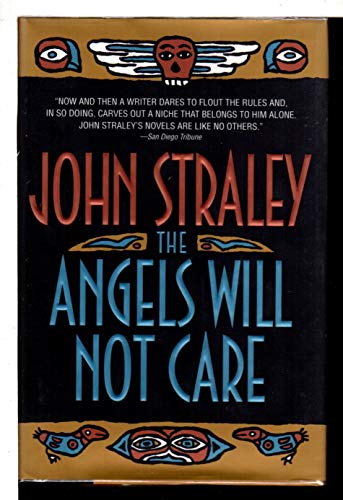
From award-winning author John Straley comes a masterfully plotted, stunningly original new mystery as beautifully stark and delightfully unpredictable as the Alaskan landscape he has so perfectly captured.
Trouble is Cecil Younger's business. As a private investigator, it comes with the territory. But lately the kind of trouble he's seen is definitely not good for business. Getting blamed for a friend's suicide has hurt both his conscience and his reputation. And things have gone straight to hell since then. His most thrilling case of late: surveillance of a lawyer's chicken coop to see who's stealing her fowl.
Enter Sonny Walters of the Great Circle Cruise Lines, whose first-class ship has a first-class problem. It seems there's some controversy surrounding the ship's doctor. More than that, Mr. Walters won't say, except that he'll give Cecil free rein--as well as free passage and an unlimited bar tab--to get to the bottom of the unsavory rumors. Younger jumps at the opportunity.
Soon he, housemate Toddy, and live-in love Jane Marie set sail on the S.S. Westward. All Cecil expected to find was an incompetent doctor and the excuse the cruise line needed to fire him. Instead what Cecil finds is a lot worse. First of all, the accommodations are little better than steerage. Second, the free bar tab turns out not to be so free. And then there is Sonny Walters himself, who seems to change from Captain Steubing to Captain Bligh the instant the ship launches. But worst of all is that amid the limbo contests, bird-watching, and bridge tournaments, enough well-to-do passengers are going belly-up to ruin everyone's vacation.
Cecil was hired to conduct a discreet investigation. But when he finds himself the target of violence, discretion is the last thing on his mind. Adding insult to injury, a hotshot rival PI turns up and points an accusing finger at the perfect suspect: Cecil Younger. Suddenly Cecil is out of his depth, far from home, and thinking of only one thing--survival. By the time the S.S. Westward makes landfall up the Alaskan coast, Cecil may just wish he was back chasing chickens in Sitka instead of sleeping with the fishes.
John Straley lives in Sitka, Alaska, with his young son and wife, a marine biologist who studies whales. He is the Shamus Award-winning author of The Woman Who Married a Bear, The Curious Eat Themselves, The Music of What Happens, and Death and the Language of Happiness.
"synopsis" may belong to another edition of this title.
About the Author
John Straley lives in Sitka, Alaska, with his young son and wife, a marine biologist who studies whales. He is the Shamus Award-winning author of The Woman Who Married a Bear, The Curious Eat Themselves, The Music of What Happens, and Death and the Language of Happiness.
From the Paperback edition.
From the Inside Flap
inning author John Straley comes a masterfully plotted, stunningly original new mystery as beautifully stark and delightfully unpredictable as the Alaskan landscape he has so perfectly captured.
Trouble is Cecil Younger's business. As a private investigator, it comes with the territory. But lately the kind of trouble he's seen is definitely not good for business. Getting blamed for a friend's suicide has hurt both his conscience and his reputation. And things have gone straight to hell since then. His most thrilling case of late: surveillance of a lawyer's chicken coop to see who's stealing her fowl.
Enter Sonny Walters of the Great Circle Cruise Lines, whose first-class ship has a first-class problem. It seems there's some controversy surrounding the ship's doctor. More than that, Mr. Walters won't say, except that he'll give Cecil free rein--as well as free passage and an unlimited bar tab--to get to the bottom of the unsavory rumors. Younger jumps at the opportunity. <
Reviews
Cecil Younger, the Sitka, Alaska, PI who last appeared in Death and the Language of Happiness (1997), is one of the poorer, but often more interesting, investigators in contemporary crime fiction: his current job is trying to catch a chicken thief. It looks as though Cecil might finally catch a break, however, when he's hired to conduct a modest investigation aboard a cruise ship and even gets to take along his long-suffering girlfriend, Jane Marie, as well as his entertaining roommate, Toddy. But the SS Westward is hardly the Love Boat with its motley international crew and its bizarre complement of passengers from the L'Inconnue De La Seine Travel Club. And its two-week cruises have an awfully high mortality rate, which is why the cruise company has asked Cecil discreetly to investigate the ship's doctor. Discretion is not one of Cecil's strong points. Nor, for that matter, is detection. Against the backdrop of onboard games, dances, songfests and whale-spotting, a surrealistic dance of death and mutilation is also taking place. Worse, Cecil finds himself auditioning for the role of victim or scapegoat rather than that of hero. Quirky and quixotic, Straley's hero is a perfect fit for the spectacular landscape he inhabits.
Copyright 1998 Reed Business Information, Inc.
The author of Death and the Language of Happiness (LJ 4/1/97) adds an exciting adventure to his Alaskan series. Private eye Cecil Younger finds trouble aboard a luxury cruise ship, where the doctor may be killing wealthy passengers. Solid.
Copyright 1998 Reed Business Information, Inc.
When Cecil Younger is hired to investigate suspicious goings-on aboard a luxury cruise liner, he gets a lot more than he bargained for. It seems that passengers, all members of a group that books cruises for the terminally ill, keep turning up dead. Are they ending their own lives, or is someone doing it for them? Straley keeps the proceedings pretty lively--Cecil is a fast-talking, funny narrator in the Fletch mold, and the mystery is genuinely mysterious. The headline-inspired premise is not just a gimmick: Straley's exploration of the notion of assisted suicide imparts a real sense of the complexity, and emotion, of the subject. Readers who like their mysteries laced with a little social commentary will enjoy this excellent novel as will those looking for a fast-paced thriller. Straley's fans should flock to this title, and word-of-mouth may push it further into the limelight. David Pitt
Excerpt. © Reprinted by permission. All rights reserved.
Sitka, Alaska--Summer
It was coming down to the last months of the twentieth century and I couldn't wait for the parties to end, particularly since it didn't seem I had been invited to any of them.
It had been two months since the shooting and I still hadn't shaken off my bad mood. Whether I was to blame or not had never really been decided but when I saw my friends downtown in the bookstore or in the coffee shop they would pat the outside of their pockets, then look at their watches and mumble excuses as quickly as they could.
This is only partially to explain why I was crouched in a wet salmonberry bush watching a chicken coop through my foggy binoculars. My feet were wet and my legs were cramping. The rain dribbled down on me like warm beer. I had thought of giving private investigations up before but never with as much seriousness as this.
It was the middle of August and we had had now only three sunny days all summer long. Those days had been emeralds of sparkling green water and blue sky. Gray rock, white snow and the lush blanket of trees running down the steep sided mountains to the tidelands. Those sunny days were actually cruel, because the rest of the summer had been so wet: warm and mild, no dramatic storms, only low clouds closing off the mountains and pebbling the surface of the shallow puddles with rain.
It had been on one of the only clear emerald days that Grant McGowan had taken a gun and held it to his fiancÚe's head out on the back deck of his derelict boat moored in Thomsen Harbor. He told the first policeman on scene that he wanted to talk to me.
Grant had been a mill worker before the pulp mill closed down. He had made a decent living working as a shill for the company's public relations crew after the shutdown. They would trot him out at hearings or in set-up articles about the impact of the mill's closeout on the community. Grant made a good unemployed blue-collar victim for the congressional committees that were convened to bail out the timber business. Grant was smart and hard-working and he was living in appalling conditions on a forty-foot wooden boat that was sinking, very slowly.
But the truth was Grant never lived any better when he was working. He had always been a drinker and a fuck-up. That was how we had become close.
Grant had a florid imagination that embellished every story with a kind of heartfelt drama. He wanted his tales to be more than barroom talk, more than the drama that fills every heavy-metal rant and cowboy ballad. Grant wanted to be bigger than life, in real life, and as a result he lied about almost everything. It was the world, he claimed, that had kept him from realizing his true potential, the demands of making a shitty living that kept him from following his true nature. And this true nature changed with almost every sitting at the bar.
Once he had grabbed me by the elbow at the bar and blared into my ear: "Canada, Younger! They've got working-class poets in Canada!"
"No shit?" I said and kept looking at my wobbly reflection in the bar mirror. "Hell of a health care plan too," I added.
"Younger . . ." He wheeled around, stepping on the foot of a bald-headed cannery worker with five earrings in one ear. I couldn't tell if it was a man or a woman. "Younger. God dammit, there's no reason I can't be a poet of the working class too." The person with the earrings limped toward the bathrooms. I strained my neck around to check out which room this creature was headed for.
"Other than the fact that you're no longer a worker," I offered.
We laughed and Grant bought a round and we toasted to working poets of Canada.
The police had given me a radio hidden in a flack vest that I wore over an extra-large black raincoat. So as I walked down the dock to where Grant was holding his fiancÚe at gunpoint I looked like a badly dressed umpire who was hearing voices.
Grant had his arm around Vicky loosely. I would have mistaken it for a casual embrace, until I saw the Ruger Blackhawk .44 with rust blotching the blueing. Grant had to cock his elbow out at an odd angle to get the long barrel to rest on her ear. Vicky's head was shaking. Her mouse-brown hair hung limply to her shoulders. She had a cigarette in her right hand but I never saw her take a draw on it. The ash fell on the painted deck.
The police had briefed me. They would listen on the radio. They just wanted me to talk. Keep him busy. Don't argue. Don't make deals or negotiate. Try and emotionally free up the situation; avoid hard choices. They were getting their people in place. Standing in front of Grant and Vicky I felt stupid in the clothes and the vest. I started to take the flack jacket off and Grant became tense.
"What is this shit?" I asked him. "You want to be in Newsweek or something? This is crazy."
"I know you've got a gun in there, man." Grant tightened his grip on his own pistol and stood up straighter. Vicky grimaced, her breath escaped in short whining bursts. She dropped her cigarette.
"Oh for Christ sakes, Grant!" I said and slipped back into the vest. "Like I'm going to come down here to kill you? What do I need a fucking gun for?"
"She says she's leaving me, Younger."
Vicky shook her head and shoulders but did not speak. "Well, I can't see why. I mean, you're such great company, Grant." I smiled and tried to step over the gunwale of the boat. Behind me more police cars were rolling up into the parking lot of the Forest Service building. It was about a seventy-five-yard shot. Doable, I thought, but not preferable.
"Let's get out of here, man," I said, and my voice cracked. "This is more trouble than either of us need. Especially on such a beautiful day. I'll tell them it was a gag. Vicky, I'm sure, will back me up on this. Come on, man--we can work this out and I bet we can watch baseball on TV. What do ya say?"
The radio in the vest squawked. I fished for it and Grant pulled the hammer back on the Blackhawk. Behind me I heard police car doors slam. I heard footsteps on the gravel.
"I'm a fuck-up, Cecil," Grant said and he was crying. "I'm not fooling anyone. Vicky's all that matters."
"Oh you're not a fuck-up," I said. "If you are, what does that make me? I've been right there with you and I'm not about to kill anybody."
"Oh, you got everything, man. You got a rich family. You got a sister and a girlfriend with a good business. I ain't got shit. All I got is Vicky." Grant was crying hard now. Snot rolled down his lip into the stubble of his three-day beard.
"Then kill yourself, asshole, and let Vicky go!"
He took a deep breath and the muscles on his arm relaxed. He smiled at me sweetly and, as I think back on it now, with some pity, then lifted the gun to his temple and fired.
"About this title" may belong to another edition of this title.
Other Popular Editions of the Same Title

Search results for The Angels Will Not Care

Stock Image
The Angels Will Not Care
Seller: ThriftBooks-Atlanta, AUSTELL, GA, U.S.A.
Seller rating 5 out of 5 stars

Hardcover. Condition: Very Good. No Jacket. Missing dust jacket; May have limited writing in cover pages. Pages are unmarked. ~ ThriftBooks: Read More, Spend Less. Seller Inventory # G0553106422I4N01
Stock Image
The Angels Will Not Care
Seller: ThriftBooks-Dallas, Dallas, TX, U.S.A.
Seller rating 5 out of 5 stars
Hardcover. Condition: Very Good. No Jacket. May have limited writing in cover pages. Pages are unmarked. ~ ThriftBooks: Read More, Spend Less. Seller Inventory # G0553106422I4N00
Stock Image
The Angels Will Not Care
Seller: World of Books (was SecondSale), Montgomery, IL, U.S.A.
Seller rating 5 out of 5 stars
Condition: Acceptable. Item in acceptable condition! Textbooks may not include supplemental items i.e. CDs, access codes etc. Seller Inventory # 00094033604
Stock Image
The Angels Will Not Care
Seller: World of Books (was SecondSale), Montgomery, IL, U.S.A.
Seller rating 5 out of 5 stars
Condition: Very Good. Item in very good condition! Textbooks may not include supplemental items i.e. CDs, access codes etc. Seller Inventory # 00101383148
Stock Image
The Angels Will Not Care
Seller: HPB-Ruby, Dallas, TX, U.S.A.
Seller rating 5 out of 5 stars
hardcover. Condition: Very Good. Connecting readers with great books since 1972! Used books may not include companion materials, and may have some shelf wear or limited writing. We ship orders daily and Customer Service is our top priority! Seller Inventory # S_424988116
Seller Image
The Angels Will Not Care
Seller: Goodwill Books, Hillsboro, OR, U.S.A.
Seller rating 5 out of 5 stars
Condition: good. Signs of wear and consistent use. Seller Inventory # GICWV.0553106422.G
Stock Image
The Angels Will Not Care
Published by
Bantam Doubleday Dell Publishing Group, 1998
ISBN 10: 0553106422
ISBN 13: 9780553106428
Used
Hardcover
First Edition
Seller: Better World Books, Mishawaka, IN, U.S.A.
Seller rating 5 out of 5 stars
Condition: Very Good. First Edition. Former library copy. Pages intact with possible writing/highlighting. Binding strong with minor wear. Dust jackets/supplements may not be included. Includes library markings. Stock photo provided. Product includes identifying sticker. Better World Books: Buy Books. Do Good. Seller Inventory # GRP96064517
Stock Image
The Angels Will Not Care
Published by
Bantam Doubleday Dell Publishing Group, 1998
ISBN 10: 0553106422
ISBN 13: 9780553106428
Used
Hardcover
First Edition
Seller: Better World Books, Mishawaka, IN, U.S.A.
Seller rating 5 out of 5 stars
Condition: Good. First Edition. Former library copy. Pages intact with minimal writing/highlighting. The binding may be loose and creased. Dust jackets/supplements are not included. Includes library markings. Stock photo provided. Product includes identifying sticker. Better World Books: Buy Books. Do Good. Seller Inventory # GRP92565736
Stock Image
The Angels Will Not Care
Seller: HPB Inc., Dallas, TX, U.S.A.
Seller rating 5 out of 5 stars
hardcover. Condition: Very Good. Connecting readers with great books since 1972! Used books may not include companion materials, and may have some shelf wear or limited writing. We ship orders daily and Customer Service is our top priority! Seller Inventory # S_474133902
Stock Image
The Angels Will Not Care
Seller: Housing Works Online Bookstore, New York, NY, U.S.A.
Seller rating 5 out of 5 stars
Condition: Very Good. Minimal wear to cover. Pages clean and binding tight. shelf wear. bumped edges. Hardcover. Seller Inventory # KT3-03021