
Items related to The Forest Lover
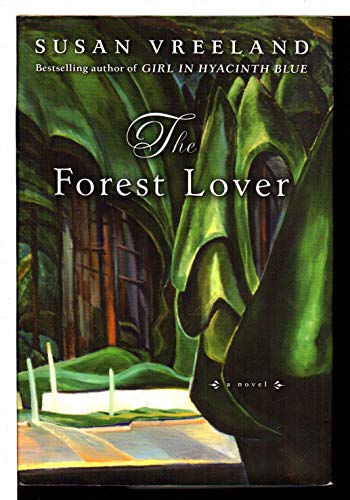
Synopsis
From an early age, it is clear that Emily Carr is not like her sisters - not satisfied with the pious and rigid world she is expected to fit into. Her creative talent and fiercely independent spirit are far too strong to be suppressed by her father's wishes that she marry and settle down into polite white Vancouver society. Drawn to the danger and beauty of a vast wilderness and its people, Emily defies her family's better judgment, spurns suitors, and establishes herself as an art teacher, venturing off whenever possible to the wild coast of British Columbia. There she begins to paint the native tribal villages in an effort to portray the rich culture of these people, their canoes, totems, and artfully decorated communal houses before they are destroyed forever.
"synopsis" may belong to another edition of this title.
About the Author
Susan Vreeland is the award-winning author of the national bestsellers The Passion of Artemisia and Girl in Hyacinth Blue.
Reviews
Adult/High School–This novel portrays 20 years in the life of British Columbia painter Emily Carr, who was determined to preserve the Indian heritage, especially the totem poles, of the Pacific Northwest in her art. Living in the late 1800s, when women were supposed to be subservient homemakers and not adventuresome and out on their own in the forests, Carr knew what she wanted and then went after it, even when this meant doing without food. Although she is about 30 when the story opens, teens will relate to her rebellious streak, her firm adherence to her beliefs, and her unusual friends. Those interested in art history will appreciate the discussions of technique and reading about her year in Paris as she learned from prominent artists. The novel is decidedly heavier reading than the author's Girl in Hyacinth Blue (MacMurray & Beck, 1999), and sometimes the Indians' dialogue is in pidgin English. Four black-and-white reproductions and the color dust jacket represent a few of Carr's works.–Claudia Moore, W. T. Woodson High School, Fairfax, VA
Copyright © Reed Business Information, a division of Reed Elsevier Inc. All rights reserved.
The Canadian artist Emily Carr (1871- 1945) could be a feminist icon. Spirited and courageous, inspired by an inner vision of "distortion for expression" and by a mission to capture on canvas the starkly fierce totem poles carved by the Indian tribes of British Columbia, Carr endured the disapproval of her family and of society at large until her belated vindication. One of the pleasures of this beguiling novel based on Carr's life is the way Vreeland (Girl in Hyacinth Blue) herself has acquired a painter's eye; her descriptions of Carr's works are faithful evocations of the artist's dazzling colors and craft. No art schools taught the techniques that Carr felt suitable to the immense, rugged landscape of British Columbia. Moreover, when she ventured into isolated tribal villages and befriended the natives, braving physical discomfort and sometimes real danger, she was accused of "unwholesome socializing with primitives." Drawing on Carr's many journals, Vreeland imagines her experiences in remote areas of B.C. as well as in Victoria, Vancouver and (briefly) France. There are few dramatic climaxes; instead, Vreeland emphasizes Carr's relationships with her rigidly conventional siblings and with her mentors and colleagues. She vividly describes the obstacles Carr faced when she ventured into the wilderness and in her periods of near poverty and self-doubt. A fictitious French fur trader introduces a romantic element, which may offend purists. Much of the suspense comes through Carr's affectionate relationship with a real woman, Sophie Frank, a Squamish basket maker who loses nine children to white men's diseases. Adding to Sophie's emotional desolation is the torment introduced by inflexible Christian dogma that alienates tribes from their native traditions and spiritual beliefs. Vreeland provides this historical background with the same authoritative detail that she brings to the Victorian culture that challenged Carr's pioneering efforts. Her robust narrative should do much to establish Carr's significance in the world of modern art.
Copyright © Reed Business Information, a division of Reed Elsevier Inc. All rights reserved.
In her last novel, best-selling author Vreeland fictionalized the life of Renaissance painter Artemisia Gentileschi. She now presents a speculative portrait of the intrepid and too little known British Columbian painter Emily Carr (1871-1945), older sister-in-spirit to O'Keeffe and Kahlo. Awareness of Carr's extraordinary life and unprecedented paintings of Canada's magnificent western wilderness and the carvings and totem poles of the region's native peoples is increasing thanks to renewed appreciation for Canada's Group of Seven, a circle of male painters also committed to celebrating their country's pristine natural beauty. But Carr, working in painful isolation, was way ahead of them, and her passionate quest induced her to break every rule of conduct for a Victorian-era white Christian woman. Vreeland couldn't have chosen a more vital, compelling, and significant subject, although she does romanticize Carr's incredible life nearly to the point of superficiality. Even so, her dramatic depictions of Carr's daunting solo journeys, arduous artistic struggle, persistent loneliness, and despair over the tragic fate of the endangered people she came to love truly are provocative and moving. And Vreeland is to be commended for introducing Carr to the wider audience she so deserves. Donna Seaman
Copyright © American Library Association. All rights reserved
"About this title" may belong to another edition of this title.
Search results for The Forest Lover

Stock Image
The Forest Lover
Seller: World of Books (was SecondSale), Montgomery, IL, U.S.A.
Seller rating 5 out of 5 stars

Condition: Good. Item in good condition. Textbooks may not include supplemental items i.e. CDs, access codes etc. Seller Inventory # 00098322865
Stock Image
The Forest Lover
Seller: World of Books (was SecondSale), Montgomery, IL, U.S.A.
Seller rating 5 out of 5 stars
Condition: Acceptable. Item in acceptable condition! Textbooks may not include supplemental items i.e. CDs, access codes etc. Seller Inventory # 00105767639
Seller Image
The Forest Lover
Seller: Zoom Books Company, Lynden, WA, U.S.A.
Seller rating 5 out of 5 stars
Condition: very_good. Book is in very good condition and may include minimal underlining highlighting. The book can also include "From the library of" labels. May not contain miscellaneous items toys, dvds, etc. . We offer 100% money back guarantee and 24 7 customer service. Seller Inventory # ZBV.0670032670.VG
Stock Image
The Forest Lover
Seller: NW Book Rescue, Hubbard, OR, U.S.A.
Seller rating 2 out of 5 stars

hardcover. Condition: Good. Ex Libris copy. May have library stickers and plastic covering. Good Clean copy. Minimal signs of wear. Seller Inventory # NLF-20260518-0074-1.3M-3A0185
Stock Image
The Forest Lover
Published by
Viking Adult (edition First Edition), 2004
ISBN 10: 0670032670
ISBN 13: 9780670032679
Used
Hardcover
First Edition
Seller: BooksRun, Philadelphia, PA, U.S.A.
Seller rating 5 out of 5 stars
Hardcover. Condition: Very Good. First Edition. With dust jacket. It's a well-cared-for item that has seen limited use. The item may show minor signs of wear. All the text is legible, with all pages included. It may have slight markings and/or highlighting. Seller Inventory # 0670032670-11-1-29
Seller Image
The Forest Lover
Seller: Greenworld Books, Arlington, TX, U.S.A.
Seller rating 5 out of 5 stars
Condition: good. Fast Free Shipping â" Good condition. It may show normal signs of use, such as light writing, highlighting, or library markings, but all pages are intact and the book is fully readable. A solid, complete copy that's ready to enjoy. Seller Inventory # GWV.0670032670.G
Seller Image
The Forest Lover
Seller: Dream Books Co., Denver, CO, U.S.A.
Seller rating 5 out of 5 stars
Condition: very_good. Pages are clean with no markings. May show minor signs of wear or cosmetic defects marks, cuts, bends, or scuffs on the cover, spine, pages, or dust jacket. May have remainder marks on edges. Seller Inventory # DBV.0670032670.VG
Stock Image
The Forest Lover
Seller: Evergreen Goodwill, Seattle, WA, U.S.A.
Seller rating 5 out of 5 stars
hardcover. Condition: Good. Seller Inventory # mon0000481368
Stock Image
The Forest Lover
Seller: HPB-Emerald, Dallas, TX, U.S.A.
Seller rating 5 out of 5 stars
hardcover. Condition: Very Good. Connecting readers with great books since 1972! Used books may not include companion materials, and may have some shelf wear or limited writing. We ship orders daily and Customer Service is our top priority! Seller Inventory # S_474234785
Stock Image
The Forest Lover
Seller: Half Price Books Inc., Dallas, TX, U.S.A.
Seller rating 5 out of 5 stars
hardcover. Condition: Very Good. Connecting readers with great books since 1972! Used books may not include companion materials, and may have some shelf wear or limited writing. We ship orders daily and Customer Service is our top priority! Seller Inventory # S_476588411