
Synopsis
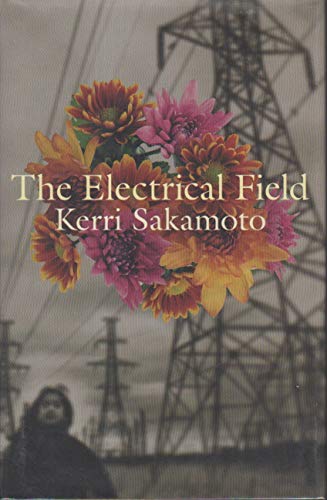
A rare and powerful novel about memory and murder, and the unusual friendship that develops between an ageing Japanese-Canadian woman and a young girl desperate to uncover the truth.
When the beautiful Chisako and her lover are found murdered in a park, members of the small Ontario community must finally acknowledge certain inescapable truths about each other. The Electrical Field slowly exposes all those implicated in the murders - particularly Miss Saito, the novel's unreliable narrator, through whom we gradually discover the truth. Asako Saito, middle-aged, caring for her elderly, bedridden father and her distracted younger brother, seems to be a passive observer. But as the facts become known, and events are cast in different light, Miss Saito turns out to be central to the crime. To understand her connection to the murders, she must first confront her past and her craving for an emotional connection that has profound consequences. Set in the 1970s, The Electrical Field reaches deep into the past, and into Canada's communal response to war. Kerri Sakamoto gives us a masterful, elegant story of passion, memory and regret, and beautifully illuminates the life of an ordinary woman.
The Electrical Field is sure to be among the most discussed books of the season. This haunting and unsettling novel reads like the best thrillers and introduces a gifted Canadian writer.
"synopsis" may belong to another edition of this title.
About the Author
Kerri Sakamoto is a Toronto-born writer of fiction as well as film and visual arts criticism. Her short stories have appeared in Charlie Chan is Dead, an anthology of Asian-American fiction, and in publications such as The Quarterly and West Coast Line.
From the Inside Flap
A rare and powerful novel about memory and murder, and the unusual friendship that develops between an ageing Japanese-Canadian woman and a young girl desperate to uncover the truth.
When the beautiful Chisako and her lover are found murdered in a park, members of the small Ontario community must finally acknowledge certain inescapable truths about each other. The Electrical Field slowly exposes all those implicated in the murders - particularly Miss Saito, the novel's unreliable narrator, through whom we gradually discover the truth. Asako Saito, middle-aged, caring for her elderly, bedridden father and her distracted younger brother, seems to be a passive observer. But as the facts become known, and events are cast in different light, Miss Saito turns out to be central to the crime. To understand her connection to the murders, she must first confront her past and her craving for an emotional connection that has profound consequences. Set in the 1970s, The Electrical Field reaches deep into the past, and into Canada's communal response to war. Kerri Sakamoto gives us a masterful, elegant story of passion, memory and regret, and beautifully illuminates the life of an ordinary woman.
The Electrical Field is sure to be among the most discussed books of the season. This haunting and unsettling novel reads like the best thrillers and introduces a gifted Canadian writer.
Excerpt. © Reprinted by permission. All rights reserved.
I happened to be dusting the front window-ledge when I saw her running across the grassy strip of the electrical field. I stepped out onto the porch and called to her. I could tell she heard me because she slowed down a bit, hesitated before turning. I waved.
"Sachi!" I shouted. "What is it?"
She barely paused to check for cars before crossing the concession road in front of my yard; not that many passed since the new highway to the airport had been built. Shyly she edged up my porch steps to where I stood. She was out of breath, her eyes filled with an adult's burden. "I don't know," she said, panting. "Maybe it's nothing."
The sweat glistened on her, sweet, odourless water, and it struck me as odd, her sweating so much -- a girl and a nihonjin at that; we nihonjin, we Japanese, hardly perspire at all, and the late spring air was cool that day. I sat down to signal calm and patted the lawn chair beside me. She sat but kept jiggling one knee. Finally she stood up again. "Yano came and took -- ," she began.
"Mr. Yano," I broke in, though everyone called him Yano, even myself. "He took Tam out of class this morning. Kimi too."
"Tamio," I corrected her, as if I could tell her what to call the boy, her special friend. As if I could tell her anything. "A doctor's appointment, maybe?"
She shook her head as a child does, flinging her hair all about. Though at thirteen going on fourteen, she no longer was a child, I reminded myself.
"Yano looked crazy," she went on. "Like I've never seen him. His hands were like this." She clenched her fists and gritted her brace-clad teeth: a fierce little animal. "He hadn't taken a bath, not for a long time," she said, pinching her flat nose and grimacing. "Worse than usual. Everybody noticed."
"About this title" may belong to another edition of this title.
Other Popular Editions of the Same Title

Search results for The Electrical Field

Stock Image
THE ELECTRICAL FIELD
Published by
Alfred A. Knopf, Canada (edition First Edition), 1998
ISBN 10: 0676971261
ISBN 13: 9780676971262
Used
Hardcover
First Edition
Seller: BooksRun, Philadelphia, PA, U.S.A.
Seller rating 5 out of 5 stars

Hardcover. Condition: Very Good. First Edition. With dust jacket. It's a well-cared-for item that has seen limited use. The item may show minor signs of wear. All the text is legible, with all pages included. It may have slight markings and/or highlighting. Seller Inventory # 0676971261-11-1-29
Stock Image
The Electrical Field
Seller: Zoom Books East, Glendale Heights, IL, U.S.A.
Seller rating 5 out of 5 stars
Condition: like_new. Book is in like new condition with minimal signs of wear. Pages are clean and free from notes or highlighting. Dust cover is intact. May not contain miscellaneous items toys, dvds, etc. . We offer 100% money back guarantee and 24 7 customer service. Seller Inventory # ZEV.0676971261.LN
Stock Image
The Electrical Field
Published by
Knopf, Toronto, 1998
ISBN 10: 0676971261
ISBN 13: 9780676971262
Used
Hardcover
First Edition
Seller: Willis Monie-Books, ABAA, Cooperstown, NY, U.S.A.
Seller rating 5 out of 5 stars
Hardcover. Condition: Very Good. Dust Jacket Condition: Very Good. First Canadian Edition. Seller Inventory # 88307
Seller Image
The Electrical Field
Published by
Alfred A. Knopf, 1998
ISBN 10: 0676971261
ISBN 13: 9780676971262
Used
Hardcover
First Edition
Seller: Yesterday's Muse, ABAA, ILAB, IOBA, Webster, NY, U.S.A.
Seller rating 5 out of 5 stars
Hard Cover. Condition: Near Fine. Dust Jacket Condition: Near Fine. First Edition. First edition. Minimal cosmetic wear. 1998 Hard Cover. 305 pp. Author's first novel. When the beautiful Chisako and her lover are found murdered in a park, members of the small Ontario community must finally acknowledge certain inescapable truths. Set in the 1970s, The Electrical Field reaches deep into the past to explore the dire legacy of the internment of Japanese-Canadians during the war. Seller Inventory # 2344836
Stock Image
The Electrical Field
Published by
Knopf, Toronto, 1998
ISBN 10: 0676971261
ISBN 13: 9780676971262
Used
Hardcover
First Edition
Signed
Seller: A Good Read, Toronto, ON, Canada
Seller rating 4 out of 5 stars

Hardcover. Condition: Fine. Dust Jacket Condition: Very Good. First Edition. Flat signed by author on title page. True first edition of author's first novel. D/j has small chip to lower front tip, some rubbing on edges. A Good Read ships from Toronto and Niagara Falls, NY - customers outside of North America please allow two to three weeks for delivery. ; 8vo - over 7¾" - 9¾" tall; Signed by Author. Seller Inventory # 470
Buy Used
US$ 9.99
US$ 11.00 shipping
Ships from Canada to U.S.A.
Ships from Canada to U.S.A.
Quantity: 1 available
Stock Image
The Electrical Field
Seller: A Good Read, Toronto, ON, Canada
Seller rating 4 out of 5 stars
Hardcover. Condition: Good. Dust Jacket Condition: Very Good. Flat-signed by author on title page. Minor shelf wear to d/j. A Good Read ships from Toronto and Niagara Falls, NY - customers outside of North America please allow two to three weeks for delivery. ; 8vo 8" - 9" tall; 305 pages; Signed by Author. Seller Inventory # 236049
Buy Used
US$ 9.99
US$ 11.00 shipping
Ships from Canada to U.S.A.
Ships from Canada to U.S.A.
Quantity: 1 available
Stock Image
THE ELECTRICAL FIELD
Published by
Alfred A. Knopf, Canada, Toronto, ON, Canada, 1998
ISBN 10: 0676971261
ISBN 13: 9780676971262
Used
Hardcover
First Edition
Seller: Joe Staats, Bookseller, Los Angeles, CA, U.S.A.
Seller rating 3 out of 5 stars

Hardcover. Condition: As New. Dust Jacket Condition: As New. First Canadian Edition. Author's first novel is a rare and powerful novel about memory and murder, and the unusual friendship that develops between an aging Japanese-Canadian woman, Asako Saito, and a young girl desperate to uncover the truth. Winner of the 1999 Commonwealth Writers Prize for Best First Novel, THE ELECTRICAL FIELD was also shortlisted for Canadian Governor General's Award. As new, in fine, mylar-protected dust jacket. M46. Seller Inventory # 020384
Seller Image
The Electrical Field
Seller: WeBuyBooks, Rossendale, LANCS, United Kingdom
Seller rating 5 out of 5 stars
Condition: Very Good. Most items will be dispatched the same or the next working day. A copy that has been read, but is in excellent condition. Pages are intact and not marred by notes or highlighting. The spine remains undamaged. Seller Inventory # rev5616656900
Buy Used
US$ 12.62
US$ 9.74 shipping
Ships from United Kingdom to U.S.A.
Ships from United Kingdom to U.S.A.
Quantity: 1 available
Stock Image
THE ELECTRICAL FIELD
Published by
Alfred A. Knopf, Canada, 1998
ISBN 10: 0676971261
ISBN 13: 9780676971262
Used
Hardcover
First Edition
Signed
Seller: A Good Read, Toronto, ON, Canada
Seller rating 4 out of 5 stars
Hardcover. Condition: Near Fine. Dust Jacket Condition: Near Fine. First Edition; First Printing. A Good Read ships from Toronto and Niagara Falls, NY - customers outside of North America please allow two to three weeks for delivery. Minor edgewear. ; 8.5 X 5.8 X 1.4 inches; Signed by Author. Seller Inventory # 158075
Buy Used
US$ 12.99
US$ 11.00 shipping
Ships from Canada to U.S.A.
Ships from Canada to U.S.A.
Quantity: 1 available
Stock Image
THE ELECTRICAL FIELD
Published by
Alfred A. Knopf, Canada, 1998
ISBN 10: 0676971261
ISBN 13: 9780676971262
Used
Hardcover
First Edition
Signed
Seller: A Good Read, Toronto, ON, Canada
Seller rating 4 out of 5 stars
Hardcover. Condition: Near Fine. Dust Jacket Condition: Near Fine. First Edition; First Printing. A Good Read ships from Toronto and Niagara Falls, NY - customers outside of North America please allow two to three weeks for delivery. Minor edgewear. ; 8.5 X 5.8 X 1.4 inches; Signed by Author. Seller Inventory # 158076
Buy Used
US$ 12.99
US$ 11.00 shipping
Ships from Canada to U.S.A.
Ships from Canada to U.S.A.
Quantity: 1 available