
Synopsis
Peter Matthiessen is one of the few American writers ever nominated for the National Book Award for both fiction and nonfiction.
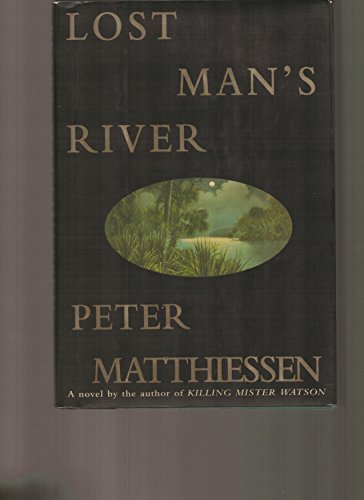
When his novel Killing Mister Watson was published in 1990, the reviews were extraordinary. It was heralded as "a marvel of invention . . . a virtuoso performance" (The New York Times Book Review) and a "novel [that] stands with the best that our nation has produced as literature" (Los Angeles Times Book Review). Now Peter Matthiessen brings us the second novel in his Watson trilogy, a project that has been nearly twenty years in the writing. A story of epic scope and ambition, Lost Man's River confronts the primal relationship between a dangerous father and his desperate sons and the ways in which his death has shaped their lives.
Lucius Watson is obsessed with learning the truth about his father. Who was E. J. Watson? Was he a devoted family man, an inspired farmer, a man of progress and vision? Or was he a cold-blooded murderer and amoral opportunist? Were his neighbors driven to kill him out of fear? Or was it envy? And if Watson was a killer, should the neighbors fear the obsessed Lucius when he returns to live among them and ask questions?
The characters in this tale are men and women molded by the harsh elements of the Florida Everglades--an isolated breed, descendants of renegades and pioneers, who have only their grit, instinct, and tradition to wield against the obliterating forces of twentieth-century progress: Speck Daniels, moonshiner and alligator poacher turned gunrunner; Sally Brown, who struggles to escape the racism and shame of her local family; R. B. Collins, known as Chicken, crippled by drink and rage, who is the custodian of Watson secrets; Watson Dyer, the unacknowledged namesake with designs on the remote Watson homestead hidden in the wild rivers; and Henry Short, a black man and unwilling member of the group of armed island men who awaited E. J. Watson in the silent twilight. Only a storyteller of Peter Matthiessen's dazzling artistry could capture the beauty and strangeness of life on this lawless frontier while probing deeply into its underlying tragedy: the brutal destruction of the land in the name of progress, and the racism that infects the heart of New World history.
"synopsis" may belong to another edition of this title.
About the Author
Peter Matthiessen was born in New York City in 1927 and had already begun his writing career by the time he graduated from Yale University in 1950. The following year, he was a founder of The Paris Review. Besides At Play in the Fields of the Lord, which was nominated for the National Book Award, he has published six other works of fiction, including Far Tortuga and Killing Mister Watson. Mr. Matthiessen's parallel career as a naturalist and explorer has resulted in numerous widely acclaimed books of nonfiction, among them The Tree Where Man Was Born, which was nominated for the National Book Award, and The Snow Leopard, which won it.
From the Back Cover
"Intricately structured, richly documented, utterly convincing . . . certain to linger in the memory like an experience we have lived through but cannot, for all our effort at analysis, comprehend."
-Joyce Carol Oates, The Washington Post Book World
"A novel of high ambition and high achievement. . . . Like Twain and Faulkner, Matthiessen has mastered the knack of achieving a literary effect without viola-ting the authenticity of an unlettered voice."
-Cleveland Plain Dealer
"This novel is Matthiessen at his best-a masterfully spun yarn, a little otherworldly, a dreamlike momentum. . . . Like everything of his, it's also a deep dec-laration of love for the planet."
-Thomas Pynchon
"The most beautiful and compelling American novel in decades."
-Chicago Sun-Times
"An original and powerful artist . . . who has produced as impressive a body of work as that of any writer of our time. . . . He has immeasurably enlarged our consciousness."
-William Styron
"One of our best writers."
-Don DeLillo
"When all the faddish smoke clears, Peter Matthiessen's work will stand revealed as that of an artist of immense talent, grandeur, and genius."
-Jim Harrison
"One of our few genuine masters."
-Thomas McGuane
"The best of the North American capacity for risk, self-knowledge, and the transformation of experience into destiny is to be found in the work of Peter Matthiessen."
-Carlos Fuentes
From the Inside Flap
essen is one of the few American writers ever nominated for the National Book Award for both fiction and nonfiction.
When his novel Killing Mister Watson was published in 1990, the reviews were extraordinary. It was heralded as "a marvel of invention . . . a virtuoso performance" (The New York Times Book Review) and a "novel [that] stands with the best that our nation has produced as literature" (Los Angeles Times Book Review). Now Peter Matthiessen brings us the second novel in his Watson trilogy, a project that has been nearly twenty years in the writing. A story of epic scope and ambition, Lost Man's River confronts the primal relationship between a dangerous father and his desperate sons and the ways in which his death has shaped their lives.
Lucius Watson is obsessed with learning the truth about his father. Who was E. J. Watson? Was he a devoted family man, an inspired farmer, a man of progress an
Reviews
A large, vivid, ambitious novel from one of the country's most accomplished American writers, offering a powerful portrait of life among the hunters, renegades, and wanderers infesting the Florida Everglades in the century's early decades. Matthiessen's (African Silences, 1991, etc.) latest is in many ways a sequel to his 1990 novel, Killing Mister Watson. In that work, the violent, vigorous figure of Edgar Watson dominated the action. A settler in the still wild Everglades in the early years of the century, Edgar, with his reputation as a killer, was both respected and feared by his neighbors. Then, in 1910, died during a confrontation with a posse. But who actually fired the fatal shot? Had Edgar fired first? And was he in fact a murderer? His son Lucius, an academic, has tried repeatedly to escape from his father's lengthy shadow. Once again, in the 1950s, Lucius is drawn reluctantly back into the struggle to puzzle out what his father was when a cache of documents about him comes to light. In the company of some of his father's cronies and a few of his bitter enemies, all of them old men nursing grudges and powerful recollections of frontier days in the Everglades, Lucius travels ever deeper into the wilderness. Along the way he hears some extraordinary tales about the lives of the local farmers, hunters, smugglers, and moonshiners, assembles a moving portrait of the destruction of the fragile ecosystem of the Everglades, and finally discovers the painful, complex truth about his father's life and death. Lucius's long, complex relationship with his father's memory is brilliantly handled, as is the portrait of the fate of the Everglades, its wildlife, and its tough, idiosyncratic inhabitants. Interweaving a lament for the lost wilderness, a shrewd, persuasive study of character, and a powerful meditation on the sources of American violence, Matthiessen has produced one of the best novels of recent years. (Author tour) -- Copyright ©1997, Kirkus Associates, LP. All rights reserved.
The brutal murder of a prominent sugarcane planter in the early 20th century was the cornerstone for Killing Mr. Watson (LJ 6/1/90), Matthiessen's first book in a trilogy about the man, the murder, and its far-reaching impact on several pioneer families in southern Florida. Fifty years after Watson's death, his son Lucius emerges from self-imposed exile, asking surviving witnesses probing questions most would rather leave unanswered. The Watson homestead is at stake, and Lucius aims to clear his father's name of the crimes attributed to him. But as Lucius investigates further, he finds it harder to cling to his version of the truth. Like the earlier book, this work depends on oral histories, and its numerous reminiscences create a rich story; however, the leisurely tone and large cast make for slow reading. Those so inclined to dive in, however, will find passages of unexpected resonance amid the gnarled family trees. Readers should peruse the first (more succinct) book to get the full story before tackling this labor of love from the famed wilderness writer. For larger fiction collections.
-?Marc A. Kloszewski, Indiana Free Lib., Pa.
Copyright 1997 Reed Business Information, Inc.
"About this title" may belong to another edition of this title.
Other Popular Editions of the Same Title

Search results for Lost Man's River:

Stock Image
Lost Mans River
Seller: World of Books (was SecondSale), Montgomery, IL, U.S.A.
Seller rating 5 out of 5 stars

Condition: Good. Item in good condition and has highlighting/writing on text. Used texts may not contain supplemental items such as CDs, info-trac etc. Seller Inventory # 00104188321
Stock Image
Lost Mans River
Seller: World of Books (was SecondSale), Montgomery, IL, U.S.A.
Seller rating 5 out of 5 stars
Condition: Good. Item in good condition. Textbooks may not include supplemental items i.e. CDs, access codes etc. Seller Inventory # 00103792716
Stock Image
Lost Mans River
Seller: World of Books (was SecondSale), Montgomery, IL, U.S.A.
Seller rating 5 out of 5 stars
Condition: Very Good. Item in very good condition! Textbooks may not include supplemental items i.e. CDs, access codes etc. Seller Inventory # 00101195672
Stock Image
Lost Man's River
Published by
Random House Publishing Group, 1997
ISBN 10: 0679403779
ISBN 13: 9780679403777
Used
Hardcover
First Edition
Seller: Better World Books: West, Reno, NV, U.S.A.
Seller rating 5 out of 5 stars
Condition: Good. 1st ed. Pages intact with minimal writing/highlighting. The binding may be loose and creased. Dust jackets/supplements are not included. Stock photo provided. Product includes identifying sticker. Better World Books: Buy Books. Do Good. Seller Inventory # 12030522-75
Stock Image
Lost Man's River
Published by
Random House Publishing Group, 1997
ISBN 10: 0679403779
ISBN 13: 9780679403777
Used
Hardcover
First Edition
Seller: Better World Books, Mishawaka, IN, U.S.A.
Seller rating 5 out of 5 stars
Condition: Good. 1st ed. Former library copy. Pages intact with minimal writing/highlighting. The binding may be loose and creased. Dust jackets/supplements are not included. Includes library markings. Stock photo provided. Product includes identifying sticker. Better World Books: Buy Books. Do Good. Seller Inventory # GRP81607754
Stock Image
Lost Man's River:
Seller: Wonder Book, Frederick, MD, U.S.A.
Seller rating 5 out of 5 stars
Condition: Very Good. Signed Copy . Very Good dust jacket. Signed by author on front endpage. Seller Inventory # S18O-00503
Stock Image
Lost Man's River:
Seller: Wonder Book, Frederick, MD, U.S.A.
Seller rating 5 out of 5 stars
Condition: Very Good. Very Good condition. Very Good dust jacket. A copy that may have a few cosmetic defects. May also contain light spine creasing or a few markings such as an owner's name, short gifter's inscription or light stamp. Seller Inventory # I10B-01153
Stock Image
Lost Man's River:
Seller: Half Price Books Inc., Dallas, TX, U.S.A.
Seller rating 5 out of 5 stars
hardcover. Condition: Very Good. Connecting readers with great books since 1972! Used books may not include companion materials, and may have some shelf wear or limited writing. We ship orders daily and Customer Service is our top priority! Seller Inventory # S_446512241
Seller Image
Lost Man's River:
Seller: Greenworld Books, Arlington, TX, U.S.A.
Seller rating 5 out of 5 stars
Condition: good. Fast Free Shipping â" Good condition. It may show normal signs of use, such as light writing, highlighting, or library markings, but all pages are intact and the book is fully readable. A solid, complete copy that's ready to enjoy. Seller Inventory # GWV.0679403779.G
Stock Image
Lost Man's River:
Seller: HPB Inc., Dallas, TX, U.S.A.
Seller rating 5 out of 5 stars
hardcover. Condition: Very Good. Connecting readers with great books since 1972! Used books may not include companion materials, and may have some shelf wear or limited writing. We ship orders daily and Customer Service is our top priority! Seller Inventory # S_452677267