
Synopsis
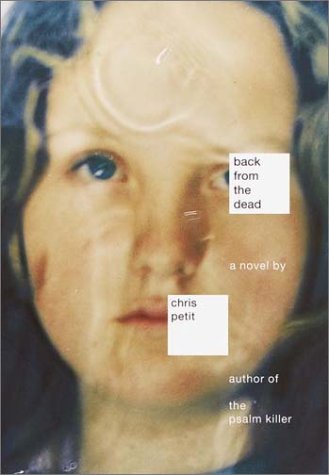
Chris Petit's novel The Psalm Killer, published in 1997 to wide acclaim, is among the best and most electrifying fictional explorations we have had of the "troubles" in Northern Ireland. Now he brings that same narrative mastery to a dark, searing novel that takes us deep into the compulsions of self-destruction and fame.
Youselli is a cynical, disillusioned city cop painfully aware of the downward spiral he's on. McMahon is a fading but still profligate rock star who has begun receiving letters signed in the name of a girl who died fifteen years ago, when he was at the height of his fame. McMahon is desperate to know who's writing them. Youselli is reluctant—the privileged decadence and celebrity games of McMahon's life both irritate and attract him—but he agrees to investigate.
Almost immediately Youselli is pulled into the eerie mystery of the letters—their combination of anger and yearning, their fierce sexuality, their seeming authenticity in the face of their obvious fabrication and, especially, their strange fatalism: "A man once told me I was malfated. Imagine being told that . . . He said I would never avoid my destiny to be malfated. Make a left instead of a right and it's there waiting. Our lives hang by the slenderest of threads, every minute of every day. You should remember that for when I come. It all ends in death, as you will know."
And though the letters are addressed to McMahon, Youselli begins to feel more and more implicated by them himself. He senses that they are somehow tainting the lives of those who read them—especially Edith Weber, the psychiatrist he has enlisted to help him understand the mind behind the letters (and who might help him understand his mind as well)—but he grows increasingly blind to the effect they are having on his own life. Finally, he too appears to be malfated: following the deadly inner logic of obsession, he becomes both detective and fate's agent, the "solution" to the puzzle of the letters leading him toward his undoing.
Powerful, chilling and unexpected, Back from the Dead is a clear confirmation of Chris Petit's remarkable gifts.
"synopsis" may belong to another edition of this title.
About the Author
Chris Petit is a filmmaker and writer. He lives in North London.
Reviews
Following the success of his first novel, 1997's The Psalm Killer, Petit falters badly, offering up a dreary, uneventful tale about the haunting effects of an old murder. Populated by sullen, unlikable characters, the story hangs on a promising if familiar premise: a fading, insufferably rich rock star known only as McMahon has received a string of letters signed by a woman, Leah, whose death he apparently witnessed 15 years earlier in France. Understandably distressed, McMahon privately hires Youselli, a New York City police detective, to find out who is behind the letters and why. Youselli, a burn-out case recently separated bitterly from his wife, notes that each letter they come once a week is increasingly threatening in tone. While interviewing many of those close to McMahon, Youselli determines there was more to Leah's death than his client lets on. Can she, in fact, still be alive? Given that tantalizing question, Youselli plows ahead, questioning McMahon's adulterous, conniving wife, Angelica; Paolo, the insolent, drug-dealing son of one of McMahon's former band members; McMahon's former manager, a sadistic homosexual named Aaron; and Blackledge, a creepy filmmaker in McMahon's entourage. Assisting Youselli on the case is a lonely psychiatrist, Edith Weber, who provides interpretation of the letters. The plot develops slowly and tediously and none of the characters are easy to root for, not even Youselli, whose self-pity and destructive personal habits inspire only indifference. The ending is both depressing and unsatisfying. Petit, however, shows flashes of true skill: his characterizations, while relentlessly dark and unsavory, can captivate, and his dialogue has a clipped quality that's intriguing to follow. But that's meager consolation for a story that is, in the end, a test of endurance.
Copyright 2001 Reed Business Information, Inc.
Fading sixties rock-star McMahon has been receiving emotionally fraught letters from Leah, a former lover long believed dead. Nothing much rattles the self-indulgent McMahon, but he is so clearly unnerved by the content of the letters that his wife calls on hard-bitten New York City cop Youselli to investigate. Both attracted and repulsed by the McMahons' careless, decadent lifestyle, Youselli takes the case because he is so intrigued by the emotional directness of Leah's letters. His investigation takes him to L.A and into an underground world of snuff films, drugs, and black magic. Like Robert Stone, Petit is interested in the theme of self-destruction and the particular form it took during the sixties, and he shares Stone's great gift--evident in Children of Light and Dog Soldiers--for creating addled, perverse characters iconic of that period. Petit avoids Stone's overtly political message, content to craft an unpredictable and haunting thriller. Joanne Wilkinson
Copyright © American Library Association. All rights reserved
Excerpt. © Reprinted by permission. All rights reserved.
Chapter One
-Did you close my eyes? I often wonder what happened. Was it you who found me and was I still beautiful? I do not know how it came to this. But here we are, after all, and I cannot tell if I am loving you or hating you. Both, I guess. What happened to Paolo? He must be grown by now and gone to college. You know I never stopped loving you, that is why I am writing. Some love never fades.
You must be surprised reading this. I can see your face as clear as ever, and your first reaction-it can't be, not her. Did you say a prayer for me in all those years, think of me just a little bit? I am different now from how you remember, but not so much. Then you do not look the same either, short hair. I saw you in a magazine. You have haunted my dreams for so long, now it is my turn.
On the good days my love for you overflows. Other times love is so cruel and I think, wait a minute, when I remember what you did, you should suffer too. Into each life some rain must fall. I cut out your picture. I am looking at it now. There's a sorrow in your eyes. Is that because of me or do you never think of me at all? Am I just the past to you? And if you are thinking, "She can't come back," do not bet on it. One of these days you will find out-Love to love you, Leah
Did you ever see a big star cry? This one did when he read what she wrote. "How can I get a letter from a dead person?" he asked Youselli.
Like a lot of famous people the man had a big head, physically as well as in the mental sense, Youselli noticed. They were standing in a fancy panelled library out in the man's Long Island residence, a second or even third home that would cost Youselli several working lifetimes of his cop's salary.
Till he saw the man cry Youselli had never thought about how songs were always full of crying-not just this man's songs, everyone's. To be fair, he was not really crying after reading the letter but there were tears in his eyes, and Youselli thought, It sure has spoiled your party. He remembered the old song, "It's My Party (And I'll Cry If I Want To)."
In the background servants came and went. The man's wife had told him there would be a lot of celebrities, as though he had never done security before. Recently the hiring of cops for celebrity security had become such a fashion accessory that his captain turned a blind eye because it gave the department access to a wealthy address list for fund-raisers.
What he could not figure was why the wife had shown McMahon the letter at all after the fuss she had made on the phone that morning about keeping it secret. "I don't want him upset. Just find out who's sending them," she had said, like they were coming from around the corner instead of Los Angeles. Youselli had wondered then if the wife was insecure. Face to face, he was less sure. In the flesh she was something else, as snazzy as an Italian contessa. He had heard she and McMahon led pretty much separate lives, she in Manhattan while he partied out at the house. Close up, Youselli could see that the hard living was taking its toll on McMahon despite the work of orthodontists and clinics. He was still star skinny and had all his hair but Youselli wondered about face lifts.
McMahon read the letter again while Youselli looked at the envelope, an everyday brand and self-adhesive, which meant no saliva trace. As for getting hold of where McMahon lived, the internet was full of listings of famous addresses. The typeface was a regular font, almost certainly from a standard computer.
McMahon made a helpless gesture with his hand and said, "I don't understand, it makes no sense." Youselli's impression was that McMahon was a phony, using pauses like an actor. Maybe he had played too many big stages and that made it hard for him to do close-up work without resorting to exaggerated mannerisms, like the way he raked his hand through his shampoo-commercial hair to signal bafflement. Youselli had never seen such silky hair not on a girl.
McMahon finished the letter and appeared so upset that it took him several attempts to produce a coherent summary of the letter's meaning. It referred, he finally said, to an incident that had taken place in France fifteen years earlier, when a teenage American girl named Leah had died in an accident while looking after the young son of a fellow band member, now also deceased.
"What kind of accident?" Youselli asked.
"She died in a fall at Mickey's house. Mickey and Astrid were with me and when they got back she was lying at the bottom of the stairs."
Youselli thought the story sounded conveniently vague. "Who was the girl?"
"She came to look after Mickey's kid, Paolo." McMahon spoke like he was issuing a press release. The band had been renting French chateaux that summer, gypsying round Europe to avoid British tax. Youselli watched the wife watching her husband and thought, he is not going to say anything in front of her. He wondered if big stars jerked off.
Big party, rich man's party, rich man's house, Youselli thought as he watched the chauffeured limousines arrive. Trees high as the house screened off the world outside, their dusky green in smoky contrast to the brash lit-up rectangle of azure, the rich man's pool. The rich were so predictable, he thought. He could bust them for the load of fancy dope they were pretending wasn't in the back room. Youselli stuck his hands in his pockets and gave a smile to the wife that went unreturned while McMahon charged around, suddenly energized. Youselli told himself it was another night for the three wise monkeys: see nothing, say nothing, do nothing, and play the dumb cop.
Youselli had made sure security was tight. He had men on the gate and on the grounds with walkie-talkies. His base was the secure room under the stairs, which amounted to a closet big enough to sit in. It was like the inside of a large safe, steel-lined, with a fax and phone-the last line of retreat from whatever unimaginable horrors the famous lived in fear of. Youselli had a man in there checking the CCTV monitors that screened the exteriors. Youselli spent the early part of the evening watching the guests arrive on the screens, like they were on regular TV. A lot of names, a lot of faces and a lot of people dressed like pirates, too many tall women for his taste, and a couple of celebrity photographers snapping away. It was like the seventies never went away, Youselli thought, plus he had not realized there were still so many smokers.
The catering staff were dressed as slaves and the prettiest waitress rolled her eyes at him whenever she passed. A steady flow of guests-but only the elite-kept disappearing into the room Youselli wasn't supposed to know about and came back out animated. The door was guarded by private security. Youselli asked the wife about the extra muscle. She told him it was the standard arrangement for her people to mind the cloakroom. Youselli could not resist a grin, trying to decide which of the impossibly well-heeled guests was going to run off with a bunch of coats. The wife shot him a snooty look that said he was insubordinate.
Before the party got too wild she made a pretty speech about all the great things her husband was about to do, including write his book. The book involved the biggest deal ever signed for any star's memoirs, she proudly told her guests, and it would be the one that pulled no punches, she assured them, written by the man himself and not one of those as-told-to jobs. Youselli thought McMahon looked less than happy at the prospect. Maybe he was one of those musicians whose brains had been fried by drugs. Maybe he would be needing a ghost after all.
After the speech Youselli checked the grounds. He took O'Dowd, who complained his shoes pinched.
"You should swap them with Christopher Walken's," said Youselli. "His look comfortable."
He had noticed Walken, taller than the rest, in a sinister dark suit that fitted his movie image, and shoes that did not, the rattiest pair Youselli had seen outside a building skip. Stars like Walken he had no problem recognizing. Lesser known faces hit him after a time lag. So many famous people in the room, it was like a waxworks museum.
From across the lawn the party floated like a ship in the night.
"How old's this guy?" O'Dowd asked. "I mean, giving him a sled."
The wife had made McMahon the presentation at the end of her speech. O'Dowd was right. A child's sled was not the easiest thing for one adult to give to another in public, regardless of its particular history. It must be nice to have so many toys, Youselli thought. He had counted four vintage cars in the garage.
They crossed from the edge of the lawn into the undergrowth. To their left was a summer house and by the light of the moon Youselli could make out the silhouette of a couple banging away at each other. Beyond, the water of the sound gleamed like oil. He wondered why the wife had shown McMahon the letter. He tried to picture the woman who had written it. When he got back to the house he would fax a copy to the shrink they used for assessment of hostile mail.
O'Dowd wanted to stay and watch the activity in the summer house, which was reaching its noisy climax. O'Dowd was so predictable, thought Youselli. He felt inexplicably flat, maybe because nobody was going to stand up and make speeches about what a great guy he was, and no one was going to write to him.
Guests with reputations to protect had gone early or retreated to private rooms. Youselli did not stop to ask himself what was going on in half of them. From time to time he heard applause from behind closed doors. Meanwhile the rest of the party disintegrated into an incoherent mass of squirming bodies, more or less upright on the dance floor and horizontal by the pool.
Youselli's eyes watered from the smoke. "What are you doing after the orgy?" asked O'Dowd.
O'Dowd was one of those people h...
"About this title" may belong to another edition of this title.
Search results for Back from the Dead

Stock Image
Back from the Dead
Seller: ThriftBooks-Atlanta, AUSTELL, GA, U.S.A.
Seller rating 5 out of 5 stars

Hardcover. Condition: Very Good. No Jacket. Former library book; May have limited writing in cover pages. Pages are unmarked. ~ ThriftBooks: Read More, Spend Less. Seller Inventory # G0679451277I4N10
Stock Image
Back From the Dead (First Edition)
Published by
Knopf (New York), 2001
ISBN 10: 0679451277
ISBN 13: 9780679451273
Used
Hardcover
First Edition
Seller: Dan Pope Books, West Hartford, CT, U.S.A.
Seller rating 5 out of 5 stars
Hardcover. Condition: As New. Dust Jacket Condition: New. 1st Edition. First American edition. First printing. Hardbound. A pristine unread copy. Very fine/very fine in all respects. Comes with mylar dust jacket protector. Smoke free shop. Shipped in sturdy box with bubble wrap. Sale. FICTION. Seller Inventory # jean0106-8
Stock Image
Back from the Dead
Seller: Book Lover's Warehouse, Johnson City, TN, U.S.A.
Seller rating 5 out of 5 stars
Hardcover. Condition: Very Good. Stated first edition. The dust jacket is clean with light shelf wear. The pages of this book are clean and unmarked. A good solid copy. FAST SHIPPING & FREE TRACKING! Seller Inventory # 186925
Stock Image
Back from the Dead : A Novel
Published by
Alfred A. Knopf Incorporated, New York, NY, 2001
ISBN 10: 0679451277
ISBN 13: 9780679451273
Used
Hardcover
First Edition
Seller: Willis Monie-Books, ABAA, Cooperstown, NY, U.S.A.
Seller rating 5 out of 5 stars
Hardcover. Condition: Very Good. Dust Jacket Condition: Very Good. First US Edition. Seller Inventory # 59868
Stock Image
Back from the Dead : A Novel
Published by
Alfred A. Knopf Incorporated, New York, NY, U.S.A., 2001
ISBN 10: 0679451277
ISBN 13: 9780679451273
Used
Hardcover
First Edition
Seller: Michael J. Toth, Bookseller, ABAA, Springtown, PA, U.S.A.
Seller rating 5 out of 5 stars
Hard Cover. Condition: Fine. Dust Jacket Condition: Fine. First Edition. Seller Inventory # 005092
Stock Image
Back from the Dead
Seller: Glands of Destiny First Edition Books, Sedro Woolley, WA, U.S.A.
Seller rating 5 out of 5 stars
Hardcover. Condition: Like New. Publisher: Knopf, NY, 2001. First Edition, First Printing. FINE- hardcover book in FINE dust-jacket. Remainder marked, otherwise, "As New, Unread". Not price-clipped. Not a book club edition. Not an ex-library copy. All of our books with dust-jackets are shipped in fresh, archival-safe mylar protective sleeves. Seller Inventory # SKU1027705
Stock Image
Back from the Dead
Seller: Glands of Destiny First Edition Books, Sedro Woolley, WA, U.S.A.
Seller rating 5 out of 5 stars
Hardcover. Condition: Very Good. Publisher: Knopf, NY, 2001. First Edition, First Printing. NEAR FINE- hardcover book in FINE dust-jacket. Rear board has a 50 cent-size closed tear/scuff. Not remainder marked. Not price-clipped. Not a book club edition. Not an ex-library copy. All of our books with dust-jackets are shipped in fresh, archival-safe mylar protective sleeves. Seller Inventory # SKU1023483
Stock Image
Back from the Dead
Seller: Russell Books, Victoria, BC, Canada
Seller rating 5 out of 5 stars
Hardcover. Condition: Good. 1st American ed. Bargain book! Seller Inventory # X002939
Buy Used
US$ 9.99
US$ 19.99 shipping
Ships from Canada to U.S.A.
Ships from Canada to U.S.A.
Quantity: 1 available