
Synopsis
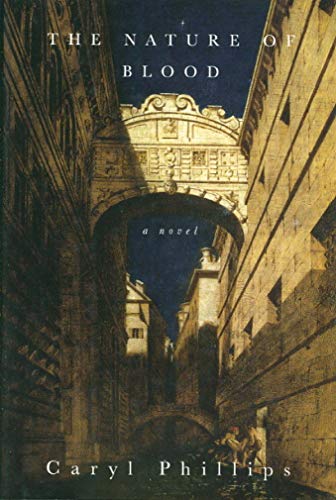
A German Jewish girl whose life is destroyed by the atrocities of World War II . . . her uncle, who undermines the sureties of his own life in order to fight for Israeli statehood . . . the Jews of a 15th-century Italian ghetto . . Othello, newly arrived in Venice . . . a young Ethiopian Jewish woman resettled in Israel. These are the extraordinary people who inhabit Caryl Phillips' eloquent and moving new novel, and whose stories are connected by circumstance, spirit, and blood across the centuries.
"synopsis" may belong to another edition of this title.
From the Inside Flap
ish girl whose life is destroyed by the atrocities of World War II . . . her uncle, who undermines the sureties of his own life in order to fight for Israeli statehood . . . the Jews of a 15th-century Italian ghetto . . Othello, newly arrived in Venice . . . a young Ethiopian Jewish woman resettled in Israel. These are the extraordinary people who inhabit Caryl Phillips' eloquent and moving new novel, and whose stories are connected by circumstance, spirit, and blood across the centuries.
Reviews
The West Indianborn author of Crossing the River (1994), among other fiction, here offers an earnest novel composed of parallel narratives, each exploring the consequences of racial or ethnic prejudice and hatred. In the central story, Phillips traces the life of Eva Stern, a German Jew who survives both the loss of her family and her own sufferings in a concentration camp during WW II, only to learn that ``liberation'' can't free her from the pain of memories or the guilt of having lived when so many died. Closely related subplots examine the emotions of a British soldier who pleads unsuccessfully for Eva's hand in marriage, and the loneliness endured by her uncle Stephan, who abandons his wife and child to participate in the building of the new state of Israel. Another major narrative block describes the persecution of 15th-century Jewish moneylenders accused of the ritual murder of a Christian child. This is a baldly discursive sequence, scarcely fictionalized at all, and weighted with redundancies. And, in a surprising change of pace--and skillful piece of writing--Phillips retells the story of Othello's passion for Desdemona and his fruitless attempts to blend into Venetian society, all in the Moor's own limpid, sensuous, lushly imagistic language. Various tricks with perspective and voice scattered throughout these several stories fail to disguise the obvious fact that Eva Stern's is by far the most powerful--and that its power is vitiated by all those sudden unannounced shifts of subject and tone. Whatever the novel gains in thematic coherence from its odd structure, it loses in the reader's frequently distracted relationship to its most compelling character. An interesting concept, but Phillips's virtuosity calls all too much attention to itself. Not one of this talented author's better books. -- Copyright ©1997, Kirkus Associates, LP. All rights reserved.
Though working a historical vein--the Holocaust and the establishment of the Israeli state--that has provided many novels with raw material, Phillips' fifth book reads more like a play. A series of blackouts develops themes of isolation, religious persecution, and exile. These vignettes offer a view of the decisive moments of five characters. Some, like the stories of German labor camp survivor Eva and Othello the Moor, are recurring threads; while others, like the scene in which a young Ethiopian Jew picks up Eva's elderly Uncle Stephan at an Israeli social club, are mere glimpses. Setting and time shift as rapidly as the desert sand, but there is no confusion: each voice is clear and distinct, and the stories they tell are rich and moving. Although this is a skillfully written book, readers seeking a tidy ending will be disappointed: one doesn't know what happens to these characters when the lights go down, whether they live or die, succeed or fail. Phillips seems determined to show, not tell, the truth of the Yoruba proverb he admonishes Othello with, "The river that does not know its source dries up." June Vigor
A range of characters inhabit Phillips's new novel?a Jewish doctor who gives up family and security to fight for Israel; the Jews of 15th-century Portobufole, outside Venice, who are tolerated as useful but arrested and tortured when rumor of a Gentile child's blood sacrifice gets going; Othello, honored in Venice but ever the outsider ("my friend, an African river bears no resemblance to a Venetian canal. Only the strongest spirit can hold together both"); and an Ethiopian Jewish woman, ignorant of the modern world, who has returned home to Israel. At the heart of the novel?but not exactly holding together its shimmering, disparate parts?is Eva Stern, niece of the crusading Jewish doctor, who recounts tensions in her family before World War II devastates Europe and then the horror of concentration and d.p. camps in an unadorned, dispassionate voice. Not as compactly written as works like Phillips's Cambridge (LJ 2/1/92), this novel nevertheless evokes a sense of the outsider's awful burden throughout time. Recommended for most collections.?Barbara Hoffert, "Library Journal"
Copyright 1997 Reed Business Information, Inc.
"About this title" may belong to another edition of this title.
Other Popular Editions of the Same Title

Search results for The Nature of Blood

Stock Image
The Nature of Blood
Seller: World of Books (was SecondSale), Montgomery, IL, U.S.A.
Seller rating 5 out of 5 stars

Condition: Very Good. Item in very good condition! Textbooks may not include supplemental items i.e. CDs, access codes etc. Seller Inventory # 00092330794
Stock Image
The Nature of Blood
Seller: ThriftBooks-Atlanta, AUSTELL, GA, U.S.A.
Seller rating 5 out of 5 stars
Hardcover. Condition: Very Good. No Jacket. May have limited writing in cover pages. Pages are unmarked. ~ ThriftBooks: Read More, Spend Less. Seller Inventory # G0679454705I4N00
Stock Image
The Nature of Blood
Seller: ThriftBooks-Atlanta, AUSTELL, GA, U.S.A.
Seller rating 5 out of 5 stars
Hardcover. Condition: Very Good. No Jacket. Former library book; May have limited writing in cover pages. Pages are unmarked. ~ ThriftBooks: Read More, Spend Less. Seller Inventory # G0679454705I4N10
Stock Image
The Nature of Blood
Seller: ThriftBooks-Dallas, Dallas, TX, U.S.A.
Seller rating 5 out of 5 stars
Hardcover. Condition: Very Good. No Jacket. May have limited writing in cover pages. Pages are unmarked. ~ ThriftBooks: Read More, Spend Less. Seller Inventory # G0679454705I4N00
Stock Image
The Nature of Blood
Seller: ThriftBooks-Phoenix, Phoenix, AZ, U.S.A.
Seller rating 5 out of 5 stars
Hardcover. Condition: Very Good. No Jacket. May have limited writing in cover pages. Pages are unmarked. ~ ThriftBooks: Read More, Spend Less. Seller Inventory # G0679454705I4N00
Stock Image
The Nature of Blood
Published by
Knopf Doubleday Publishing Group, 1997
ISBN 10: 0679454705
ISBN 13: 9780679454700
Used
Hardcover
Seller: Better World Books: West, Reno, NV, U.S.A.
Seller rating 5 out of 5 stars
Condition: Good. Pages intact with minimal writing/highlighting. The binding may be loose and creased. Dust jackets/supplements are not included. Stock photo provided. Product includes identifying sticker. Better World Books: Buy Books. Do Good. Seller Inventory # 2415212-75
Stock Image
The Nature of Blood
Seller: Wonder Book, Frederick, MD, U.S.A.
Seller rating 5 out of 5 stars
Condition: As New. Like New condition. Like New dust jacket. In protective mylar cover. A near perfect copy that may have very minor cosmetic defects. Seller Inventory # T14C-03596
Stock Image
The Nature of Blood
Seller: Wonder Book, Frederick, MD, U.S.A.
Seller rating 5 out of 5 stars
Condition: Very Good. Signed Copy . Very Good dust jacket. Signed by author on title page. Seller Inventory # S21F-01927
Stock Image
The Nature of Blood
Seller: HPB-Movies, Dallas, TX, U.S.A.
Seller rating 4 out of 5 stars

hardcover. Condition: Very Good. Connecting readers with great books since 1972! Used books may not include companion materials, and may have some shelf wear or limited writing. We ship orders daily and Customer Service is our top priority! Seller Inventory # S_251804221
Stock Image
The Nature of Blood
Published by
Alfred A. Knopf May 1997, 1997
ISBN 10: 0679454705
ISBN 13: 9780679454700
Used
Hardcover
First Edition
Seller: Dunaway Books, St. Louis, MO, U.S.A.
Seller rating 4 out of 5 stars
Hardcover. Condition: Good. Dust Jacket Condition: Good. First Edition. Seller Inventory # 165791