
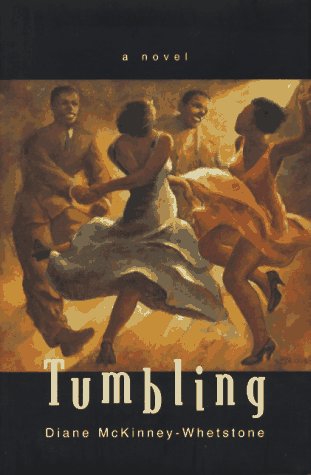
Items related to Tumbling
Synopsis
“Even the air is palpable in Tumbling...The story moves forth on the power of Ms. McKinney-Whetstone’s characters. Ms. McKinney-Whetstone captures the formidable struggle to protect both a community and a family.” —New York Times Book Review
“Warm and intimate.... Tumbling is an accomplished novel, with sharply drawn characters, exuberant prose, plenty of period detail and a wise, forgiving outlook on family life.” — Los Angeles Times Book Review
The beloved bestselling debut novel that launched the luminous career of Diane McKinney Whetstone, critically acclaimed author of Tempest Rising, Blues Dancing, Leaving Cecil Street, and Trading Dreams at Midnight. Writing in a style as accessible as Terry McMillan (Waiting to Exhale, How Stella Got Her Groove Back), yet with the literary touches of Toni Morrison (Beloved, Song of Solomon), McKinney Whetstone’s Tumbling is the “warm and wonderful” (Nikki Giovanni), beautiful and uplifting story of Noon and Herbie and their tight-knit Philadelphia neighborhood in the 1940s and 50s.
"synopsis" may belong to another edition of this title.
About the Author
The author of the critically acclaimed novels Tumbling, Tempest Rising, Blues Dancing, Leaving Cecil Street, and Trading Dreams at Midnight, Diane McKinney-Whetstone is the recipient of numerous awards, including the Black Caucus of the American Library Association’s Literary Award for Fiction, which she won twice. She lives in Philadelphia with her husband. For more on Diane McKinney-Whetstone please visit www.mckinney-whetstone.com or follow her on Twitter @Dianemckwh.
From the Back Cover
In this deeply textured debut novel, the feel and rhythm of a close-knit African-American community is evoked. Set in South Philadelphia during the 1940s and 1950s, Tumbling combines the mood of an urban community with the vitality of its inhabitants to tell a story in which sorrow and joy come in equal measure.
At the heart of the story is Herbie and Noon, who care deeply for each other but have been unable to consummate their marriage because of a vicious sexual attack in Noon's past. While Noon finds comfort and solace in her church, club-hopping Herbie finds friendship and sexual gratification with jazz singer named Ethel.
Herbie and Noon are blessed with daughters when, on two separate occasions, children are left on their doorstep. On the advice of the community, they take the children into their home, where the girls become inseparable, as if blood sisters.
When a devastating city proposal threatens to put a road through the area, the community must pull together to avoid being pulled apart. Noon becomes the unexpected leader in the struggle to keep both her home and her family whole.
Reviews
Tumbling makes me marvel. It is smooth, sure-footed, wise as old folks, hip-hop street smart, a beam of laser light that illuminates the heart of the human condition. Prepare for deep laughter. Don't be surprised when you are moved to tears.
A bouncy, moody, musical--if improbable--debut by an author who, like a good blues singer, is strong on style and interpretation even while covering familiar material. Echoes of Toni Morrison's Sula and Jazz pervade--without overwhelming--the story here, though to her credit McKinney- Whetstone's setting (Philadelphia in the 1940s and '50s) is an entirely original landscape in African-American fiction. The pavements and brownstones rattle and hum with the sounds, textures, and spirit of South Philly's black middle- and working-class residents. This is a novel crowded with characters, the most prominent and memorable being Noon, the book's wounded matriarch, a holy roller with a dark past, and her trying, wayward husband Herbie. He is jazz to her gospel, but the score of the couple's marriage changes abruptly when two girls, first an infant, then a five-year-old, are abandoned on their doorstep. The twin discoveries of the children's identities constitute dramatic, though incredible, subplots. More compelling are the girls' eventual love for each other, the chronicle of their adolescent growing pains, and a heated romantic rivalry over a slick developer. The contest for this man's affection unfolds against the specter of a proposed freeway being run through the neighborhood. The threatened displacement of family and friends also rends the girls' relationship. The two are eventually reconciled by the efforts of the novel's most sharp-edged figure, the blues singer Ethel, a hellion entangled with each of the main characters. McKinney-Whetstone convincingly presents the community's fight for self-determination as the outward manifestation of the psychic struggle of African-Americans during a period of tremendous social and cultural turmoil. A gifted prose writer with a tremendous sense of place, McKinney-Whetstone shows the potential here to move up the ranks of novelists currently exploring the African-American experience. (Author tour) -- Copyright ©1996, Kirkus Associates, LP. All rights reserved.
Sunday morning in South Philly, according to McKinney-Whetstone, is "like buttermilk," with "a quiet smoothness to it." The same can be said of this remarkable first novel. A gentle portrait of an African American community in South Philadelphia in the 1940s and '50s, the story probes beneath its residents' lives to tell a powerful tale of damage and healing. Noon is a Florida preacher's daughter too scarred from a secret childhood incident to let a man touch her; her husband, Herbie, is a redcap who met her when he was a hepcat jazz drummer touring with fiery singer Ethel. When newborn Fannie and, five years later, Ethel's five-year-old orphan niece, Liz, are abandoned on Noon and Herbie's doorstep, the embrace of community allows the creation of a family. Many women struggle in private against pain-especially Liz, who hides in the closet and eats plaster to deal with what she knows about Herbie and Ethel. Fannie's prescient visions and her wish to stave off the inevitable underscore an ambivalent view of the power of change. As the threat looms of a highway to be built through the church-centered neighborhood, individual characters find their fates, and the delicately passionate narrative coalesces around a soul-galvanizing metaphor of bricks and mortar and spirit. Literary Guild and Doubleday Book Club selection. Author tour.
Copyright 1996 Reed Business Information, Inc.
Many readers will find this story different, though many will liken it to such wonderfully different tales as Toni Morrison's Beloved, Tina Ansa's Baby of the Family, or Tananarive Due's The Between, particularly because of its dabblings into the supernatural. The novel centers on Noon and Herbie, living in a south Philadelphia community during the 1940s and 1950s and struggling bravely with their unconsummated marriage, which necessitates Herbie's tentative liaison with a peripatetic singer named Ethel. The marriage is possibly strengthened by two events: on separate occasions two infants are abandoned on the couple's doorstep and become part of their family, their children as it were. Through the course of the novel, the characters experience "tumbled" relationships over opposing ideals, opinions, desires, and needs. Often when they feel that their destinies are not in their control or that they are "tumbling" into an uncertain destiny, spirituality and intuition intervene to defeat chaos. McKinney-Whetstone has written a powerful novel that is sure to launch her career among the great African American women writers. Lillian Lewis
It's been almost a year since Herbie and Noon were married, and still they've had no sexual contact. When Herbie finds a baby on their porch steps one night, he hopes things will change. When nothing happens, he continues to stay out late into the night and takes up with a local club singer. The club singer suddenly leaves to pursue another job, leaving her five-year-old niece in Herbie's care. Thus, Herbie and Noon now must raise two children, one who seems to have the ability to see into the future and another who enjoys eating the plaster off their closet walls. This is an intelligently written first novel set in Philadelphia during the 1940s. The author captures the time, emotions, and lives of the characters well, even if the novel slows down around the midway point. All in all, this will do well in large fiction collections.?Shenise Ross, New York
Copyright 1996 Reed Business Information, Inc.
Excerpt. © Reprinted by permission. All rights reserved.
Excerpt
Chapter 1
The black predawn air was filled with movement. Its thin coolness rushed through the streets of South Philly, encircling the tight, sturdy row houses. In 1940 the blocks were clean and close. The people who lived here scrubbed their steps every morning until the sand in the concrete sparkled like diamond pins. Then some went to work mopping floors and cooking meals for rich folks, or cleaning fish at the dock, or stitching fine leather shoes or pinch-pleated draperies at the factories on the north side. Some answered phones or crumpled paper for the government. Some tended house and nursed babies. A few were really nurses. One or two taught school. Unless it was the weekend. On the weekend the blocks came to life. They'd cram into Club Royale, where redheaded olives danced in gold-colored liquid. And the music flowed like bubbly. And brown faces laughed for real, not the mannered tee-hees of the workday, but booming laughs. And Sunday they shouted in church and felt the sweet release where grand hats rocked, and high heels stomped or went clickety-clack depending on how the spirit hit.
Right now they slept. Especially if they'd been at Club Royale earlier. They were in a heavy sleep as the moving air wrapped around their chimneys, and stroked their curtained windows, and slid down their banisters. It breezed past the church where the bricks were gray and jutted into the dark air and even shone from the dew that was just beginning to settle. It shimmied over Pop's, the corner store famous for its glass jars filled with sweet pickled pigs' feet. And then dipped past the funeral home owned by the Saunderses, where the Model T hearse was usually parked out front. It blew over the playground where a makeshift swing hanging with tufted, braided clothesline swayed to the rhythm of the dancing air. And then turned on through a short block where Cardplaying-Rose lived; the light from her basement meant that kings and queens and aces were slapping her fold-up table adorned with piles of red and green chips for quarters and dollars and IOUs. And then the night air moved all through Lombard Street and bounced up and down the long block where Noon and Herbie lived. Right now it caressed a brown cardboard box being slipped onto Noon and Herbie's middle step.
Noon was fast asleep this Saturday morning. Still two hours before her faithful church bells would give her the early risers' wake-up call. So she didn't hear quick swishes of leather against concrete rushing straight to her house. Nor did she stir when the rustling sound got louder as sweaty palms shifted the box gently along the steps so that it wouldn't tip. But if Noon or anyone else on the whole of Lombard Street had been only half awake, she surely would have heard the singular whisper tinged with a sadness that was dark as the night. The air heard it, and swallowed it up, and whipped around the corner to push Herbie on home.
Herbie was wide-awake, walking through the streets as the air nudged him on. Heading in after a night of clapping to the beat, then hanging later at Royale because he'd heard Ethel might be coming back, then stepping outside of Royale and running right into Bow, the barber who cut hair at the end of Herbie's block, and having to suffer through a lecture about the wages of sin and ignorance, Herbie appreciated the way the moving air was at his back. He needed a push to get home. The red and white candy cane lamp in front of Bow's barbershop made Herbie mad again as he thought about Bow's finger wagging in his face and his voice all in his ear saying, "Boy, you got a good wife, stop trying to live the fast life, chasing women and hanging in those clubs."
He got some nerve, Herbie thought. He ought to be glad my sweet, pretty mama taught me to respect my elders, or I would have yanked his finger and told him to mind his own business. Herbie kicked at the air as he walked past Bow's. He didn't consider himself a woman chaser anyhow. There was his wife, Noon. And there was Ethel. At least there had been Ethel. He hadn't seen her in several months. But now the thought of her roundness filled his head, the way she moved like fire and made the air crackle when she laughed. The thought warmed him as he pushed up Lombard Street toward home.
The air was moving faster now, impatiently, rushing ahead of Herbie and then doubling back to egg him on. He pulled his jacket closer and picked up his pace. His house was in the middle of a long block. For the past year he and his wife, Noon, lived here with people mostly like him who used to live in the South too. Georgia, South Carolina, Alabama, Mississippi. They brought their dialects, their gospel music and blues, their love for Jesus, children, and candied yams. A few had been here all along, so they said. Like Noon's pastor, Reverend Schell. "My daddy's daddy worked for Harriet Tubman," Reverend Schell was often heard to proclaim. The stories of the perilous journeys on the "Railroad" made for rich metaphor many a Sunday about making it to the promised land. Except that Herbie got it secondhand from Noon. He rarely went to church, didn't particularly care for Reverend Schell's dramatics, and had a few "railroad" stories of his own, as he was a redcap, a porter, at the Thirtieth Street train station.
The air was really dancing now, and whistling, and made Herbie step even faster. Noon would be asleep, he was sure of that. Just as well, he thought, with her problem and all when it came time for them to mix pleasures, just as well. When he thought about Noon, his guilt vibrated in his chest like a tuning fork sitting where his lungs should be. Good churchgoing woman she was. Didn't go to card parties or speakeasies. Content to take care of him and her church business and roast a turkey for somebody's wedding or fry chicken for the gathering after somebody's funeral, or sew organza dresses for somebody's girls for Easter. Nice things. He was almost sorry he was warmed by thoughts of Ethel. But then he pictured Ethel's lips, the thickness and redness, and her drooping eyes that always seemed to be moaning, "baby, baby," and he thought about Noon and her problem, and Bow's finger wagging in his face, and all he could do was say, "Damn," out loud to only the moving air.
The box sat patiently on the steps as Herbie approached his house. He might have tripped over it except that pink yarn fringes hung over the edges. They rippled in the breeze and startled the night as they moved. They startled Herbie too. "What the hell?" he murmured as he stopped sharply and nudged the box with his foot. He pulled back the pink covering. He peered into the box.
He stood straight up. He pulled at the end of his long, thin nose and rubbed his hand hard across his head. How many beers had he had at Royale? Only two, not even enough to make him miss a step, certainly not enough to make the night do a strangeness on his mind. He reached in his jacket pocket and snatched out a tin filled with red-topped stick matches. He struck a match and cupped his hands to protect the flame from the air that was circling him in wispy drafts. He leaned into the box guided by the fire. A baby. Damn sure was. Somebody had left a baby right here on his steps.
He sat down on the steps next to the box. He lifted out a dark-haired infant swaddled in a loosely knitted bright pink blanket. His hands felt clumsy and large as he held the baby like a chicken he had just pulled from a crate of ice on Ninth Street. The baby jerked and then cried a loud, agitated cry. "Shit," Herbie said. "You gonna go and do all that crying, someone will think I'm out here trying to hurt you. I'm only trying to figure this out." He brought the baby to his chest. Awkwardly at first. And then he worked up a smooth, gentle rocking motion. The baby hushed. He rested the infant along the length of his thighs. He lit another match and held it high like a torch so he could see the baby's face. He saw the eyes. Dark as coals that shocked him first, then softened him to putty. "What you looking at, huh?" he whispered into the eyes. "You can't see me nohow; don't y'all stay blind till you much older than this?" He felt silly. He had never talked to an infant before. He thought that he should run in the house and wake Noon; she would know what to do. Surely they'd have to turn the baby over to the authorities, but in the meantime Noon would know what to do about feeding it and changing it. He caught himself calling the baby "it" and then wondered if it was really a girl child. "You gotta be a girl, right? I mean, they got you all in pink, I'm just gonna have to trust that you a girl."
The eyes pierced through the predawn air that had gotten quiet around them now and held him as he talked. He knew where he had seen these eyes. Not just their blackness or their roundness, but deep inside, beyond the physical, these eyes had a knowingness about them, a familiarity; these were his mother's eyes. He'd seen eyes like these from time to time after his mother's death: a stray dog that would hang around their Mississippi country house and shock him with his mother's stare, a bird that would allow him to get closer than any normal bird and then look straight through to his soul the way his mother used to do, even the pantry mouse that he couldn't kill because it gripped him with his mother's eyes. His mother came back to him again and again in the eyes. But never before in a human's eyes.
He wondered then where the baby had come from. Dropped out of the sky to stare at him and reinforce Bow's warnings about trying to live the fast life? He dismissed that. His superstitions had their limit. He let the flame go out and drew the child closer into his chest and cradled her head in one hand and, with a deftness that surprised him, rummaged through the box with the other. "Shameful, abandoning you out here under the cover of night like this. No note saying what your name is or nothing. Diapers in here. Bottle in here too. No reason, though; they packed everything in here except the reason why." He stood, still holding the baby's head close to his chest. She smelled of cocoa butter and talc. He rubbed his chin against her hair, which was thick and soft. "I'll take you in to Noon and let her change you and do all that tending-to business." The baby nestled her head in the crook of his neck. He stopped short. He had never had such a sensation as this. As if a blanket of warmth had just peeled away from the chill of the night and covered them both. The air let out a deep contented sigh as Herbie stepped through his front door, holding the baby close as he went.
"Noon," he yelled, once inside the door. "Noon, you gotta come down here and see this. Noon!" He trod tenuously across the buffed-up shine of the hardwood floor. He held the baby's head to his chest as he walked. He stepped onto the thick circle of a throw rug in the center of the room and yanked the cord that turned on the living room chandelier. He eased the baby's head back in his palm so he could see her in the swaying light of the chandelier.
"Herbie, that you? What you got that bright light on in the middle of the night for? Coming in here talking loud this time of night, what's all the commotion?" Noon's voice was generous like her round face, her bow-shaped hips, and her healthy legs. It was what had attracted Herbie to her in the first place, the hips and the legs. He could see the print of the hips even now as she rushed down the stairs in a thick quilted robe.
"Lord have mercy! Where in Jesus name did you get that baby? Where it come from, Herbie?"
"On the steps. I was on my way in from Royale, and this box was on the steps."
"On what steps? Royale's? Ours?" She pulled back Herbie's arm and gently took the baby from him. "And where's the box? Maybe there's a note or something in there."
"Still on the steps, on our steps, I wouldn't go looking through no boxes left on anybody else's steps." He went back out the front door to bring the box in. The space between his chin and his shoulder still held the warmth of the baby's body right where she had nestled her head.
"It is a girl, right?" he asked as he walked back into the living room and put the box at Noon's feet. She was now on the couch smiling exaggerated smiles and otherwise animating her face as she cooed and clucked and amused the contents of the pink covering.
"Oh, yeah, I done already checked her out, she's a girl for real, a newborn baby girl, can't be more than a week by the looks of the cord, and she's gonna need changing she is." She talked more to the baby than to Herbie.
Herbie hovered over Noon as she undid the loosely knitted blanket and inspected the baby's limbs and fingers and toes. "Diapers in the box." He said it with authority. "And be careful with her head."
"Scuse me, Mr. Herbie." Noon turned and looked at him, her small, slanted eyes filled with exclamation. "I been taking care of infants since I was ten; I do know how to hold a baby. I'm just surprised you was able to even get her up the steps and in the house without snapping her spine."
"Well, I did. I even stopped her from crying when we were out front. It just came natural. She was good and content with me holding her too till you came and snatched her right outta my hands."
"I declare 'fore God! You seem to have gotten mighty attached to this baby. I thought a baby was the farthest thing from your mind."
"No, it's just that I can hardly get close enough to you to put you in a family way." He saw Noon flinch, even from where he was standing, looking down on her head that she turned from him. He could see her scalp tighten through the brown twisted papers that she used to curl her hair. He stopped and breathed in hard and said, "I'm sorry, Noon, I shouldn't have said that."
Noon's face was round and soft brown, and the print of her cheekbones was usually lost in the roundness, except that they were showing now as she ground her teeth and swallowed hard, trying to swallow the hurt that always surfaced as a ball in her throat whenever he reminded her of her bedroom problem. It was all Noon could do to just pull her defenses up like a girdle to keep him from seeing the hurt.
Right now the baby helped. "Mercy, mercy," she said, ignoring Herbie, "You 'bout the cutest baby I ever did see, look at those eyes."
"The eyes are something, aren't they?" Herbie said excitedly as he pushed into the space between Noon and the arm of the couch. "What those eyes look like to you?"
"Like black diamonds, that's what they look like." Noon took her voice down to a whisper. The baby's eyes held Noon too. "Wish those eyes could tell me who left you, why they leave you on our steps, who would do such a thing, on a chilly night too, even if they did have you good and bundled. Do they know me, whoever left you, or did they just leave you arbitrarily like?"
The room was completely quiet except for Noon's whispers and the baby's light breathing that sounded like sighs. The chandelier swayed to the hushed rumble of Noon's voice. Herbie pressed himself into the couch and stared in the baby's eyes.
Continues...
Excerpted from Tumblingby Diane McKinney-Whetstone Copyright © 1996 by Diane McKinney-Whetstone. Excerpted by permission.Copyright © 1996 Diane McKinney-Whetstone
All rights reserved. No part of this excerpt may be reproduced or reprinted without permission in writing from the publisher.
Excerpts are provided by Dial-A-Book Inc. solely for the personal use of visitors to this web site.
All right reserved.
"About this title" may belong to another edition of this title.
Search results for Tumbling

Seller Image
Tumbling
Seller: Zoom Books Company, Lynden, WA, U.S.A.
Seller rating 5 out of 5 stars

Condition: very_good. Book is in very good condition and may include minimal underlining highlighting. The book can also include "From the library of" labels. May not contain miscellaneous items toys, dvds, etc. . We offer 100% money back guarantee and 24 7 customer service. Seller Inventory # ZBV.068814487X.VG
Stock Image
Tumbling
Seller: World of Books (was SecondSale), Montgomery, IL, U.S.A.
Seller rating 5 out of 5 stars
Hardback. Condition: Good. Warm and intimate. . . . An accomplished novel, with sharply drawn characters, exuberant prose, plenty of period detail and a wise, forgiving outlook on family life. -- Los Angeles Times Book ReviewTumbling is the beloved bestselling debut novel that launched the luminous career of Diane McKinney Whetstone, critically acclaimed author of Tempest Rising, Blues Dancing, Leaving Cecil Street, and Trading Dreams at Midnight. Writing in a style as accessible as Terry McMillan, yet with the literary touches of Toni Morrison, McKinney Whetstone's Tumbling is a poignant, exquisitely rendered story of the ties that bind us and the secrets that keep us apart. Noon and Herbie are deeply in love and living in a tightly knit African American neighborhood in South Philadelphia during the 1940s. But their marriage remains unconsummated because of a horrible incident in Noon's past, so each seeks comfort elsewhere: Noon in the warm acceptance of the neighborhood church; Herbie in the arms of Ethel, a jazz singer. Then one day an infant girl is left on their doorstep, and later Ethel blesses them with her five-year-old niece. Suddenly and unexpectedly a family, Herbie, Noon, and their two girls draw closer--until an outside threat reawakens a fire in Noon, causing her to rise up and fight to hold her family and her community together. Seller Inventory # 00096096282
Stock Image
Tumbling
Seller: World of Books (was SecondSale), Montgomery, IL, U.S.A.
Seller rating 5 out of 5 stars
Hardback. Condition: Fair. Warm and intimate. . . . An accomplished novel, with sharply drawn characters, exuberant prose, plenty of period detail and a wise, forgiving outlook on family life. -- Los Angeles Times Book ReviewTumbling is the beloved bestselling debut novel that launched the luminous career of Diane McKinney Whetstone, critically acclaimed author of Tempest Rising, Blues Dancing, Leaving Cecil Street, and Trading Dreams at Midnight. Writing in a style as accessible as Terry McMillan, yet with the literary touches of Toni Morrison, McKinney Whetstone's Tumbling is a poignant, exquisitely rendered story of the ties that bind us and the secrets that keep us apart. Noon and Herbie are deeply in love and living in a tightly knit African American neighborhood in South Philadelphia during the 1940s. But their marriage remains unconsummated because of a horrible incident in Noon's past, so each seeks comfort elsewhere: Noon in the warm acceptance of the neighborhood church; Herbie in the arms of Ethel, a jazz singer. Then one day an infant girl is left on their doorstep, and later Ethel blesses them with her five-year-old niece. Suddenly and unexpectedly a family, Herbie, Noon, and their two girls draw closer--until an outside threat reawakens a fire in Noon, causing her to rise up and fight to hold her family and her community together. Seller Inventory # 00094038902
Stock Image
Tumbling
Published by
William Morrow (edition ), 1996
ISBN 10: 068814487X
ISBN 13: 9780688144876
Used
Hardcover
Seller: BooksRun, Philadelphia, PA, U.S.A.
Seller rating 5 out of 5 stars
Hardcover. Condition: Fair. With dust jacket. The item might be beaten up but readable. May contain markings or highlighting, as well as stains, bent corners, or any other major defect, but the text is not obscured in any way. Seller Inventory # 068814487X-7-1-13_29
Stock Image
Tumbling
Published by
William Morrow (edition ), 1996
ISBN 10: 068814487X
ISBN 13: 9780688144876
Used
Hardcover
Seller: BooksRun, Philadelphia, PA, U.S.A.
Seller rating 5 out of 5 stars
Hardcover. Condition: Very Good. With dust jacket. It's a well-cared-for item that has seen limited use. The item may show minor signs of wear. All the text is legible, with all pages included. It may have slight markings and/or highlighting. Seller Inventory # 068814487X-11-1-29
Seller Image
Tumbling
Seller: ZBK Books, Carlstadt, NJ, U.S.A.
Seller rating 5 out of 5 stars
Condition: very_good. Fast & Free Shipping â" Very Good condition book with a firm cover and clean pages. Shows normal use and some light wear or limited notes markings. A solid, nice copy to enjoy. Seller Inventory # ZWV.068814487X.VG
Stock Image
Tumbling
Seller: ThriftBooks-Phoenix, Phoenix, AZ, U.S.A.
Seller rating 5 out of 5 stars
Hardcover. Condition: Very Good. No Jacket. Missing dust jacket; May have limited writing in cover pages. Pages are unmarked. ~ ThriftBooks: Read More, Spend Less. Seller Inventory # G068814487XI4N01
Stock Image
Tumbling
Seller: ThriftBooks-Atlanta, AUSTELL, GA, U.S.A.
Seller rating 5 out of 5 stars
Hardcover. Condition: Good. No Jacket. Former library book; Pages can have notes/highlighting. Spine may show signs of wear. ~ ThriftBooks: Read More, Spend Less. Seller Inventory # G068814487XI3N10
Stock Image
Tumbling
Seller: ThriftBooks-Phoenix, Phoenix, AZ, U.S.A.
Seller rating 5 out of 5 stars
Hardcover. Condition: Good. No Jacket. Missing dust jacket; Pages can have notes/highlighting. Spine may show signs of wear. ~ ThriftBooks: Read More, Spend Less. Seller Inventory # G068814487XI3N01
Stock Image
Tumbling
Seller: ThriftBooks-Atlanta, AUSTELL, GA, U.S.A.
Seller rating 5 out of 5 stars
Hardcover. Condition: Good. No Jacket. Missing dust jacket; Pages can have notes/highlighting. Spine may show signs of wear. ~ ThriftBooks: Read More, Spend Less. Seller Inventory # G068814487XI3N01