
Synopsis
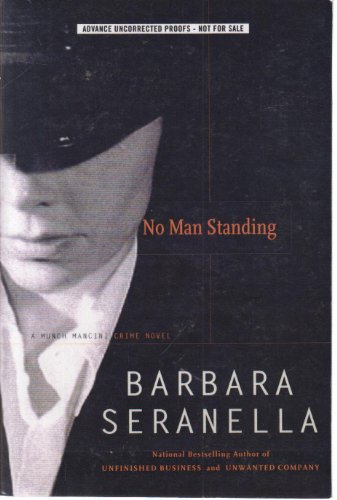
Munch Mancini assists old friend and fellow former biker Ellen, whose parents are brutally murdered after Ellen is released from prison, a situation that is further complicated when Munch begins to be stalked by the mother of her daughter's friend. 15,000 first printing.
"synopsis" may belong to another edition of this title.
Reviews
The fifth novel in Serenella's bestselling 1980s saga (No Human Involved, etc.) featuring Miranda Munch Mancini, onetime junkie, hooker and California biker chick, gets off to a fast start with the brutal murder of the mother and stepfather of Munch's old running buddy, Ellen Summers. Alas, the plot then goes off in several directions and bogs down. With Munch providing the only homecoming welcome, Ellen is about to try the transition from prison life to normal societyagain (she came out of the can once before, in 1999's Unwanted Company). Ellen still behaves more as if she has unfinished illegal business to transact than as if she's ready for the straight and narrow. Various parties unknown appear to think this business involves a large amount of missing money. Meanwhile, Munch has managed to put it all togetheras a well-paid auto mechanic, owner-operator of a limousine service and single mother to an adopted eight-year-old daughter, Asia. Munch can testify to the rewards of a virtuous life, but reminders of her dark past return in the form of a jealous woman's spiteful pranks. Ellen's father appears and acts mysteriously. Munch's efforts to shield Ellen complicate old and new relationships with members of the local police. The result is mayhem and a litter of prostrate bodies. Established fans will lap this one up as eagerly as earlier books in the series, but new readers are likely to be more taken with the eccentric characters than the wandering plot.
Copyright 2002 Cahners Business Information, Inc.
Ellen Summers, newly released from prison, resumes her longstanding friendship with Miranda "Munch" Mancini, a former druggie-turned-auto mechanic and limo service operator. When Ellen's parents are killed, Munch fears that Ellen will either want revenge or will herself become the next victim. Unfortunately, Ellen knows the present whereabouts of some illegally gotten cash, probably counterfeit. With quick segues to strip clubs, more murder, and various surveillants, the narrative action never stops. An appealing fifth addition to the series featuring a "bad girl" sleuth (Unwanted Company) and down-to-earth characters. For readers who like their mysteries a bit grittier.
Copyright 2002 Reed Business Information, Inc.
The fifth outing for Miranda "Munch" Mancini, former biker and drug addict turned car mechanic, places the heroine in the awkward duel role of soccer mom/criminal accessory. Munch is busily doing the right thing, raising her adopted daughter and buying a new house, when she learns that her old friend Ellen's parents have been murdered. The next day, Ellen is released from prison and soon shows up on Munch's doorstep. Ellen's name always spells trouble, and this time is no different--she has some stolen money squirreled away that may have played a role in her parents' murder. Roped into helping Ellen sort things out, Munch proves herself again to be a likable and earnest character with a tough side that is explained by glimpses into her dark past. Her romantic entanglement with a police officer promises interesting times ahead. This story should send some readers back to the first books in the series to catch up on what they've missed. Carrie Bissey
Copyright © American Library Association. All rights reserved
Excerpt. © Reprinted by permission. All rights reserved.
Chapter 1
Los Angeles Homicide Detective Art Becker studied the trail of ants streaming into the open mouth of the dead man. After a minute he hefted his portly frame upright and waved to his new partner, Rico Chacón.
Chacón's athletic younger body moved effortlessly toward him. "We've got one more in the house," Chacón said, staring down at the first victim. Even on this overcast morning, he wore sunglasses -- Carreras, the kind that adjusted to the light.
The two detectives belonged to a team of robbery/homicide investigators that worked out of the Pacific Division station on Culver and Centinela. Homicide was not unheard of in these parts. The projects up on Slauson were usually good for at least a stabbing on a Saturday night. There was a block on Short Avenue where every other graffiti-covered house was for sale, the signs riddled with bullet holes. But this street was more your working-class residential -- a lot of Hispanics, a few blacks, but mainly Midwest transplants.
The two victims had been tentatively identified by the first unit on the scene as Dwayne and Lila Mae Summers. Approximate ages: mid-fifties. Becker made a note of the date, Thursday, January 17, 1985, on a fresh page of his notebook and next to that he wrote, Cloudy, 50°. In cross-examination, a criminal-defense attorney had once asked him what the weather had been like the day of the crime. It had looked bad to the jury when he had to admit he didn't remember. That was the last time he was going to get caught like that, he thought, as he continued his inspection of the corpse.
Cause of death for the guy was probably going to be related to the hole in his head. It looked like a bullet wound, but Becker knew better than to assume. He had seen enough tools, kitchen and garden implements, and scraps of hardware stuck in bodies to know how deceptive entry wounds could be. Skin stretched and hair made scalp wounds even more difficult to reckon. Size and shape of the projectile would be determined later by the coroner. However, judging from the scuff marks in the dirt, it was safe to say the vic had died on the run. Becker looked for scorch marks from muzzle flash but found none.
The two uniformed officers who had first responded to the call and now had the duty of guarding the bodies had made a game of picking an ant in line and wagering on the number of seconds it would take it to reach the guy's mouth.
"Just to the lips?" Becker asked. "Or all the way inside?"
"Inside," the taller of the two uniforms said.
Becker noticed a little piece of machinery sticking up out of the dirt. He kicked at it with his toe, and it came loose from the ground. The piece of black metal was an inch long, cast in a figure-eight pattern. Not a tool, he decided as he stooped and picked it up, but some sort of hardware. Two round half-inch stainless-steel prongs, their ends grooved, connected to the figure-eight-shaped flange. He turned it back and forth in his hand and showed it to Chacón. "Know what this is?"
"No, maybe a car part."
"Let's bag it," Becker said.
Chacón put the piece in a little plastic evidence bag on which he recorded the date and location.
"Who's the mope?" Becker asked, indicating the middle-aged white man sitting within the outside layer of yellow tape. Two perimeters had been erected. Tape one protected the interior scene. The second, encompassing driveways on either side of the house and part of the street, formed a staging area where the officers, witnesses, and forensics people could operate and be separated from the public and media.
"Neighbor," the second uniformed cop answered. "He's the guy who found the DBs and called it in."
"What's his name?" Chacón asked.
"Johnson. Cal Johnson."
Becker nodded toward the house. As primary officer assigned to this case, he made the call on how they would proceed. Before speaking to Johnson, he wanted to familiarize himself with the entire crime scene. He walked around an anemic flower bed of mostly dirt and dying daisies and stepped up the single wooden stair leading to the front door. To the right of the door a rusted hibachi sat in cement. The woman's body was just inside. From the neck down, her body faced the ceiling. It took him a second to realize that he was looking at the back of her head. Her face lay buried in the blood-soaked gray carpet. The torque that had snapped her neck had exposed white vertebrae. The fingers on both hands were bruised a deep purple and twisted at unnatural angles.
Chacón came up behind him. He was one of those tall, quiet types who observed everything but said little. Now he made a small grunt of shock.
Becker closed his eyes and took a deep breath through his mouth, giving his senses a break. He had seen death before, but this one made him check his gag reflex. Murder was one thing. People get mad, lose control, snap or whatever, and kill someone. It happened every day, every minute of the day somewhere, probably. But what kind of a human was capable of committing such extreme torture? That he would never fathom. Maybe he was old-fashioned, but the fact that the victim was a woman made this cruelty even worse. He flexed his own undamaged hands, unwillingly imagining the ache of having his fingers cracked like wishbones.
"Let's get to work," he said.
He opened his eyes and looked around the room. The table in front of the couch had been upended and several pictures torn from the wall. Rectangular patches of unfaded paint testified to their previous locations. From the doorway he could also see that drawers in the bedroom dresser had been pulled out and dumped on the floor. The two men toured the rest of the house. The first police on the scene had done this also, making sure no other victims had been overlooked. Becker and Chacón took care to travel in pathways already used by those officers. The kitchen appeared undisturbed as did the bathroom. They returned to the front room where the body was and tried to reconstruct what had happened.
It seemed that either the unknown subject(s) had found what they were looking for or something had interrupted them. A mass of aged papers was on the floor of the bedroom closet. The cardboard box that had apparently held the papers sat upright beside them. Ellen was written in Marks-A-Lot across the front. Clearly a parent's collection of mementos. They were arranged in chronological order, starting with grammar school report cards and childish drawings rendered in happy colors -- a girl and her mom and dad holding hands in the sun with flowers growing at their feet. Becker thought of the abused flower bed out front.
The artwork turned more sophisticated. Pencil sketches of horses and dogs. His own preteen girls were nuts for horses and dogs. Directly to the right of the sketches was a 1971 junior high school yearbook opened to the S's. He looked for and found a Summers. Ellen Summers. If she was in ninth grade fourteen years ago, that would put her age at about twenty-nine now.
The documentation that was fanned across the floor filled in those missing years. Release forms from county jail, bail receipts, and probation reports. There was also a flyer from a club called the Spearmint Rhino. It advertised itself as an adult cabaret. The picture of the sultry blonde on all fours and clad only in a G-string filled in the subtext. The face of the girl on the flyer matched the ninth-grade black-and-white photo of Ellen Summers given a few trips around a rough block. The flyer had crease marks in it, as if it had been folded in thirds and fitted inside an envelope.
An uneven spray of blood over the papers told him that they had been arranged here prior to at least some of the carnage.
"Time to talk to the neighbor," Becker said. The two detectives left the house and approached Cal Jo
"About this title" may belong to another edition of this title.
Other Popular Editions of the Same Title

Search results for No Man Standing: A Munch Mancini Crime Novel

Stock Image
No Man Standing: A Munch Mancini Crime Novel (Munch Mancini Novels)
Seller: Books From California, Simi Valley, CA, U.S.A.
Seller rating 4 out of 5 stars

Hardcover. Condition: Very Good. Signed. Signed by the author. Seller Inventory # mon0003299286
Stock Image
No Man Standing: A Munch Mancini Crime Novel
Seller: ThriftBooks-Dallas, Dallas, TX, U.S.A.
Seller rating 5 out of 5 stars

Hardcover. Condition: Good. No Jacket. Missing dust jacket; Pages can have notes/highlighting. Spine may show signs of wear. ~ ThriftBooks: Read More, Spend Less. Seller Inventory # G0743213866I3N01
Stock Image
No Man Standing: A Munch Mancini Crime Novel (Munch Mancini Novels)
Seller: Books From California, Simi Valley, CA, U.S.A.
Seller rating 4 out of 5 stars
Hardcover. Condition: Very Good. Seller Inventory # mon0003014941
Stock Image
NO MAN STANDING~A MUNCH MANCINI CRIME NOVEL
Published by
SCRIBNER, 2002
ISBN 10: 0743213866
ISBN 13: 9780743213868
Used
Hardcover
First Edition
Signed
Seller: lottabooks, ORANGE, CA, U.S.A.
Seller rating 4 out of 5 stars
HARDCOVER. Condition: VERY GOOD. Dust Jacket Condition: VERY GOOD. FIRST EDITION. FLAT SIGNED ON THE TITLE PAGE~VERY NICE COPY OF THIS BOOK. SIGNED. Seller Inventory # 50144
Stock Image
No Man Standing ***SIGNED*** ***REVIEW COPY***
Published by
Scribner, NY, 2002
ISBN 10: 0743213866
ISBN 13: 9780743213868
Used
Hardcover
First Edition
Signed
Seller: William Ross, Jr., Annapolis, MD, U.S.A.
Seller rating 5 out of 5 stars
Hardcover. Condition: Fine. Dust Jacket Condition: Fine. First Edition. First Edition, First Printing with full number line. Signed, without inscription, by author on the FULL title page. Fine book In Fine dust jacket. Review copy with review materials laid in. All our books are bubble wrapped and shipped in a sturdy box with Delivery Confirmation. NO remainder mark, NO previous owner markings or inscriptions, NOT price clipped, NOT a Book Club Edition, NOT an Ex-Lib. Dust jacket covered in protective clear wrapper. Signed. Seller Inventory # 012966
Stock Image
No Man Standing A Munch Mancini Crime Novel
Published by
Scribner, New York, ET AL, 2002
ISBN 10: 0743213866
ISBN 13: 9780743213868
Used
Hardcover
Seller: Willis Monie-Books, ABAA, Cooperstown, NY, U.S.A.
Seller rating 5 out of 5 stars
Hardcover. Condition: Very Good. Dust Jacket Condition: Very Good. First Printing. Remainder mark (s) on bottom edge.; Seller Inventory # 177055
Stock Image
No Man Standing
Published by
Scribner, New York, 2002
ISBN 10: 0743213866
ISBN 13: 9780743213868
Used
Hardcover
First Edition
Seller: Once Upon A Crime, Minneapolis, MN, U.S.A.
Seller rating 4 out of 5 stars
Hardcover. Condition: Fine. Dust Jacket Condition: Fine. 1st Edition. Seller Inventory # 005207
Stock Image
No Man Standing: A Munch Mancini Crime Novel (Munch Mancini Novels)
Published by
Scribner, 2002
ISBN 10: 0743213866
ISBN 13: 9780743213868
Used
Hardcover
First Edition
Signed
Seller: Wonder Book, Frederick, MD, U.S.A.
Seller rating 5 out of 5 stars
Condition: As New. Signed Copy First edition copy. . Very Good dust jacket. With remainder mark. Signed by author on title page. In protective mylar cover. (mystery). Seller Inventory # Q20F-00984
Stock Image
No Man Standing: A Munch Mancini Crime Novel
Seller: Book Alley, Pasadena, CA, U.S.A.
Seller rating 4 out of 5 stars
Hardcover. Condition: Very Good. Dust Jacket Condition: very good. Signed. First Edition. SIGNED; Signed by Barbara Seranella at title page with date 4/28/02. No inscription. Very good hardcover in very good dust jacket; dj protected by mylar cover (mylar has some wear). Gently read with no markingss in text. Seller Inventory # mon0000625743
Stock Image
No Man Standing: A Munch Mancini Crime Novel (Munch Mancini Novels)
Seller: Fallen Leaf Books, Nashville, IN, U.S.A.
Seller rating 2 out of 5 stars

Hardcover. Condition: Near Fine. Dust Jacket Condition: As New. First Edition. signed by the author on the title page below their name, a near fine to fine copy. Seller Inventory # 57674