
Synopsis
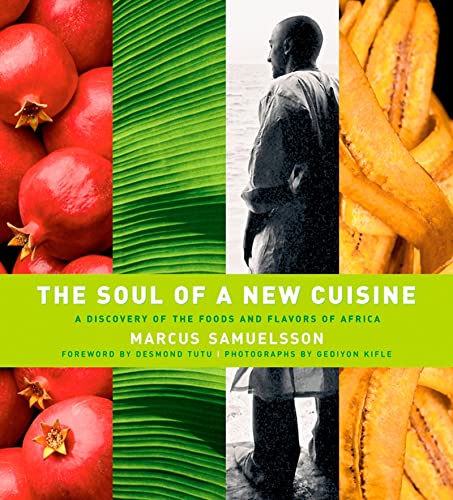
"For as long as I can remember, I've had Africa on my mind." Award-winning chef Marcus Samuelsson may be best known for his innovative take on Scandinavian cuisine at New York's Restaurant Aquavit, but his story begins thousands of miles away, in Africa. Born in Ethiopia and raised in Sweden by adoptive parents, his life transcends national boundaries, and his individual approach to cuisine is a global yet personal one that draws freely from many ethnic and cultural influences.
In The Soul of a New Cuisine, Marcus returns to the land of his birth to explore the continent's rich diversity of cultures and cuisines through recipes and stories from his travels in Africa. Stunning color images by award-winning photographer Gediyon Kifle bring the breadth of the African experience to life, from fishermen at sunset off the coast of Zanzibar to French baguettes loaded onto a bicycle in Senegal.
Marcus shares more than 200 enticing recipes, including his own African-inspired creations and traditional dishes from all parts of Africa. You can delight in spicy stews and Barbequed Snapper from West Africa and the familiar Mediterranean flavors of dishes like Moroccan Lemon-Olive Chicken, or make your way east and south for the irresistible taste combinations of dishes such as Curried Trout with Coconut-Chili Sauce from Kenya and Apple-Squash Fritters from South Africa's Cape Malay. Using ingredients that are readily available in American markets, the recipes are doable as well as delicious.
Of course, one of the keys to authentic African cooking is the use of spice blends and rubs, which elevate simple cooking techniques to an excitingly varied and intense level. Marcus includes his favorites here, with blends that go from sweet to spicy and feature everything from hot chili peppers and peppermint leaves to sesame seeds and ginger.
As he says, Africa is "a state of mind that I hope this book will help you tap into wherever you are." By cooking with a handful of this and a pinch of that, trying new foods and enjoying old ones in a new way, and lingering over meals with family and friends, you will bring the free, relaxed spirit of African cooking to your table and discover for yourself the soul of a "new" cuisine.
"synopsis" may belong to another edition of this title.
About the Author
MARCUS SAMUELSSON owns Red Rooster Harlem, Ginny's Supper Club, and Street Bird. He is the author of Marcus Off Duty; the New York Times bestseller Yes, Chef; the James Beard Award-winning Soul of a New Cuisine; and Aquavit. He frequently appears as a judge on Chopped and lives with his wife in Harlem.
From the Back Cover
"Let us break bread together and celebrate our diversity."
—Desmond Tutu, from the Foreword
"Marcus generously shares his mnandi (the Zulu word for 'delicious') recipes, travels in Africa, and insights on culture and cooking. He is also supporting children across the globe through UNICEF. Thank you!"
—Quincy Jones, film composer, activist, TV producer, and Grammy award winner
"Marcus has produced a beautiful and definitive work that stands apart. A proud example of his heritage, this book captures the soul of African cuisine."
—Alfred Portale, Co-owner and Executive Chef, Gotham Bar and Grill
"The Soul of a New Cuisine will inspire many exhilarating kitchen journeys."
—Matt Lee and Ted Lee, Contributing Editors, Travel + Leisure
"Marcus Samuelsson's exploration of the foods of Africa incites the adventurous diner to imagine what we've missed all these years: an ancient tradition that Samuelsson makes utterly contemporary, accessible, and delicious."
—Thelma Golden, director and Chief Curator, The Studio Museum in Harlem
"The Soul of a New Cuisine is a stunning and lavishly photographed snapshot of African cuisine and culture. It's a delicious journey that drives right through the soul of Africa!"
—Colin Cowie, Founder and President, Colin Cowie Lifestyle
Reviews
Starred Review. Born Ethiopian, raised Swedish, and now one of New York City's top chefs, Samuelsson (Aquavit: And the New Scandinavian Cuisine) has written an exotic yet accessible book that will hasten the coming of the African fusion cookery he envisions. His 204 recipes and 258 color photos are enriched with personal and political history; as in his many condiments and sauces, the balance is right. While he stresses the diversity and bounty of the second-largest continent, he repeatedly describes African cuisine as poor people's cooking, crafted with simple tools and necessarily emphasizing starches, vegetables and big flavors. Whether it's rosemary for Honey Bread or turmeric, ginger and cinnamon in his Vegetable Samosas, herbs and spices are always sauteed in oil or tossed in a hot dry pan, to intensify and mellow. He even proposes toasting the cinnamon for the whipped cream accompanying his Ethiopian Chocolate Rum Cake. The recipe for the cake is typical: the batter is prepared in a single bowl, mixed with a spoon, and bakes up moist and gingerbread-like, with great keeping properties. Toasting the cinnamon takes seconds and is impressive in the complexity it delivers. (Oct.)
Copyright © Reed Business Information, a division of Reed Elsevier Inc. All rights reserved.
Samuelsson established his reputation as one of the foremost exponents of contemporary Swedish cookery through Aquavit, his celebrated New York City restaurant. Now he travels to wholly new territory by returning to the land of his birth and the glorious traditions of African cooking. From his native Ethiopia he prepares injera, the country's staple fermented flatbread. Moroccan cooking, one of Africa's most sophisticated, contributes harissa, a fiery spice paste that warms many North African dishes. Cassava stuffs shrimp for a satisfying West African meal. Samuelsson substitutes beef for lamb in South Africa's renowned bobotie but takes care to preserve the dish's curry-influenced spicing. Jerk chicken, more generally associated with Jamaica, shows how African eating traditions have spread abroad. He does not flinch at using contemporary ingredients such as arugula and Yukon Gold potatoes to make his recipes attractive. The immensity and diversity of Africa make it difficult to comprehend a continent's varied cooking styles in a single book, but Samuelsson's achievement celebrates a little-known cuisine. Mark Knoblauch
Copyright © American Library Association. All rights reserved
Excerpt. © Reprinted by permission. All rights reserved.
The Soul of a New Cuisine
A Discovery of the Foods and Flavors of AfricaBy Marcus Samuelsson Heidi Sacko Walters Gediyon Kifle Desmond TutuJohn Wiley & Sons
Copyright © 2006 John Wiley & Sons, LtdAll right reserved.
ISBN: 978-0-7645-6911-1
Chapter One
INGREDIENTS AND EQUIPMENT
PANTRY
The African kitchen is not as foreign as you may expect-many of the ingredients used in everyday cooking are found in pantries around the world. There are a number of ingredients, however, that either are unique to Africa or are used in ways that you may not be accustomed to.
Banana Leaves: The wide, striated leaves of the banana tree are frequently used in West Africa to wrap foods for steaming. The leaves are very long, measuring 3 to 4 feet, and should be cut to the needed size. They can be found in Latin, Asian, Caribbean, and African grocery stores and are usually sold frozen.
Beans: Beans are a common source of protein throughout Africa, particularly in countries like Ethiopia, where a large number of religious fast days are observed. I prefer cooking with dried beans rather than using canned beans, which often have a metallic taste. Cover dried beans with cold water and soak for at least 8 hours, or overnight, before cooking them.
Brown Sugar: Brown sugar is manufactured throughout the African continent. My favorite is an organic fair-trade raw-cane demerara from Malawi, which is sold under the Wholesome Sweetners brand at many upscale grocery stores. It has an intense, multifaceted flavor that really stands out in a recipe.
Bulgur: Arab traders introduced many foods to North Africa, including bulgur, a type of cracked wheat. This highly nutritious grain can be found in larger supermarkets, health food stores, and specialty stores, as well as through online sources.
Cardamom: Tanzania is one of the world's largest growers of cardamom, a lovely aromatic spice used to flavor soups, stews, baked goods, and, in Arabic countries, coffee. I suggest buying whole cardamom and grinding it yourself rather than buying preground, as the flavor is much more intense. This is true of all spices, but the flavor difference is especially noticeable for this spice. White and green cardamom pods are available; I prefer white cardamom, which has been bleached, because I think it gives a cleaner, truer taste. Avoid brown or black cardamom, also known as false cardamom, which comes from a different plant. And use cardamom sparingly, as the intense flavor goes a long way.
Cassava: Originally from South America, cassava was brought to Africa by Spanish and Portuguese traders and quickly became a staple food. Probably the most well-known use of the cigar-shaped root is in West Africa, where it is cooked and pounded into a mash called fufu. In addition, the leaves are used as a green vegetable, while the roots are also dried to make cassava meal and tapioca. There are two main types of cassava, bitter and sweet. Cyanide compounds occur naturally in the bitter variety, making it poisonous unless cooked, so only the sweet variety is approved by the USDA for sale in the United States; to be on the safe side, I suggest rinsing any cassava thoroughly before preparing it. Cassava, also known as manioc or yuca, is available in African and Hispanic markets. Look for roots that are firm and even in color and texture.
Chickpeas: Chickpeas were first cultivated by the ancient Egyptians, and they have played an important part in African cooking ever since. They are pureed into a vegetarian paste like hummus, crushed and fried to make falafel, or stirred whole into stews or couscous. I prefer dried chickpeas, which need to be soaked in cold water for at least 8 hours before using, to canned. Look for whole, uniformly colored beans with no cracks.
Chilies: Heat is one of the hallmarks of African cooking, especially in West Africa, Mozambique, Angola, Tunisia, and the Horn region, where a blisteringly hot dose of chili peppers is added to many dishes. Chilies originated in Mexico and were brought to Africa by Spanish and Portuguese traders in the 1500s. The variety of chilies available today is astonishing. For the recipes in this book, I use the more readily available serrano, jalapeo, bird's-eye, and Scotch bonnet, but feel free to experiment with any different varieties you may find, varying the amount you use according to your personal heat preference. Most of the heat in chilies comes from capsaicin, a chemical found in the seeds and ribs. It is very potent and can burn the skin or your eyes if you rub them after handling, so be careful not to touch your face, and thoroughly wash your hands afterward.
Chocolate: Chocolate is as popular in Africa as it is elsewhere in the world. Use a high-quality brand like Scharffen Berger, Valrhona, or Callebaut, all of which are made with the choicest cacao beans for a wonderful flavor profile.
Cinnamon: A familiar flavor around the world, cinnamon has earned a place of importance in the African kitchen, used in the tagines of Morocco, the Indian-inspired stews of the eastern coast, and the Malay dishes of Cape Town, among others. There are two types of cinnamon. Cassia is the most common in the United States, but I prefer Ceylon, or true cinnamon, which has a milder, sweeter, more refined flavor. When possible, buy whole sticks instead of ground cinnamon, which is usually the cassia variety.
Clarified Butter: Clarified butter is the basis of nit'ir qibe, the spiced butter used in almost all of Ethiopia's stews. Because all the milk solids have been removed, clarified butter can be cooked over high temperatures without burning and can be stored for much longer without going rancid, an important point for cooks living in Ethiopia's scorching climate. To make clarified butter, heat at least 5 pound of butter in a saucepan over medium-low heat, without stirring, until the milk fats separate and fall to the bottom of the pan. Carefully skim the foam from the top, then pour the golden liquid butter into a container, leaving the milk solids in the pan. Tightly covered, clarified butter will keep for up to a month in the refrigerator.
Coconut Milk: Coconuts are used throughout the world's tropical areas, and both the milk and meat are common ingredients in many African recipes. Fresh coconut milk is made by combining equal parts hot water and coconut meat and blending the mixture in a blender or food processor, then straining the resulting mash through a cheesecloth. Canned coconut milk, readily available in most grocery stores, can be used in any recipe calling for coconut milk; just be sure to shake the can vigorously before opening, as it separates upon standing.
Coffee: My birthplace of Ethiopia is also the birthplace of coffee. Wild Arabica coffee beans originated in the forest of the Kaffa region, where, according to legend, a local goatherd named Kaldi noticed his goats frolicking energetically after chewing on the berries and decided to try them himself. To this day, coffee still grows in the wild throughout Ethiopia, and its production is a vital part of the country's economy. The Sidamo region produces one of my favorite coffees, a full, earthy blend with great texture. Coffee production is not limited to Ethiopia. Neighbor countries Kenya and Tanzania grow some of the best coffees available in the world.
Condensed Milk: Condensed milk-milk mixed with sugar and heated until much of the water has evaporated, leaving a sweet, sticky liquid-is used to add a sweet richness to baked goods and desserts. In cans, condensed milk can be stored at room temperature for up to 6 months or longer; after opening, it can be stored in the refrigerator in a tightly sealed container for 3 to 5 days.
Cornmeal: Along with chilies and tomatoes, Portuguese and Spanish traders introduced corn to Africa from their colonies in the Americas. Today, corn is a staple food throughout much of the continent, particularly in Southern and East Africa, where cornmeal is used to make a polentalike porridge that is served for breakfast, lunch, and dinner. African cornmeal, or mealie meal as it is known, is made from a dry type of field corn; the closest equivalent available in the United States is finely ground cornmeal.
Couscous: When it comes to North African cooking, no other food compares in importance to couscous. Called seksu in Berber, this pasta is still formed by hand into tiny balls, then steamed in a perforated pot known as a couscoussier throughout all of North Africa. Although semolina flour is the grain most commonly used as the base for the couscous sold in North America, throughout North Africa it can be made with any variety of grains, including barley, unripened wheat, or wheat bran. A form of couscous made of millet flour is found in western Africa, particularly in Mali.
Fenugreek Seeds: Pungent fenugreek seeds are best known for their use in Indian curries, but they play a starring role in the cooking of eastern Africa, particularly in Ethiopian sauces. Look for seeds that are yellowish brown in color, firm, and unbroken.
Ginger: Ginger is used both medicinally and culinarily throughout Africa. This knobby tropical rhizome lends a fresh, spicy zing to stews, soups, and beverages all over the continent. Look for firm, evenly colored ginger with smooth skin. Peel away the tough skin before using. Store, tightly wrapped, in the refrigerator for up to 3 weeks.
Lemongrass: The sour, lemony flavor and fragrance of lemongrass is most associated with the cooking of Southeast Asia, but it is an important component of African cooking, too, especially along the eastern coast, where the Asian influences are the strongest. African cooks use the whole stalk, chopping and crushing the root end to flavor meat and fish dishes and infusing the top part in water to make a deliciously refreshing tea.
Lentils: Lentils are popular all over the African continent, particularly along the Indian-influenced eastern coast; the Horn region of Ethiopia, Eritrea, and Somalia; and Egypt. Hearty and filling, they make wonderful vegetarian stews. Brown lentils can be found at most supermarkets; red and yellow lentils are available at Middle Eastern and Indian markets, as well as many health food stores and supermarkets.
Mango: In recent years, the mango has become widely available throughout the United States and it's not hard to see why it's so popular: this beautiful golden-fleshed fruit has a heady fragrance and bursts with sweet juices. Choose mangoes that give just slightly when squeezed; if only unripened mangoes are available, place them in a paper bag to speed up the ripening process. Following the Indian tradition, in Africa green mangoes are used like a vegetable in salads and savory side dishes. Green mangoes can be found at Caribbean, Asian, and Indian markets. Mango pits are very large; to pit the fruit, use a sharp knife to cut the flesh away from the pit.
Merguez Sausage: Bright red merguez sausages from Tunisia, Algeria, and Morocco are made from beef or lamb, rather than pork, in keeping with Islamic dietary laws. They get their spiciness from fiery harissa. These small sausages are typically grilled or fried or cut into pieces and stirred into couscous dishes. You can find them at ethnic markets and some specialty butchers.
Morning Glory: Morning glory-also known as water spinach, kang kong, and swamp cabbage-is a popular green in Africa, as well as in the Caribbean, Asia, and the Philippines. Neither a spinach nor a cabbage, it has small thin leaves and a delicate flavor that takes well to sauteing. Look for it in Caribbean, Asian, and African markets.
Okra: I had always thought of okra as a vegetable of the American South, so it came as a surprise to learn that it originated in my native Ethiopia and is used throughout Africa. It is used to thicken soups and stews, and it is the prime ingredient in the gumbos of the American South. Okra is available frozen or canned, but when possible I suggest using fresh, which you can find at specialty markets and some grocery stores. When buying fresh okra, look for firm, bright green pods.
Palm Oil: Also known as dende, palm oil is one of the ingredients I most associate with West African cooking. This bright red oil, which is much stronger in taste than the vegetable oils commonly used in the United States, is generously splashed over fish, poultry, and meat and lends its vivid hue to the red rice dishes made along the Atlantic coast. I've substituted the more readily available olive, canola, or peanut oils in most of the recipes in this book, but a splash of palm oil will add a touch of authenticity to any of the West African-style recipes. You can find it in specialty stores and through Internet sources.
Papaya: This delicately scented fruit is used in both ripe and unripened form by African cooks. When ripe, it is typically eaten as a snack or a sweet ending to a meal; unripened, it is commonly used like a vegetable in salads and savory side dishes. Like many other foods that are now common in the continent, the papaya was brought to Africa by Spanish and Portuguese traders from their Central and South American colonies. When purchasing ripe papayas, look for fruit with golden-yellow skin that gives just slightly when squeezed. Green papayas are firm with a solid green skin.
Peanuts: Though it may seem as American as baseball and apple pie, the peanut (or groundnut, as it is known throughout Africa) is believed to have originated in South America and been introduced to East and West Africa by Portuguese traders in the sixteenth century. Today, peanuts are commonly used in stews and soups across Africa, and peanut oil is used for frying. Peanuts are usually sold roasted. For the recipes in this book, you can use salted dry-roasted peanuts, but if you want to buy them unshelled, look for clean, intact shells. In some recipes I call for blanched peanuts, which give a moister, meatier flavor to the finished dish.
Plantains: Plantains are eaten throughout sub-Saharan Africa and in regions around the world where African slaves carried their culinary traditions, including the Caribbean and Brazil. Unlike their cousin the banana, plantains are eaten both ripe and unripe. Unripened green plantains are typically used in savory dishes, while ripe yellow plantains are used for sweet preparations. In recipes that call for plantains, I've indicated whether to use the green or yellow fruit. Yellow plantains can be peeled as easily as a banana, but the skins of green plantains are thick and tough and cling to the fruit, often breaking off in little pieces when you try to peel it. The easiest way to peel a green plantain is to cut off both ends, then make four evenly spaced incisions with a sharp knife down the length of the fruit. Pull off the sections crosswise rather than lengthwise for a perfectly peeled plantain.
Rice: Rice is one of Africa's most important foods and is eaten throughout most of the continent, from the Malay culture of South Africa, to the Indian-influenced eastern coast, to the Arab-style dishes of Morocco, Algeria, Tunisia, and Egypt. Rice is particularly important in parts of western Africa, including Senegal, where short-grain rice is an integral part of national dishes like chep-bu-jen and jollof rice. In fact, it was slaves from West Africa who brought their knowledge of rice cultivation to the Carolinas, where rice farming thrived for more than three centuries. Broken jasmine rice from Asia, which I find at many of the African markets near my home in Harlem, can be used as a short-grain rice.
Shiro Powder: Shiro powder is one of the staple foods at Ethiopian markets. Made from dried ground chickpeas or yellow split peas, chilies, garlic, and berbere, the signature spice blend of the region, it's used to make a filling vegetarian paste that's served with injera, especially during Ethiopia's fasting period. Shiro powder is difficult to find in the United States; I usually purchase it from a local Ethiopian restaurant, but you can easily order it from an online source.
Sumac: Sumac comes from the berries of a type of sumac bush, which are dried and usually sold ground. It adds a sour, acidic note to many Middle Eastern and North African dishes. Most notably, it is one of the principal ingredients in za'atar, the popular spice blend. You can find sumac in ethnic grocery stores and through online sources.
(Continues...)
Excerpted from The Soul of a New Cuisineby Marcus Samuelsson Heidi Sacko Walters Gediyon Kifle Desmond Tutu Copyright © 2006 by John Wiley & Sons, Ltd. Excerpted by permission.
All rights reserved. No part of this excerpt may be reproduced or reprinted without permission in writing from the publisher.
Excerpts are provided by Dial-A-Book Inc. solely for the personal use of visitors to this web site.
"About this title" may belong to another edition of this title.
Search results for The Soul Of A New Cuisine: A Discovery of the Foods...

Stock Image
The Soul Of A New Cuisine: A Discovery of the Foods and Flavors of Africa
Seller: Orion Tech, Kingwood, TX, U.S.A.
Seller rating 5 out of 5 stars

hardcover. Condition: Good. Seller Inventory # 0764569112-3-36925765
Stock Image
The Soul Of A New Cuisine: A Discovery of the Foods and Flavors of Africa
Seller: World of Books (was SecondSale), Montgomery, IL, U.S.A.
Seller rating 5 out of 5 stars
Condition: Good. Item in good condition. Textbooks may not include supplemental items i.e. CDs, access codes etc. Seller Inventory # 00101371470
Stock Image
The Soul Of A New Cuisine: A Discovery of the Foods and Flavors of Africa
Seller: Evergreen Goodwill, Seattle, WA, U.S.A.
Seller rating 5 out of 5 stars
hardcover. Condition: Good. Seller Inventory # mon0000394387
Stock Image
The Soul of a New Cuisine: A Discovery of the Foods and Flavors of Africa
Seller: ThriftBooks-Dallas, Dallas, TX, U.S.A.
Seller rating 5 out of 5 stars
Hardcover. Condition: Good. No Jacket. Pages can have notes/highlighting. Spine may show signs of wear. ~ ThriftBooks: Read More, Spend Less. Seller Inventory # G0764569112I3N00
Stock Image
The Soul of a New Cuisine: A Discovery of the Foods and Flavors of Africa
Seller: ThriftBooks-Dallas, Dallas, TX, U.S.A.
Seller rating 5 out of 5 stars
Hardcover. Condition: Good. No Jacket. Missing dust jacket; Pages can have notes/highlighting. Spine may show signs of wear. ~ ThriftBooks: Read More, Spend Less. Seller Inventory # G0764569112I3N01
Stock Image
The Soul of a New Cuisine: A Discovery of the Foods and Flavors of Africa
Seller: ThriftBooks-Atlanta, AUSTELL, GA, U.S.A.
Seller rating 5 out of 5 stars
Hardcover. Condition: Good. No Jacket. Pages can have notes/highlighting. Spine may show signs of wear. ~ ThriftBooks: Read More, Spend Less. Seller Inventory # G0764569112I3N00
Stock Image
The Soul of a New Cuisine: A Discovery of the Foods and Flavors of Africa
Seller: ThriftBooks-Dallas, Dallas, TX, U.S.A.
Seller rating 5 out of 5 stars
Hardcover. Condition: Very Good. No Jacket. May have limited writing in cover pages. Pages are unmarked. ~ ThriftBooks: Read More, Spend Less. Seller Inventory # G0764569112I4N00
Stock Image
The Soul of a New Cuisine: A Discovery of the Foods and Flavors of Africa
Seller: ThriftBooks-Atlanta, AUSTELL, GA, U.S.A.
Seller rating 5 out of 5 stars
Hardcover. Condition: Very Good. No Jacket. May have limited writing in cover pages. Pages are unmarked. ~ ThriftBooks: Read More, Spend Less. Seller Inventory # G0764569112I4N00
Stock Image
The Soul of a New Cuisine: A Discovery of the Foods and Flavors of Africa
Seller: ThriftBooks-Reno, Reno, NV, U.S.A.
Seller rating 5 out of 5 stars
Hardcover. Condition: Good. No Jacket. Pages can have notes/highlighting. Spine may show signs of wear. ~ ThriftBooks: Read More, Spend Less. Seller Inventory # G0764569112I3N00
Stock Image
The Soul of a New Cuisine: A Discovery of the Foods and Flavors of Africa
Seller: ThriftBooks-Atlanta, AUSTELL, GA, U.S.A.
Seller rating 5 out of 5 stars
Hardcover. Condition: Good. No Jacket. Former library book; Pages can have notes/highlighting. Spine may show signs of wear. ~ ThriftBooks: Read More, Spend Less. Seller Inventory # G0764569112I3N10