
Synopsis
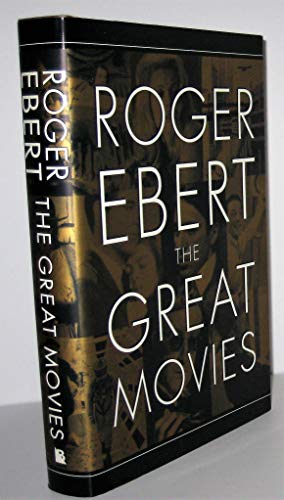
From America’s most trusted and best-known film critic, one hundred brilliant essays on the films that define for him cinematic greatness.
For the past five years Roger Ebert, the famed film writer and critic, has been writing biweekly essays for a feature called "The Great Movies," in which he offers a fresh and fervent appreciation of a great film. The Great Movies collects one hundred of these essays, each one of them a gem of critical appreciation and an amalgam of love, analysis, and history that will send readers back to that film with a fresh set of eyes and renewed enthusiasm–or perhaps to an avid first-time viewing. Ebert’s selections range widely across genres, periods, and nationalities, and from the highest achievements in film art to justly beloved and wildly successful popular entertainments. Roger Ebert manages in these essays to combine a truly populist appreciation for our most important form of popular art with a scholar’s erudition and depth of knowledge and a sure aesthetic sense. Wonderfully enhanced by stills selected by Mary Corliss, film curator at the Museum of Modern Art, The Great Movies is a treasure trove for film lovers of all persuasions, an unrivaled guide for viewers, and a book to return to again and again.
The Great Movies includes: All About Eve • Bonnie and Clyde • Casablanca • Citizen Kane • The Godfather • Jaws • La Dolce Vita • Metropolis • On the Waterfront • Psycho • The Seventh Seal • Sweet Smell of Success • Taxi Driver • The Third Man • The Wizard of Oz • and eighty-five more films.
"synopsis" may belong to another edition of this title.
About the Author
Roger Ebert has been the film critic of the Chicago Sun-Times since 1967, and is the only film critic to have won a Pulitzer Prize. His television program, Ebert and Roeper, is syndicated in more than two hundred markets. His books include Roger Ebert’s Movie Yearbook, Roger Ebert’s Book of Film, I Hated, Hated, Hated This Movie, and The Perfect London Walk. He lives in Chicago.
From the Inside Flap
From America s most trusted and best-known film critic, one hundred brilliant essays on the films that define for him cinematic greatness.
For the past five years Roger Ebert, the famed film writer and critic, has been writing biweekly essays for a feature called "The Great Movies," in which he offers a fresh and fervent appreciation of a great film. The Great Movies collects one hundred of these essays, each one of them a gem of critical appreciation and an amalgam of love, analysis, and history that will send readers back to that film with a fresh set of eyes and renewed enthusiasm or perhaps to an avid first-time viewing. Ebert s selections range widely across genres, periods, and nationalities, and from the highest achievements in film art to justly beloved and wildly successful popular entertainments. Roger Ebert manages in these essays to combine a truly populist appreciation for our most important form of popular art with a scholar s erudition and depth of knowledge and a sure aesthetic sense. Wonderfully enhanced by stills selected by Mary Corliss, film curator at the Museum of Modern Art, The Great Movies is a treasure trove for film lovers of all persuasions, an unrivaled guide for viewers, and a book to return to again and again.
The Great Movies includes: All About Eve Bonnie and Clyde Casablanca Citizen Kane The Godfather Jaws La Dolce Vita Metropolis On the Waterfront Psycho The Seventh Seal Sweet Smell of Success Taxi Driver The Third Man The Wizard of Oz and eighty-five more films.
Reviews
Culled from essays famed film critic Ebert has been writing biweekly for the last two years, the 100 pieces here tell us what's so great about Casablanca, The Seventh Seal, The Wizard of Oz, and more.
Copyright 2001 Reed Business Information, Inc.
This book presents a Roger Ebert quite different from the TV personality who offers undemanding moviegoers consumer tips on the latest Hollywood releases. Here he chooses 100 great films--not, he stresses, the 100 best films--and explains why they, not this week's batch of mall movies, are the ones that matter. Rising to the level of his subjects, he writes with an eloquence and a conviction he seldom expresses on TV or in his daily newspaper reviews. Unlike contemporary reviews, these assessments are informed by the passage of time and repeated viewings as well as by Ebert's vast general viewing experience. His selections constitute a nice mixture of American and foreign films and of sound and silent films, including inescapable classics (Citizen Kane, Casablanca), modern masterworks (The Godfather, The Decalogue), and even a few documentaries (Hoop Dreams, the generation-tracking British -Up films). In his introduction, Ebert chides younger viewers--even film students--who lack any knowledge of the medium's greatest works. If his TV fame leads any of them to pick up this book and subsequently investigate his recommendations, it will go a long way toward making up for his years of simplistic "thumbs up-thumbs down" appraisals. Gordon Flagg
Copyright © American Library Association. All rights reserved
Excerpt. © Reprinted by permission. All rights reserved.
2001: [A Space Odyssey]
The genius is not in how much Stanley Kubrick does in 2001: A Space Odyssey, but in how little. This is the work of an artist so sublimely confident that he doesn't include a single shot simply to keep our attention. He reduces each scene to its essence and leaves it on-screen long enough for us to contemplate it, to inhabit it in our imaginations. Rare among science fiction movies, 2001 is not concerned with thrilling us, but with inspiring our awe.
No little part of his effect comes from the music. Although Kubrick commissioned an original score from Alex North, he used classical recordings as a temporary track while editing the film, and they worked so well that he kept them. This was a crucial decision. North's score, which is available on a recording, is a good job of film composition but would have been wrong for 2001 because, like all scores, it attempts to underline the action--to give us emotional cues. The classical music chosen by Kubrick exists outside the action; it uplifts, it wants to be sublime, it brings a seriousness and transcendence to the visuals.
Consider two examples. The Johann Strauss waltz "Blue Danube," which accompanies the docking of the space shuttle and the space station, is deliberately slow, and so is the action. Obviously such a docking process would have to take place with extreme caution (as we now know from experience), but other directors might have found the space ballet too slow, and punched it up with thrilling music, which would have been wrong. We are asked in the scene to contemplate the process, to stand in space and watch. We know the music. It proceeds as it must. And so, through a peculiar logic, the space hardware moves slowly because it's keeping the tempo of the waltz. At the same time, there is an exaltation in the music that helps us feel the majesty of the process.
Now consider Kubrick's famous use of Richard Strauss's Thus Spake Zarathustra. Inspired by the words of Nietzsche, its bold opening notes embody the ascension of man into spheres reserved for the gods. It is cold, frightening, magnificent. It is associated in the film with the first entry of man's consciousness into the universe--and with the eventual passage of that consciousness onto a new level, symbolized by the Star Child at the end of the film. When classical music is associated with popular entertainment, the result is usually to trivialize the music (who can listen to the William Tell Overture without thinking of the Lone Ranger?). Kubrick's film is almost unique in enhancing the music by its association with his images.
I was present at the Los Angeles premiere of the film, in 1968, at the Pantages Theater. It is impossible to adequately describe the anticipation in the audience. Kubrick had been working on the film in secrecy for some years, in collaboration, the audience knew, with the author Arthur C. Clarke, the special effects expert Douglas Trumbull, and consultants who advised him on the specific details of his imaginary future--everything from space station design to corporate logos. Fearing to fly and facing a deadline, Kubrick had sailed from England on the Queen Elizabeth, using an editing room on board, and had continued to edit the film during a cross-country train journey. Now it was finally ready to be seen.
To describe that first screening as a disaster would be wrong, for many of those who remained until the end knew they had seen one of the greatest films ever made. But not everyone remained. Rock Hudson stalked down the aisle, audibly complaining, "Will someone tell me what the hell this is about?" There were many other walkouts, and some restlessness at the film's slow pace (Kubrick immediately cut about seventeen minutes, including a pod sequence that essentially repeated another one). The film did not provide the clear narrative and easy entertainment cues the audience expected. The closing sequences, with the astronaut inexplicably finding himself in a bedroom somewhere beyond Jupiter, were baffling. The overnight Hollywood judgment was that Kubrick had become derailed, that in his obsession with effects and set pieces, he had failed to make a movie.
What he had actually done was make a philosophical statement about man's place in the universe, using images as those before him had used words, music, or prayer. And he had made it in a way that invited us to contemplate it--not to experience it vicariously as entertainment, as we might in a good conventional science fiction film, but to stand outside it as a philosopher might, and think about it.
The film falls into several movements. In the first, prehistoric apes, confronted by a mysterious black monolith, teach themselves that bones can be used as weapons, and thus discover their first tools. I have always felt that the smooth artificial surfaces and right angles of the monolith, which was obviously made by intelligent beings, triggered the realization in an ape brain that intelligence could be used to shape the objects of the world.
The bone is thrown into the air and dissolves into another weapon, an orbiting bomb platform (this has been called the longest flash-forward in the history of the cinema). We meet Dr. Heywood Floyd (William Sylvester), en route to a space station and the moon. This section is willfully antinarrative; there are no breathless dialogue passages to tell us of his mission, and instead Kubrick shows us the minutiae of the flight: the design of the cabin, the details of in-flight service, the effects of zero gravity.
Then comes the docking sequence, with its waltz, and for a time even the restless in the audience are silenced, I imagine, by the sheer wonder of the visuals. On board, we see familiar brand names, we participate in an enigmatic conference among the scientists of several nations, we see such gimmicks as a videophone and a zero-gravity toilet.
The sequence on the moon (which looks as real as the actual video of the moon landing a year later) is a variation on the film's opening sequence. Man is confronted with a monolith, just as the apes were, and is drawn to a similar conclusion: This must have been made. And as the first monolith led to the discovery of tools, so the second leads to the employment of man's most elaborate tool: the space ship Discovery, employed by man in partnership with the artificial intelligence of the onboard computer, named HAL 9000.
Life on board the Discovery is presented as a long, eventless routine of exercise, maintenance checks, and chess games with HAL. Only when the astronauts fear that HAL's programming has failed does a level of suspense emerge; their challenge is to somehow get around HAL, which has been programmed to believe "This mission is too important for me to allow you to jeopardize it." Their efforts lead to one of the great shots in the cinema, as the men attempt to have a private conversation in a space pod, and HAL reads their lips. The way Kubrick edits this scene so that we can discover what HAL is doing is masterful in its restraint: He makes it clear but doesn't insist on it. He trusts our intelligence.
Later comes the famous "star gate" sequence, a sound and light journey in which the astronaut Dave Bowman (Keir Dullea) travels through what we might now call a wormhole, into another place, or dimension, that is unexplained. At journey's end is the comfortable bedroom suite in which he grows old, eating his meals quietly, napping, living the life (I imagine) of a zoo animal who has been placed in a familiar environment. And then the Star Child.
There is never an explanation of the other race that presumably left the monoliths and provided the star gate and the bedroom. 2001 lore suggests Kubrick and Clarke tried and failed to create plausible aliens. It is just as well. The alien race exists more effectively in negative space: We react to its invisible presence more strongly than we possibly could to any actual representation.
2001: A Space Odyssey is in many respects a silent film. There are few conversations that could not be handled with title cards. Much of the dialogue exists only to show people talking to one another, without much regard to content (this is true of the conference on the space station). Ironically the dialogue containing the most feeling comes from HAL, as it pleads for its "life" and sings "Daisy."
The film creates its effects essentially out of visuals and music. It is meditative. It does not cater to us, but wants to inspire us, enlarge us. More than thirty years after it was made, it has not dated in any important detail, and although special effects have become more versatile in the computer age, Trumbull's work remains completely convincing--more convincing, perhaps, than more sophisticated effects in later films, because it looks more plausible, more like documentary footage than like elements in a story.
Only a few films are transcendent and work upon our minds and imaginations like music or prayer or a vast belittling landscape. Most movies are about characters with a goal in mind, who obtain it after difficulties either comic or dramatic. 2001: A Space Odyssey is not about a goal, but about a quest, a need. It does not hook its effects on specific plot points, nor does it ask us to identify with Dave Bowman or any other character. It says to us: We became men when we learned to think. Our minds have given us the tools to understand where we live and who we are. Now it is time to move on to the next step, to know that we live not on a planet, but among the stars, and that we are not flesh, but intelligence.
[The 400 Blows]
I demand that a film express either the joy of making cinema or the agony of making cinema. I am not at all interested in anything in between.
TRUFFAUT
Francois Truffaut's The 400 Blows (1959) is one of the most intensely touching stories ever made about a young adolescent. Inspired by Truffaut's own early life, it shows a young, resourceful boy growing up in Paris and apparently dashing ...
"About this title" may belong to another edition of this title.
Other Popular Editions of the Same Title

Search results for The Great Movies

Stock Image
The Great Movies
Seller: ThriftBooks-Atlanta, AUSTELL, GA, U.S.A.
Seller rating 5 out of 5 stars

Hardcover. Condition: Fair. No Jacket. Readable copy. Pages may have considerable notes/highlighting. ~ ThriftBooks: Read More, Spend Less. Seller Inventory # G076791032XI5N00
Stock Image
The Great Movies
Seller: ThriftBooks-Atlanta, AUSTELL, GA, U.S.A.
Seller rating 5 out of 5 stars
Hardcover. Condition: Good. No Jacket. Missing dust jacket; Pages can have notes/highlighting. Spine may show signs of wear. ~ ThriftBooks: Read More, Spend Less. Seller Inventory # G076791032XI3N01
Stock Image
The Great Movies
Published by
Broadway (edition Reprint), 2002
ISBN 10: 076791032X
ISBN 13: 9780767910323
Used
Hardcover
Seller: BooksRun, Philadelphia, PA, U.S.A.
Seller rating 5 out of 5 stars
Hardcover. Condition: Fair. Reprint. The item might be beaten up but readable. May contain markings or highlighting, as well as stains, bent corners, or any other major defect, but the text is not obscured in any way. Seller Inventory # 076791032X-7-1
Seller Image
The Great Movies
Seller: clickgoodwillbooks, Indianapolis, IN, U.S.A.
Seller rating 5 out of 5 stars
Condition: acceptable. Used - Acceptable: All pages and the cover are intact, but shrink wrap, dust covers, or boxed set case may be missing. Pages may include limited notes, highlighting, or minor water damage but the text is readable. Item may be missing bundled media. Seller Inventory # CSIV.076791032X.A
Seller Image
The Great Movies
Seller: tLighthouse Books, Onekama, MI, U.S.A.
Seller rating 5 out of 5 stars
Condition: acceptable. Acceptable condition. Reading copy. May have signs of wear and previous use scuffs, library copy, highlighting, writing, and underlining . May have foxing, slight water damage or tears. 100% GUARANTEE! Shipped with delivery confirmation. If you're not satisfied with purchase just return it! Seller Inventory # HSV.076791032X.A
Seller Image
The Great Movies
Published by
Broadway Books, 2002
ISBN 10: 076791032X
ISBN 13: 9780767910323
Used
Hardcover
First Edition
Seller: Southampton Books, Sag Harbor, NY, U.S.A.
Seller rating 5 out of 5 stars
Hardcover. Condition: Like New. First Edition. First Edition, First Printing. Not price-clipped. Published by Broadway Books, 2002. Octavo. Hardcover. Book is like new with previous owner name on front flyleaf. Dust jacket is like new.100% positive feedback. 30 day money back guarantee. NEXT DAY SHIPPING! Excellent customer service. Please email with any questions. All books packed carefully and ship with free delivery confirmation/tracking. All books come with free bookmarks. Ships from Sag Harbor, New York. Seller Inventory # 393554
Stock Image
The Great Movies
Published by
Broadway Books, New York, 2002
ISBN 10: 076791032X
ISBN 13: 9780767910323
Used
Hardcover
Seller: Abacus Bookshop, Pittsford, NY, U.S.A.
Seller rating 5 out of 5 stars
hardcover. Condition: Fine copy in fine dust jacket. Illus. with photos (illustrator). Later prt. 8vo, 511 pp. Seller Inventory # 066178
Stock Image
The Great Movies
Seller: GoldBooks, Denver, CO, U.S.A.
Seller rating 5 out of 5 stars
Hardcover. Condition: new. New Copy. Customer Service Guaranteed. Seller Inventory # 28X80_53_076791032X
Stock Image
The Great Movies
Seller: WorldofBooks, Goring-By-Sea, WS, United Kingdom
Seller rating 5 out of 5 stars
Hardback. Condition: Very Good. The book has been read, but is in excellent condition. Pages are intact and not marred by notes or highlighting. The spine remains undamaged. Seller Inventory # GOR002421123
Buy Used
US$ 51.32
US$ 7.52 shipping
Ships from United Kingdom to U.S.A.
Ships from United Kingdom to U.S.A.
Quantity: 2 available
Stock Image
The Great Movies
Published by
Broadway, 2002
ISBN 10: 076791032X
ISBN 13: 9780767910323
Used
Hardcover
First Edition
Signed
Seller: Windy City Books, Batavia, IL, U.S.A.
Seller rating 5 out of 5 stars
Hardcover. Condition: Near Fine. Dust Jacket Condition: Near Fine. 1st Edition. Signed and inscribed by author. "To Jennifer" 1st ed/6th printing. Signed by Author(s). Seller Inventory # 003983