
Synopsis
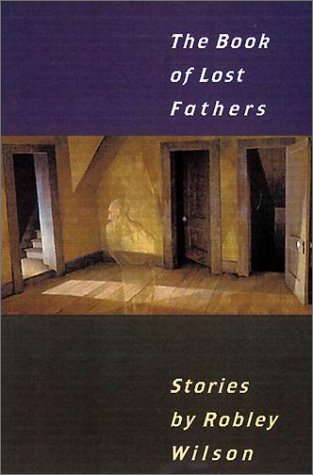
"Why is it the worst things happen when you're most relaxed and your head's empty of everything serious?" These words, from the narrator of the story "Grief," are at the heart of The Book of Lost Fathers, the new collection of short fiction by Robley Wilson. These stories depict ordinary, recognizable people dealing with loneliness, loss, and mortality. A woman and her father experience an earthquake, and the incident reinforces the frailty of the dying man. A man must confront his fiancée's past when he realizes the identity of the "stranger" they meet on vacation. A best man arrives late for his friend's wedding, only to learn that the groom has died hours before.
Combining an evocative and compassionate style with familiar characters and enduring messages, Wilson treats fundamental questions of love, suffering, and humanity. His "lost fathers" provide a common thread that weaves together stories about fathers, husbands, and lovers, past and present -- and the women whose lives they change.
"synopsis" may belong to another edition of this title.
About the Author
Robley Wilson's Robley Wilson's previous story collections include Terrible Kisses, Living Alone, and Dancing for Men,which won the Drue Heinz Literature Prize. He has been a Guggenheim Fellow and a Nicholl Fellow in Screenwriting. For 31 years he edited the North American Review, and now lives in Florida with his wife, fiction writer Susan Hubbard.
Reviews
Set in various locales ranging from small New England towns to Florida resorts, Midwestern farms to earthquake-ridden California, this haunting collection of stories is told from the points of view of jilted women, widowed wives, bewildered children and grieving men. Characters struggle to deal with the absence of fathers, whether from desertion, natural death or the "gradual dissolving away" of family life. One of the standouts, "Dorothy and Her Friends," takes a bizarre twist as Dorothy, who lives in a Boston apartment with her bitter, religious mother, begins an affair with a traveling evangelist. Deserted by her father at age 12, she now wonders, "What in the world was it that made men leave marriage, abandon family as if the truly important lay somewhere else?" For Dorothy, her father's legacy continues as men enter and leave her life "as swift as rare, intractable birds." Often Wilson simply refers to characters as "the wife" or "the son," emphasizing how family relationships mold their identities. In "Trespass," a divorced architect faces his estranged father's death and the fact that his ex-wife was included in the will, but he was not. "Florida" presents the postdivorce perspective of "lost" fathers like Fowler, who vacations with his fianc‚e and her two daughters in an attempt to mesh splintered families into a new whole. The last image in the final story, "A Day of Splendid Omens," finds a grieving woman cradling her young daughter as she whispers stories about the girl's dead father. The image captures the tone of the entire collection, in which Wilson adeptly illustrates in an unsentimental manner the sometimes devastating powers of family, love and loss.
Copyright 2001 Cahners Business Information, Inc.
"About this title" may belong to another edition of this title.
Search results for The Book of Lost Fathers: Stories (Johns Hopkins: Poetry...

Stock Image
The Book of Lost Fathers: Stories (Johns Hopkins: Poetry and Fiction)
Published by
The Johns Hopkins University Press, 2001
ISBN 10: 0801867177
ISBN 13: 9780801867170
Used
Hardcover
Seller: Redux Books, Grand Rapids, MI, U.S.A.
Seller rating 5 out of 5 stars

Hardcover. Condition: Very Good. Hardcover with dust jacket. Pages are clean and unmarked. Covers show very minor shelf wear. Dust jacket shows light edge wear. Binding is tight, hinges strong. APPEARS UNREAD. ALMOST LIKE NEW.; 100% Satisfaction Guaranteed! Ships same or next business day! Seller Inventory # 142509230007
Stock Image
The Book of Lost Fathers: Stories (Johns Hopkins: Poetry and Fiction)
Published by
The Johns Hopkins University Pre, 2001
ISBN 10: 0801867177
ISBN 13: 9780801867170
Used
Hardcover
Seller: Books From California, Simi Valley, CA, U.S.A.
Seller rating 4 out of 5 stars

Hardcover. Condition: Very Good. Seller Inventory # mon0003520467
Stock Image
The Book of Lost Fathers: Stories
Published by
Baltimore, Maryland, U.S.A.: Johns Hopkins Univ Pr, 2001., 2001
ISBN 10: 0801867177
ISBN 13: 9780801867170
Used
Hardcover
First Edition
Seller: Rock Solid Books, Jenison, MI, U.S.A.
Seller rating 5 out of 5 stars
Hardcover. Condition: Fine. Dust Jacket Included. First Edition. An excellent, unread copy in a near fine dust jacket. Seller Inventory # 2297
Stock Image
THE BOOK OF LOST FATHERS: STORIES
Published by
The Johns Hopkins University Press, 2001
ISBN 10: 0801867177
ISBN 13: 9780801867170
Used
Hardcover
First Edition
Seller: Ilium Books, Somerville, MA, U.S.A.
Seller rating 5 out of 5 stars
Condition: Fine. First Edition. Baltimore and London: Johns Hopkins University Press, (2001). 1st Edition. 226 p. Hardbound with Dust Jacket. A bright and clean copy. Review copy with publisher's press release and review slip laid-in. Fine/Fine. Seller Inventory # 299
Stock Image
The Book of Lost Fathers: Stories
Published by
Johns Hopkins Univ. Press, Baltimore, 2001
ISBN 10: 0801867177
ISBN 13: 9780801867170
Used
Hardcover
First Edition
Seller: Abacus Bookshop, Pittsford, NY, U.S.A.
Seller rating 5 out of 5 stars
hardcover. Condition: Fine copy in fine dust jacket. 1st. 8vo, 226 pp. Seller Inventory # 097524
Stock Image
The Book of Lost Fathers: Stories
Published by
Johns Hopkins University Press, 2001
ISBN 10: 0801867177
ISBN 13: 9780801867170
Used
Hardcover
First Edition
Seller: Dan Pope Books, West Hartford, CT, U.S.A.
Seller rating 5 out of 5 stars
Hardcover. Condition: As New. Dust Jacket Condition: As New. 1st Edition. Johns Hopkins University Press, 2001. First edition, first printing. Hardbound. As New in as new dust jacket. A pristine unread copy, fresh and clean, never opened. 4700. Seller Inventory # rw1
Stock Image
The Book of Lost Fathers
Published by
Baltimore: Johns Hopkins Press, 2001, Baltimore, 2001
ISBN 10: 0801867177
ISBN 13: 9780801867170
Used
Hardcover
First Edition
Seller: Priceless Books, Urbana, IL, U.S.A.
Seller rating 4 out of 5 stars
Hb. Condition: VG. Dust Jacket Condition: VG-. 1st. Hb. VG/VG-. 1st. 226pp. Extremities book & Dj lightly rubbed; small tear top spine Dj. Seller Inventory # 044499
Stock Image
The Book of Lost Fathers: Stories (Johns Hopkins: Poetry and Fiction)
Published by
The Johns Hopkins University Press, Baltimore, 2001
ISBN 10: 0801867177
ISBN 13: 9780801867170
Used
Hardcover
First Edition
Seller: Michael J. Toth, Bookseller, ABAA, Springtown, PA, U.S.A.
Seller rating 5 out of 5 stars
Hard Cover. Condition: Near Fine. Dust Jacket Condition: Near Fine. First Edition. Bound in 3/4 brown boards with green cloth spine with gold lettering to spine; is in near-fine condition as is dustjacket. 226 pgs. Seller Inventory # 6000169
Seller Image
The Book of Lost Fathers: Stories (Johns Hopkins: Poetry and Fiction)
Published by
Johns Hopkins University Press, 2001
ISBN 10: 0801867177
ISBN 13: 9780801867170
Used
Hardcover
Seller: Libros Tobal, Ajalvir, M, Spain
Seller rating 5 out of 5 stars
Tapa dura. Condition: Bien. Texto en inglés. Tapa dura con sobrecubierta de editorial ilustrada. Sin subrayados ni anotaciones. Muy Buen estado de conservación. 'Why is it the worst things happen when you're most relaxed and your head's empty of everything serious?' These words, from the narrator of the story 'Grief,' are at the heart of The Book of Lost Fathers, the new collection of short fiction by Robley Wilson. These stories depict ordinary, recognizable people dealing with loneliness, loss, and mortality. A woman and her father experience an earthquake, and the incident reinforces the frailty of the dying man. A man must confront his fiancee's past when he realizes the identity of the 'stranger' they meet on vacation. A best man arrives late for his friend's wedding, only to learn that the groom has died hours before. Combining an evocative and compassionate style with familiar characters and enduring messages, Wilson treats fundamental questions of love, suffering, and humanity. His 'lost fathers' provide a common thread that weaves together stories about fathers, husbands, and lovers, past and present--and the women whose lives they change. Libro. Seller Inventory # 96537
Buy Used
US$ 17.38
US$ 31.29 shipping
Ships from Spain to U.S.A.
Ships from Spain to U.S.A.
Quantity: 1 available
Stock Image
The Book of Lost Fathers: Stories (Johns Hopkins: Poetry and Fiction)
Published by
The Johns Hopkins University Press, 2001
ISBN 10: 0801867177
ISBN 13: 9780801867170
New
Hardcover
Seller: SHIMEDIA, Brooklyn, NY, U.S.A.
Seller rating 5 out of 5 stars
Condition: New. Satisfaction Guaranteed or your money back. Seller Inventory # 0801867177