
Synopsis
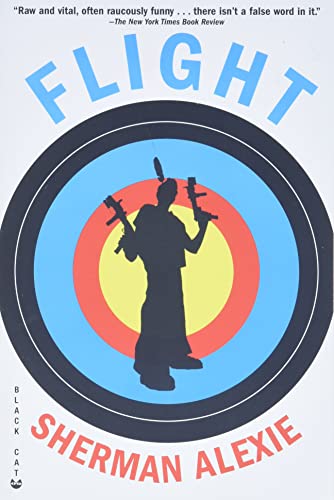
The best-selling author of multiple award-winning books returns with his first novel in ten years is the hilarious and tragic portrait of an orphaned Indian boy who travels back and forth through time in a violent search for his true identity.
Sherman Alexie is one of our most gifted and accomplished storytellers and a treasured writer of huge national stature. His first novel since Indian Killer is a powerful, fast, and timely story of a troubled foster teenager—a boy who is not a “legal” Indian because he was never claimed by his father—who learns the true meaning of terror.
The journey for this young hero begins as he’s about to commit a massive act of violence. At the moment of decision, he finds himself shot back through time and resurfaced in the body of an FBI agent during the civil rights era. Here he will be forced to see just why “Hell is Red River, Idaho, in the 1970s.” Red River is only the first stop in a shocking sojourn through moments of violence in American history. He will continue traveling back to inhabit the body of an Indian child during the battle at Little Bighorn and then ride with an Indian tracker in the nineteenth century before materializing as an airline pilot jetting through the skies today. During these frantic trips through time, his refrain grows: “Who’s to judge?” and “I don’t understand humans.” When finally, blessedly, our young warrior comes to rest again in his own contemporary body, he is mightily transformed by all he’s seen.
This is Sherman Alexie at his most brilliant—making us laugh while he’s breaking our hearts. Time Out has said that “Alexie, like his characters, is on a modern-day vision quest,” and this has never been clearer than in Flight, where he seeks nothing less than an understanding of why human beings hate. Simultaneously wrenching and deeply humorous, wholly contemporary yet steeped in American history, Flight is irrepressible, fearless, and groundbreaking Alexie.
"synopsis" may belong to another edition of this title.
About the Author
Sherman J. Alexie, Jr., was born in October 1966. A Spokane/Coeur d’Alene Indian, he grew up on the Spokane Indian Reservation in Wellpinit, Washington, about 50 miles northwest of Spokane. Approximately 1,100 Spokane Tribal members live there. Alexie’s father is a Coeur d’Alene Indian, and his mother is a Spokane Indian.
Reviews
His first novel in over a decade, Sherman Alexie's Flight winds themes of alienation, revenge, and forgiveness through its narrator's time-traveling adventures. Critics were impressed with the clever Zits: his thoughts and actions are both humorous and painfully genuine, the essence of troubled adolescence. However, reviewers complained about the lack of depth, of fully developed secondary characters, and of historical detail. Many critics also noted that the plot's swift pace and tidy ending were more appropriate for juvenile fiction. The New York Times, on the other hand, considered these elements part of the novel's charm. Though Alexie's latest effort may disappoint some readers, many will still find snatches of his trademark humor and moving prose.
Copyright © 2004 Phillips & Nelson Media, Inc.
The year is 2007; the hero, a throwaway kid named Zits. Half-Native American, half- Irish, an orphan since the age of 6, Zits is a self-proclaimed blank sky, a solar eclipse. He inherited his mother's green eyes and his father's acne. At 15, he has lived in 20 different foster homes, gone to 22 different schools and owns just enough clothing to fill a backpack. Then one day, looking for revenge, he takes a trip back in time and gets a chance at redemption. Where H.G. Wells used a time machine and Jack Finney used hypnosis, Sherman Alexie uses a gun as a mode of transport in his entertaining new novel, Flight.
The story opens as Zits wakes up in yet another foster home, has a stare-down contest with his brutish foster father, shoves his whiney foster mother and ends up in juvie, the routine as familiar to him as sunrise. In jail, he meets a wise and well-read white boy, Justice, who apologizes for his race's aggression toward Native Americans and encourages Zits to perform a Ghost Dance, dancing the white people away. Once out of jail, Justice gives Zits two guns, one real, one paint, and Zits ghost dances in a bank, where he gets shot in the head. At the moment of impact, his journey through time begins. Zits's odyssey is actually a vision quest on which he learns that revenge is bloody painful.
Landing in 1975, Zits inhabits the body of FBI agent Hank Storm and finds himself suddenly sympathetic with the law as he confronts two traitorous members of a Native American group called Indigenous Rights Now, who have gruesomely tortured a young warrior for not revealing some mysterious and unspecified secrets. Sickened, Zits/Storm falls unconscious, wakes three days later, meets his wife, Mrs. Storm, kisses her and realizes he would kill for her kisses. That thought transports him again, and he lands in a real Indian camp, where Crazy Horse and his band await Custer. Zits witnesses the carnage of Custer's Last Stand through the eyes of a young Indian child and finds he's losing his stomach for revenge.
He time-travels several more times, and each trip presents moral dilemmas. He becomes the linchpin for the slaughter of children, innocently befriends a suicide bomber and finally inhabits his own absentee father.
The quest for revenge becomes a lesson in empathy, and while "lesson" may not sound like a recipe for good fiction, Zits is extraordinarily good company. Self-mocking without being self-effacing, he seduces us with attitude that seems especially geared to teenage readers: "The skin doctor tells me I have six months to live. I'm exaggerating. I don't have a skin doctor and you can't actually die of zits. But you can die of shame. And, trust me, my zit-shame is killing me."
A character who's charmingly cheeky about himself talks well about things like shame and revenge but occasionally embodies the ideas, not the emotions. And the novel's pretty much a one-man show. Even while Zits inhabits other bodies, he rarely loses Zits-consciousness, so we experience "the other" through one spirit, voice and mind. In real time, the secondary characters are more plot props than fully developed people. They range from eloquent philosophers like Justice to cartoons like the foster parents. The foster mother is described as "a short, fat woman. If this were a fairy tale, she'd be the evil stepmother who eats children. This isn't a fairy tale, so she's just a loser who gorges on food like alcoholics drink booze."
These caricatures seem deliberate and are arguably appropriate for a novel about a loner like Zits, who defines himself against the world. Why give the world dimension when its orphaned children have none? At any rate, don't look for languid realism or descriptive fluff in Flight. Alexie favors the short-cut transitions of a director, and he choreographs potent, dramatic stand-alone scenes that would play well on stage. Here Zits meditates on the nature of profanity, deciding even a harmless word can be profane when delivered with punch:
" 'Don't you look at me that way,' [the foster father] says. 'Don't try to stare me down.'
"Of course, I keep staring at him.
" 'Stop staring at me,' he says.
" 'Plop,' I say.
" 'What did you say?'
" 'Plopping plop.'
"Jesus, I sound like a pissed-off Dr. Seuss character. That thought makes me laugh.
" 'Are you laughing at me?' he asks.
" 'You bet your plopping ass I'm laughing at you.' "
Flight lacks the depth and scope of Alexie's groundbreaking Reservation Blues, but it's original, funny and provocative -- a trip worth taking.
-- Ann Cummins is the author of a story collection, "Red Ant House," and a novel, "Yellowcake."
Copyright 2007, The Washington Post. All Rights Reserved.
A deadpan "Call Me Zits" opens the first novel in 10 years from Alexie (Smoke Signals, etc.), narrated by a self-described "time-traveling mass murderer" whose name and deeds unravel as this captivating bildungsroman progresses. Half-Indian, half-Irish, acne-beset Zits is 15: he never knew his alcoholic father; his mother died when he was six; his aunt kicked him out when he was 10 (after he set her sleeping boyfriend on fire because the boyfriend had been forcing Zits to have sex). Running away from his 20th foster home, Zits ends up, briefly, in jail; soon after, he enters a bank, shoots several people and is shot dead himself. Zits then commences time-traveling via the bodies of others, finding himself variously lodged in an FBI agent in the '70s (helping to assassinate radical Indian activists); a mute Indian boy at the Battle of Little Big Horn; an Indian tracker named Gus; an airplane pilot instructor (one of whose pupils commits a terrorist act); and his own father. Zits eventually comes back to himself and to an unexpected redemption. While the plot is wisp-thin, one quickly surrenders to Zits's voice, which elegantly mixes free-floating young adult cynicism with a charged, idiosyncratic view of American history. Alexie plunges the book into bracing depths. (Apr.)
Copyright © Reed Business Information, a division of Reed Elsevier Inc. All rights reserved.
It's tough enough to be an orphan and a ward of the state, let alone a so-called half-breed. Heck, being 15 years old is no freaking picnic, especially if your face is so badly marred by acne your nickname is Zits. Add to that a devastating history of abuse, and no wonder Zits, a gun in each hand, is about to exact revenge on strangers in a bank. Has Alexie, a high-profile writer known for provocative, inventive, in-your-face fiction about Native American life, written a classic troubled youth-turned-killer tale? Of course not. This is a time-travel fable about the legacy of prejudice and pain. Zits is inexplicably catapulted back to 1975, where he inhabits the body of a white FBI agent confronting radical Indian activists, the first episode in an out-of-body odyssey. Smart, funny, and resilient, Zits is profoundly transformed, as the hero in a tale of ordeals is supposed to be, by his shape-shifting experiences as an Indian boy at Little Big Horn, an Indian tracker, a homeless Indian drunk, and a pilot in unnerving proximity to a Muslim terrorist. Alexie's concentrated and mesmerizing novel of instructive confrontations is structured around provocative variations on the meanings and implications of flight as it asserts that people of all backgrounds are equally capable of good and evil. Donna Seaman
Copyright © American Library Association. All rights reserved
"About this title" may belong to another edition of this title.
Other Popular Editions of the Same Title

Search results for Flight: A Novel

Stock Image
Flight A Novel
Seller: World of Books (was SecondSale), Montgomery, IL, U.S.A.
Seller rating 5 out of 5 stars

Condition: Acceptable. Item in acceptable condition! Textbooks may not include supplemental items i.e. CDs, access codes etc. Seller Inventory # 00080692295
Stock Image
Flight A Novel
Seller: World of Books (was SecondSale), Montgomery, IL, U.S.A.
Seller rating 5 out of 5 stars
Condition: Very Good. Item in very good condition! Textbooks may not include supplemental items i.e. CDs, access codes etc. Seller Inventory # 00095916367
Stock Image
Flight A Novel
Seller: World of Books (was SecondSale), Montgomery, IL, U.S.A.
Seller rating 5 out of 5 stars
Condition: Good. Item in good condition. Textbooks may not include supplemental items i.e. CDs, access codes etc. Seller Inventory # 00083121109
Stock Image
Flight: A Novel
Seller: Gulf Coast Books, Cypress, TX, U.S.A.
Seller rating 5 out of 5 stars
Paperback. Condition: Good. Seller Inventory # 0802170374-3-18609927
Seller Image
Flight: A Novel
Seller: Dream Books Co., Denver, CO, U.S.A.
Seller rating 5 out of 5 stars
Condition: acceptable. This copy has clearly been enjoyedâ"expect noticeable shelf wear and some minor creases to the cover. Binding is strong, and all pages are legible. May contain previous library markings or stamps. Seller Inventory # DBV.0802170374.A
Seller Image
Flight: A Novel
Seller: Books for Life, LAUREL, MD, U.S.A.
Seller rating 5 out of 5 stars
Condition: good. Book is in good condition. Minimal signs of wear. It May have markings or highlights, but kept to only a few pages. May not come with supplemental materials if applicable. Seller Inventory # LFM.84PM
Seller Image
Flight: A Novel
Seller: Books for Life, LAUREL, MD, U.S.A.
Seller rating 5 out of 5 stars
Condition: acceptable. Book is in acceptable condition. May have shelf wear, edge wear, and spine wear, but a very readable copy. May not come with supplemental materials if applicable. Does not include original dustcover jacket. Possibly Ex Library Copy. Seller Inventory # LFM.841S
Seller Image
Flight: A Novel
Seller: Greenworld Books, Arlington, TX, U.S.A.
Seller rating 5 out of 5 stars
Condition: very_good. Fast Free Shipping â" Very Good condition book with a firm cover and clean pages. Shows normal use and some light wear or limited notes markings. A solid, nice copy to enjoy. Seller Inventory # GWV.0802170374.VG
Stock Image
Flight: A Novel
Seller: New Legacy Books, Annandale, NJ, U.S.A.
Seller rating 5 out of 5 stars
paperback. Condition: Good. Fast shipping and order satisfaction guaranteed. A portion of your purchase benefits Non-Profit Organizations, First Aid and Fire Stations! Seller Inventory # 5FS0000014LE
Stock Image
Flight: A Novel
Seller: More Than Words, Waltham, MA, U.S.A.
Seller rating 5 out of 5 stars
Condition: Good. . . All orders guaranteed and ship within 24 hours. Before placing your order for please contact us for confirmation on the book's binding. Check out our other listings to add to your order for discounted shipping. Seller Inventory # WAL-E-3f-002534