
Synopsis
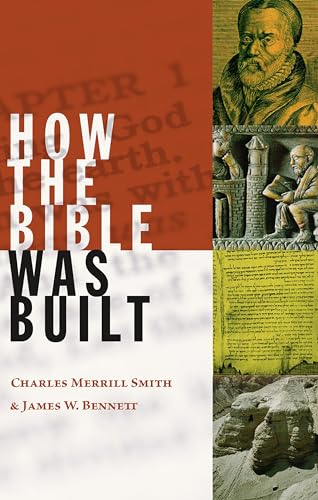
The Bible continues to be the world’s runaway best-seller. But very few people could say just how its seemingly disparate jumble of writings — stories, letters, poems, collections of laws, religious visions — got there. Filling this knowledge gap, How the Bible Was Built clearly tells the story of how the Bible came to be. Penned by Charles Merrill Smith in response to his teenage granddaughter’s questions, the manuscript was discovered after Smith’s death and has been reworked by his friend James Bennett for a wider audience. Free of theological or sectarian slant, this little volume provides a concise, factual overview of the Bible’s construction throughout history, outlining how its various books were written and collected and later canonized and translated. Written in an easy conversational style and enhanced by two helpful appendixes (of biblical terms and dates), How the Bible Was Built will give a more informed understanding of the Bible to people of virtually any reading level and any religious persuasion.
Did you know?
- The word “Bible” comes from biblion, a Greek word meaning “papyrus scroll.”
- It took several thousand years to construct the Bible.
- The book we call Deuteronomy was discovered hidden away in a dark corner during the reconstruction of the temple under King Josiah.
- The Apocrypha contains some of the earliest “detective” stories on record.
- Church councils had many disagreements about which books ought to be authoritative (a book called the Shepherd of Hermas almost made the cut; the book of Revelation almost didn’t).
- A heretic helped form the canon.
- Debate over the canon didn’t really end until the Protestant Reformation and the use of the printing press.
"synopsis" may belong to another edition of this title.
About the Authors
Charles Merrill Smith (1919–1985) was a United Methodist minister and the well-known author of such books as How to Become a Bishop without Being Religious, When the Saints Go Marching Out, and the Reverend Randollph mystery series
James W. Bennett, a longtime friend of Charles Merrill Smith, is the award-winning author of several young adult novels, including Old Hoss and The Squared Circle, as well as the spiritual memoir A Quiet Desperation.
From the Back Cover
The Bible continues to be the world's runaway best-seller. But very few people could say just how its seemingly disparate jumble of writings -- stories, letters, poems, collections of laws, religious visions -- got there. Filling this knowledge gap, "How the Bible Was Built" clearly tells the story of how the Bible came to be.
Penned by Charles Merrill Smith in response to his teenage granddaughter's questions, the manuscript was discovered after Smith's death and has been reworked by his friend James Bennett for a wider audience. Free of theological or sectarian slant, this little volume provides a concise, factual overview of the Bible's construction throughout history, outlining how its various books were written and collected and later canonized and translated.
Written in an easy conversational style and enhanced by two helpful appendixes (of biblical terms and dates), "How the Bible Was Built" will give a more informed understanding of the Bible to people of virtually any reading level and any religious persuasion.
Did you know?The word "Bible" comes from "biblion," a Greek word meaning "papyrus scroll." It took several thousand years to construct the Bible. The book we call Deuteronomy was discovered hidden away in a dark corner during the reconstruction of the temple under King Josiah. The Apocrypha contains some of the earliest "detective" stories on record. Church councils had many disagreements about which books ought to be authoritative (a book called the Shepherd of Hermas almost made the cut; the book of Revelation almost didn't). A heretic helped form the canon. Debate over the canon didn't really end until the Protestant Reformation and the use of theprinting press.
Reviews
*Starred Review* The Bible is an integral part of millions of lives, yet how many ever wonder from whence it sprang, other, that is, than from the hand of God? We are all fairly certain God didn't personally pen it. What's more, we have heard the rumors about authors unnamed, whose works, but for certain circumstances, might have been included in the Good Book. So then, how did the Bible emerge in its current state? Moreover, is there such a thing as a current state of the Bible? When his granddaughter asked noted United Methodist minister and author Smith several such questions, he set about answering them. Finding no authoritative books to speak to her and other ordinary readers, he decided to create one. He died before completing the effort, and his unfinished notes languished for years before his widow discovered them and turned them over to Bennett, who cut, pasted, and, where necessary, augmented to produce this tiny but mighty volume. In straightforward language, Smith and Bennett successfully explain the evolution and permutations of the documents we know as the Holy Bible, which, it turns out, is different things to different people. A job well done that is sure to become a preferred reference for basic Bible study. Donna Chavez
Copyright © American Library Association. All rights reserved
"About this title" may belong to another edition of this title.
Search results for How the Bible was Built

Seller Image
How the Bible was Built
Published by
Wm. B. Eerdmans Publishing Co., 2005
ISBN 10: 0802829430
ISBN 13: 9780802829436
Used
Softcover
Seller: Dream Books Co., Denver, CO, U.S.A.
Seller rating 5 out of 5 stars

Condition: acceptable. This copy has clearly been enjoyedâ"expect noticeable shelf wear and some minor creases to the cover. Binding is strong, and all pages are legible. May contain previous library markings or stamps. Seller Inventory # DBV.0802829430.A
Seller Image
How the Bible was Built
Published by
Wm. B. Eerdmans Publishing Co., 2005
ISBN 10: 0802829430
ISBN 13: 9780802829436
Used
Softcover
Seller: Bay State Book Company, North Smithfield, RI, U.S.A.
Seller rating 5 out of 5 stars
Condition: very_good. Seller Inventory # BSM.12DV8
Seller Image
How the Bible was Built
Published by
Wm. B. Eerdmans Publishing Co., 2005
ISBN 10: 0802829430
ISBN 13: 9780802829436
Used
Softcover
Seller: Greenworld Books, Arlington, TX, U.S.A.
Seller rating 5 out of 5 stars
Condition: good. Fast Free Shipping â" Good condition. It may show normal signs of use, such as light writing, highlighting, or library markings, but all pages are intact and the book is fully readable. A solid, complete copy that's ready to enjoy. Seller Inventory # GWV.0802829430.G
Stock Image
How the Bible Was Built
Seller: World of Books (was SecondSale), Montgomery, IL, U.S.A.
Seller rating 5 out of 5 stars
Condition: Very Good. Item in very good condition! Textbooks may not include supplemental items i.e. CDs, access codes etc. Seller Inventory # 00103462015
Stock Image
How the Bible was Built
Published by
William B. Eerdmans Publishing Company, 2005
ISBN 10: 0802829430
ISBN 13: 9780802829436
Used
Paperback
Seller: ThriftBooks-Atlanta, AUSTELL, GA, U.S.A.
Seller rating 5 out of 5 stars
Paperback. Condition: Very Good. No Jacket. May have limited writing in cover pages. Pages are unmarked. ~ ThriftBooks: Read More, Spend Less. Seller Inventory # G0802829430I4N00
Stock Image
How the Bible was Built
Published by
William B. Eerdmans Publishing Company, 2005
ISBN 10: 0802829430
ISBN 13: 9780802829436
Used
Paperback
Seller: ThriftBooks-Dallas, Dallas, TX, U.S.A.
Seller rating 5 out of 5 stars
Paperback. Condition: Very Good. No Jacket. May have limited writing in cover pages. Pages are unmarked. ~ ThriftBooks: Read More, Spend Less. Seller Inventory # G0802829430I4N00
Stock Image
How the Bible was Built
Published by
William B. Eerdmans Publishing Company, 2005
ISBN 10: 0802829430
ISBN 13: 9780802829436
Used
Paperback
Seller: ThriftBooks-Dallas, Dallas, TX, U.S.A.
Seller rating 5 out of 5 stars
Paperback. Condition: As New. No Jacket. Pages are clean and are not marred by notes or folds of any kind. ~ ThriftBooks: Read More, Spend Less. Seller Inventory # G0802829430I2N00
Stock Image
How the Bible was Built
Published by
William B. Eerdmans Publishing Company, 2005
ISBN 10: 0802829430
ISBN 13: 9780802829436
Used
Paperback
Seller: ThriftBooks-Atlanta, AUSTELL, GA, U.S.A.
Seller rating 5 out of 5 stars
Paperback. Condition: As New. No Jacket. Pages are clean and are not marred by notes or folds of any kind. ~ ThriftBooks: Read More, Spend Less. Seller Inventory # G0802829430I2N00
Stock Image
How the Bible was Built
Published by
William B. Eerdmans Publishing Company, 2005
ISBN 10: 0802829430
ISBN 13: 9780802829436
Used
Paperback
Seller: ThriftBooks-Reno, Reno, NV, U.S.A.
Seller rating 5 out of 5 stars
Paperback. Condition: Very Good. No Jacket. May have limited writing in cover pages. Pages are unmarked. ~ ThriftBooks: Read More, Spend Less. Seller Inventory # G0802829430I4N00
Seller Image
How the Bible was Built
Published by
Wm. B. Eerdmans Publishing Co., 2005
ISBN 10: 0802829430
ISBN 13: 9780802829436
Used
Softcover
Seller: clickgoodwillbooks, Indianapolis, IN, U.S.A.
Seller rating 5 out of 5 stars
Condition: acceptable. Used - Acceptable: All pages and the cover are intact, but shrink wrap, dust covers, or boxed set case may be missing. Pages may include limited notes, highlighting, or minor water damage but the text is readable. Item may be missing bundled media. Seller Inventory # 3O6XBG000WZK_ns