
Synopsis
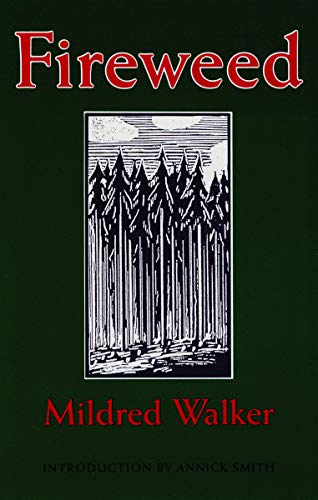
Mildred Walker was immediately recognized for the quality of her first fiction in 1934. Fireweed won the prestigious Avery and Jule Hopwood Award. The setting is a small lumber town in Upper Michigan, the stomping grounds of Paul Bunyan and the giants of Swedish, German, and Finnish lore. Young Celie and her husband, Joe Linsen, are the children of Scandinavian pioneers. Radios and flivvers have enlarged her world, and she longs to escape from an isolated place where wild violet fireweed grows to the edge of the woods.
"synopsis" may belong to another edition of this title.
About the Author
Annick Smith is a freelance writer, editor, and filmmaker. Her story, "It's Come to This," appeared in Best American Short Stories, 1992. She was coeditor, with William Kittredge, of The Last Best Place: A Montana Anthology. Her film credits include Heartland (executive producer) and A River Runs Through It (coproducer).
From the Back Cover
Mildred Walker was immediately recognized for the quality of her first fiction in 1934. Fireweed won the prestigious Avery and Jule Hopwood Award. The setting is a small lumber town in Upper Michigan, the stomping grounds of Paul Bunyan and the giants of Swedish, German, and Finnish lore. Young Celie and her husband, Joe Linsen, are the children of Scandinavian pioneers. Radios and flivvers have enlarged her world, and she longs to escape from an isolated place where wild violet fireweed grows to the edge of the woods.
Reviews
Getting out of one's too-confining hometown is the lifelong dream of more than a few, and so it is with Celie Henderson, the paler, Swedish version of Dreiser's Carrie Meeber in Walker's long out-of-print 1934 novel. Celie lives and works with her family in the Michigan mill town of Flat Point, but has dreams of brighter lights in Milwaukee and Detroit. Celie chooses mill worker Joe Linsen for her husband, breaking off a dubious courtship with Arthur Farley, a piano-playing, juke-joint aficionado brought in by his uncle to take over mill operations. She spends most of her time agonizing over her decision, prodding Joe to look for a job in the city, fretting over the hard life and harsh winters in Flat Point. Ultimately, Celie must decide between the simple pleasures of her two children and sturdy Joe, and her yearnings for the city and finer things. Walker's novel is a thrilling dime-store page-turner, filled with sharply drawn characters and details--Celie is often seen in a bright green Sears catalogue dress and opera pumps, even in the snow. Only when Walker stretches toward the metaphorical does her novel falter. When ice blocks the road out of town, Celie becomes hysterical: " 'Joe, it's like you said, look; we couldn't get out if we wanted to.' Celie laughed a thin, harsh laugh that ended in a dry sob." Still, watching the couple as they grow, have children and come to accept each other will send the reader rocketing from front cover to back. Illustrations. Nebraska, which published Walker's Winter Wheat last season, will also be publishing her The Curlew's Cry this month.
Copyright 1994 Reed Business Information, Inc.
"About this title" may belong to another edition of this title.
Search results for Fireweed

Stock Image
Fireweed
Seller: World of Books (was SecondSale), Montgomery, IL, U.S.A.
Seller rating 5 out of 5 stars

Condition: Acceptable. Item in acceptable condition! Textbooks may not include supplemental items i.e. CDs, access codes etc. Seller Inventory # 00098538315
Stock Image
Fireweed
Seller: World of Books (was SecondSale), Montgomery, IL, U.S.A.
Seller rating 5 out of 5 stars
Condition: Good. Item in good condition. Textbooks may not include supplemental items i.e. CDs, access codes etc. Seller Inventory # 00097143203
Stock Image
Fireweed (Bison Book)
Seller: HPB Inc., Dallas, TX, U.S.A.
Seller rating 5 out of 5 stars
Paperback. Condition: Very Good. Connecting readers with great books since 1972! Used books may not include companion materials, and may have some shelf wear or limited writing. We ship orders daily and Customer Service is our top priority! Seller Inventory # S_465583880
Stock Image
Fireweed
Seller: ThriftBooks-Dallas, Dallas, TX, U.S.A.
Seller rating 5 out of 5 stars
Paperback. Condition: Good. No Jacket. Pages can have notes/highlighting. Spine may show signs of wear. ~ ThriftBooks: Read More, Spend Less. Seller Inventory # G0803297580I3N00
Stock Image
Fireweed
Seller: ThriftBooks-Dallas, Dallas, TX, U.S.A.
Seller rating 5 out of 5 stars
Paperback. Condition: Fair. No Jacket. Readable copy. Pages may have considerable notes/highlighting. ~ ThriftBooks: Read More, Spend Less. Seller Inventory # G0803297580I5N00
Stock Image
Fireweed
Seller: ThriftBooks-Dallas, Dallas, TX, U.S.A.
Seller rating 5 out of 5 stars
Paperback. Condition: Very Good. No Jacket. May have limited writing in cover pages. Pages are unmarked. ~ ThriftBooks: Read More, Spend Less. Seller Inventory # G0803297580I4N00
Stock Image
Fireweed
Seller: ThriftBooks-Atlanta, AUSTELL, GA, U.S.A.
Seller rating 5 out of 5 stars
Paperback. Condition: Very Good. No Jacket. May have limited writing in cover pages. Pages are unmarked. ~ ThriftBooks: Read More, Spend Less. Seller Inventory # G0803297580I4N00
Stock Image
Fireweed
Seller: ThriftBooks-Atlanta, AUSTELL, GA, U.S.A.
Seller rating 5 out of 5 stars
Paperback. Condition: Good. No Jacket. Pages can have notes/highlighting. Spine may show signs of wear. ~ ThriftBooks: Read More, Spend Less. Seller Inventory # G0803297580I3N00
Stock Image
Fireweed
Published by
University of Nebraska Press, 1994
ISBN 10: 0803297580
ISBN 13: 9780803297586
Used
Softcover
Seller: Better World Books: West, Reno, NV, U.S.A.
Seller rating 5 out of 5 stars
Condition: Very Good. 1 Edition. Pages intact with possible writing/highlighting. Binding strong with minor wear. Dust jackets/supplements may not be included. Stock photo provided. Product includes identifying sticker. Better World Books: Buy Books. Do Good. Seller Inventory # 7710235-6
Stock Image
Fireweed
Published by
University of Nebraska Press, 1994
ISBN 10: 0803297580
ISBN 13: 9780803297586
Used
Softcover
Seller: Better World Books, Mishawaka, IN, U.S.A.
Seller rating 5 out of 5 stars
Condition: Very Good. 1 Edition. Pages intact with possible writing/highlighting. Binding strong with minor wear. Dust jackets/supplements may not be included. Stock photo provided. Product includes identifying sticker. Better World Books: Buy Books. Do Good. Seller Inventory # 7710235-6