
Synopsis
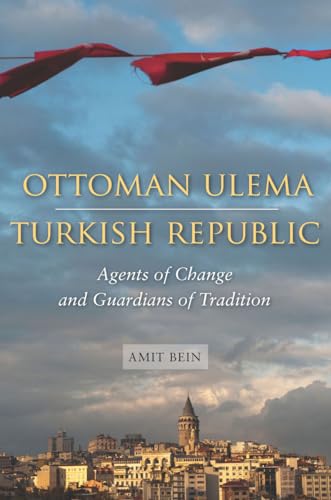
To better understand the diverse inheritance of Islamic movements in present-day Turkey, we must take a closer look at the religious establishment, the ulema, during the first half of the twentieth century. During the closing years of the Ottoman Empire and the early decades of the Republic of Turkey, the spread of secularist and anti-religious ideas had a major impact on the views and political leanings of the ulema. This book explores the intellectual debates and political movements of the religious establishment during this time. Bein reveals how competing visions of development influenced debates about reforms in religious education and the modernization of the medreses. He also explores the reactions and changing attitudes of Islamic intellectuals to the religious policies of the secular republic, and provides a better understanding of the changes in the relationship between religion and state. Exposing division within the religious establishment, this book illuminates the ulema's long-lasting legacies still in evidence in Turkey today.
"synopsis" may belong to another edition of this title.
About the Author
Amit Bein is Assistant Professor of History at Clemson University. His dissertation won the Bayard and Cleveland E. Dodge Memorial Prize for Best Dissertation in Near Eastern Studies at Princeton.
Excerpt. © Reprinted by permission. All rights reserved.
Ottoman Ulema, Turkish Republic
Agents of Change and Guardians of TraditionBy Amit BeinSTANFORD UNIVERSITY PRESS
Copyright © 2011 Board of Trustees of the Leland Stanford Junior UniversityAll right reserved.
ISBN: 978-0-8047-7311-9
Contents
Acknowledgments............................................................viiNote on Transliteration, Names, and Dates..................................ix1. The Ulema Matter........................................................12. Branding and Rebranding the Religious Establishment.....................113. Contesting Visions of Reform............................................354. The Remaking and Unmaking of Religious Education........................515. Political Activism and Its Discontents..................................776. Trials of the Early Republic............................................1057. Ottoman Memories, Republican Realities..................................1368. Past Legacies, Future Prospects.........................................154Notes......................................................................169Bibliography...............................................................197Index......................................................................209
Chapter One
The Ulema Matter
The ulema of the late Ottoman period did not fare particularly well in the historiography of modern Turkey. Only a handful of books and articles in European languages have concentrated on the intellectual production, actions, and institutions of ulema. Perhaps this relative lack of interest should not come as a surprise considering that ulema wound up getting the short end of the stick in the transition from the Ottoman Empire to the Republic of Turkey. In a matter of a few years after the establishment of the new regime in late 1923, the religious establishment was downsized and peripheralized, most of its institutions were abolished, its jurisdiction was severely curtailed, and even the appellation ulema was virtually purged from the Turkish language. When discussed in the historiography of the period, the ulema have often been described, at times dismissively or even derisively, as the essential "other" to a modernized and Westernized new elite that came to dominate the empire and the republic from the Young Turk Revolution of 1908 to the mid-twentieth century. Often they have been presented as a rather uniform socio religious group that had run its course by the early twentieth century and was thus tossed into the dustbin of history. As such, they did not appear to merit much interest in academic studies until quite recently.
Enter any Islamic bookstore in Turkey or visit the Web sites of Turkish booksellers and a very different picture emerges. Late-Ottoman ulema and the institutions associated with them are the subjects of dozens of books published in recent years. In some cases, these are new translations or revised renditions of texts originally published either in Arabic or in Ottoman script by late-Ottoman ulema. In many other instances, the publications consist of new studies about the late- Ottoman religious establishment, mostly by graduates and faculty of divinity schools that have mushroomed in Turkey in recent decades. These compilations are diverse: some are distinctly academic in tone whereas many others are aimed at reaching a wider audience. The thriving market of Islamic journals and Islam-oriented dailies contributes to the trend with frequent articles, editorials, and book reviews. The general tone of these publications is appreciative of the ulema and their institutions. Quite often they are clearly aimed at producing a counternarrative to the negative assessments that have dominated historiography and the hegemonic discourse in Turkey since the early years of the republic. Coming on the backdrop of the increasing visibility and influence of Islamic movements in Turkey, particularly since the 1990s, these efforts at reassessment and rehabilitation of the image of Ottoman ulema and their institutions are unnerving and even foreboding for many self-ascribed guardians of the secular republic.
A recent public spat put on full display the sensitivity still attached to the topic more than eighty years after the establishment of the republic. The ulema reached the headlines in November 2005 following a decision by the European Court of Human Rights (ECHR) to uphold the legality of the ban on women's headscarves in Turkish universities. Reacting to the verdict, Prime Minister Recep Tayyip Erdogan criticized the ruling of the judges, explaining that "in this matter, the ulema, not the courts, should have the final say." His remarks sparked a firestorm of controversy. His censuring of the ruling was perhaps predictable, considering his party's Islamic roots and his previously stated views on the matter of headscarves. But what really ticked off his critics was what they described as his advocacy of "the ulema" as an alternative and preferable authority.
Critics accused the Prime Minister of revealing his true Islamist stripes even as he and his supporters dismissed his detractors as plainly ignorant. Opposition spokespersons and sympathetic commentators argued that Erdogan harbored secret antisecularist designs to restore power to the religious scholars, power such as they enjoyed in Ottoman times and still do in Islamic regimes like Saudi Arabia and Iran. Erdogan and his supporters rejected these allegations out of hand as hysterical, insincere, and uninformed. The Prime Minister and his backers insisted that all he meant was that on such questions the court should have consulted with knowledgeable experts. They argued that even a glance in the dictionary will prove that the term ulema simply stands for "learned men," and thus it should not have aroused such indignation and criticism. And yet, rather than concentrating on the ECHR's controversial ruling itself, for several days some of the most prominent Turkish politicians, academics, and pundits debated and clashed in all available media venues over the exact meaning and implications of the Prime Minister's reference to "the ulema." For a time there were even discussions of an impending legal action against the Prime Minister. The action did not pass at the time and Erdogan survived this short-lived crisis unscathed. The whole affair and the passions that arose from it nevertheless demonstrated that he touched a raw nerve by alluding to "the ulema."
Erdogan's supporters and critics had very little in common on the subject, save for mutual deployment of dissembling arguments and ahistorical assertions. The Prime Minister could not have been unaware that the mere mention of the term ulema in the context of such a controversial issue as the ban on headscarves would be construed by the opposition as a provocative antisecularist statement. A seasoned politician like Erdogan could have easily used a neutral term from daily speech rather than a loaded word that might strike a chord with his political base but also unavoidably trigger harsh backlash from his opponents. His critics, meanwhile, reacted as if the word ulema per se represents a one-dimensional and inherently negative designation across time and space.
The heated public debate surrounding his statement was reflective of current political cleavages in Turkey. At the same time, it was also indicative of unresolved issues dating back to the early days of the republic. Turkey is a secular state. This fact has been enshrined in its constitution since the late 1930s. Nevertheless, there is no complete separation between the government and religious institutions, and unsettled questions about the roles and jurisdiction of the official religious administration have remained a vexing topic. The early republican leadership, staunchly secularist as it was, did not completely disestablish the Islamic religious administration and Muslim institutions. Instead, it suppressed some, restricted the functions and diminished the importance of others, and endeavored to place all of them under stricter government control. A new state agency, the Presidency of Religious Affairs (Diyanet Isleri Reisligi), or Diyanet, was put in charge of a much smaller, leaner, and less autonomous religious administration than existed in late Ottoman times. Like the republic itself, the new administration was expected to signify a break with the Ottoman past. It never really did, however, for several important reasons. For one thing, former Ottoman ulema continued to dominate the Diyanet for decades after the establishment of the republic. For another thing, the transition to democracy after World War II set in motion a process by which certain groups in society could more freely campaign for the rehabilitation of the tarnished legacies of the Ottoman ulema and their institutions. The harsh responses to Erdogan's statement are in line with similar, almost knee-jerk hostile reactions in some Kemalist circles to almost any favorable mention of anything to do with the ulema since the early days of the republic. Similar simplified and essentialized depictions also affected and handicapped studies of the religious establishment in the late Ottoman period and the early republic. Until not so long ago, the dominant historiography of these periods often reduced the ulema and their institutions to caricatures of backwardness, stagnation, traditionalism, and reaction. Islamist publications, meanwhile, frequently represented them as innocent victims of antireligious plots, persecutions, and slanders. As is often the case, such monochromatic depictions tended to be more illustrative of the observers than of the group and institutions they purport to observe. Ulema in fact responded to the challenges and opportunities of the late Ottoman period and the early republic in a variety of ways and forms.
Ulema had played important official roles in the Ottoman state since its formative period. The transformation of the state from an Anatolian principality into a world empire by the sixteenth century involved efforts to regulate and institutionalize their official position. A state-sponsored hierarchical religious establishment (ilmiye) was organized with the Sheikh ul-Islam (Seyhülislam) at the helm. He was considered answerable directly to the Sultan and symbolically the equal of the Grand Vizier. The Ottoman religious establishment was a Sunni institution and dominated by practitioners of the Hanafi school of law. Shiites in general and Alevis in particular were not recognized or formally represented in it. They were considered to be deviators from the straight path of Islam and a politically unreliable element, particularly during the long wars with the Shiite Safavid dynasty of Iran in the sixteenth and seventeenth centuries. The Ottoman official religious establishment included primarily judges, professors in the important religious seminaries (medreses), and other senior religious functionaries, mainly in the major urban centers. Many other ulema, particularly in rural areas and frontier regions, had only tenuous ties, if any at all, with the official religious establishment and were considered "unofficial." Senior ulema were part and parcel of the Ottoman elites, perhaps more than in any other premodern Islamic empire, whereas many "unofficial" ulema were associated with the lower classes. Upward mobility within the religious establishment as the result of merit and good fortune was not rare, however. On the symbolic level the religious establishment was accorded a formal recognition as a major pillar of the Islamic empire, which in practical terms translated to perquisites, prestige, and political influence for those in important positions in the learned hierarchy.
The retooling of the Ottoman government in the nineteenth century had a profound impact on the religious establishment. The expansion of the size and reach of the state apparatus, and efforts to centralize the administration and finances of the state, affected the ulema and their institutions in various ways. On the one hand, the religious establishment was increasingly bureaucratized, placed more firmly than before under the authority of the central government, faced increasing encroachments into its traditional jurisdictions, and lost most of its financial autonomy. On the other hand, the size and reach of the official religious establishment grew in real terms as the government sought to integrate into it "unofficial" Sunni ulema and Sufi sheikhs and extend its activity beyond the major urban centers. The results of these policies were varied and mixed. New statutory courts and new-style schools under the authority of specialized ministries definitely encroached on the jurisdiction of the Sheikh ul-Islam and the religious establishment. At the same time, many ulema were actually employed in the new courts, modern-style schools, institutions that were linked to the new Ministry of Islamic Endowments, and other government ministries. Administrative overlaps and institutional interweaving were evident. Still, because other government agencies grew much faster and were increasingly manned by graduates of the new-style schools by the late nineteenth century, the relative weight and importance of ulema within the state apparatus was on the decline by the turn of the twentieth century.
These developments in the Ottoman Empire followed precedents set in Europe and were in line with similar developments in many other contemporary societies. The second half of the nineteenth century and the early twentieth century witnessed in many lands similar rapid expansion in the size and functions of state apparatuses at the expense of religious establishments and institutions. In Roman Catholic countries in Europe and the Americas, governments' efforts to curtail the power and influence of the Church were particularly noticeable, though with varied and mixed results. New nations established in the Balkans in lands lost to the Ottoman Empire witnessed similar trends in connection with their Orthodox Christian churches. Confiscation of church properties and efforts to diminish the jurisdiction and roles of newly reorganized "national churches" and curtail their involvement in politics were often a notable feature of the formative periods of new nation states in the Balkans. The Ottomans were not the only Islamic government to pursue a similar if not identical path. In Egypt before and after the British occupation and in Iran there were also efforts to establish government-controlled institutions that supplanted traditional religious ones or competed with them, and to strengthen the state's hold over the administration and finances of Islamic institutions. In both cases, however, the results were mixed and the efforts mostly less effective than in the Ottoman Empire.
In many countries, expediency considerations for strengthening central governments at the expense of religious establishments were supplemented by varying degrees of anticlericalism and antireligious sentiments. The spread of positivistic and materialistic ideas, popularized as progressive and scientific, turned new middle classes, and in some places the masses, against traditional religious institutions. By the late nineteenth century, religious orthodoxies and the institutions associated with them became associated with backwardness and narrow-mindedness in the thought and writing of many an intellectual, official, and political leader. European countries were ahead of the curve in this respect. But emerging nationalist intelligentsias in some of the lands targeted by European imperialism were following suit. By the early years of the twentieth century, antireligious and secularist influences were becoming increasingly conspicuous and significant not only in many European countries but also in non-European societies that were under direct colonial control or informal modes of imperialism. Similar developments were increasingly evident in the views of Muslim intellectuals in Iran, the Caucasus, Egypt, the Levant, and the Ottoman heartlands by the late nineteenth century. Some intellectuals embraced antireligious inclinations while many more took aim not at religion per se but rather at traditional norms and practices associated with established Islamic orthodoxies. The ulema and the institutions associated with them were a prime target in this respect. As the twentieth century was setting in, however, the changes their critics advocated had yet to be translated fully and in most cases even partially into official policies or dramatic changes in the position and characteristics of religious establishments in most Muslim societies, including the Ottoman Empire.
The responses of clerical and religious establishments to the real and perceived challenges they faced varied considerably in different societies. Specific nuances and divergences in state policies and political circumstances as well as the make-up of society and specific historical, geographic, and economic variables produced distinct variations on the theme of changing relations between religion, state, and society. Conflicts, severe crises, and violent clashes in some times and at some places contrasted with negotiated compromises in others. Continued predominance of traditional orthodoxies in some settings coincided with the spread of reformist influences in many others, oftentimes pitting reform-minded clerics against their more conservative peers and traditional religious authorities. Each case was unique, but the rapid spread of new modes of communication such as the steamship, the railway, and the printed word both created an impression of a surging global phenomenon and augmented multilateral influences across political, geographic, and cultural divides. At the same time, developments in Europe were particularly significant because of European nations' outsized political, military, economic and, intellectual dominance throughout most of the world by the early twentieth century, and the belief of many an intellectual the world over that specific European precedents signified a universal path to modernity.
The Ottoman Empire and other Muslim societies and communities from British-controlled Egypt and India to Iran and Russian-ruled Central Asia and the Caucasus were no exception in this respect. Accusations hurled at ulema—such as that their traditionalism, obscurantism, and antiscientific tendencies were obstacles to progress and modernization of Muslim societies—were also aimed at contemporaneous clergy, priests, and rabbis in Islamic states such as the Ottoman Empire. Likewise, the responses of Muslim religious establishments to real and perceived challenges to their traditional jurisdictions and functions varied along a spectrum stretching from entrenched traditionalism at the one end to enthusiastic reformism at the other. Ulema in each society faced particular challenges that had to do with specific local circumstances. Their positions and actions, however, just like their challengers' stances and initiatives, were also influenced by acute awareness that the pressures and issues they faced were not unique and localized but rather common to many other contemporary Muslim and non-Muslim societies around the globe.
(Continues...)
Excerpted from Ottoman Ulema, Turkish Republicby Amit Bein Copyright © 2011 by Board of Trustees of the Leland Stanford Junior University. Excerpted by permission of STANFORD UNIVERSITY PRESS. All rights reserved. No part of this excerpt may be reproduced or reprinted without permission in writing from the publisher.
Excerpts are provided by Dial-A-Book Inc. solely for the personal use of visitors to this web site.
"About this title" may belong to another edition of this title.
Search results for Ottoman Ulema, Turkish Republic: Agents of Change and...

Stock Image
Ottoman Ulema, Turkish Republic Agents of Change & Guardians of Tradition
Published by
Stanford University Press,, 2011
ISBN 10: 0804773114
ISBN 13: 9780804773119
Used
Hardcover
Seller: Harry Alter, Sylva, NC, U.S.A.
Seller rating 5 out of 5 stars

hardcover, Condition: Very Good, Stanford University Press, 2011, 1st., 8vo., cloth, 212pp., VG/VG $. Seller Inventory # 83431
Stock Image
Ottoman Ulema, Turkish Republic: Agents of Change and Guardians of Tradition
Published by
Stanford University Press, 2011
ISBN 10: 0804773114
ISBN 13: 9780804773119
Used
Hardcover
Seller: Midtown Scholar Bookstore, Harrisburg, PA, U.S.A.
Seller rating 5 out of 5 stars
Hardcover. Condition: Good. Good - Bumped and creased book with tears to the extremities, but not affecting the text block, may have remainder mark or previous owner's name - GOOD Standard-sized. Seller Inventory # M0804773114Z3
Stock Image
Ottoman Ulema, Turkish Republic
Published by
Stanford University Press, 2011
ISBN 10: 0804773114
ISBN 13: 9780804773119
New
Hardcover
Seller: PBShop.store UK, Fairford, GLOS, United Kingdom
Seller rating 4 out of 5 stars

HRD. Condition: New. New Book. Shipped from UK. Established seller since 2000. Seller Inventory # FW-9780804773119
Buy New
US$ 63.72
US$ 6.75 shipping
Ships from United Kingdom to U.S.A.
Ships from United Kingdom to U.S.A.
Quantity: 15 available
Seller Image
Ottoman Ulema, Turkish Republic : Agents of Change and Guardians of Tradition
Published by
Stanford University Press, 2011
ISBN 10: 0804773114
ISBN 13: 9780804773119
New
Hardcover
Seller: GreatBookPrices, Columbia, MD, U.S.A.
Seller rating 5 out of 5 stars
Condition: New. Seller Inventory # 12460673-n
Seller Image
Ottoman Ulema, Turkish Republic
Published by
Stanford University Press, US, 2011
ISBN 10: 0804773114
ISBN 13: 9780804773119
New
Hardcover
Seller: Rarewaves USA, OSWEGO, IL, U.S.A.
Seller rating 5 out of 5 stars
Hardback. Condition: New. To better understand the diverse inheritance of Islamic movements in present-day Turkey, we must take a closer look at the religious establishment, the ulema, during the first half of the twentieth century. During the closing years of the Ottoman Empire and the early decades of the Republic of Turkey, the spread of secularist and anti-religious ideas had a major impact on the views and political leanings of the ulema. This book explores the intellectual debates and political movements of the religious establishment during this time. Bein reveals how competing visions of development influenced debates about reforms in religious education and the modernization of the medreses. He also explores the reactions and changing attitudes of Islamic intellectuals to the religious policies of the secular republic, and provides a better understanding of the changes in the relationship between religion and state. Exposing division within the religious establishment, this book illuminates the ulema's long-lasting legacies still in evidence in Turkey today. Seller Inventory # LU-9780804773119
Seller Image
Ottoman Ulema, Turkish Republic : Agents of Change and Guardians of Tradition
Published by
Stanford University Press, 2011
ISBN 10: 0804773114
ISBN 13: 9780804773119
Used
Hardcover
Seller: GreatBookPrices, Columbia, MD, U.S.A.
Seller rating 5 out of 5 stars
Condition: As New. Unread book in perfect condition. Seller Inventory # 12460673
Stock Image
Ottoman Ulema, Turkish Republic - Agents of Change and Guardians of Tradition (eng)
Published by
Stanford University Press, 2011
ISBN 10: 0804773114
ISBN 13: 9780804773119
New
Hardcover
Seller: Brook Bookstore On Demand, Napoli, NA, Italy
Seller rating 3 out of 5 stars

Condition: new. Seller Inventory # 690035418464a830c4af38ee5ecb6b97
Buy New
US$ 84.39
US$ 6.41 shipping
Ships from Italy to U.S.A.
Ships from Italy to U.S.A.
Quantity: Over 20 available
Stock Image
Ottoman Ulema, Turkish Republic
Published by
Stanford University Press, 2011
ISBN 10: 0804773114
ISBN 13: 9780804773119
New
Hardcover
Seller: Majestic Books, Hounslow, United Kingdom
Seller rating 4 out of 5 stars
Condition: New. pp. 224. Seller Inventory # 5480839
Buy New
US$ 82.68
US$ 8.74 shipping
Ships from United Kingdom to U.S.A.
Ships from United Kingdom to U.S.A.
Quantity: 3 available
Stock Image
Ottoman Ulema, Turkish Republic: Agents of Change and Guardians of Tradition
Published by
Stanford University Press, 2011
ISBN 10: 0804773114
ISBN 13: 9780804773119
New
Hardcover
Seller: THE SAINT BOOKSTORE, Southport, United Kingdom
Seller rating 5 out of 5 stars
Hardback. Condition: New. New copy - Usually dispatched within 4 working days. Seller Inventory # B9780804773119
Buy New
US$ 71.41
US$ 20.66 shipping
Ships from United Kingdom to U.S.A.
Ships from United Kingdom to U.S.A.
Quantity: Over 20 available
Stock Image
Ottoman Ulema, Turkish Republic
Published by
Stanford University Press, 2011
ISBN 10: 0804773114
ISBN 13: 9780804773119
New
Hardcover
Seller: Books Puddle, New York, NY, U.S.A.
Seller rating 4 out of 5 stars
Condition: New. pp. 224. Seller Inventory # 262367064