
Items related to Jack Kerouac: King of the Beats
Synopsis
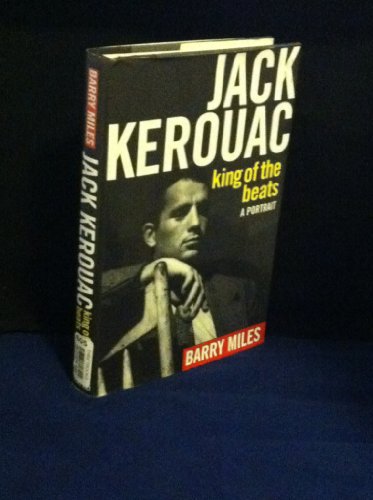
An intimate biography of the writer who has become an American icon. More than fifty years after the publication of On the Road, Jack Kerouac is more read and revered by a new generation than ever before. Why this is so is the subject of Barry Miles's fresh and revealing portrait of the writer who is the acknowledged leader of the Beat movement, the group of writers that included Allen Ginsberg and William Burroughs, who together influenced the direction of writing and culture more than any group of artists since England's Bloomsbury. From his birth in blue-collar Lowell, Massachusetts in 1922 to his years at Columbia University during World War II where he first met Allen Ginsberg and all the wild times that followed with friends such as Neal Cassady and Gary Snyder, here is the story of Jack Kerouac's life as never told before. Barry Miles draws on his close friendship with Allen Ginsberg and William Burroughs to offer new insight into both the exuberance and dismay of the man who inspired a whole generation to take to the road. Kerouac is now an icon, an image, an attitude, and a new generation looks to him as a symbol of freedom. Barry Miles shows us Kerouac the man and Kerouac the leg, his longing for greatness and the consequences of achieving it.
"synopsis" may belong to another edition of this title.
About the Author
Barry Miles (known as Miles) ran a bookstore in London in the 1960s devoted to Beat literature and was a close fri of Allen Ginsberg and William Burroughs. He is the author of Paul McCartney: Many Years from Now.
Reviews
Making bricks without straw is a phrase that suggests a product empty of data, but Miles, biographer of Allen Ginsberg and William Burroughs and once proprietor of a "Beat" bookshop in London, has made the process work in the case of Kerouac. Apparently unable to quote from more than a few scraps of turned to other sources to limn Kerouac's sex-obsessed, alcohol-sodden and drug-overdosed life. A striking portrait emerges of the author of On the Road (1957). Composing prolifically on teletype rolls, Kerouac produced what he thought of as spontaneous writingAbarely fictional reportage about the lives of his self-styled "Beat" (for beatific) generation. Outwardly virile, looking like a mill-town Canuck lumberjack, Kerouac was, Miles contends, "infantilised by his mother and unable to behave as an adult." Miles sees the mark of mutual Oedipal feelings in Kerouac's work and in his overheated life with his mother, to whom he always returned. Miles concedes that Kerouac's writing is "often splendid" and influential, but he dismisses most of it as self-indulgent concoctions for a market that the Beats created for themselves. A little more about this marketing would have made his book a more welcome addition to the Kerouac biography shelf, already crammed with such titles as Ann Charters's Kerouac, Gerald Nicosia's Memory Babe and Ellis Amburn's Subterranean Kerouac.
Copyright 1998 Reed Business Information, Inc.
Miles paints an unflattering portrait of Kerouac in this, his third biography on a major writer of the Beat Generation (e.g., William Burroughs: El Hombre Invisible, LJ 8/93). Viewing Kerouac as "insensitive, selfish, and cowardly," an alcoholic with a deep-seated Oedipal complex who remained "a perpetual adolescent," he chastises him for his racism, his misogyny, and his failure to accept responsibility for his daughter (novelist Jan Kerouac, Trainsong, LJ 3/1/88), who died in 1996. This iconoclastic approach aside, Miles's portrait differs little from earlier biographies on the details of Kerouac's life. However, he is particularly good at exploring Kerouac's complex relationships with other Beat writers and illuminating the cultural and historical contexts surrounding the Beat movement. His descriptions of Times Square in the 1940s and his comments on jazz, McCarthyism, and the cult of Edgar Cayce provide helpful background for younger readers. Recommended for all literature collections.AWilliam Gargan, Brooklyn Coll. Lib., CUNY
Copyright 1998 Reed Business Information, Inc.
"About this title" may belong to another edition of this title.
Search results for Jack Kerouac: King of the Beats

Stock Image
Jack Kerouac: King of the Beats
Published by
Henry Holt and Co. (edition First Edition), 1998
ISBN 10: 080506043X
ISBN 13: 9780805060430
Used
Hardcover
First Edition
Seller: BooksRun, Philadelphia, PA, U.S.A.
Seller rating 5 out of 5 stars

Hardcover. Condition: Fair. First Edition. The item might be beaten up but readable. May contain markings or highlighting, as well as stains, bent corners, or any other major defect, but the text is not obscured in any way. Seller Inventory # 080506043X-7-1-13
Stock Image
Jack Kerouac : King of the Beats: A Portrait
Seller: Better World Books, Mishawaka, IN, U.S.A.
Seller rating 5 out of 5 stars
Condition: Good. Former library copy. Pages intact with minimal writing/highlighting. The binding may be loose and creased. Dust jackets/supplements are not included. Includes library markings. Stock photo provided. Product includes identifying sticker. Better World Books: Buy Books. Do Good. Seller Inventory # GRP91868181
Stock Image
Jack Kerouac: King of the Beats
Seller: Wonder Book, Frederick, MD, U.S.A.
Seller rating 5 out of 5 stars
Condition: Good. Good condition. Very Good dust jacket. A copy that has been read but remains intact. May contain markings such as bookplates, stamps, limited notes and highlighting, or a few light stains. Seller Inventory # V05L-00667
Seller Image
Jack Kerouac: King of the Beats
Seller: Greenworld Books, Arlington, TX, U.S.A.
Seller rating 5 out of 5 stars
Condition: very_good. Fast Free Shipping â" Very Good condition book with a firm cover and clean pages. Shows normal use and some light wear or limited notes markings. A solid, nice copy to enjoy. Seller Inventory # GWV.080506043X.VG
Stock Image
Jack Kerouac: King of the Beats
Seller: Half Price Books Inc., Dallas, TX, U.S.A.
Seller rating 5 out of 5 stars
hardcover. Condition: Very Good. Connecting readers with great books since 1972! Used books may not include companion materials, and may have some shelf wear or limited writing. We ship orders daily and Customer Service is our top priority! Seller Inventory # S_459388409
Stock Image
Jack Kerouac: King of the Beats
Seller: HPB-Ruby, Dallas, TX, U.S.A.
Seller rating 5 out of 5 stars
hardcover. Condition: Very Good. Connecting readers with great books since 1972! Used books may not include companion materials, and may have some shelf wear or limited writing. We ship orders daily and Customer Service is our top priority! Seller Inventory # S_459430626
Stock Image
Jack Kerouac: King of the Beats
Seller: ThriftBooks-Dallas, Dallas, TX, U.S.A.
Seller rating 5 out of 5 stars
Hardcover. Condition: Very Good. No Jacket. May have limited writing in cover pages. Pages are unmarked. ~ ThriftBooks: Read More, Spend Less. Seller Inventory # G080506043XI4N00
Stock Image
Jack Kerouac: King of the Beats
Seller: ThriftBooks-Atlanta, AUSTELL, GA, U.S.A.
Seller rating 5 out of 5 stars
Hardcover. Condition: Fair. No Jacket. Readable copy. Pages may have considerable notes/highlighting. ~ ThriftBooks: Read More, Spend Less. Seller Inventory # G080506043XI5N00
Stock Image
Jack Kerouac: King of the Beats
Seller: ThriftBooks-Phoenix, Phoenix, AZ, U.S.A.
Seller rating 5 out of 5 stars
Hardcover. Condition: Very Good. No Jacket. May have limited writing in cover pages. Pages are unmarked. ~ ThriftBooks: Read More, Spend Less. Seller Inventory # G080506043XI4N00
Stock Image
Jack Kerouac, King of the Beats: A Portrait
Published by
Henry Holt & Co, New York, New York, U.S.A., 1998
ISBN 10: 080506043X
ISBN 13: 9780805060430
Used
Hardcover
First Edition
Seller: Lowry's Books, Three Rivers, MI, U.S.A.
Seller rating 4 out of 5 stars

Hard Cover. Condition: Very Good. Dust Jacket Condition: Very Good. First American Edition. Very good condition. Clean text, tight binding. Size: 8vo - over 7¾" - 9¾" tall. Seller Inventory # 082060