
Synopsis
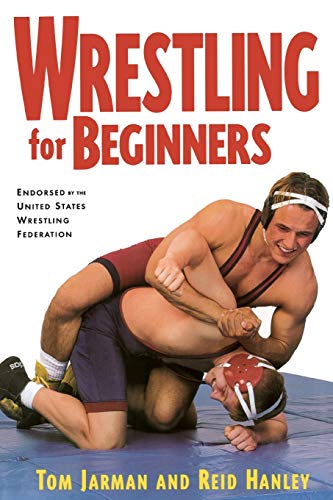
At any level of wrestling competition, the basic fundamentals are essential to success in the sport. Wrestling for Beginners gives novice wrestlers those techniques that serve as the foundation for all wrestling instruction--conditioning, maneuvers, holds, takedowns, counters, strategy, and pinning combinations. This readable and effective manual includes hundreds of stop-action photographs emphasizing proper body positions, grips, postures, and movements. There are tips on diet and nutrition, building endurance, increasing flexibility and balance, as well as specific points for mastering each of the seven basic wrestling skills. Speciac appendixes include a listing of United States Wrestling Federation weight divisions and scoring procedures and a glossary of terms. Tom Jarman, former head wrestling coach at Northwestern University, previously coached at Taylor University for 13 years, where his teams won seven conference championships and posted a 128-22 dual meet record. A two-time AII-American champion, Jarman has coached ten national place winners and one national champion. Reid Hanley is a sports writer and the author of Who's Who in Track and Field. He is winner of the 1978 Illinois Press Association award for sports writers and the 1980 Illinois Wrestling Coaches and Officials Association Newsman of the Year honor.
"synopsis" may belong to another edition of this title.
About the Author
McGraw-Hill authors represent the leading experts in their fields and are dedicated to improving the lives, careers, and interests of readers worldwide
Excerpt. © Reprinted by permission. All rights reserved.
Wrestling For Beginners
By Tom Jarman, Reid HanleyThe McGraw-Hill Companies, Inc.
Copyright © 1983Tom Jarman and Reid Hanley
All rights reserved.
ISBN: 978-0-8092-5656-3All rights reserved.
Contents
Foreword Acknowledgments PART I: THE FOUNDATION 1. Introduction 2. Conditioning 3. Strategy PART II: THE SEVEN BASIC SKILLS 4. Posture 5. Motion 6. Changing Levels 7. Penetration 8. Lifting 9. Back-step 10. Back-arching PART III: MOVES AND HOLDS 11. Takedowns and Counters 12. Escapes, Reversals, and Counters 13. Breakdowns, Pinning Combinations, and Counters Appendix A: Weight Classes, Bout Length, and Scoring Appendix B: Glossary Index
Excerpt
CHAPTER 1
Introduction
Wrestling is one of man's oldest sports, but many people really don'tknow what it is.
It's not "sleeper holds," "airplane spins," or "pile drivers." Those termsdescribe the sort of action that you'll see in our sport's distant relative,professional wrestling. And professional wrestling is closer to entertainmentthan it is to sport.
Then what is wrestling?
• It's an increasingly popular sport that requires strength,flexibility, and conditioning of its athletes.
• It's an individual sport. A wrestler can't hide behind his teammates. He mustaccept the fame for winning and take the blame for losing. The wrestler can'tblame the guy who blew the double play or missed a tackle.
• It's not a lonely sport. Sure, it's just you and your opponent out there onthe mat, but even in an individual sport you need help. You'll need thecooperation and encouragement of your teammates, the enthusiasm and knowledge ofyour coach, and the understanding and support of your friends and family.
• It is one of the fairest sports in that it favors no particular size orstature among wrestlers. Only in the heavyweight division is there any weightadvantage. Athletes must meet a certain weight limit to compete. It is a sportfor all sizes. There is room for everyone. Handicapped wrestlers, such as thosewho are blind or deaf, can compete successfully.
What is the object of wrestling? The ultimate object is to put your opponent'sshoulders to the mat—to pin him. Pinning is not always possiblewhen two well-conditioned athletes meet, so a scoring system has been developedto determine who has won. The basic concept of wrestling is simple. The wrestlertries to take his opponent to the mat; his opponent tries to get away from himor reverse positions with him. The wrestler tries to turn his opponent to hisback. The maneuvers used to accomplish these relatively simple goals are not sosimple, and they number in the thousands.
THE BASICS OF A WRESTLING MATCH
When a wrestler takes his opponent to the mat and gains control of him, that'scalled a takedown, and it's worth two points. If the wrestler in thebottom position changes position and takes control on top, that's areversal, and it's worth two points. If a wrestler gets away from hisopponent, that's an escape, and it's worth one point. When a wrestlerputs his opponent's shoulders within four inches of the mat, that's anearfall, and it's worth two or three points, depending on how long heholds them near the mat.
There are three prominent styles of wrestling in this country. The Americanstyle, used primarily in high school and college competition, is calledfolkstyle. Freestyle is the international cousin of folkstyle and isused in the Olympics. Folkstyle and freestyle are very similar.Greco-Roman is a form of wrestling used in the Olympics that permitsneither the use of the legs in holds nor holds below the waist.
The first period, the length of which depends on the level of competition,begins with both wrestlers on their feet, which is the neutral position. Eachwrestler will attempt to get a takedown in hopes of pinning the opponent. In amatch, wrestler A takes down B and is ahead 2–0.
In the second period a coin is flipped to see which wrestler will be on top andwhich wrestler on the bottom. (These positions will be shown in a laterchapter.) Wrestler A wins the flip and chooses to be on top. Wrestler B is downand will attempt to break free or change positions (reverse) with wrestler A.Wrestler B reverses his opponent and earns two points to tie the match at2–2.
Wrestler A will start the third period in the down position since he was in thetop position in the second period. If he breaks free, he gains a point for anescape and can go ahead 3–2. A breaks free to gain the lead but is thentaken down by B for a 4–3 score. Wrestler A, however, comes back for areversal to narrow the score to 6–5. Wrestler A then holds B's shouldersto the mat for a pin, which is also known as a fall, and the match is over.
COMPETITION FOR ALL AGES
There is no optimum age at which beginners should start wrestling prior to highschool. Youngsters naturally tussle at a young age, and youth wrestlingprograms, sponsored by organizations such as the United States WrestlingFederation or the YMCA, take that impromptu play a step further. Basic holds andtechniques, such as those shown in this book, are taught there. Various levelsof competition, ranging from tournaments in which everyone gets a ribbon tonational championships, are offered by the U.S. Wrestling Federation.
Junior high and high school competition are the next levels. Most U.S. highschools have wrestling programs, and many of them offer competition on juniorvarsity and varsity levels. Varsity competition consists of dual meetsagainst one other school and tournaments involving several schools.
College competition includes schools of all sizes. College matches are longersince the athletes are older and stronger, but the sport is basically the samewith some minor rule changes. National championships are conducted on alllevels.
For wrestlers who are not in college as well as for college wrestlers during theoff-season, there are open competitions. These tournaments might bebetween neighboring athletes or even between different countries. National andworld open championships are conducted on several levels.
The top achievement in wrestling is the Olympic gold medal. Wrestling is one ofthe most competitive sports in the Olympic Games, and the United States has donewell in recent Olympic competitions.
A WORD TO THE BEGINNER
To be a successful wrestler you'll have to work hard, watch your eating habits,and build your body. It isn't easy, so why do it?
Wrestling helps athletes develop in several areas. Briefly, it offers thesebenefits:
• You will develop physically in strength, stamina, and flexibility.
• You will also develop mentally through the use of different techniques andstrategies.
• You will gain an understanding of the human body and how it works.
• You will develop socially as you learn to work with others, to interact withan opponent, to respond to an authority figure, and to follow rules.
• Wrestling helps you grow emotionally as you learn to deal with success andfailure.
• Spiritual development comes in the form of courage and perseverance.
• It is also fun. Wrestling brings together people from all walks of life, allof them striving to be the best wrestlers they can be.
In short, if you've decided to become a wrestler, you've chosen to participatein the sport of philosophers and kings. In ancient Greece, the birthplace ofWestern culture, wrestling was considered an important element in one'seducation and development. The sport had educational, social, and religioussignificance in that culture, and it still offers such benefits to participants.To elaborate, young wrestlers can look forward to the following rewards.
Wrestling certainly can contribute to your personal development. Physically itwill improve your strength, flexibility, and endurance, as well as yourbalance and coordination skills. Mentally, concentration, thelearning of technique and strategy, and problem solving are all part of thissport. Socially, wrestling demands that team members work cooperatively
(Continues...)
Excerpted from Wrestling For Beginners by Tom Jarman. Copyright © 1983 by Tom Jarman and Reid Hanley. Excerpted by permission of The McGraw-Hill Companies, Inc..
All rights reserved. No part of this excerpt may be reproduced or reprinted without permission in writing from the publisher.
Excerpts are provided by Dial-A-Book Inc. solely for the personal use of visitors to this web site.
"About this title" may belong to another edition of this title.
Other Popular Editions of the Same Title

Search results for Wrestling For Beginners

Stock Image
Wrestling For Beginners
Seller: World of Books (was SecondSale), Montgomery, IL, U.S.A.
Seller rating 5 out of 5 stars

Condition: Acceptable. Item in acceptable condition! Textbooks may not include supplemental items i.e. CDs, access codes etc. Seller Inventory # 00098267458
Seller Image
Wrestling For Beginners
Seller: Aspen Book Co., Denver, CO, U.S.A.
Seller rating 5 out of 5 stars
Condition: good. A well-loved companion. Corners and cover might show a little wear, and you could find some notes or highlights. The dust jacket might be MIA, it might have been a library book and extras aren't guaranteedâ"but the story's all there! Seller Inventory # PKV.0809256568.G
Seller Image
Wrestling For Beginners
Seller: Aspen Book Co., Denver, CO, U.S.A.
Seller rating 5 out of 5 stars
Condition: acceptable. It's been through some chapters of life! Expect visible wearâ"creases, notes, highlights, maybe even a splash of water here and there. Perfect for readers who love a book with history. Seller Inventory # PKV.0809256568.A
Seller Image
Wrestling For Beginners
Seller: Greenworld Books, Arlington, TX, U.S.A.
Seller rating 5 out of 5 stars
Condition: very_good. Fast Free Shipping â" Very Good condition book with a firm cover and clean pages. Shows normal use and some light wear or limited notes markings. A solid, nice copy to enjoy. Seller Inventory # GWV.0809256568.VG
Stock Image
Wrestling for Beginners
Seller: ThriftBooks-Reno, Reno, NV, U.S.A.
Seller rating 5 out of 5 stars
Paperback. Condition: Very Good. No Jacket. May have limited writing in cover pages. Pages are unmarked. ~ ThriftBooks: Read More, Spend Less. Seller Inventory # G0809256568I4N00
Stock Image
Wrestling for Beginners
Seller: ThriftBooks-Atlanta, AUSTELL, GA, U.S.A.
Seller rating 5 out of 5 stars
Paperback. Condition: Fair. No Jacket. Readable copy. Pages may have considerable notes/highlighting. ~ ThriftBooks: Read More, Spend Less. Seller Inventory # G0809256568I5N00
Stock Image
Wrestling for Beginners
Seller: ThriftBooks-Dallas, Dallas, TX, U.S.A.
Seller rating 5 out of 5 stars
Paperback. Condition: Very Good. No Jacket. May have limited writing in cover pages. Pages are unmarked. ~ ThriftBooks: Read More, Spend Less. Seller Inventory # G0809256568I4N00
Stock Image
Wrestling for Beginners
Seller: ThriftBooks-Dallas, Dallas, TX, U.S.A.
Seller rating 5 out of 5 stars
Paperback. Condition: Fair. No Jacket. Readable copy. Pages may have considerable notes/highlighting. ~ ThriftBooks: Read More, Spend Less. Seller Inventory # G0809256568I5N00
Stock Image
Wrestling for Beginners
Seller: ThriftBooks-Dallas, Dallas, TX, U.S.A.
Seller rating 5 out of 5 stars
Paperback. Condition: Very Good. No Jacket. Former library book; May have limited writing in cover pages. Pages are unmarked. ~ ThriftBooks: Read More, Spend Less. Seller Inventory # G0809256568I4N10
Stock Image
Wrestling for Beginners
Seller: ThriftBooks-Atlanta, AUSTELL, GA, U.S.A.
Seller rating 5 out of 5 stars
Paperback. Condition: Very Good. No Jacket. May have limited writing in cover pages. Pages are unmarked. ~ ThriftBooks: Read More, Spend Less. Seller Inventory # G0809256568I4N00