
Items related to The Field Guide to Geology
Synopsis
An essential field guide for geology lovers.
Praise for the hardcover edition:
"...[a] very interesting title..."—American Reference Books Annual
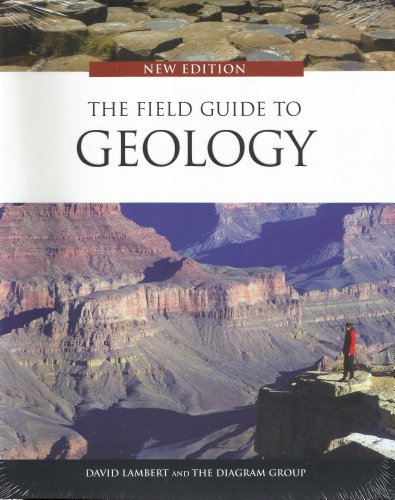
Written by a team of eminent geologists and educators, The Field Guide to Geology, New Edition features clear graphics and simple field-guide procedures to guide hikers through the great outdoors. A revised and updated edition of a best-seller, this helpful resource offers readers ready access to the subject. This edition features 200 new two-color illustrations (more than 750 in all), updated graphs and tables, as well as two new chapters titled "Monitoring the Earth's Changes" and "Geologists of Note." This volume's lucid, easy-to-follow text covers all the key rudiments of geology and will provide nature lovers with a useful reference to various geological phenomena.
Topics covered include:
- Air currents
- Composition
- Desertification
- Greenhouse effect
- Ice changes
- Seafloor profiling
- Seismic activity
- Submersibles
- Tides
- Waterflow
- and more.
"synopsis" may belong to another edition of this title.
About the Author
David Lambert has written more than eighty books for children and adults including the award-winning Kingfisher Book of Oceans and Seashores.
Diagram Group are the successful publishers of many illustrated encyclopedias, including "Rules of the Game" and "The New Weapons of the World Encyclopedia" published by St. Martin's Press.
From School Library Journal
Grade 8 Up—Since the first edition of this book was published in 1998, technology for geological fieldwork has improved immensely. The coverage of these innovations, in a new chapter called "Monitoring Earth," is this book's best feature. It provides useful overviews, at a level of detail and in a vocabulary that is perfect for the audience, of concepts such as satellite laser ranging, which is used to measure the movement of continents, and the use of satellites in mapping the ozone layer. The rest of the book discusses the planet's formation; plate tectonics; methods of rock creation; how the sea, ice, and wind change the landscape; deciphering Earth's history from fossils and other rocks; exploitation of rocks and minerals, and, in another updated section, provides lists of prominent geologists and relevant institutions. The presentation in these chapters is overly succinct for such complex information, resulting in difficult reading (with no glossary) and loss of important detail. In one chapter, a 543-million-year-period is shoehorned into 30 pages. The illustrations are particularly disappointing. It is standard practice to show geological processes in simple line diagrams. These are provided, and are useful, as far as they go. But the few photographs mean that students have little opportunity to see the features produced by the forces that are so ably diagrammed. Apart from the information on new technologies, students would do better with Timothy M. Kusky's Encyclopedia of Earth Science (Facts On File, 2005).—Henrietta Thornton-Verma, School Library Journal
Copyright © Reed Business Information, a division of Reed Elsevier Inc. All rights reserved.
"About this title" may belong to another edition of this title.
Search results for The Field Guide to Geology

Stock Image
The Field Guide to Geology
Seller: World of Books (was SecondSale), Montgomery, IL, U.S.A.
Seller rating 5 out of 5 stars

Paperback. Condition: Good. Features graphics and simple field-guide procedures to guide hikers through the great outdoors. This book features 200 two-color illustrations, graphs and tables, and covers key rudiments of geology. It covers such topics as Air currents; Composition; Desertification; Greenhouse effect; Ice changes; Seismic activity; Tides; Waterflow; and more. Seller Inventory # 00109012639
Seller Image
The Field Guide to Geology
Seller: Goodwill, Brooklyn Park, MN, U.S.A.
Seller rating 4 out of 5 stars

Condition: good. The corners are bent. Seller Inventory # MINV.0816065101.G
Stock Image
The Field Guide to Geology
Seller: ThriftBooks-Dallas, Dallas, TX, U.S.A.
Seller rating 5 out of 5 stars
Paperback. Condition: Fair. No Jacket. Readable copy. Pages may have considerable notes/highlighting. ~ ThriftBooks: Read More, Spend Less. Seller Inventory # G0816065101I5N00
Stock Image
The Field Guide to Geology
Seller: ThriftBooks-Reno, Reno, NV, U.S.A.
Seller rating 5 out of 5 stars
Paperback. Condition: Fair. No Jacket. Readable copy. Pages may have considerable notes/highlighting. ~ ThriftBooks: Read More, Spend Less. Seller Inventory # G0816065101I5N00
Stock Image
The Field Guide to Geology
Published by
Facts On File, Incorporated, 2006
ISBN 10: 0816065101
ISBN 13: 9780816065103
Used
Softcover
Seller: Better World Books, Mishawaka, IN, U.S.A.
Seller rating 5 out of 5 stars
Condition: Good. 2nd Edition. Former library copy. Pages intact with minimal writing/highlighting. The binding may be loose and creased. Dust jackets/supplements are not included. Includes library markings. Stock photo provided. Product includes identifying sticker. Better World Books: Buy Books. Do Good. Seller Inventory # GRP70730092
Stock Image
The Field Guide to Geology
Published by
Facts On File, Incorporated, 2006
ISBN 10: 0816065101
ISBN 13: 9780816065103
Used
Softcover
Seller: Better World Books: West, Reno, NV, U.S.A.
Seller rating 5 out of 5 stars
Condition: Very Good. 2nd Edition. Pages intact with possible writing/highlighting. Binding strong with minor wear. Dust jackets/supplements may not be included. Stock photo provided. Product includes identifying sticker. Better World Books: Buy Books. Do Good. Seller Inventory # 8359026-6
Stock Image
The Field Guide to Geology
Published by
Facts On File, Incorporated, 2006
ISBN 10: 0816065101
ISBN 13: 9780816065103
Used
Softcover
Seller: Better World Books, Mishawaka, IN, U.S.A.
Seller rating 5 out of 5 stars
Condition: Very Good. 2nd Edition. Pages intact with possible writing/highlighting. Binding strong with minor wear. Dust jackets/supplements may not be included. Stock photo provided. Product includes identifying sticker. Better World Books: Buy Books. Do Good. Seller Inventory # 8359026-6
Stock Image
The Field Guide to Geology
Published by
Facts On File, Incorporated, 2006
ISBN 10: 0816065101
ISBN 13: 9780816065103
Used
Softcover
Seller: Better World Books: West, Reno, NV, U.S.A.
Seller rating 5 out of 5 stars
Condition: Good. 2nd Edition. Pages intact with minimal writing/highlighting. The binding may be loose and creased. Dust jackets/supplements are not included. Stock photo provided. Product includes identifying sticker. Better World Books: Buy Books. Do Good. Seller Inventory # 4425265-6
Stock Image
The Field Guide to Geology
Published by
Facts On File, Incorporated, 2006
ISBN 10: 0816065101
ISBN 13: 9780816065103
Used
Softcover
Seller: Better World Books: West, Reno, NV, U.S.A.
Seller rating 5 out of 5 stars
Condition: Good. 2nd Edition. Former library copy. Pages intact with minimal writing/highlighting. The binding may be loose and creased. Dust jackets/supplements are not included. Includes library markings. Stock photo provided. Product includes identifying sticker. Better World Books: Buy Books. Do Good. Seller Inventory # GRP70730092
Seller Image
The Field Guide to Geology
Seller: Dream Books Co., Denver, CO, U.S.A.
Seller rating 5 out of 5 stars
Condition: good. Gently used with minimal wear on the corners and cover. A few pages may contain light highlighting or writing, but the text remains fully legible. Dust jacket may be missing, and supplemental materials like CDs or codes may not be included. May be ex-library with library markings. Ships promptly! Seller Inventory # DBV.0816065101.G