
Items related to Summa Technologiae (Volume 40) (Electronic Mediations)
Summa Technologiae (Volume 40) (Electronic Mediations) - Softcover
Book 29 of 50: Electronic Mediations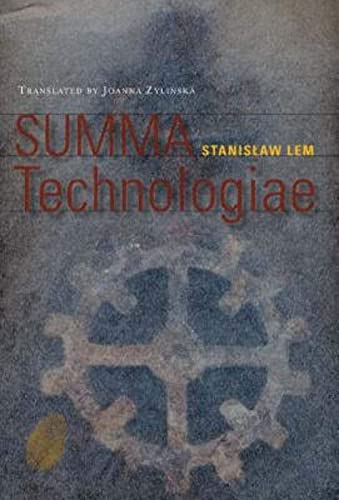
Synopsis
The Polish writer Stanislaw Lem is best known to English-speaking readers as the author of the 1961 science fiction novel Solaris, adapted into a meditative film by Andrei Tarkovsky in 1972 and remade in 2002 by Steven Soderbergh. Throughout his writings, comprising dozens of science fiction novels and short stories, Lem offered deeply philosophical and bitingly satirical reflections on the limitations of both science and humanity.
In Summa Technologiae—his major work of nonfiction, first published in 1964 and now available in English for the first time—Lem produced an engaging and caustically logical philosophical treatise about human and nonhuman life in its past, present, and future forms. After five decades Summa Technologiae has lost none of its intellectual or critical significance. Indeed, many of Lem’s conjectures about future technologies have now come true: from artificial intelligence, bionics, and nanotechnology to the dangers of information overload, the concept underlying Internet search engines, and the idea of virtual reality. More important for its continued relevance, however, is Lem’s rigorous investigation into the parallel development of biological and technical evolution and his conclusion that technology will outlive humanity.
Preceding Richard Dawkins’s understanding of evolution as a blind watchmaker by more than two decades, Lem posits evolution as opportunistic, shortsighted, extravagant, and illogical. Strikingly original and still timely, Summa Technologiae resonates with a wide range of contemporary debates about information and new media, the life sciences, and the emerging relationship between technology and humanity.
"synopsis" may belong to another edition of this title.
About the Author
Stanislaw Lem (1921–2006) was the best-known science fiction author writing outside the English language. His books have been translated into more than forty languages and have sold more than 27 million copies worldwide.
Joanna Zylinska is professor of new media and communications at Goldsmiths, University of London. She is the author of Bioethics in the Age of New Media and The Ethics of Cultural Studies.
"About this title" may belong to another edition of this title.
Search results for Summa Technologiae (Volume 40) (Electronic Mediations)

Stock Image
Summa Technologiae
Published by
University of Minnesota Press, 2014
ISBN 10: 0816675775
ISBN 13: 9780816675777
Used
Paperback
Seller: World of Books (was SecondSale), Montgomery, IL, U.S.A.
Seller rating 5 out of 5 stars

Paperback. Condition: Good. The Polish writer Stanislaw Lem is best known to English-speaking readers as the author of the 1961 science fiction novel Solaris, adapted into a meditative film by Andrei Tarkovsky in 1972 and remade in 2002 by Steven Soderbergh. Throughout his writings, comprising dozens of science fiction novels and short stories, Lem offered deeply philosophical and bitingly satirical reflections on the limitations of both science and humanity. In Summa Technologiae-his major work of nonfiction, first published in 1964 and now available in English for the first time-Lem produced an engaging and caustically logical philosophical treatise about human and nonhuman life in its past, present, and future forms. After five decades Summa Technologiae has lost none of its intellectual or critical significance. Indeed, many of Lem?s conjectures about future technologies have now come true: from artificial intelligence, bionics, and nanotechnology to the dangers of information overload, the concept underlying Internet search engines, and the idea of virtual reality. More important for its continued relevance, however, is Lem?s rigorous investigation into the parallel development of biological and technical evolution and his conclusion that technology will outlive humanity. Preceding Richard Dawkins?s understanding of evolution as a blind watchmaker by more than two decades, Lem posits evolution as opportunistic, shortsighted, extravagant, and illogical. Strikingly original and still timely, Summa Technologiae resonates with a wide range of contemporary debates about information and new media, the life sciences, and the emerging relationship between technology and humanity. Seller Inventory # CIN0816675775G
Stock Image
Summa Technologiae
Published by
University of Minnesota Press, 2014
ISBN 10: 0816675775
ISBN 13: 9780816675777
Used
Paperback
Seller: World of Books Inc, Montgomery, IL, U.S.A.
Seller rating 4 out of 5 stars

Paperback. Condition: Good. The Polish writer Stanislaw Lem is best known to English-speaking readers as the author of the 1961 science fiction novel Solaris, adapted into a meditative film by Andrei Tarkovsky in 1972 and remade in 2002 by Steven Soderbergh. Throughout his writings, comprising dozens of science fiction novels and short stories, Lem offered deeply philosophical and bitingly satirical reflections on the limitations of both science and humanity. In Summa Technologiae-his major work of nonfiction, first published in 1964 and now available in English for the first time-Lem produced an engaging and caustically logical philosophical treatise about human and nonhuman life in its past, present, and future forms. After five decades Summa Technologiae has lost none of its intellectual or critical significance. Indeed, many of Lem?s conjectures about future technologies have now come true: from artificial intelligence, bionics, and nanotechnology to the dangers of information overload, the concept underlying Internet search engines, and the idea of virtual reality. More important for its continued relevance, however, is Lem?s rigorous investigation into the parallel development of biological and technical evolution and his conclusion that technology will outlive humanity. Preceding Richard Dawkins?s understanding of evolution as a blind watchmaker by more than two decades, Lem posits evolution as opportunistic, shortsighted, extravagant, and illogical. Strikingly original and still timely, Summa Technologiae resonates with a wide range of contemporary debates about information and new media, the life sciences, and the emerging relationship between technology and humanity. Seller Inventory # CIN0816675775G
Seller Image
Summa Technologiae (Volume 40) (Electronic Mediations)
Published by
Univ Of Minnesota Press, 2014
ISBN 10: 0816675775
ISBN 13: 9780816675777
Used
Softcover
Seller: 2nd Life Books, Burlington, NJ, U.S.A.
Seller rating 5 out of 5 stars
Condition: very_good. Used book in very good condition. May have some minor wear. May NOT include discs, or access code or other supplemental material. Ships directly from Amazon and is eligible for Prime or super saver FREE shipping. We ship Monday-Saturday and respond to inquiries within 24 hours. Seller Inventory # BXM.E8GI
Stock Image
Summa Technologiae
Published by
University of Minnesota Press, 2014
ISBN 10: 0816675775
ISBN 13: 9780816675777
Used
Softcover
Seller: Better World Books: West, Reno, NV, U.S.A.
Seller rating 5 out of 5 stars
Condition: Very Good. Pages intact with possible writing/highlighting. Binding strong with minor wear. Dust jackets/supplements may not be included. Stock photo provided. Product includes identifying sticker. Better World Books: Buy Books. Do Good. Seller Inventory # 39017361-20
Stock Image
Summa Technologiae (Volume 40) (Electronic Mediations)
Published by
Univ Of Minnesota Press, 2014
ISBN 10: 0816675775
ISBN 13: 9780816675777
Used
paperback
Seller: HPB-Diamond, Dallas, TX, U.S.A.
Seller rating 5 out of 5 stars
paperback. Condition: Very Good. Connecting readers with great books since 1972! Used books may not include companion materials, and may have some shelf wear or limited writing. We ship orders daily and Customer Service is our top priority! Seller Inventory # S_486795615
Stock Image
Summa Technologiae (Electronic Mediations)
Seller: Lakeside Books, Benton Harbor, MI, U.S.A.
Seller rating 5 out of 5 stars
Condition: New. Brand New! Not Overstocks or Low Quality Book Club Editions! Direct From the Publisher! We're not a giant, faceless warehouse organization! We're a small town bookstore that loves books and loves it's customers! Buy from Lakeside Books! Seller Inventory # OTF-S-9780816675777
Seller Image
Summa Technologiae
Seller: GreatBookPrices, Columbia, MD, U.S.A.
Seller rating 5 out of 5 stars
Condition: New. Seller Inventory # 20632623-n
Seller Image
Summa Technologiae
Published by
Univ Of Minnesota Press, 2014
ISBN 10: 0816675775
ISBN 13: 9780816675777
Used
Softcover
Seller: GreatBookPrices, Columbia, MD, U.S.A.
Seller rating 5 out of 5 stars
Condition: As New. Unread book in perfect condition. Seller Inventory # 20632623
Stock Image
Summa Technologiae Format: Paperback
Published by
University of Chicago press, 2014
ISBN 10: 0816675775
ISBN 13: 9780816675777
New
Softcover
Seller: INDOO, Avenel, NJ, U.S.A.
Seller rating 5 out of 5 stars
Condition: New. Brand New. Seller Inventory # 9780816675777
Stock Image
Summa Technologiae (Volume 40) (Electronic Mediations)
Seller: California Books, Miami, FL, U.S.A.
Seller rating 5 out of 5 stars
Condition: New. Seller Inventory # I-9780816675777