
Synopsis
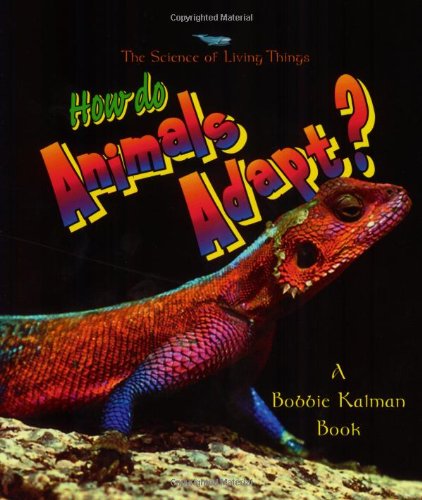
Describes how animals adapt to survive, discussing camouflage, mimicry, poisons, defense, adaptations to weather, feeding, and mating.
"synopsis" may belong to another edition of this title.
About the Author
Bobbie Kalman is the author and publisher of more than one hundred and fifty quality children's library books. She has created many of Crabtree's most popular series, including The Early Settler Life Series, The Historic Communities Series and The Crabapples Series of "starter" books for younger children. This year Bobbie has created the exciting new series Sports in Action. Bobbie's series are extremely successful in schools and public libraries because she writes them with specific curriculum needs in mind. She works with a writing team of creative writers who thoroughly research each topic. Colorful, attractive covers and entertaining text make her books sell equally well in bookstores and museums. Bobbie holds degrees in English, Psychology and Education. She has taught at both the elementary and secondary level. As well as being a teacher, Bobbie has worked as an educational consultant with several publishing companies.
Reviews
Grade 1-3-The first book examines ways that animals' bodies and/or behavior help them survive in particular habitats. Types of adaptation include camouflage, hibernation, and migration. The second entry looks at the group of animals that includes the kangaroo, koala, and opossum. The last title covers various methods of locomotion such as swimming, flying, and jumping. In all three books, a two-page spread is devoted to a particular topic. Though none of the information is oversimplified, it is rather generalized. For example, in Marsupial, only one page is devoted to the opossum and it includes a discussion of varieties found in other countries as well as the North American species. A combination of color photographs and drawings adequately illustrate the texts. Though the information provided is simple, the language is a bit too difficult for the newly independent readers whom Kalman seems to be targeting. Many of the scientific terms are boldfaced and defined in the text and/or in the glossary, but there isn't much consistency as to which ones are defined where. Of the three books, Marsupials is the most successful, mainly because it has the narrowest scope. However, none of these offerings is in-depth enough to serve as a primary source for reports. All three are best suited to youngsters looking for brief answers to satisfy their curiosity and casual browsers who are animal enthusiasts.
Arwen Marshall, formerly at New York Public Library
Copyright 2000 Reed Business Information, Inc.
"About this title" may belong to another edition of this title.
Search results for How do Animals Adapt? (The Science of Living Things)

Stock Image
How do Animals Adapt? (The Science of Living Things)
Seller: World of Books (was SecondSale), Montgomery, IL, U.S.A.
Seller rating 5 out of 5 stars

Condition: Good. Item in good condition. Textbooks may not include supplemental items i.e. CDs, access codes etc. Seller Inventory # 00099814877
Seller Image
How do Animals Adapt? (The Science of Living Things)
Seller: Zoom Books East, Glendale Heights, IL, U.S.A.
Seller rating 5 out of 5 stars
Condition: very_good. Book is in very good condition and may include minimal underlining highlighting. The book can also include "From the library of" labels. May not contain miscellaneous items toys, dvds, etc. . We offer 100% money back guarantee and 24 7 customer service. Seller Inventory # ZEV.0865059578.VG
Stock Image
How do Animals Adapt? (The Science of Living Things)
Seller: World of Books (was SecondSale), Montgomery, IL, U.S.A.
Seller rating 5 out of 5 stars
Condition: Good. Item in good condition and has highlighting/writing on text. Used texts may not contain supplemental items such as CDs, info-trac etc. Seller Inventory # 00098864592
Seller Image
How do Animals Adapt? (The Science of Living Things)
Seller: Reliant Bookstore, El Dorado, KS, U.S.A.
Seller rating 5 out of 5 stars
Condition: good. This book is in good condition with very minimal damage. Pages may have minimal notes or highlighting. Cover image on the book may vary from photo. Ships out quickly in a secure plastic mailer. Seller Inventory # RDV.0865059578.G
Stock Image
How do Animals Adapt? (The Science of Living Things)
Published by
Crabtree Pub Co (edition ), 2000
ISBN 10: 0865059578
ISBN 13: 9780865059573
Used
Paperback
Seller: BooksRun, Philadelphia, PA, U.S.A.
Seller rating 5 out of 5 stars
Paperback. Condition: Very Good. It's a well-cared-for item that has seen limited use. The item may show minor signs of wear. All the text is legible, with all pages included. It may have slight markings and/or highlighting. Seller Inventory # 0865059578-11-1
Stock Image
How do Animals Adapt? (The Science of Living Things)
Seller: Half Price Books Inc., Dallas, TX, U.S.A.
Seller rating 5 out of 5 stars
paperback. Condition: Very Good. Connecting readers with great books since 1972! Used books may not include companion materials, and may have some shelf wear or limited writing. We ship orders daily and Customer Service is our top priority! Seller Inventory # S_449795777
Seller Image
How do Animals Adapt? (The Science of Living Things)
Seller: Off The Shelf, Antonia, MO, U.S.A.
Seller rating 5 out of 5 stars
Condition: good. The item shows wear from consistent use, but it remains in good condition and works perfectly. All pages and cover are intact including the dust cover, if applicable . Spine may show signs of wear. Pages may include limited notes and highlighting. May NOT include discs, access code or other supplemental materials. Seller Inventory # 4WILKM00NV9M
Stock Image
How do Animals Adapt? (The Science of Living Things)
Seller: HPB-Emerald, Dallas, TX, U.S.A.
Seller rating 5 out of 5 stars
Paperback. Condition: Very Good. Connecting readers with great books since 1972! Used books may not include companion materials, and may have some shelf wear or limited writing. We ship orders daily and Customer Service is our top priority! Seller Inventory # S_394544952
Stock Image
How do Animals Adapt? (The Science of Living Things)
Seller: HPB-Ruby, Dallas, TX, U.S.A.
Seller rating 5 out of 5 stars
Paperback. Condition: Very Good. Connecting readers with great books since 1972! Used books may not include companion materials, and may have some shelf wear or limited writing. We ship orders daily and Customer Service is our top priority! Seller Inventory # S_452201436
Stock Image
How do Animals Adapt? (The Science of Living Things)
Seller: HPB Inc., Dallas, TX, U.S.A.
Seller rating 5 out of 5 stars
paperback. Condition: Very Good. Connecting readers with great books since 1972! Used books may not include companion materials, and may have some shelf wear or limited writing. We ship orders daily and Customer Service is our top priority! Seller Inventory # S_450127871