
Synopsis
Now updated with a new epilogue--an essential read for anyone interested in Shadow Work
Cheating... lying ... jealousy ... blaming ... greed ... shame… These forbidden feelings and behaviors erupt from the dark, denied part of ourselves-the personal shadow. But they erupt with a purpose: They are trying to tell us their secrets.
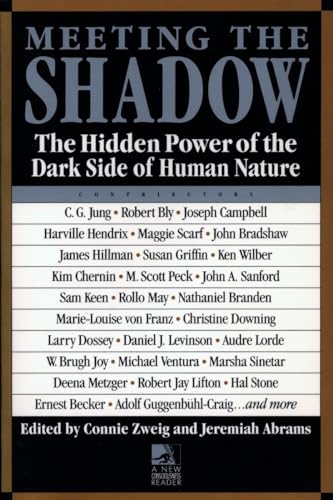
Meeting the Shadow is a landmark collection of 65 wide-ranging essays by thought leaders – including Carl Jung, Joseph Campbell, Ken Wilber, James Hillman, Susan Griffin, Harville Hendrix—on the dark side of human nature as it appears in families, intimate relationships, sexuality, work, spirituality, politics, therapy, and creativity. It presents tools for Shadow Work that enable us to make a conscious relationship with the shadow, defuse negative emotions, release guilt and shame, achieve a genuine self-acceptance, and heal our relationships.
Although we think of the shadow as containing only darkness, as Jung stated, its essence is "pure gold.”
One does not become enlightened by imagining figures of light, but by making the darkness conscious. –C.G. Jung
"synopsis" may belong to another edition of this title.
About the Author
Connie Zweig, Ph.D., is also author of Romancing the Shadow; Meeting the Shadow on the Spiritual Path; The Inner Work of Age; and a novel, A Moth to the Flame: The Story of Sufi Poet Rumi. Her Podcast, Dr. Neil’s Spiritual Awakening to Non-Duality, posts on all platforms.
Jeremiah Abrams worked as a Jungian therapist in Northern California and retreat leader in Ubud, Bali, until 2022.
Reviews
Zweig, former executive editor of Brain/Mind Bulletin, and Abrams, a Jungian therapist, offer a provocative collection of more than 60 brief pieces (most of them extracts from longer works) exploring the "shadow," the part of the unconscious self that a conscious mind sees as undesirable and tries to define as the "other." Christine Downing considers how a person might project the shadow self onto a same-sex sibling, while Maggie Scarf describes the ways in which husbands and wives can do the same thing: one spouse, for instance, expressing anger for the spouse who shuns the hostile feelings, turning an "intrapsychic problem" into "interpersonal conflict." Jerome S. Bernstein looks at this phenomenon in collective terms: the U.S. sees its darker self in the Soviet Union and vice versa. Many of the contributors note the dangers of ignoring one's own shadow, and the volume concludes with texts that discuss ways of coming to terms with it. Ken Wilber suggests that people should try to recognize and play out aspects of their rejected selves in order to heal "the split between persona and cap is correct/pk Shadow."
Copyright 1991 Reed Business Information, Inc.
"About this title" may belong to another edition of this title.
Search results for Meeting the Shadow: The Hidden Power of the Dark Side...

Seller Image
Meeting the Shadow: The Hidden Power of the Dark Side of Human Nature
Seller: Dream Books Co., Denver, CO, U.S.A.
Seller rating 5 out of 5 stars

Condition: acceptable. This copy has clearly been enjoyedâ"expect noticeable shelf wear and some minor creases to the cover. Binding is strong, and all pages are legible. May contain previous library markings or stamps. Seller Inventory # DBV.087477618X.A
Stock Image
Meeting the Shadow: Hidden Pow
Seller: World of Books (was SecondSale), Montgomery, IL, U.S.A.
Seller rating 5 out of 5 stars
Condition: Good. Item in good condition and has highlighting/writing on text. Used texts may not contain supplemental items such as CDs, info-trac etc. Seller Inventory # 00104351623
Seller Image
Meeting the Shadow: The Hidden Power of the Dark Side of Human Nature
Seller: Zoom Books East, Glendale Heights, IL, U.S.A.
Seller rating 5 out of 5 stars
Condition: good. Book is in good condition and may include underlining highlighting and minimal wear. The book can also include "From the library of" labels. May not contain miscellaneous items toys, dvds, etc. . We offer 100% money back guarantee and 24 7 customer service. Seller Inventory # ZEV.087477618X.G
Seller Image
Meeting the Shadow: The Hidden Power of the Dark Side of Human Nature
Seller: Goodwill of Central and Coastal Virginia, Richmond, VA, U.S.A.
Seller rating 4 out of 5 stars

Condition: acceptable. Seller Inventory # CCVV.087477618X.A
Seller Image
Meeting the Shadow: The Hidden Power of the Dark Side of Human Nature
Seller: Zoom Books Company, Lynden, WA, U.S.A.
Seller rating 5 out of 5 stars
Condition: very_good. Book is in very good condition and may include minimal underlining highlighting. The book can also include "From the library of" labels. May not contain miscellaneous items toys, dvds, etc. . We offer 100% money back guarantee and 24 7 customer service. Seller Inventory # ZBV.087477618X.VG
Seller Image
Meeting the Shadow: The Hidden Power of the Dark Side of Human Nature
Seller: Goodwill Books, Hillsboro, OR, U.S.A.
Seller rating 5 out of 5 stars
Condition: acceptable. Fairly worn, but readable and intact. If applicable: Dust jacket, disc or access code may not be included. Seller Inventory # 3IIK10005KYS_ns
Seller Image
Meeting the Shadow: The Hidden Power of the Dark Side of Human Nature
Seller: Blue Vase Books, Interlochen, MI, U.S.A.
Seller rating 5 out of 5 stars
Condition: acceptable. The item is very worn but is perfectly usable. Signs of wear can include aesthetic issues such as scratches, dents, worn and creased covers, folded page corners and minor liquid stains. All pages and the cover are intact, but the dust cover may be missing. Pages may include moderate to heavy amount of notes and highlighting, but the text is not obscured or unreadable. Page edges may have foxing age related spots and browning . May NOT include discs, access code or other supplemental materials. Seller Inventory # BVV.087477618X.A
Stock Image
Meeting the Shadow: The Hidden Power of the Dark Side of Human Nature
Seller: ThriftBooks-Dallas, Dallas, TX, U.S.A.
Seller rating 5 out of 5 stars
Paperback. Condition: Good. No Jacket. Former library book; Pages can have notes/highlighting. Spine may show signs of wear. ~ ThriftBooks: Read More, Spend Less. Seller Inventory # G087477618XI3N10
Stock Image
Meeting the Shadow: The Hidden Power of the Dark Side of Human Nature
Seller: ThriftBooks-Reno, Reno, NV, U.S.A.
Seller rating 5 out of 5 stars
Paperback. Condition: Fair. No Jacket. Readable copy. Pages may have considerable notes/highlighting. ~ ThriftBooks: Read More, Spend Less. Seller Inventory # G087477618XI5N00
Stock Image
Meeting the Shadow: The Hidden Power of the Dark Side of Human Nature
Seller: ThriftBooks-Dallas, Dallas, TX, U.S.A.
Seller rating 5 out of 5 stars
Paperback. Condition: Fair. No Jacket. Readable copy. Pages may have considerable notes/highlighting. ~ ThriftBooks: Read More, Spend Less. Seller Inventory # G087477618XI5N00