
Synopsis
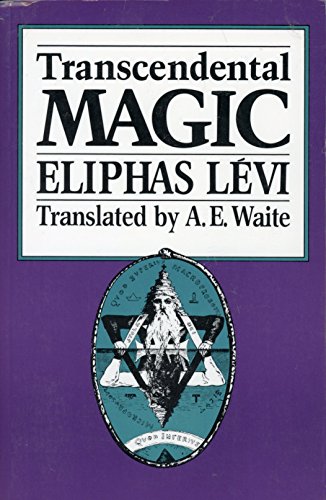
The classic groundbreaking exploration of ancient occult philosophy by the author of The History of Magic.
Steeped in the Western occult tradition, Éliphas Lévi (Alphonese Louis Constant) was a master of the Rosicrucian interpretation of the Qabalah, which forms the basis of magic as practiced in the West today.
The first half of this book deals with the principles and theories that underlie magical work, covering the subject from the Qabalistic, Hermetic, and Christian points of view; while in the second half, instructions are clearly given for the preparation of the instruments of the art and of their ceremonial employment in the rites governing necromancy, spells, and divination.
The translation and notes by A.E. Waite are immaculate. Waite, a noted scholar of his day, taught the theory and practice of magic in both the Hermetic and Rosicrucian orders. Due to the high caliber of both author and editor, this book maintains its preeminent position in the literature of the magic arts.
"synopsis" may belong to another edition of this title.
About the Author
Alphonse Louis Constant, better know by his pen name Eliphas Levi, was a master of the traditional Rosicrucian interpretation of the Kabbalah. He was born in France in 1810, and through the offices of the parish priest, was educated for the church at SaintSulpice. He was later expelled from seminary for teaching doctrines contrary to those of the Roman Catholic Church. In 1824 Levi began studying the occult sciences, and wrote about magic and the Kabbalah for the next three decades. His other books include Transcendental Magic, Mysteries of the Qabalah, and The Book of Splendours.
A.E. Waite (1857-1942) is one of the bestknown authors and translators of magic and the occult. He is the creator of the Rider-Waite tarot and is the author of several books including Book of Black Magic and Pictorial Keys to the Tarot.
Excerpt. © Reprinted by permission. All rights reserved.
TRANSCENDENTAL MAGIC
Its Doctrine and Ritual
By Eliphas LeviSamuel Weiser, Inc.
Copyright © 2013 Eliphas Levi
All rights reserved.
ISBN: 978-0-87728-079-8All rights reserved.
Contents
| EXPLANATION OF THE FIGURES | |
| BIOGRAPHICAL PREFACE | |
| THE DOCTRINE OF TRANSCENDENTAL MAGIC | |
| Introduction | |
| I THE CANDIDATE | |
| II THE PILLARS OF THE TEMPLE | |
| III THE TRIANGLE OF SOLOMON | |
| IV THE TETRAGRAM | |
| V THE PENTAGRAM | |
| VI MAGICAL EQUILIBRIUM | |
| VII THE FIERY SWORD | |
| VIII REALIZATION | |
| IX INITIATION | |
| X THE KABALAH | |
| XI THE MAGIC CHAIN | |
| XII THE GREAT WORK | |
| XIII NECROMANCY | |
| XIV TRANSMUTATIONS | |
| XV BLACK MAGIC | |
| XVI BEWITCHMENTS | |
| XVII ASTROLOGY | |
| XVIII CHARMS AND PHILTRES | |
| XIX THE STONE OF THE PHILOSOPHERS—ELAGABALUS | |
| XX THE UNIVERSAL MEDICINE | |
| XXI DIVINATION | |
| XXII SUMMARY AND GENERAL KEY OF THE FOUR SECRET SCIENCES | |
| THE RITUAL OF TRANSCENDENTAL MAGIC | |
| Introduction | |
| I PREPARATIONS | |
| II MAGICAL EQUILIBRIUM | |
| III THE TRIANGLE OF PANTACLES | |
| IV THE CONJURATION OF THE FOUR | |
| V THE BLAZING PENTAGRAM | |
| VI THE MEDIUM AND MEDIATOR | |
| VII THE SEPTENARY OF TALISMANS | |
| VIII A WARNING TO THE IMPRUDENT | |
| IX THE CEREMONIAL OF INITIATES | |
| X THE KEY OF OCCULTISM | |
| XI THE TRIPLE CHAIN | |
| XII THE GREAT WORK | |
| XIII NECROMANCY | |
| XIV TRANSMUTATIONS | |
| XV THE SABBATH OF THE SORCERERS | |
| XVI WITCHCRAFT AND SPELLS | |
| XVII THE WRITING OF THE STARS | |
| XVIII PHILTRES AND MAGNETISM | |
| XIX THE MASTERY OF THE SUN | |
| XX THE THAUMATURGE | |
| XXI THE SCIENCE OF THE PROPHETS | |
| XXII THE BOOK OF HERMES | |
| SUPPLEMENT TO THE RITUAL | |
| THE NUCTEMERON OF APOLLONIUS OF TYANA | |
| THE NUCTEMERON ACCORDING TO THE HEBREWS | |
| INDEX |
CHAPTER 1
THE CANDIDATE
DISCIPLINA ENSOPH KETHER
When a philosopher adopted as the basis for a new apocalypse of human wisdom theaxiom: "I think, therefore I am", in a measure he altered unconsciously, fromthe stand point of Christian Revelation, the old conception of the SupremeBeing. I am that I am, said the Being of beings of Moses. I am he who thinks,says the man of Descartes, and to think being to speak inwardly, such a one mayaffirm, like the God of St John the Evangelist: I am he in whom and by whom theword manifests—In principio erat verbum. Now, what is this principle? It is agroundwork of speech, it is a reason for the existence of the word. The essenceof the word is in the principle; the principle is that which is; intelligence isa principle which speaks. What further is intellectual light? It is speech. Whatis revelation? It is speech also, being is the principle, speech is the means,and the plenitude or development and perfection of being is the end. To speak isto create. But to say: "I think, therefore I exist", is to argue fromconsequence to principle, and certain contradictions which have been adduced bya great writer, Lamennais, have proved abundantly the philosophical unsoundnessof this method. I am, therefore something exists—might seem to be a moreprimitive and simple foundation for experimental philo sophy. I am, thereforeBeing exists. Ego Sum qui sum—such is the first revelation of God in man and ofman in the world, while it is also the first axiom of occult philosophy. [TEXT NOT REPRODUCIBLE IN ASCII]. Beingis being. Hence this philosophy, having that which is for its principle, can bein no sense hypothesis or guesswork.
THE SIGN OF EXCOMMUNICATION
Mercurius Trismegistus begins his admirable symbol known under the name of the"Emerald Table," by this threefold affirmation: "It is true, it is certainwithout error, it is of all truth." Thus, in physics, the true confirmed byexperience; in philosophy, certitude purged from any alloy of error; in thedomain of religion or the infinite, absolute truth indicated by analogy: suchare the first necessities of true science, and Magic only can impart these toits adepts.
But you, before all things, who are you, thus taking this work in your hands andproposing to read it? On the pediment of a temple consecrated by antiquity tothe God of Light was an inscription of two words: "Know thyself." I impress thesame counsel on every man when he seeks to approach science. Magic, which themen of old denominated the Sanctum Regnum, the Holy Kingdom, or Kingdom of God,Regnum Dei, exists only for kings and for priests. Are you priests? Are youkings? The priesthood of Magic is not a vulgar priesthood, and its royaltyenters not into competition with the princes of this world. The monarchs ofscience are the priests of truth, and their sovereignty is hidden from themultitude, like their prayers and sacrifices. The kings of science are men whoknow the truth and them the truth has made free, according to the specificpromise given by the most mighty of all initiators.
The man who is enslaved by his passions or worldly prejudices can be initiatedin no wise; he must reform or he will never attain; meanwhile he cannot be anadept, for this word signifies a person who has achieved by will and by work.The man who loves his own opinions and fears to part with them, who suspects newtruths, who is unprepared to doubt everything rather than admit anything onchance, should close this book: for him it is useless and dangerous. He willfail to understand it, and it will trouble him, while if he should divine themeaning, there will be a still greater source of disquietude. If you hold byanything in the world more than by reason, truth and justice; if your will beuncertain and vacillating, either in good or evil; if logic alarm you, or thenaked truth make you blush; if you are hurt when accepted errors are assailed;condemn this work straight away. Do not read it; let it cease to exist for you;but at the same time do not cry it down as dangerous. The secrets which itrecords will be understood by an elect few and will be reserved by those whounderstand them. Show light to the birds of the night-time, and you hide theirlight; it is the light which blinds them and for them is darker than darkness.It follows that I shall speak clearly and make known everything, with the firmconviction that initiates alone, or those who deserve initiation, will read alland understand in part.
There is a true and a false science, a Divine and an Infernal Magic—in otherwords, one which is delusive and tenebrous. It is our task to reveal the oneand to unveil the other, to distinguish the magician from the sorcerer and theadept from the charlatan. The magician avails himself of a force which he knows,the sorcerer seeks to misuse that which he does not understand. If it bepossible in a scientific work to employ a term so vulgar and so discredited,then the devil gives himself to the magician and the sorcerer gives himself tothe devil. The magician is the sovereign pontiff of Nature, the sorcerer is herprofaner only. The sorcerer is in the same relation to the magician that asuperstitious and fanatical person bears to a truly religious man.
Before proceeding further, let us define Magic in a sentence. Magic is thetraditional science of the secrets of Nature which has been transmitted to usfrom the Magi. By means of this science the adept is invested with a species ofrelative omnipotence and can operate superhumanly— that is, after a manner whichtranscends the normal possibility of men. Thereby many illustrious hierophants,such as Mercurius Trismegistus, Osiris, Orpheus, Apollonius of Tyana, and otherswhom it might be dangerous or unwise to name, came after their death to beadored and invoked as gods. Thereby others also—according to that ebb-and flowof opinion which is responsible for the caprices of success—became emissaries ofinfernus or suspected adven turers, like the Emperor Julian, Apuleius, theenchanter Merlin and that arch-sorcerer, as he was termed in his day, theillustrious and unfortunate Cornelius Agrippa.
To attain the Sanctum Regnum, in other words, the knowledge and power of theMagi, there are four indis pensable conditions—an intelligence illuminated bystudy, an intrepidity which nothing can check, a will which cannot be broken,and a prudence which nothing can corrupt and nothing intoxicate. To know, todare, to will, to keep silence —such are the four words of the Magus, inscribedupon the four symbolical forms of the sphinx. These maxims can be combinedafter four manners and explained four times by one another.
On the first page of the Book of Hermes the adept is depicted with a large hat,which, if turned down, would conceal his entire head. One hand is raised towardsheaven, which he seems to command with his wand, while the other is placed uponhis breast; before him are the chief symbols or instruments of science, and hehas others hidden in a juggler's wallet. His body and arms form the letterAleph, the first of that alphabet which the Jews borrowed from the Egyptians: tothis symbol we shall have occasion to recur later on.
The Magus is truly that which the Hebrew Kabalists term Microprosopus — otherwise,the creator of the little world. The first of all magical sciencesbeing the knowledge of one's self, so is one's own creation first of all worksof science; it comprehends the others and is the beginning of the Great Work.The expression, however, requires explanation. Supreme Reason being the soleinvariable and conse quently imperishable principle—and death, as we call it,being change—it follows that the intelligence which cleaves closely to thisprinciple and in a manner identifies itself therewith, does hereby make itselfunchangeable and as a result immortal. To cleave invariably to reason it will beunderstood that it is necessary to attain independence of all those forces whichby their fatal and inevitable operation produce the alternatives of life anddeath. To know how to suffer, to forbear and co die—such are the first secretswhich place us beyond reach of affliction, the desires of the flesh and the fearof annihilation. The man who seeks and finds a glorious death has faith inimmortality and universal humanity believes in it with him and for him, raisingaltars and statues to his memory in token of eternal life.
Man becomes king of the brutes only by subduing or taming them: otherwise hewill be their victim or slave. Brutes are the type of our passions; they are theinstinctive forces of Nature. The world is a field of battle, where libertystruggles with inertia by the opposition of active force. Physical laws aremillstones; if you cannot be the miller you must be the grain. You are called tobe king of air, water, earth and fire; but to reign over these four livingcreatures of symbolism, it is necessary to conquer and enchain them. He whoaspires to be a sage and to know the Great Enigma of Nature must be the heir anddespoiler of the sphinx: his the human head, in order to possess speech; his theeagle's wings, in order to scale the heights; his the bull's flanks, in order tofurrow the depths; his the lion's talons, to make a way on the right and theleft, before and behind.
You therefore who seek initiation, are you learned as Faust? Are you insensibleas Job? No, is it not so? But you may become like unto both if you choose. Haveyou overcome the vortices of vague thoughts? Are you without indecision orcapriciousness? Do you consent to pleasure only when you will, and do you wishfor it only when vou should? No, is it not so? Not at least invariably, but thismay come to pass if you choose. The sphinx has not only a man's head, it haswoman's breasts; do you know how to resist feminine charms? No, is it not so?And you laugh outright in replying, parading your moral weakness for theglorification of your physical and vital force. Be it so: I allow you to renderthis homage to the ass of Sterne or Apuleius. The ass has its merit, I agree; itwas consecrated to Priapus as was the goat to the god of Mendes. But take it forwhat it is worth, and decide whether ass or man shall be master. He alone canpossess truly the pleasure of love who has conquered the love of pleasure. To beable and to forbear is to be twice able. Woman enchains you by your desires;master your desires and you will enchain her. The greatest injury that can beinflicted on a man is to call him a coward. Now, what is a cowardly person? Onewho neglects his moral dignity in order to obey blindly the instincts of Nature.As a fact, in the presence of danger it is natural to be afraid and seek flight:why, then, is it shameful? Because honour has erected it into a law that we mustprefer our duty to our inclinations or fears. What is honour from this point ofview? It is a universal presentience of immortality and appreciation of themeans which can lead to it. The last trophy which a man can win from death is totriumph over the appetite for life, not by despair but by a more exalted hope,which is contained in faith, for all that is noble and honest, by the undividedconsent of the world. To learn self-conquest is therefore to learn life, and theausterities of stoicism were no vain parade of freedom! To yield to the forcesof Nature is to follow the stream of collective life and to be the slave ofsecondary causes. To resist and subdue Nature is to make for one's self apersonal and imperishable life: it is to break free from the vicissitudes oflife and death. Every man who is prepared to die rather than renounce truth andjustice is most truly living, for immortality abides in his soul. To find or toform such men was the end of all ancient initiations. Pythagoras disciplined hispupils by silence and all kinds of self-denial; candidates in Egypt were triedby the four elements; and we know the self-inflicted austerities of fakirs andbrahmans in India for attaining the kingdom of free will and divineindependence. All macerations of asceticism are borrowed from the initiations ofthe Ancient Mysteries; they have ceased because those qualified for initiation,no longer finding initiators, and the leaders of conscience becoming in thelapse of time as uninstructed as the vulgar, the blind have grown weary offollowing the blind, and no one has cared to pass through ordeals the end ofwhich was only in doubt and despair: the path of light was lost. To succeed inperforming something we must know that which it is proposed to do, or at leastmust have faith in someone who does know it. But shall I stake my life on aventure, or follow someone at chance who himself cannot see where he is going?
We must not set out rashly along the path of the transcendental sciences, but,once started, we must reach the end or perish. To doubt is to lose one's reason;to pause is to fall; to recoil is to plunge into an abyss. You, therefore, whoare undertaking the study of this book, if you persevere to the end andunderstand it, you will be either a monarch or madman. Do what you will with thevolume, you will be unable to despise or to forget it. If you are pure, it willbe your light; if strong, your arm; if holy, your religion; if wise, the rule ofyour wisdom. But if you are wicked, for you it will be an infernal torch; itwill lacerate your breast like a poniard; it will rankle in your memory like aremorse; it will people your imagination with chimeras, and will drive youthrough folly to despair. You will endeavour to laugh at it, and will only gnashyour teeth; it will be like the file in the fable which the serpent tried tobite, but it destroyed all his teeth.
Let us now enter on the series of initiations. I have said that revelation isthe word. As a fact, the word, or speech, is the veil of being and thecharacteristic sign of life. Every form is the veil of a word, because the ideawhich is the mother of the word is the sole reason for the existence of forms.Every figure is a character, every character derives from and returns into aword. For this reason the ancient sages, of whom Trismegistus is the organ,formulated their sole dogma in these terms: "That which is above is like untothat which is below, and that which is below unto that which is above." In otherwords, the form is proportional to the idea; the shadow is the measure of thebody calculated in its relation to the luminous ray; the scabbard is as deep asthe sword is long; the negation is in proportion to the contrary affirmation;production is equal to destruction in the movement which preserves life; andthere is no point in infinite extension which may not be regarded as the centreof a circle having an expanding circumference receding indefinitely into space.Every individuality is therefore indefinitely perfectible, since the moral orderis analogous to the physical, and since we cannot conceive any point as unableto dilate, increase and radiate in a philosophically unlimited circle. What canbe affirmed of the soul in its totality may be affirmed of each faculty of thesoul. The intelligence and will of man are instruments of incalculable power andcapacity. But intelligence and will possess as their help-mate and instrument afaculty which is too imperfectly known, the omnipotence of which belongsexclusively to the domain of Magic. I speak of the imagination, which theKabalists term the Diaphane or Translucid. Imagination, in effect, is like thesoul's eye; therein forms are outlined and preserved; thereby we behold thereflections of the invisible world; it is the glass of visions and the apparatusof magical life. By its intervention we heal diseases, modify the seasons, warnoff death from the living and raise the dead to life, because it is theimagination which exalts will and gives it power over the Universal Agent.Imagination determines the shape of the child in its mother's womb and decidesthe destiny of men; it lends wings to contagion and directs the arms of warfare.Are you exposed in battle? Believe yourself to be invulnerable like Achilles,and you will be so, says Paracelsus. Fear attracts bullets, but they arerepelled by courage. It is well known that persons with amputated limbs feelpain in the vicinity of members which they possess no longer. Paracelsusoperated upon living blood by medicating the product of a bleeding; he curedheadache at a distance by treating hair cut from the patient. By the science ofthe theoretical unity and solidarity between all parts of the body, heanticipated and outstripped the theories, or rather experiences, of our mostcelebrated magnetists. Hence his cures were miraculous, and to his name ofPhilip Theophrastus Bombast, he deserved the addition of Aureolus Paracelsus,with the further epithet of divine!
(Continues...)
Excerpted from TRANSCENDENTAL MAGIC by Eliphas Levi. Copyright © 2013 Eliphas Levi. Excerpted by permission of Samuel Weiser, Inc..
All rights reserved. No part of this excerpt may be reproduced or reprinted without permission in writing from the publisher.
Excerpts are provided by Dial-A-Book Inc. solely for the personal use of visitors to this web site.
"About this title" may belong to another edition of this title.
Other Popular Editions of the Same Title

Search results for Transcendental Magic

Seller Image
Transcendental Magic
Seller: Bay State Book Company, North Smithfield, RI, U.S.A.
Seller rating 5 out of 5 stars

Condition: acceptable. The book is complete and readable, with all pages and cover intact. Dust jacket, shrink wrap, or boxed set case may be missing. Pages may have light notes, highlighting, or minor water exposure, but nothing that affects readability. May be an ex-library copy and could include library markings or stickers. Seller Inventory # BSM.13VQC
Stock Image
Transcendental Magic
Seller: HPB-Diamond, Dallas, TX, U.S.A.
Seller rating 5 out of 5 stars
Paperback. Condition: Very Good. Connecting readers with great books since 1972! Used books may not include companion materials, and may have some shelf wear or limited writing. We ship orders daily and Customer Service is our top priority! Seller Inventory # S_472478313
Stock Image
Transcendental Magic
Seller: Better World Books, Mishawaka, IN, U.S.A.
Seller rating 5 out of 5 stars
Condition: Fine. Used book that is in almost brand-new condition. May contain a remainder mark. Better World Books: Buy Books. Do Good. Seller Inventory # 6017466-6
Stock Image
Transcendental Magic
Seller: Duru Media, Tallahassee, FL, U.S.A.
Seller rating 4 out of 5 stars

paperback. Condition: New. Seller Inventory # 01KRDV9W26HZ6SW
Seller Image
Transcendental Magic
Seller: GreatBookPrices, Columbia, MD, U.S.A.
Seller rating 5 out of 5 stars
Condition: New. Seller Inventory # 147055-n
Stock Image
Transcendental Magic
Seller: Lakeside Books, Benton Harbor, MI, U.S.A.
Seller rating 5 out of 5 stars
Condition: New. Brand New! Not Overstocks or Low Quality Book Club Editions! Direct From the Publisher! We're not a giant, faceless warehouse organization! We're a small town bookstore that loves books and loves it's customers! Buy from Lakeside Books! Seller Inventory # OTF-S-9780877280798
Seller Image
Transcendental Magic (Paperback or Softback)
Published by
Weiser Books 1/15/1968, 1968
ISBN 10: 0877280797
ISBN 13: 9780877280798
New
Paperback or Softback
Seller: BargainBookStores, Grand Rapids, MI, U.S.A.
Seller rating 5 out of 5 stars
Paperback or Softback. Condition: New. Transcendental Magic. Book. Seller Inventory # BBS-9780877280798
Stock Image
Transcendental Magic
Seller: California Books, Miami, FL, U.S.A.
Seller rating 4 out of 5 stars
Condition: New. Seller Inventory # I-9780877280798
Stock Image
Transcendental Magic
Seller: Lucky's Textbooks, Dallas, TX, U.S.A.
Seller rating 5 out of 5 stars
Condition: New. Seller Inventory # ABLIING23Mar2317530020991
Seller Image
Transcendental Magic
Seller: GreatBookPrices, Columbia, MD, U.S.A.
Seller rating 5 out of 5 stars
Condition: As New. Unread book in perfect condition. Seller Inventory # 147055