
Synopsis
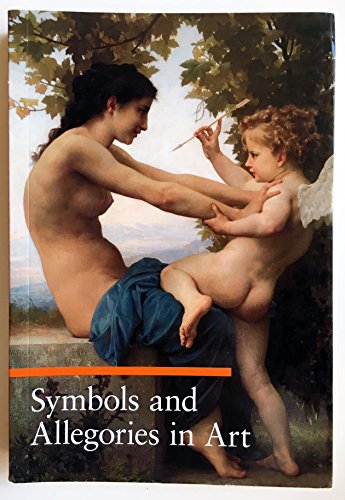
From antiquity, when the gods and goddesses were commonly featured in works of art, through to the twentieth century, when Surrealists drew on archetypes from the unconscious, artists have embedded symbols in their works. As with previous volumes in the Guide to Imagery series, the goal of this book is to provide contemporary readers and museum visitors with the tools to read the hidden meanings in works of art.
This latest volume is divided thematically into four sections featuring symbols related to time, man, space (earth and sky), and allegories or moral lessons. Readers will learn, for instance, that night, the primordial mother of the cosmos, was often portrayed in ancient art as a woman wrapped in a black veil, whereas day or noon was often represented in Renaissance art as a strong, virile man evoking the full manifestation of the sun's energy.
Each entry in the book contains a main reference image in which details of the symbol or allegory being analyzed are called out for discussion. In the margin, for quick access by the reader, is a summary of the essential characteristics of the symbol in question, the derivation of its name, and the religious tradition from which it springs.
"synopsis" may belong to another edition of this title.
About the Author
Matilde Battistini is an art critic and author, along with Stefano Zuffi, of Picasso, L'opera di un genio and La Natura Morta.
Reviews
This sixth volume of the Getty's superb Guide to Imagery series does not disappoint, following a winning formula to satisfying results. Like its predecessors, the book lushly reproduces masterworks and breaks them down into their component parts, explaining the meanings attached to each in helpful marginal text. The volume contains a selection of exemplary paintings from the last 500 years, but it's particularly heavy on the Renaissance-familiar standouts include van Eyck's The Arnolfini Marriage, Holbein the Younger's The Ambassadors, Botticelli's Spring and several fantastic works by Bruegel the Elder. The book is divided into four sections-"Time, " "Man, " "Space" and "Allegories"-with plenty of subsections in each. For anyone unfamiliar with Renaissance symbols and tropes, this book adds depth and nuance to the sensual power of its greatest works.
Copyright © Reed Business Information, a division of Reed Elsevier Inc. All rights reserved.
"About this title" may belong to another edition of this title.
Search results for Symbols and Allegories in Art (A Guide to Imagery)

Stock Image
Symbols and Allegories in Art (A Guide to Imagery)
Published by
J. Paul Getty Museum (edition First Edition), 2005
ISBN 10: 0892368187
ISBN 13: 9780892368181
Used
Paperback
First Edition
Seller: BooksRun, Philadelphia, PA, U.S.A.
Seller rating 5 out of 5 stars

Paperback. Condition: Very Good. First Edition. It's a well-cared-for item that has seen limited use. The item may show minor signs of wear. All the text is legible, with all pages included. It may have slight markings and/or highlighting. Seller Inventory # 0892368187-11-1
Stock Image
Symbols and Allegories in Art (A Guide to Imagery)
Seller: World of Books (was SecondSale), Montgomery, IL, U.S.A.
Seller rating 5 out of 5 stars
Condition: Good. Item in good condition. Textbooks may not include supplemental items i.e. CDs, access codes etc. Seller Inventory # 00105381205
Seller Image
Symbols and Allegories in Art (A Guide to Imagery)
Seller: clickgoodwillbooks, Indianapolis, IN, U.S.A.
Seller rating 5 out of 5 stars
Condition: acceptable. Used - Acceptable: All pages and the cover are intact, but shrink wrap, dust covers, or boxed set case may be missing. Pages may include limited notes, highlighting, or minor water damage but the text is readable. Item may be missing bundled media. Seller Inventory # CSIV.0892368187.A
Stock Image
Symbols and Allegories in Art
Seller: Better World Books: West, Reno, NV, U.S.A.
Seller rating 5 out of 5 stars
Condition: Good. Former library copy. Pages intact with minimal writing/highlighting. The binding may be loose and creased. Dust jackets/supplements are not included. Includes library markings. Stock photo provided. Product includes identifying sticker. Better World Books: Buy Books. Do Good. Seller Inventory # 5779212-6
Seller Image
Symbols and Allegories in Art (A Guide to Imagery)
Seller: Goodwill of Greater Milwaukee and Chicago, Racine, WI, U.S.A.
Seller rating 5 out of 5 stars
Condition: good. Book is considered to be in good or better condition. The actual cover image may not match the stock photo. Hard cover books may show signs of wear on the spine, cover or dust jacket. Paperback book may show signs of wear on spine or cover as well as having a slight bend, curve or creasing to it. Book should have minimal to no writing inside and no highlighting. Pages should be free of tears or creasing. Stickers should not be present on cover or elsewhere, and any CD or DVD expected with the book is included. Book is not a former library copy. Seller Inventory # SEWV.0892368187.G
Stock Image
Symbols and Allegories in Art (A Guide to Imagery)
Seller: Redux Books, Grand Rapids, MI, U.S.A.
Seller rating 5 out of 5 stars
Paperback. Condition: As New. Paperback. Cover shows very minor shelving wear, otherwise an unblemished copy.; 100% Satisfaction Guaranteed! Ships same or next business day! Seller Inventory # 132601070030
Stock Image
Symbols and Allegories in Art (A Guide to Imagery)
Published by
J. Paul Getty Museum, 2005
ISBN 10: 0892368187
ISBN 13: 9780892368181
Used
Trade Paperback
Seller: Open Books West Loop, Chicago, IL, U.S.A.
Seller rating 4 out of 5 stars

Trade Paperback. Condition: Used. Seller Inventory # 1222426
Stock Image
Symbols and Allegories in Art (Guide to Imagery) (Getty Publications -)
Seller: AwesomeBooks, Wallingford, United Kingdom
Seller rating 5 out of 5 stars
paperback. Condition: Very Good. Symbols and Allegories in Art (Guide to Imagery) (Getty Publications -) This book is in very good condition and will be shipped within 24 hours of ordering. The cover may have some limited signs of wear but the pages are clean, intact and the spine remains undamaged. This book has clearly been well maintained and looked after thus far. Money back guarantee if you are not satisfied. See all our books here, order more than 1 book and get discounted shipping. Seller Inventory # 7719-9780892368181
Buy Used
US$ 16.42
US$ 5.42 shipping
Ships from United Kingdom to U.S.A.
Ships from United Kingdom to U.S.A.
Quantity: 2 available
Seller Image
SYMBOLS AND ALLEGORIES IN ART
Published by
Getty Publications, Los Angeles, 2002
ISBN 10: 0892368187
ISBN 13: 9780892368181
Used
Paperback
Seller: Kubik Fine Books Ltd., ABAA, Dayton, OH, U.S.A.
Seller rating 5 out of 5 stars
Paperback. Third Printing. 383p. A softcover book in near fine condition. The top left corners of pages 35-70 curl crookedly inward. The text is clean and the binding tight. Seller Inventory # 203186
Stock Image
SYMBOLS & ALLEGORIES IN ART
Published by
University of Chicago press, 2005
ISBN 10: 0892368187
ISBN 13: 9780892368181
New
Softcover
Seller: INDOO, Avenel, NJ, U.S.A.
Seller rating 5 out of 5 stars
Condition: New. Brand New. Seller Inventory # 9780892368181