
Items related to Jim Carrey: The Joker is Wild: The Trials and Triumphs...
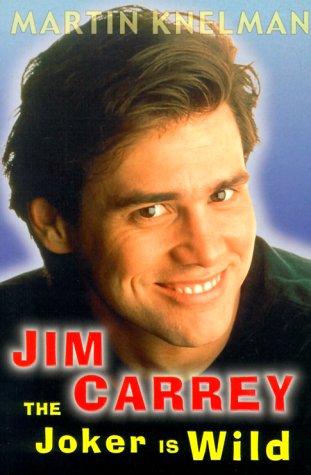
Synopsis
This is the absorbing, touching story of a lonely boy from a troubled family who found the secret of making people laugh - and dreamed of becoming a comedy star.
When Jim Carrey's father (himself a frustrated performer) lost his job, the whole homeless family was enlisted to work as night cleaners at a factory in exchange for lodging in a strange suburb. Scrubbing washrooms by night turned Jim Carrey into a desperate and angry school dropout, and made Jim determined to succeed in a new life.
Jim developed a series of celebrity impressions that led to his comedy club breakthrough when he was 19. But his drive for the big time took him to Los Angeles, where he scuffled in comedy clubs and then landed a role in the hip TV series "In Living Color." That paved the way for a phenomenal movie breakthrough with the surprise hit "Ace Ventura", "Pet Detective." More hits followed: "Mask," "Dumb and Dumber" and "Liar, Liar."
Now, after his dramatic performance in "The Truman Show," Jim Carrey's career is taking an intriguing new direction. His role as the late comedian Andy Kaufman in the forthcoming "Man In The Moon" is already being described as Oscar material this March. Hilarious and poignant, Jim Carrey: The Joker Is Wild tells for the first time the full, astounding inside story of Jim Carrey's bumpy rise to stardom.
"synopsis" may belong to another edition of this title.
About the Author
Martin Knelman is an award-winning cultural journalist, who was an influential film columnist for the "Toronto Star." His most recent book was a biography of John Candy.
Reviews
Despite two unauthorized biographies, the inspired star of Man on the Moon and The Truman Show is still a mystery to his fans. Knelman does a good job of recounting the circumstances of Carrey's rise to fameDfrom the times when money was so scarce that his family was forced to live in a camper to his $20-million-dollar salary for the upcoming Grinch Who Stole Christmas. The star's life is played out here, with parents, agents, producers, and friends making appearances. Unfortunately, Carrey's own voice is missing. Like Roy Trakin's Jim Carrey: Unmasked (St. Martin's, 1995), this biography doesn't give a real sense of what the star is likeDwhich, given Carrey's private nature, may always be so. Nevertheless, fans of the comic actor will want to read Knelman's in-depth account as the best snapshot available of this enigmatic genius. Recommended for all popular and film collections.DKelli Perkins, Herrick D.L, Holland, MI
Copyright 2000 Reed Business Information, Inc.
Excerpt. © Reprinted by permission. All rights reserved.
Chapter Twelve
Between Projects
Within the small circle of comedians who hung out together at the Comedy Store and often stayed up most of the night after the club closed, none had a greater influence on Jim Carrey than the dark and daring Sam Kinison. A former Pentecostal preacher, Kinison had begun his career touring churches all over the United States with his brothers -- only to discover that his real pulpit was in the comedy clubs that had begun springing up by the late 1970s. Kinison had already become a fixture on the L.A. comedy scene by the time Carrey arrived in 1983. His rants about sex, religion and politics had made him a legend among comedy-world insiders, even though he was considered so far from the mainstream that Mitzi Shore would always schedule Sam to appear last, after midnight, when the kind of customers who would be horrified had already gone home, leaving only a smattering of hard-core adventurers seeking something wild.
Sam's fans adored his trademark style of delivery. A rather bulky, rumpled-looking fellow, he would begin talking slowly and quietly, wearing an oversize overcoat and a beret, possibly dropping a few quotes from the Bible while warming up. All the while he would pace the stage menacingly, like a caged lion making a final attempt to control his temper. Then his raspy voice would build to a screaming crescendo, as his rage finally exploded. As often as not, the target would be women who were doing him wrong or driving him crazy. His best-known rant was known as "the bitch from hell." Some people found Kinison frightening and deeply unpleasant, but there was also a streak of genuine brilliance. Beyond the politically incorrect cracks and the torrents of abuse, his fans glimpsed something more: a breathtaking honesty about his own failings, appetites and hypocrisies; a refusal to charm the audience; and a readiness to send up his own anger as a kind of campy excess.
Eight years older than Carrey, Kinison became a kind of mentor to the kid from Canada, even though Carrey's sweet showbiz impressions were light years from Kinison's corrosive social satire. That was something Sam would kid Jim about. Unlike Andrew Dice Clay -- who became prominent around the same time, and truly was vicious -- Sam could be completely charming. He had charisma, and he could win people over. In the early years of their friendship, Carrey worshipped Kinison without making any moves to be a follower of the gospel according to Sam, either in his personal life or in his act. Offstage, Sam could be thoughtful and charitable, but he was also reckless and self-destructive. Hard drinking, drugs and partying-till-you-drop were all part of his scene.
It was when Jim returned to the Comedy Store after Duck Factory, Once Bitten and Peggy Sue Got Married that the influence of Sam Kinison began to show up in his performances. Among those who had a close-up view of that transition was Kelly Moran, a former telephone company technician from Texas. Moran was already dabbling in comedy and would later become a full-time comedian, but his job at the Comedy Store from mid- 1985 to late i1987 did not involve being funny. Four nights a week he played the piano -- while getting an education by watching an array of comics perform.
While making music at the Comedy Store, Moran picked up a realistic overview of the comedy world. There was a lot of talk about the legendary stars who had once been unknowns working the room -- Robin Williams, Richard Pryor and Eddie Murphy, among others. But L.A. was a town of ten-minute appearances, and for every star of the future discovered by Mitzi there were scores destined for careers of relative obscurity - comics who would never get that big break in film or TV, never cross over to that next level of success. Instead they would go on, year after year, spending half their time on the road playing towns less glamorous than L.A. and New York, getting paid badly while becoming less hopeful as the years went by, and less capable of connecting with increasingly young audiences. Some of them would give up and drift away from the comedy business altogether; some would destroy themselves with drugs and booze; and a few lucky ones would segue into lucrative gigs on the corporate circuit, or a long-term development deal writing for film or TV that would allow them a measure of comfort and security that still fell short of fame or stardom.
When Moran first knew Jim Carrey, he would often see him at the club in the company of Melissa Womer, an aspiring actress from Pennsylvania who had taken a job as a waitress there. This wasn't her only job; she also worked as a masseuse at a health club. In the comedy world, it's standard practice for comedians to date waitresses working at the club, so no one was surprised about Jim and Melissa -- although people were aware that Jim's ex-girlfriend was a famous rock star, while his new girlfriend was somewhat less glamorous. Kelly once made the mistake of asking Jim about Linda Ronstadt, because he was married to a singer who was a big Ronstadt fan. Jim was very guarded and made it clear that he didn't want to talk about her.
"I'd heard a lot about Jim," Moran says. "Then after I met him I was a witness to a turning point in his career, when he was abandoning his impressionist act. He was going through a very dark period."
In fact, Carrey was having a nervous breakdown. Having sent Percy and Kay [his parents] back to Canada, Jim was still trying to come to terms with the conflicting feelings he had about his parents. He had never stopped trying to please them, and often talked about them with affection. But he also saw them as the cause of a deep malaise within himself that no amount of manic comedy could expunge. This conflict found expression in disturbing paintings with a touch of Dali-like surrealism. Jim's paintings depicted everything from stuffed animals to Percy looking at his watch while holding a gun in his hand.
When Jim's sister Rita came to Los Angeles for a visit, she took a look at the paintings and asked Jim: "Are you okay?"
To which he retorted: "Yeah, I'm okay. I have an outlet. What do you do?
"Years later, Carrey explained how he was influenced by Kinison's no-holds-barred style. "Sam made me sit back and say, 'Here's a guy who is really doing something different and challenging the audience.' Night after night I saw him chase people out of the Comedy Store. And I thought, if you're willing to take a risk like that, then you're going to do something different with your art."
Inspired by Sam, Jim decided to try playing without a net. At this point, he had no money, he had no job, and he had no act. But he had become aware of the stigma of being an impressionist. You were considered a kind of parasite, living vicariously on the personalities of the celebrities you portrayed. Carrey wanted to be an original the way Sam was an original. The difference between his old act and his new act was the anger he was now expressing. As he later observed, "When I went back to stand-up it was with what nobody wanted me to do, which was ideas."
According to Moran, the transition didn't happen all at once. "Jim would bomb 70 percent of the time. He would get up with no script and free-associate; he would call it 'being in the moment.' And most nights the audience wasn't buying it. On a slow night, he wouldn't care if the audience wasn't going along with him. But on some nights, I would see him revert to his impressionist act, just to avoid a complete disaster. Let's say it's a Friday night and there are a couple of hundred people in the room. You don't want to empty the room; it's not a good thing to do. And if he could see his material wasn't going over, then just to hold the crowd and save his ego, he would slip in his impressions."
But Moran also observed some amazing performances that the public didn't get a chance
"About this title" may belong to another edition of this title.
Search results for Jim Carrey: The Joker is Wild: The Trials and Triumphs...

Stock Image
Jim Carrey: The Joker is Wild: The Trials and Triumphs of Jim Carrey
Seller: Orion Tech, Kingwood, TX, U.S.A.
Seller rating 5 out of 5 stars

paperback. Condition: Fair. Seller Inventory # 1552095355-4-33750204
Stock Image
Jim Carrey: The Joker is Wild: The Trials and Triumphs of Jim Carrey
Seller: More Than Words, Waltham, MA, U.S.A.
Seller rating 5 out of 5 stars
Condition: Good. . . All orders guaranteed and ship within 24 hours. Before placing your order for please contact us for confirmation on the book's binding. Check out our other listings to add to your order for discounted shipping. Seller Inventory # WAL-N-2h-002747
Stock Image
Jim Carrey: The Joker is Wild: The Trials and Triumphs of Jim Carrey
Seller: Half Price Books Inc., Dallas, TX, U.S.A.
Seller rating 5 out of 5 stars
Paperback. Condition: Very Good. Connecting readers with great books since 1972! Used books may not include companion materials, and may have some shelf wear or limited writing. We ship orders daily and Customer Service is our top priority! Seller Inventory # S_470332930
Stock Image
Jim Carrey: The Joker is Wild: The Trials and Triumphs of Jim Carrey
Seller: ThriftBooks-Dallas, Dallas, TX, U.S.A.
Seller rating 5 out of 5 stars
Paperback. Condition: Fair. No Jacket. Readable copy. Pages may have considerable notes/highlighting. ~ ThriftBooks: Read More, Spend Less. Seller Inventory # G1552095355I5N00
Stock Image
Jim Carrey: The Joker is Wild: The Trials and Triumphs of Jim Carrey
Seller: ThriftBooks-Atlanta, AUSTELL, GA, U.S.A.
Seller rating 5 out of 5 stars
Paperback. Condition: Fair. No Jacket. Readable copy. Pages may have considerable notes/highlighting. ~ ThriftBooks: Read More, Spend Less. Seller Inventory # G1552095355I5N00
Stock Image
Jim Carrey: The Joker is Wild: The Trials and Triumphs of Jim Carrey
Seller: ThriftBooks-Atlanta, AUSTELL, GA, U.S.A.
Seller rating 5 out of 5 stars
Paperback. Condition: Good. No Jacket. Pages can have notes/highlighting. Spine may show signs of wear. ~ ThriftBooks: Read More, Spend Less. Seller Inventory # G1552095355I3N00
Stock Image
Jim Carrey: The Joker is Wild: The Trials and Triumphs of Jim Carrey
Seller: ThriftBooks-Dallas, Dallas, TX, U.S.A.
Seller rating 5 out of 5 stars
Paperback. Condition: Good. No Jacket. Pages can have notes/highlighting. Spine may show signs of wear. ~ ThriftBooks: Read More, Spend Less. Seller Inventory # G1552095355I3N00
Stock Image
Jim Carrey : The Trials and Triumphs of Jim Carrey
Seller: Better World Books, Mishawaka, IN, U.S.A.
Seller rating 5 out of 5 stars
Condition: Fine. Used book that is in almost brand-new condition. May contain a remainder mark. Better World Books: Buy Books. Do Good. Seller Inventory # 13853815-6
Stock Image
Jim Carrey: The Joker Is Wild
Seller: Reuseabook, Gloucester, GLOS, United Kingdom
Seller rating 5 out of 5 stars
paperback. Condition: Used; Good. Dispatched, from the UK, within 48 hours of ordering. This book is in good condition but will show signs of previous ownership. Please expect some creasing to the spine and/or minor damage to the cover. Seller Inventory # CHL10865402
Buy Used
US$ 23.92
US$ 9.28 shipping
Ships from United Kingdom to U.S.A.
Ships from United Kingdom to U.S.A.
Quantity: 1 available
Stock Image
Jim Carrey: The Joker is Wild: The Trials and Triumphs of Jim Carrey
Seller: YESIBOOKSTORE, MIAMI, FL, U.S.A.
Seller rating 4 out of 5 stars

paperback. Condition: As New. Seller Inventory # 1552095355-VB