
Items related to What to Do When Your Brain Gets Stuck: A Kid's...
What to Do When Your Brain Gets Stuck: A Kid's Guide to Overcoming OCD - Softcover
Book 4 of 27: What-to-Do Guides for Kids Series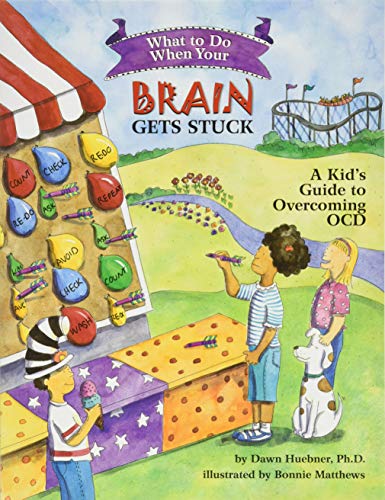
Synopsis
Can kids learn to outsmart OCD? Yes―and this workbook shows them how!
Recipient of the Gold NAPPA Award (National Parenting Publications Awards) and Moonbeam Silver Children’s Book Award for Activity Books
Sometimes the brain gets stuck―repeating thoughts or rituals that feel impossible to stop. For kids with OCD, these patterns can take over daily life. But with the right tools, they can learn to break free and feel in charge again.
What to Do When Your Brain Gets Stuck is an empowering guide that helps kids understand obsessive-compulsive disorder and discover practical ways to manage it. Through engaging stories, fun activities, and step-by-step strategies, this interactive workbook teaches kids how to challenge OCD’s tricks and build confidence in their ability to cope.
Whether your child struggles with repetitive thoughts, compulsive behaviors, or both, this book offers a clear, compassionate path toward feeling stronger, calmer, and more in control.
Key Features:
- Perfect for kids ages 6–12 who experience obsessive thoughts or compulsive behaviors
- Uses proven cognitive-behavioral techniques to help kids break free from OCD patterns
- Includes hands-on exercises and creative activities to make learning engaging and effective
- Features a supportive introduction for parents and caregivers to guide kids through the process
- Part of the trusted What-to-Do Guides for Kids series―used by parents, educators, and therapists for more than 20 years
- Created by Magination Press, the children’s imprint of the American Psychological Association―leaders in children’s mental health and well-being
"synopsis" may belong to another edition of this title.
About the Author
Dawn Huebner, PhD, is a psychologist, parent coach, and the author of numerous self-help books for children. Her books have been translated into twenty-three languages, touching the lives of millions of children around the world.
From the Back Cover
Did you know that people have brain sorters that keep their brains from getting cluttered with unnecessary thoughts? Sometimes these brain sorters get mixed up, though, and brains get clogged with thoughts that really bother kids. If this has happened to you, if it's hard for you to feel safe or sure of yourself because certain thoughts have gotten stuck, this book is for you. What To Do When Your Brain Gets Stuck guides children and their parents through the cognitive-behavioral techniques used to treat Obsessive Compulsive Disorder. Revealing OCD in a whole new light, this interactive self-help book turns kids into super-sleuths who can recognize OCD's tricks. Engaging examples, activities, and step-by-step instructions help children master the skills needed to break free from the sticky thoughts and urges of OCD, and live happier lives. This is the complete resource for educating, motivating, and empowering children to work toward change.
Excerpt. © Reprinted by permission. All rights reserved.
Obsessive-Compulsive Disorder is about more than hand washing. It's about thoughts and urges that get stuck in your child's mind, terrifying him, tormenting her. It's about rituals intended to ward off harm. It's about things feeling "not right" to your child. And it's about questions, endless questions -- questions about safety, questions about certainty, questions that drive you crazy, questions that break your heart.
OCD is a neurobiological problem, and there is nothing you or your child did to cause it. While it appears random and bizarre, it's actually quite common and predictable. OCD is related to certain abnormalities in brain chemistry and function. And although it appears rather tenacious, it is in fact a treatable condition.
Children with OCD benefit most from a type of therapy called cognitive-behavioral therapy. Cognitive-behavioral therapy teaches children new ways to think about and respond to the thoughts and urges that characterize OCD. Children learn, in effect, to retrain their brains to respond more accurately and efficiently - to become unstuck.
"About this title" may belong to another edition of this title.
Search results for What to Do When Your Brain Gets Stuck: A Kid's...

Stock Image
What to Do When Your Brain Gets Stuck: A Kid's Guide to Overcoming OCD
Published by
Magination Press (R) -- American Psychologica, 2017
ISBN 10: 1591478057
ISBN 13: 9781591478058
Used
Paperback
Seller: ThriftBooks-Atlanta, AUSTELL, GA, U.S.A.
Seller rating 5 out of 5 stars

Paperback. Condition: Good. No Jacket. Matthews, Bonnie (illustrator). Pages can have notes/highlighting. Spine may show signs of wear. ~ ThriftBooks: Read More, Spend Less. Seller Inventory # G1591478057I3N00
Stock Image
What to Do When Your Brain Gets Stuck: A Kid's Guide to Overcoming OCD
Published by
Magination Press (R) -- American Psychologica, 2017
ISBN 10: 1591478057
ISBN 13: 9781591478058
Used
Paperback
Seller: ThriftBooks-Dallas, Dallas, TX, U.S.A.
Seller rating 5 out of 5 stars
Paperback. Condition: Good. No Jacket. Matthews, Bonnie (illustrator). Pages can have notes/highlighting. Spine may show signs of wear. ~ ThriftBooks: Read More, Spend Less. Seller Inventory # G1591478057I3N00
Stock Image
What to Do When Your Brain Gets Stuck: A Kid's Guide to Overcoming OCD
Published by
Magination Press (R) -- American Psychologica, 2017
ISBN 10: 1591478057
ISBN 13: 9781591478058
Used
Paperback
Seller: ThriftBooks-Atlanta, AUSTELL, GA, U.S.A.
Seller rating 5 out of 5 stars
Paperback. Condition: Fair. No Jacket. Matthews, Bonnie (illustrator). Readable copy. Pages may have considerable notes/highlighting. ~ ThriftBooks: Read More, Spend Less. Seller Inventory # G1591478057I5N00
Stock Image
What to Do When Your Brain Get
Published by
Magination Press ? American Psychological Association, 2017
ISBN 10: 1591478057
ISBN 13: 9781591478058
Used
Softcover
Seller: World of Books (was SecondSale), Montgomery, IL, U.S.A.
Seller rating 5 out of 5 stars
Condition: Good. Matthews, Bonnie (illustrator). Item in good condition. Textbooks may not include supplemental items i.e. CDs, access codes etc. Seller Inventory # 00108066012
Stock Image
What to Do When Your Brain Gets Stuck: A Kid's Guide to Overcoming OCD
Published by
Magination Press (R) -- American Psychologica, 2017
ISBN 10: 1591478057
ISBN 13: 9781591478058
Used
Paperback
Seller: ThriftBooks-Phoenix, Phoenix, AZ, U.S.A.
Seller rating 5 out of 5 stars
Paperback. Condition: Good. No Jacket. Matthews, Bonnie (illustrator). Pages can have notes/highlighting. Spine may show signs of wear. ~ ThriftBooks: Read More, Spend Less. Seller Inventory # G1591478057I3N00
Stock Image
What to Do When Your Brain Gets Stuck: A Kid's Guide to Overcoming OCD
Published by
Magination Press (R) -- American Psychologica, 2017
ISBN 10: 1591478057
ISBN 13: 9781591478058
Used
Paperback
Seller: ThriftBooks-Reno, Reno, NV, U.S.A.
Seller rating 5 out of 5 stars
Paperback. Condition: Good. No Jacket. Matthews, Bonnie (illustrator). Pages can have notes/highlighting. Spine may show signs of wear. ~ ThriftBooks: Read More, Spend Less. Seller Inventory # G1591478057I3N00
Stock Image
What to Do When Your Brain Gets Stuck: A Kid's Guide to Overcoming OCD
Published by
Magination Press (R) -- American Psychologica, 2017
ISBN 10: 1591478057
ISBN 13: 9781591478058
Used
Paperback
Seller: ThriftBooks-Dallas, Dallas, TX, U.S.A.
Seller rating 5 out of 5 stars
Paperback. Condition: Fair. No Jacket. Matthews, Bonnie (illustrator). Readable copy. Pages may have considerable notes/highlighting. ~ ThriftBooks: Read More, Spend Less. Seller Inventory # G1591478057I5N00
Seller Image
What to Do When Your Brain Gets Stuck: A Kid's Guide to Overcoming OCD
Published by
Magination Press ® ? American Psychological Association, 2017
ISBN 10: 1591478057
ISBN 13: 9781591478058
Used
Softcover
Seller: Greenworld Books, Arlington, TX, U.S.A.
Seller rating 5 out of 5 stars
Condition: very_good. Matthews, Bonnie (illustrator). Fast Free Shipping â" Very Good condition book with a firm cover and clean pages. Shows normal use and some light wear or limited notes markings. A solid, nice copy to enjoy. Seller Inventory # GWV.1591478057.VG
Seller Image
What to Do When Your Brain Gets Stuck: A Kid's Guide to Overcoming OCD
Published by
Magination Press ® ? American Psychological Association, 2017
ISBN 10: 1591478057
ISBN 13: 9781591478058
Used
Softcover
Seller: Dream Books Co., Denver, CO, U.S.A.
Seller rating 5 out of 5 stars
Condition: good. Matthews, Bonnie (illustrator). Gently used with minimal wear on the corners and cover. A few pages may contain light highlighting or writing, but the text remains fully legible. Dust jacket may be missing, and supplemental materials like CDs or codes may not be included. May be ex-library with library markings. Ships promptly! Seller Inventory # DBV.1591478057.G
Seller Image
What to Do When Your Brain Gets Stuck: A Kid's Guide to Overcoming OCD
Published by
Magination Press ® ? American Psychological Association, 2017
ISBN 10: 1591478057
ISBN 13: 9781591478058
Used
Softcover
Seller: Goodwill Books, Hillsboro, OR, U.S.A.
Seller rating 5 out of 5 stars
Condition: good. Matthews, Bonnie (illustrator). Signs of wear and consistent use. Seller Inventory # 3IIK10005FWS_ns