
Synopsis
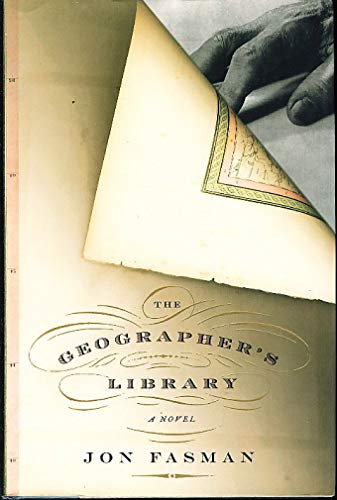
Nine hundred years after a twelfth-century Sicilian cat burglar steals artifacts that possess the secret to eternal life and scatters them throughout the world, a young Connecticut reporter finds evidence that someone is collecting the artifacts again, a story that is complicated by the murder investigation of a local professor. A first novel. 100,000 first printing.
"synopsis" may belong to another edition of this title.
About the Author
Jon Fasman was born in Chicago in 1975 and grew up in Washington, D.C. He was educated at Brown and Oxford universities and has worked as a journalist in Washington, D.C., New York, Oxford, and Moscow. His writing has appeared in The Times Literary Supplement, Slate, Legal Affairs, the Moscow Times, and The Washington Post. He is now a writer and an editor for The Economist's Web site.
Reviews
One of the more interesting trends in contemporary publishing is, for want of a better term, the arcane thriller. These are novels (Carlos Ruiz Zafon's Shadow of the Wind, for instance, or Ian Caldwell and Dustin Thomason's Rule of Four) in which an academic, or someone in an academic's circle, must race against time to uncover a mysterious truth held by secret societies and/or locked away in dense and foreboding tomes, accessible only to improbably dashing specialists. Naturally, many of these books owe their ISBN to the publishing phenomenon of Dan Brown's The Da Vinci Code, but the continued success of thrillers with academic heroes or intellectual cores points to an interesting contradiction. Intellectuals, after all, have never done well as American icons. We prefer our heroes to be people of action, not scholarship or contemplation, and we like our knowledge to have immediate and tangible use. Witness, for example, Hollywood's recent entry into the Dan Brown craze, "National Treasure," which rests on the premise that the value of the Declaration of Independence lies not in its provocative enlightenment philosophy -- now there's a silly notion -- but rather in a secret treasure map encoded within the physical document. The true worth of this seminal American text, in other words, is not the ideas it espouses, but rather the material wealth to which it can lead.
The Geographer's Library, by Jon Fasman, absolutely falls into the category of the arcane thriller, but it is a much more interesting and creative book than many of those making up the marketing wave on which it will no doubt attempt to ride. Yes, the story features obscure books in forgotten tongues, secret brotherhoods, exotic locales and clever puzzles, but Fasman comes across as a novelist genuinely interested in unraveling the convention of the thriller, and he gives his tale a delightfully and successfully postmodern flavor. And rather than presenting obscure knowledge as valuable only because it gets you things, he is far more interested in showing how physical things lead to knowledge.
The book contains two primary narratives -- one conventional, the other far less so. The first revolves around Paul Tomm, a recent college graduate who has landed a job as a reporter at a weekly newspaper in a small and depressingly stagnant New England town. Tomm is clever and charismatic, though largely devoid of ambition until one of the locals, an elderly Estonian immigrant, dies and Tomm is charged with writing the obituary. The dead man turns out to be Jaan Pühapäev, an aloof professor from the same prestigious Connecticut university that Tomm himself attended. With the help of another former professor -- as polished, unhurried and generous with his time as only fictional academics can be -- and the professor's policeman nephew -- as wise-cracking, unhurried and generous with his time as only fictional policemen can be -- Tomm sets out to reveal the genuinely bizarre truth of Pühapäev's identity and the cause of his mysterious death. You know, after all, that when the town coroner announces that there's something strange about the body, but dies before he can tell anyone the specifics, there's something going on. As it happens, there's quite a lot going on, including a menacing Albanian, decayed body parts left hammered to doors and a beautiful woman with a secret, but in Fasman's capable hands these conventions have the kind of narrative power that keeps the story from feeling trite and contrived.
The other aspect of The Geographer's Library is a collection of interlinked tales that spans several centuries, beginning with medieval Iran and ending in more modern times and roaming through various parts of the former Soviet Union. Each of these sections, told with a variety of distinctive voices and tones, fixates on a particular artifact -- a key, a flute, a deck of cards -- with unique properties and sought by determined and ruthless agents. Fasman's method here approaches David Mitchell territory (Cloud Atlas, Ghostwritten), and if he lacks Mitchell's powerful skill in hopping seamlessly from character to character, he does, ultimately, make clear how these different objects and stories come together.
Unlike most arcane thrillers, which are ultimately mundane thrillers gussied up with the occasional info dump, The Geographer's Library makes an effort to get readers off their intellectual duffs by presenting the artifacts in catalog format, separating them from the narrative and demanding that they be seen as elements of a puzzle rather than props in a set piece. The solution to the intellectual game may ultimately rankle with some readers, who might not feel that the rules have sufficiently prepared them for the conclusion, but maybe this discomfort is right too. The Geographer's Library, in other words, is not only a genuine celebration of intellectual effort, it is also jarring in all the right ways.
Reviewed by David Liss
Copyright 2005, The Washington Post Co. All Rights Reserved.
A young reporter is caught up in a deadly centuries-long treasure hunt in this puppyish but brainy debut, a thriller steeped in arcane lore and exotic history. When Paul Tomm, a reporter for the Lincoln Carrier, a small Connecticut newspaper, looks into the demise of Jaan Puhapaev, an elderly academic found dead in his cluttered house, nothing seems out of the ordinary - until the pathologist performing the autopsy is himself killed in a freak car accident. Various locals and acquaintances offer reminiscences of the late professor that suggest Puhapaev was an extremely complicated (and perhaps dangerous) character. Tomm's discoveries lead him to a lovely young woman, a network of international smugglers and hidden alchemical libraries. Appealing more to the intellect than to the emotions, the book is slowed by the catalogue-like descriptions of precious objects that close many chapters, while the protagonist, however likable, is often too naïve to be entirely credible. Still, some deft plotting and lively writing bode well for the author's future literary endeavors.
Copyright © Reed Business Information, a division of Reed Elsevier Inc. All rights reserved.
Fasman's début novel features one Paul Tomm, a reporter who, while poking around a quiet New England village on the obituary beat, stumbles upon clues to the demise of a local professor. He receives anonymous warnings to back off—most notably, a bloody molar pinned to his front door—but refuses to abandon his scoop. Alternating with the murder-mystery story line are cryptic chapters detailing the powers of the fifteen talismans of alchemy said to have been stolen, in 1154, from the Muslim cartographer, librarian, and mystic al-Idrisi. The gradual convergence of the two narratives is satisfying, but when, at the climax, Tomm beans an intruder with a baseball, bathos threatens. The novel is inventive and spirited but, like its protagonist, prematurely ambitious.
Copyright © 2005 The New Yorker
First novels often suffer from "TMI"--too much information. The going-on-and-on syndrome probably results from a beginning novelist's overcare about adequate development of plot and character. In Fasman's debut novel, the TMI is not a real detriment to the narrative flow. As if simultaneously spinning several plates on rods, this new novelist bravely keeps more than one story line aloft, each one representing a different level of time. At one end of his time frame stands the tale of a young reporter on a contemporary small-town newspaper investigating the odd death of a rather mysterious college professor, and the opposite end of his time line is occupied by the adventures of a geographer and herbalist at the court of a twelfth-century Sicilian king. In managing these two extremes in time, the author takes a while to knit them together so their connection is understood, but once he does that, the result is a generally admirable historical thriller. Brad Hooper
Copyright © American Library Association. All rights reserved
"About this title" may belong to another edition of this title.
Search results for The Geographer's Library

Stock Image
The Geographer's Library
Seller: World of Books (was SecondSale), Montgomery, IL, U.S.A.
Seller rating 5 out of 5 stars

Condition: Good. Item in good condition. Textbooks may not include supplemental items i.e. CDs, access codes etc. Seller Inventory # 00025660413
Stock Image
The Geographer's Library
Seller: World of Books (was SecondSale), Montgomery, IL, U.S.A.
Seller rating 5 out of 5 stars
Condition: Very Good. Item in good condition. Textbooks may not include supplemental items i.e. CDs, access codes etc. Seller Inventory # 00056414978
Stock Image
The Geographer's Library
Seller: World of Books (was SecondSale), Montgomery, IL, U.S.A.
Seller rating 5 out of 5 stars
Condition: Acceptable. Item in good condition. Textbooks may not include supplemental items i.e. CDs, access codes etc. Seller Inventory # 00057493628
Stock Image
The Geographer's Library
Seller: Once Upon A Time Books, Siloam Springs, AR, U.S.A.
Seller rating 4 out of 5 stars

Hardcover. Condition: Good. This is a used book in good condition and may show some signs of use or wear . This is a used book in good condition and may show some signs of use or wear . Seller Inventory # mon0000616626
Stock Image
The Geographer's Library
Seller: Once Upon A Time Books, Siloam Springs, AR, U.S.A.
Seller rating 4 out of 5 stars
Hardcover. Condition: Acceptable. This is a used book. It may contain highlighting/underlining and/or the book may show heavier signs of wear . It may also be ex-library or without dustjacket. This is a used book. It may contain highlighting/underlining and/or the book may show heavier signs of wear . It may also be ex-library or without dustjacket. Seller Inventory # mon0001118967
Stock Image
The Geographer's Library
Published by
Penguin Publishing Group, 2005
ISBN 10: 1594200386
ISBN 13: 9781594200380
Used
Hardcover
Seller: Better World Books, Mishawaka, IN, U.S.A.
Seller rating 5 out of 5 stars
Condition: Good. First Edition. 1 in number line. Pages intact with minimal writing/highlighting. The binding may be loose and creased. Dust jackets/supplements are not included. Stock photo provided. Product includes identifying sticker. Better World Books: Buy Books. Do Good. Seller Inventory # 15658941-6
Stock Image
The Geographer's Library
Published by
Penguin Press HC, The (edition ), 2005
ISBN 10: 1594200386
ISBN 13: 9781594200380
Used
Hardcover
Seller: BooksRun, Philadelphia, PA, U.S.A.
Seller rating 5 out of 5 stars
Hardcover. Condition: Very Good. It's a well-cared-for item that has seen limited use. The item may show minor signs of wear. All the text is legible, with all pages included. It may have slight markings and/or highlighting. Seller Inventory # 1594200386-11-1
Stock Image
The Geographer's Library
Seller: HPB-Diamond, Dallas, TX, U.S.A.
Seller rating 5 out of 5 stars
Hardcover. Condition: Very Good. Connecting readers with great books since 1972! Used books may not include companion materials, and may have some shelf wear or limited writing. We ship orders daily and Customer Service is our top priority! Seller Inventory # S_424226514
Stock Image
The Geographer's Library
Seller: Half Price Books Inc., Dallas, TX, U.S.A.
Seller rating 5 out of 5 stars
Hardcover. Condition: Very Good. Connecting readers with great books since 1972! Used books may not include companion materials, and may have some shelf wear or limited writing. We ship orders daily and Customer Service is our top priority! Seller Inventory # S_427616074
Stock Image
The Geographer's Library
Seller: HPB-Ruby, Dallas, TX, U.S.A.
Seller rating 5 out of 5 stars
Hardcover. Condition: Very Good. Connecting readers with great books since 1972! Used books may not include companion materials, and may have some shelf wear or limited writing. We ship orders daily and Customer Service is our top priority! Seller Inventory # S_459401470