
Items related to Recipes Every College Student Should Know (Stuff You...
Recipes Every College Student Should Know (Stuff You Should Know) - Hardcover
Book 21 of 33: Stuff You Should Know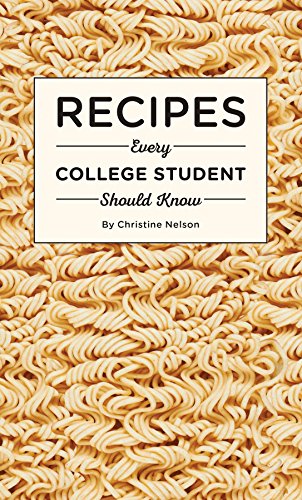
Synopsis
A perfect gift for hungry dorm-dwellers, this must-have pocket guide will help students (and other beginning cooks) make and eat healthy snacks, meals, and other tasty bites.
Discover quick breakfasts to help you make it to class on time, backpack-friendly lunches, dormmate dinners for a crowd, study break snacks, and of course an infallible recipe for microwave mug cake—plus basic tools, terms, nutrition, budgeting guides, and safety tips for novice cooks. No matter if you’ve got a microwave and an electric kettle or a full-sized kitchen, this book will have you well-fed and back to studying (or video games) in no time.
Recipes include meals and snacks such as breakfast burritos, hummus and veggie wraps, healthy avocado and sunflower seed sandwich, bacon: microwaved or panfried, chocolate-covered popcorn, and more.
- Simple recipes for breakfasts, lunches, dinners, snacks, and desserts designed for busy students and beginner cooks
- Learn how to make satisfying food without overspending, with practical guidance on budgeting, groceries, and getting more from basic ingredients
- Cook with limited equipment or access to a full kitchen
- Covers essential tools, cooking terms, nutrition, food safety, and the practical know-how first-time cooks need
- A practical gift for college students, recent high school graduates, first-time renters, and young adults learning to cook on their own
Learn the basics, stretch your budget, and make real meals without living on takeout or instant noodles.
"synopsis" may belong to another edition of this title.
About the Author
Christine Nelson is a writer, cook, and accountant in Clayton, New Jersey. She has four college-age sons who routinely call her for advice at dinnertime.
Excerpt. © Reprinted by permission. All rights reserved.
Introduction
After years of dreaming about going away to college, you're finally ready. But the questions seem endless. What classes should I take? Should I join a fraternity/sorority? How will I get all this homework done? Should I learn how to cook?
Yes, you should! Learning to cook offers:
1. Choice. After years of other people making all the decisions, now it's your turn. You decide what to eat.
2. Control. You've probably heard horror stories about the Freshman 15—the pounds a first-year gains. Cooking your own meals gives you control over portions and ingredients.
3. Knowledge. That's why you're in college! Even if you forget calculus or Spanish the day after graduation, you will always need to eat. Preparing appetizing, healthy, low-cost meals is a skill you will use for years to come.
4. Satisfaction. It's one in the morning, all the stores are closed, and you want a snack. Good thing you can make chocolate-covered popcorn!
This little book will help get you started with step-by-step recipes, recommended tools, and some kitchen-safety basics. There are meal ideas for a group of friends and quick breakfasts to make before class. This information may not help you pass your history midterm, but it will allow you to eat well while studying for it.
The Basics
Cooking doesn't need to be complicated. The simple recipes in this book will give you the nourishing food you need to make it through the school year, this page explain the terms you'll need to know. And following these 10 tips will allow you to at least look like you know what you're doing.
1. Buy fresh ingredients. Read the sell-by dates on dairy, meats, and packaged foods. Look for fruits and vegetables that are not wilted or punctured.
2. Beware of convenience foods. Anything already washed, cut up, bagged, or canned may save time, but they're more expensive than whole foods.
3. Read the recipe through. Many a home cook has been thwarted by an unexpected instruction to "marinate overnight."
4. Don't thaw food on the counter. Ever. (See Safety First!)
5. Follow directions. Don't just throw all the ingredients together. It won't end well.
6. Start clean. Wash your cooking area as well as your hands.
7. Assemble everything before you start. You don't want to be in the middle of arecipe when you realize that your roommatedrank all the milk.
8. Measure first. Peel, chop, measure—whatever it takes to match the ingredients list. Cooking will go more smoothly.
9. Preheat. Set the oven to the correct temperature before you start cooking. It will be ready when you are.
10. Clean as you go. Post-meal dishes are far more overwhelming than mid-cooking dishes.
"About this title" may belong to another edition of this title.
Search results for Recipes Every College Student Should Know (Stuff You...

Stock Image
Recipes Every College Student Should Know
Published by
Andrews McMeel Publishing, 2017
ISBN 10: 159474954X
ISBN 13: 9781594749544
Used
Hardcover
Seller: World of Books (was SecondSale), Montgomery, IL, U.S.A.
Seller rating 5 out of 5 stars

Hardback. Condition: Very Good. College Cooking 101: You have a microwave, a mini-fridge, and a very strict budget. What's the easiest path to a satisfying study break snack? Seller Inventory # 00108219322
Stock Image
Recipes Every College Student Should Know
Published by
Andrews McMeel Publishing, 2017
ISBN 10: 159474954X
ISBN 13: 9781594749544
Used
Hardcover
Seller: World of Books (was SecondSale), Montgomery, IL, U.S.A.
Seller rating 5 out of 5 stars
Hardback. Condition: Fair. College Cooking 101: You have a microwave, a mini-fridge, and a very strict budget. What's the easiest path to a satisfying study break snack? Seller Inventory # 00088450237
Stock Image
Recipes Every College Student Should Know
Published by
Andrews McMeel Publishing, 2017
ISBN 10: 159474954X
ISBN 13: 9781594749544
Used
Hardcover
Seller: World of Books (was SecondSale), Montgomery, IL, U.S.A.
Seller rating 5 out of 5 stars
Hardback. Condition: Good. College Cooking 101: You have a microwave, a mini-fridge, and a very strict budget. What's the easiest path to a satisfying study break snack? Seller Inventory # 00064699036
Stock Image
Recipes Every College Student Should Know (Stuff You Should Know)
Seller: Orion Tech, Kingwood, TX, U.S.A.
Seller rating 5 out of 5 stars
hardcover. Condition: Good. Seller Inventory # 159474954X-3-30620010
Stock Image
Recipes Every College Student Should Know (Stuff You Should Know)
Seller: Gulf Coast Books, Cypress, TX, U.S.A.
Seller rating 5 out of 5 stars
hardcover. Condition: Good. Seller Inventory # 159474954X-3-30248292
Seller Image
Recipes Every College Student Should Know (Stuff You Should Know)
Seller: Zoom Books East, Glendale Heights, IL, U.S.A.
Seller rating 5 out of 5 stars
Condition: very_good. Book is in very good condition and may include minimal underlining highlighting. The book can also include "From the library of" labels. May not contain miscellaneous items toys, dvds, etc. . We offer 100% money back guarantee and 24 7 customer service. Seller Inventory # ZEV.159474954X.VG
Stock Image
Recipes Every College Student Should Know (Stuff You Should Know)
Seller: NW Book Rescue, Hubbard, OR, U.S.A.
Seller rating 2 out of 5 stars

hardcover. Condition: As New. Excellent condition. Pages are crisp and clean with no markings. Any images shown are stock photographs and product may differ from what is shown. Seller Inventory # *-SFRC-20260731-0747-48.5K-2A0713
Seller Image
Recipes Every College Student Should Know (Stuff You Should Know)
Seller: Zoom Books Company, Lynden, WA, U.S.A.
Seller rating 5 out of 5 stars
Condition: very_good. Book is in very good condition and may include minimal underlining highlighting. The book can also include "From the library of" labels. May not contain miscellaneous items toys, dvds, etc. . We offer 100% money back guarantee and 24 7 customer service. Seller Inventory # ZBV.159474954X.VG
Stock Image
Recipes Every College Student Should Know (Stuff You Should Know)
Seller: BooksRun, Philadelphia, PA, U.S.A.
Seller rating 5 out of 5 stars
Hardcover. Condition: Very Good. It's a well-cared-for item that has seen limited use. The item may show minor signs of wear. All the text is legible, with all pages included. It may have slight markings and/or highlighting. Seller Inventory # 159474954X-8-18
Stock Image
Recipes Every College Student Should Know (Stuff You Should Know)
Seller: BooksRun, Philadelphia, PA, U.S.A.
Seller rating 5 out of 5 stars
Hardcover. Condition: Very Good. It's a well-cared-for item that has seen limited use. The item may show minor signs of wear. All the text is legible, with all pages included. It may have slight markings and/or highlighting. Seller Inventory # 159474954X-8-1