
Items related to The Lost Colony, Book One: The Snodgrass Conspiracy
Synopsis
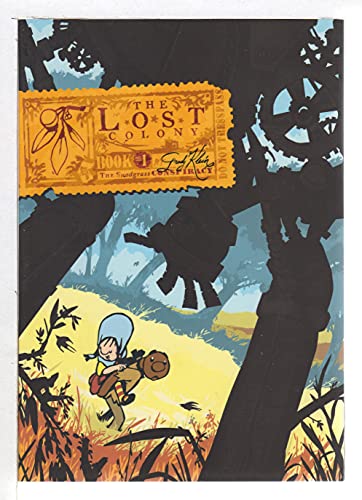
Set in nineteenth-century America, The Lost Colony takes place on a mysterious island unknown to the rest of the world. No one knows it exists except its citizens, a colorful and outrageous band of capitalists, inventors, hucksters, and freemen. They jealously guard the island's fantastic wealth from the prying fingers of the outside world, even as they attempt to conceal its captivating secrets from one another. The Lost Colony is a boiling concoction of slavery, patriotism, religion, and greed--in many ways, the story of America itself.
The first in an addictive new series for readers of all ages, The Lost Colony is a self-contained world filled with endearing and memorable characters, whose hilarious foibles overlay a plot that resonates with America's own historical struggles with issues such as profiteering, racism and slavery. Thoughtfully written, richly illustrated, and always hilarious, The Lost Colony welcomes you into a new world.
The first in an addictive new series for readers of all ages, The Lost Colony is a self-contained world filled with endearing and memorable characters, whose hilarious foibles overlay a plot that resonates with America's own historical struggles with issues such as profiteering, racism and slavery. Thoughtfully written, richly illustrated, and always hilarious, The Lost Colony welcomes you into a new world.
"synopsis" may belong to another edition of this title.
About the Author
Grady Klein is an award-winning freelance illustrator, designer, and animator. His work, which includes the animated short Dust Bunny, has appeared in print and on screen all over the world. The Lost Colony is his first book.
Reviews
Grade 9 Up–Edweard Stoop makes his way onto an island that isnt on any maps and proceeds to paper it with posters for an upcoming slave auction. This act and his very presence precipitate a series of hijinx on the part of the residents. The characters are all given amusing ways of talking, and many have a secret agenda in their interactions, but the main point of the story is to provide or provoke a comic perspective on race and slavery, ending in a resolution that literally comes out of a machine. The exaggerated characters border on offensive, with attitudes that would be easier to classify if the story or artwork, and not the cover flap, informed readers that the action takes place in the 19th century–a claim undercut by relentlessly anachronistic dialogue and situations. The artwork is clever, with marvelous colors and elegantly rendered backgrounds, but the characters have been reduced to an objectified simplicity that makes them difficult to read. Additionally, visual sequences are frequently interrupted by sudden vignettes, either of a flashback or a metaphor rendered literally. These seem to exist in order to inject an additional dose of comedy into the proceedings while breaking up lengthy expository narratives. What they serve to do, however, is jar readers and further fracture the reading experience.–Benjamin Russell, Belmont High School, MA
Copyright © Reed Business Information, a division of Reed Elsevier Inc. All rights reserved.
This somewhat perplexing book is ostensibly the story of an island cut off from the rest of colonial America. The island is populated by a variety of "characters" who are just that—sitcom stereotypes without real motivation. Add to that the strange combination of both faux historical language and modern terms like "dude" and problematic artwork, and you have a book that doesn't quite hit its stride. At its center, this book is trying to tell a story about America in transition, about slavery and technology and capitalism. An old inventor comes up with a machine that will replace slaves, while another man, Snodgrass, attempts to manipulate the local currency. But the reasons for these characters' actions remain vague. The thick black outlines in Klein's artwork are filled in with a vast amount of digital effects, which distract and confuse rather than describe and elucidate. His storytelling is similarly busy, with each page filled with odd-sized panels without apparent rhyme or reason. The Lost Colony stakes out ambitious and worthwhile territory, but it needs to find a focus. (May)
Copyright © Reed Business Information, a division of Reed Elsevier Inc. All rights reserved.
Gr. 10-12. Historical and contemporary American racial, economic, and social issues lie at the heart of this witty, sophisticated, candy-colored adventure, set in a utopian island community. Bertha (Birdy) Snodgrass, preadolescent daughter of the town banker, throws in her lot with a shady Chinese Mexican wizard, his golemlike assistant, and, finally, with Louis the slave. Readers with a grasp of pre-Jamestown history will have the easiest time understanding the riffs on Puritanism and the various American hypocrisies woven into this story. Racial and cultural slurs are buried beneath the surface of character interactions, and no ethnic group is spared. That, of course, is the point: to see oneself as a possible victim of prejudice, or, like Birdy, work toward changing things and make friends with people who are different. Teens (especially those enrolled in advanced-placement American history classes) as well as many adults will find a lot to enjoy and think about in this brash, fantastic tale--and they will look forward to other volumes in the planned series. Francisca Goldsmith
Copyright © American Library Association. All rights reserved
"About this title" may belong to another edition of this title.
Search results for The Lost Colony, Book One: The Snodgrass Conspiracy

Stock Image
The Lost Colony: Snodgrass Conspiracy
Seller: World of Books (was SecondSale), Montgomery, IL, U.S.A.
Seller rating 5 out of 5 stars

Paperback. Condition: Good. Features a self-contained world filled with memorable characters, whose hilarious foibles overlay a plot that resonates with America's own historical struggles with issues such as profiteering, racism and slavery. Seller Inventory # 00101046139
Stock Image
The Lost Colony: Snodgrass Conspiracy
Seller: World of Books (was SecondSale), Montgomery, IL, U.S.A.
Seller rating 5 out of 5 stars
Paperback. Condition: Very Good. Features a self-contained world filled with memorable characters, whose hilarious foibles overlay a plot that resonates with America's own historical struggles with issues such as profiteering, racism and slavery. Seller Inventory # 00101836441
Stock Image
The Lost Colony, Book One: The Snodgrass Conspiracy (Bk. 1)
Seller: More Than Words, Waltham, MA, U.S.A.
Seller rating 5 out of 5 stars
Condition: Very Good. A bright, square, and overall a nice copy. Seller Inventory # BOS-P-13b-01463
Stock Image
The Lost Colony
Seller: Better World Books, Mishawaka, IN, U.S.A.
Seller rating 5 out of 5 stars
Condition: Good. Pages intact with minimal writing/highlighting. The binding may be loose and creased. Dust jackets/supplements are not included. Stock photo provided. Product includes identifying sticker. Better World Books: Buy Books. Do Good. Seller Inventory # 3782539-6
Stock Image
The Lost Colony
Seller: Better World Books, Mishawaka, IN, U.S.A.
Seller rating 5 out of 5 stars
Condition: Good. Former library copy. Pages intact with minimal writing/highlighting. The binding may be loose and creased. Dust jackets/supplements are not included. Includes library markings. Stock photo provided. Product includes identifying sticker. Better World Books: Buy Books. Do Good. Seller Inventory # 42626998-6
Stock Image
The Lost Colony: Snodgrass Conspiracy
Seller: World of Books Inc, Montgomery, IL, U.S.A.
Seller rating 4 out of 5 stars

Paperback. Condition: Good. Features a self-contained world filled with memorable characters, whose hilarious foibles overlay a plot that resonates with America's own historical struggles with issues such as profiteering, racism and slavery. Seller Inventory # CIN1596430974G
Stock Image
The Lost Colony: Snodgrass Conspiracy
Seller: World of Books Inc, Montgomery, IL, U.S.A.
Seller rating 4 out of 5 stars
Paperback. Condition: Very Good. Features a self-contained world filled with memorable characters, whose hilarious foibles overlay a plot that resonates with America's own historical struggles with issues such as profiteering, racism and slavery. Seller Inventory # CIN1596430974VG
Stock Image
The Lost Colony, Book One: The Snodgrass Conspiracy
Seller: ThriftBooks-Atlanta, AUSTELL, GA, U.S.A.
Seller rating 5 out of 5 stars
Paperback. Condition: Good. No Jacket. Former library book; Pages can have notes/highlighting. Spine may show signs of wear. ~ ThriftBooks: Read More, Spend Less. Seller Inventory # G1596430974I3N10
Seller Image
The Lost Colony, Book One: The Snodgrass Conspiracy
Seller: Goodbooks Company, Springdale, AR, U.S.A.
Seller rating 5 out of 5 stars
Condition: good. Has a sturdy binding with some shelf wear. May have some markings or highlighting. Used copies may not include access codes or Cd's. Slight bending may be present. Seller Inventory # GBV.1596430974.G
Stock Image
The Lost Colony, Book One: The Snodgrass Conspiracy
Seller: Duru Media, Tallahassee, FL, U.S.A.
Seller rating 5 out of 5 stars
paperback. Condition: New. Seller Inventory # 01KRHHY3G6CAY1A