
Synopsis
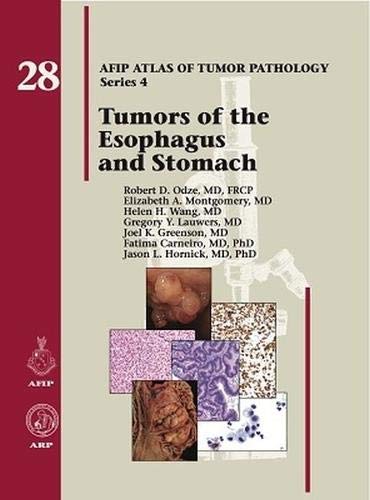
Since the publication of the previous edition of Tumors of the Esophagus and Stomach, great advances in many areas of tumor biology have led to a better understanding of the pathogenesis, pathology, and molecular biology of epithelial and stromal malignancies of the upper gastrointestinal tract. Many of these advances have led to specific improvements in diagnosis, prognosis, treatment, and thus, survival in patients affected by these tumors. This edition of the Fascicle was written to highlight these advances, and more specifically, to help pathologists diagnose diseases more accurately and understand how pathology contributes to clinical treatment in the new age of personalized and targeted therapy. Notable advances described in this publication include: 1) expansion of our understanding of the pathologic features and molecular pathogenesis of carcinomas of the esophagus and stomach, most of which develop through a chronic inflammation-metaplasia-dysplasia-carcinoma sequence. Important refinements in the classification of neoplastic precursor lesions have been made since the last AFIP series, including the morphologic and endoscopic subtypes, and this has led to improvements in surgical treatment with a strong trend toward minimization in the form of endoscopic mucosal and submucosal dissections 2) discovery of new diseases, such as gastric adenocarcinoma and proximal polyposis syndrome (GAPPS), a special variant of familial adenomatous polyposis, and significant advances in our knowledge regarding the molecular characterization of genetic polyposis syndromes 3) great expansion in the molecular-pathology correlation, morphologic diversity, classification, and therapeutic options of gastrointestinal stromal tumors (GISTs) 4) reclassification and refinement of prognostic factors related to neuroendocrine tumors 5) improvements in the role of cytology in the diagnosis of tumors of the upper gastrointestinal tract. This book has been written with the pathologist in mind first by using tables that illustrate salient pathologic, molecular, and differential diagnostic features of key entities that are often difficult to distinguish from each other. Specific color photographs of classic tumors and morphologic variants often difficult to recognize are used throughout.
"synopsis" may belong to another edition of this title.
Search results for Tumors of the Esophagus and Stomach (AFIP Atlas of...

Stock Image
Tumors of the Esophagus and Stomach (AFIP Atlas of Tumor Pathology, Series 4,)
Published by
American Registry of Pathology, 2019
ISBN 10: 1933477407
ISBN 13: 9781933477404
Used
Hardcover
Seller: Salish Sea Books, Bellingham, WA, U.S.A.
Seller rating 5 out of 5 stars

Condition: Like New. Near Fine/Like New; Hardcover; This book is brand new and still sealed in the publisher's original shrinkwrap; Corners are slightly "bumped" through the plastic; This book will be shipped in a sturdy cardboard box with foam padding; Large Format (Quatro, 10.75" - 11.75" tall); 3.4 lbs; Tan and red covers with medical illustrations, and title in black lettering; 2019, American Registry of Pathology; 416 pages; "Tumors of the Esophagus and Stomach (AFIP Atlas of Tumor Pathology, Series 4,)," by Robert D. Odze, et al. Seller Inventory # SKU-8959AI07903176
Stock Image
Tumors of the Esophagus and Stomach (AFIP Atlas of Tumor Pathology, Series 4,)
Published by
American Registry of Pathology, 2019
ISBN 10: 1933477407
ISBN 13: 9781933477404
Used
Hardcover
Seller: ThriftBooks-Atlanta, AUSTELL, GA, U.S.A.
Seller rating 5 out of 5 stars
Hardcover. Condition: Very Good. No Jacket. May have limited writing in cover pages. Pages are unmarked. ~ ThriftBooks: Read More, Spend Less. Seller Inventory # G1933477407I4N00
Stock Image
Tumors of the Esophagus and Stomach (eng)
Published by
American Registry of Pathology, 2019
ISBN 10: 1933477407
ISBN 13: 9781933477404
New
Hardcover
Seller: Brook Bookstore On Demand, Napoli, NA, Italy
Seller rating 3 out of 5 stars

Condition: new. Seller Inventory # 848e48e4fb06d05630aec8e335d775ad
Buy New
US$ 193.66
US$ 15.71 shipping
Ships from Italy to U.S.A.
Ships from Italy to U.S.A.
Quantity: 10 available
Stock Image
Tumors of the Esophagus and Stomach
Published by
American Registry of Pathology, 2019
ISBN 10: 1933477407
ISBN 13: 9781933477404
New
Hardcover
Seller: Kennys Bookshop and Art Galleries Ltd., Galway, GY, Ireland
Seller rating 5 out of 5 stars
Condition: New. 2019. Hardcover. . . . . . Seller Inventory # V9781933477404
Buy New
US$ 218.91
US$ 12.22 shipping
Ships from Ireland to U.S.A.
Ships from Ireland to U.S.A.
Quantity: 1 available
Seller Image
Tumors of the Esophagus and Stomach
Published by
American Registry of Pathology, US, 2019
ISBN 10: 1933477407
ISBN 13: 9781933477404
New
Hardcover
Seller: Rarewaves.com USA, London, LONDO, United Kingdom
Seller rating 5 out of 5 stars
Hardback. Condition: New. Since the publication of the previous edition of Tumors of the Esophagus and Stomach, great advances in many areas of tumor biology have led to a better understanding of the pathogenesis, pathology, and molecular biology of epithelial and stromal malignancies of the upper gastrointestinal tract. Many of these advances have led to specific improvements in diagnosis, prognosis, treatment, and thus, survival in patients affected by these tumors. This edition of the Fascicle was written to highlight these advances, and more specifically, to help pathologists diagnose diseases more accurately and understand how pathology contributes to clinical treatment in the new age of personalized and targeted therapy.Notable advances described in this publication include:1) expansion of our understanding of the pathologic features and molecular pathogenesis of carcinomas of the esophagus and stomach, most of which develop through a chronic inflammation-metaplasia-dysplasia-carcinoma sequence. Important refinements in the classification of neoplastic precursor lesions have been made since the last AFIP series, including the morphologic and endoscopic subtypes, and this has led to improvements in surgical treatment with a strong trend toward minimization in the form of endoscopic mucosal and submucosal dissections2) discovery of new diseases, such as gastric adenocarcinoma and proximal polyposis syndrome (GAPPS), a special variant of familial adenomatous polyposis, and significant advances in our knowledge regarding the molecular characterization of genetic polyposis syndromes3) great expansion in the molecular-pathology correlation, morphologic diversity, classification, and therapeutic options of gastrointestinal stromal tumors (GISTs)4) reclassification and refinement of prognostic factors related to neuroendocrine tumors5) improvements in the role of cytology in the diagnosis of tumors of the upper gastrointestinal tract.This book has been written with the pathologist in mind first by using tables that illustrate salient pathologic, molecular, and differential diagnostic features of key entities that are often difficult to distinguish from each other. Specific color photographs of classic tumors and morphologic variants often difficult to recognize are used throughout. Seller Inventory # LU-9781933477404
Buy New
US$ 254.67
Free Shipping
Ships from United Kingdom to U.S.A.
Ships from United Kingdom to U.S.A.
Quantity: 5 available
Stock Image
Tumors of the Esophagus and Stomach (Hardcover)
Published by
American Registry of Pathology, Washington, 2019
ISBN 10: 1933477407
ISBN 13: 9781933477404
New
Hardcover
Seller: Grand Eagle Retail, Bensenville, IL, U.S.A.
Seller rating 5 out of 5 stars
Hardcover. Condition: new. Hardcover. Since the publication of the previous edition of Tumors of the Esophagus and Stomach, great advances in many areas of tumor biology have led to a better understanding of the pathogenesis, pathology, and molecular biology of epithelial and stromal malignancies of the upper gastrointestinal tract. Many of these advances have led to specific improvements in diagnosis, prognosis, treatment, and thus, survival in patients affected by these tumors. This edition of the Fascicle was written to highlight these advances, and more specifically, to help pathologists diagnose diseases more accurately and understand how pathology contributes to clinical treatment in the new age of personalized and targeted therapy.Notable advances described in this publication include:1) expansion of our understanding of the pathologic features and molecular pathogenesis of carcinomas of the esophagus and stomach, most of which develop through a chronic inflammation-metaplasia-dysplasia-carcinoma sequence. Important refinements in the classification of neoplastic precursor lesions have been made since the last AFIP series, including the morphologic and endoscopic subtypes, and this has led to improvements in surgical treatment with a strong trend toward minimization in the form of endoscopic mucosal and submucosal dissections2) discovery of new diseases, such as gastric adenocarcinoma and proximal polyposis syndrome (GAPPS), a special variant of familial adenomatous polyposis, and significant advances in our knowledge regarding the molecular characterization of genetic polyposis syndromes3) great expansion in the molecular-pathology correlation, morphologic diversity, classification, and therapeutic options of gastrointestinal stromal tumors (GISTs)4) reclassification and refinement of prognostic factors related to neuroendocrine tumors5) improvements in the role of cytology in the diagnosis of tumors of the upper gastrointestinal tract.This book has been written with the pathologist in mind first by using tables that illustrate salient pathologic, molecular, and differential diagnostic features of key entities that are often difficult to distinguish from each other. Specific color photographs of classic tumors and morphologic variants often difficult to recognize are used throughout. Advances in many areas of tumor biology have led to a better understanding of the pathogenesis, pathology, and molecular biology of epithelial and stromal malignancies of the upper gastrointestinal tract. This edition highlights these advances, and helps pathologists diagnose diseases more accurately. Shipping may be from multiple locations in the US or from the UK, depending on stock availability. Seller Inventory # 9781933477404
Stock Image
Tumors Of The Esophagus And Stomach
Published by
American Registry Of Pathology, 2019
ISBN 10: 1933477407
ISBN 13: 9781933477404
New
Hardcover
Seller: Revaluation Books, Exeter, United Kingdom
Seller rating 5 out of 5 stars
Hardcover. Condition: Brand New. 416 pages. 11.14x8.62x0.98 inches. In Stock. Seller Inventory # __1933477407
Buy New
US$ 240.68
US$ 20.18 shipping
Ships from United Kingdom to U.S.A.
Ships from United Kingdom to U.S.A.
Quantity: 2 available
Stock Image
Tumors of the Esophagus and Stomach
Published by
MP-ARP Am Reg of Pathology, 2019
ISBN 10: 1933477407
ISBN 13: 9781933477404
New
Hardcover
Seller: PBShop.store UK, Fairford, GLOS, United Kingdom
Seller rating 4 out of 5 stars

HRD. Condition: New. New Book. Shipped from UK. Established seller since 2000. Seller Inventory # FW-9781933477404
Buy New
US$ 249.64
US$ 11.42 shipping
Ships from United Kingdom to U.S.A.
Ships from United Kingdom to U.S.A.
Quantity: 11 available
Stock Image
Tumors of the Esophagus and Stomach
Published by
American Registry of Pathology, 2019
ISBN 10: 1933477407
ISBN 13: 9781933477404
New
Hardcover
Seller: Kennys Bookstore, Olney, MD, U.S.A.
Seller rating 5 out of 5 stars
Condition: New. 2019. Hardcover. . . . . . Books ship from the US and Ireland. Seller Inventory # V9781933477404
Stock Image
Tumors of the Esophagus and Stomach
Published by
American Registry of Pathology, 2019
ISBN 10: 1933477407
ISBN 13: 9781933477404
New
Hardcover
Seller: Majestic Books, Hounslow, United Kingdom
Seller rating 4 out of 5 stars
Condition: New. Seller Inventory # 370877250
Buy New
US$ 270.34
US$ 8.75 shipping
Ships from United Kingdom to U.S.A.
Ships from United Kingdom to U.S.A.
Quantity: 3 available