About this Item
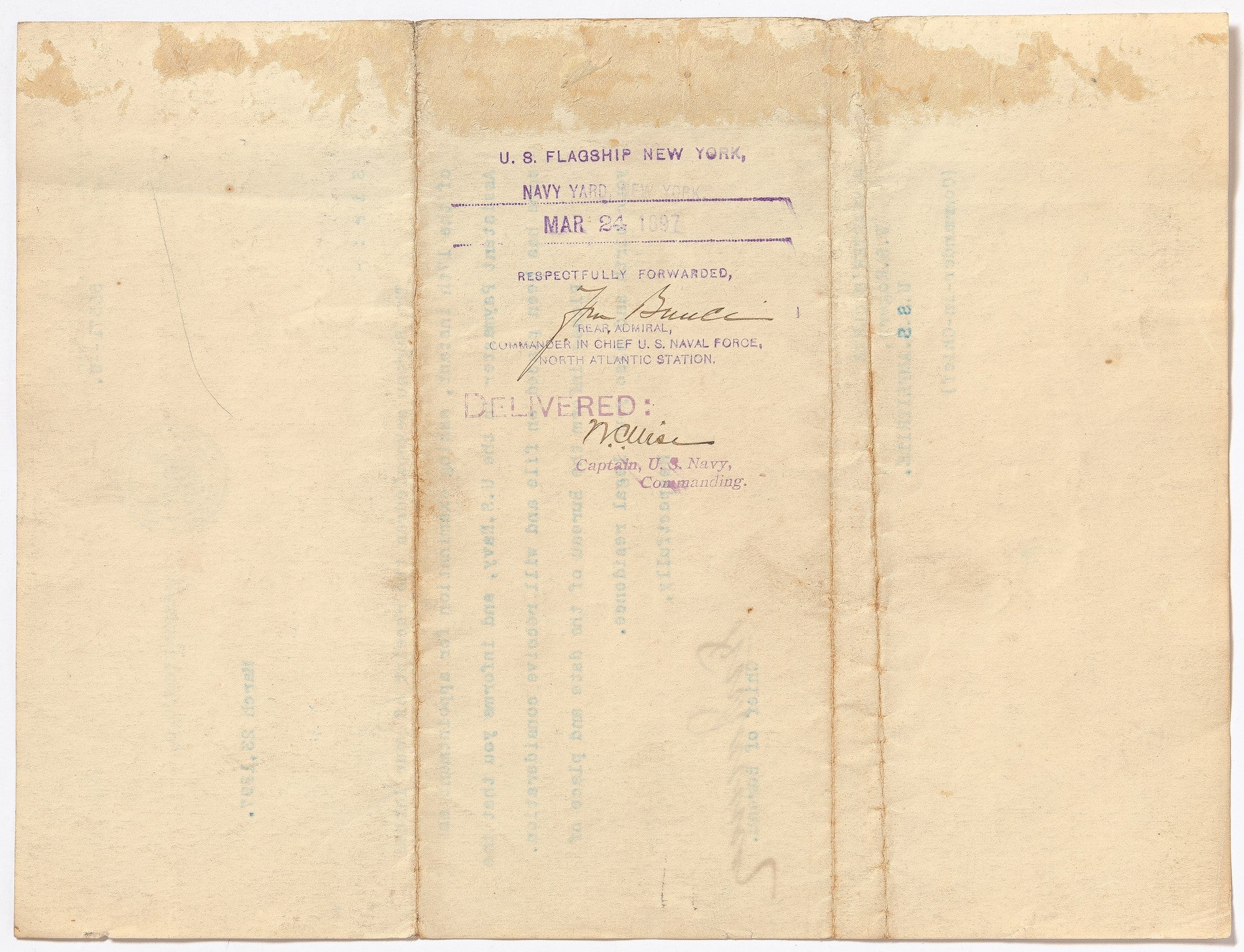
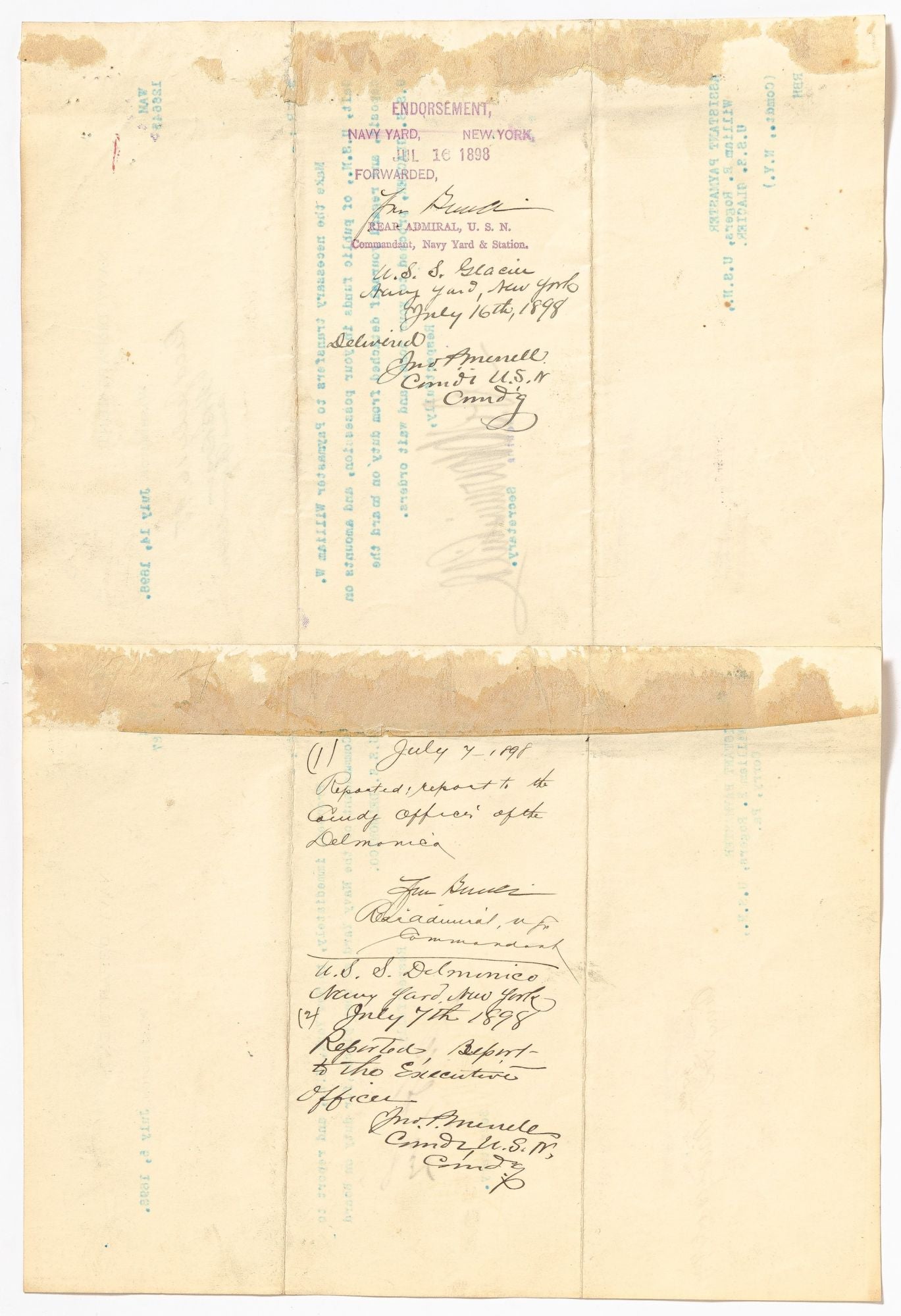
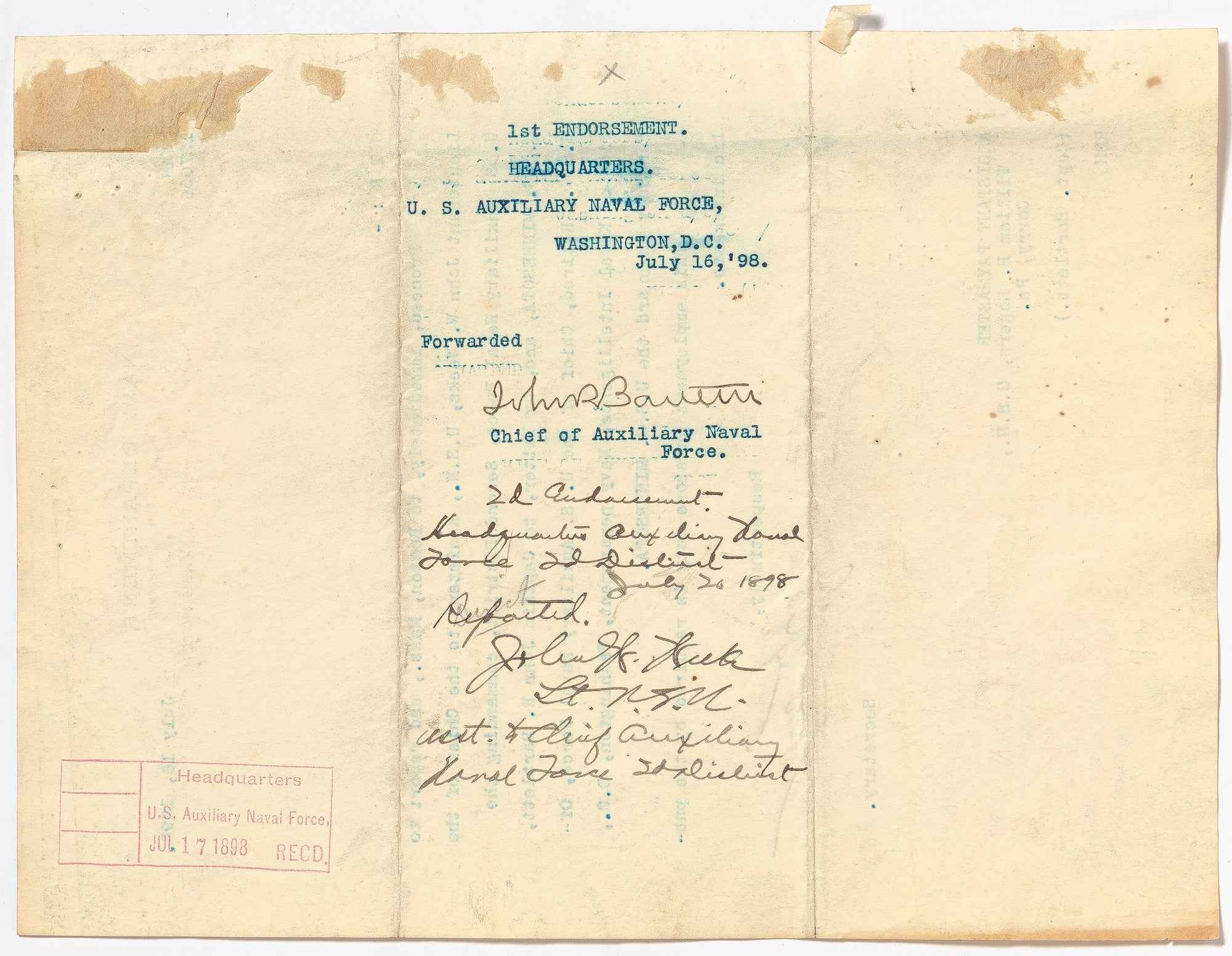
A collection of Naval correspondence featuring signatures from prominent Naval officers, many of whom served in the Civil War: a total of 37 unique signatures across 30 pieces with dates ranging from March of 1897 to May of 1904, with tangential connections to the Spanish-American War, the Philippine American War, and the Boxer Rebellion. Typed and mimeographed pages, many on Naval Department letterhead, measuring 8" x 10 ½" printed on the recto only, many with stamps and handwriting on the verso, this is all with the exception of a handwritten Western Union Telegraph request for sick leave with the typed or mimeographed response attached (measuring 5 ¼" x 8"). All are age toned with light wear and creasing from being folded, some with shallow abrasions along one margin perhaps from being sealed, overall a very good or better collection of correspondence. The recipient of this correspondence was William B. Rogers, an Assistant Paymaster in the U.S. Navy. The collection opens with a response from Francis Ramsay, Chief of Bureau, dated March, 23, 1897 responding to Rogers request to be appointed an Assistant Paymaster. Rogers is called in for examination later that year and on April 30, 1898, received orders to fill in for Paymaster John N. Speel aboard the U.S.S. Amphitrite. The rest of the collection follows Rogers through his career as an Assistant Paymaster up to May 25, 1904, with the bulk of the letters instructing Rogers to either report for duty or detach from duty. Several ships are named including the U.S.S. Michigan, the U.S.S. Minnesota, and the U.S.S. Delmonico, which was only named as such for a few days; this is reflected in the correspondence with Rogers being instructed to report for duty aboard the Demonico on July 5, 1898 (the day the ship was commissioned), then receiving word to detach from duty aboard the U.S.S. Glacier just nine days later. Most notable are the various signatures from naval officers, each with a storied career, many having seen action in the Civil War, and some going on to do great things in the 20th century. A few highlights are: John W. Weeks (two signatures): Weeks was the Secretary of War from 1921 to 1925 and was featured on the cover of *Time* magazine in October of 1925. The issue tells the story of a very public disagreement he had with Henry Ford. Charles Dwight Sigsbee (one signature): Sigsbee was the captain of the U.S.S. Maine, which exploded in 1898, sinking in Havana Harbor, Cuba, and becoming the catalyst that would lead to the Spanish-American War. He was also a celebrated oceanographer and hydrographer, who was elected to the American Philosophical Society in 1899. E.B. (Edward Buttevant) Barry (one signature): Barry served in the Spanish-American War and the Philippine American War. He commanded the U.S.S. Kentucky, the U.S.S. Vicksburg, and others. He was appointed Commander-in-Chief, U.S. Pacific Fleet in November of 1910, but only served until January 1911, being forced to resign after a scandal involving his suspected homosexuality. His signature was one of the most difficult to make out and we were not alone in finding it inscrutable, as *The Brooklyn Daily Eagle* once referred to it as the "weirdest [signature] in the Navy." John D. Long (12 signatures): Long was a lawyer and politician who served as the governor of Massachusetts from 1880 to 1883, and the Secretary of the Navy from 1897 to 1902, resigning after his once Under Secretary, Theodore Rosevelt, became president. Charles Herbert Allen (one signature): Allen was the first US-appointed civilian governor of Puerto Rico, which the U.S. acquired as a result of the Spanish-American War. His signature here is from when he held the position of Assistant Secretary of the Navy under President McKinley, a position he received after his predecessor, Theodore Roosevelt, resigned. Though it should be noted that underneath his signature on this letter dated September 27, 1898, his title is printed as "Acting Secretary.
Seller Inventory # 583440
Contact seller
Report this item