Synopsis
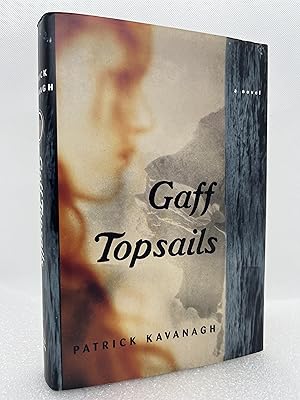
A Canadian author presents a rich portrait of a small Irish-Catholic parish on the coast of Newfoundland in 1948, where Father MacMurrough tends a flock of dreamers, mutes, lonely women, and lighthouse keepers. A first novel. 25,000 first printing. Tour.
Reviews
A wealth of fascinating material and its author's lyrical prose style are the saving graces of this ponderous, overheated first novel from and about Newfoundland. Its actions occur during a single day: June 24, 1948, when local fishermen celebrate the Feast of St. John the Baptist; its characters--all to differing degrees solitaries and seekers-- include a Dostoevskyan mute, Michael Barron, starved for love and consumed by a vision of ``the perfect darkness that waits, just for him''; Michael's younger brother Kevin, a sin- and God-haunted altar boy; Father MacMurrough, a restless priest troubled by memories of earthly love; a nubile girl who follows the practices of local superstition in hopes of securing a husband; a fisherman's wife who indulges in a Molly Bloomlike reverie while awaiting her husband's return; the local lighthouse keeper (``Johnny the Light''), once a hero who rescued an entire ship's crew, now the drunken laughingstock of the community--and on and on thus, in a fragmented narrative that dances among the characters' varied consciousness as the day's round of working and dreaming moves toward a climactic ritual on the beach coinciding with the clarifications of the people's separate ``visions.'' Beneath the twin shadows of inland mountains (named ``Gaff Topsails'') and a huge iceberg that drifts offshore nearby, these individual destinies play themselves out--in a manner all too reminiscent of, and probably derived from, Patrick White's relentlessly symphonic Riders in the Chariot. There are wonderful things here: the long interpolated tale (albeit indebted to Robinson Crusoe) of the Irish castaway who was the area's first settler; superb descriptions of wind, weather, and landscape; and lively dialogue rife with rib- tickling obscenities. Overall, however, this is a novel that strains too hard to impress, and sinks beneath its own weight of allusions and symbols. -- Copyright ©1998, Kirkus Associates, LP. All rights reserved.
A 500-year-old Irish Catholic village on the Newfoundland coast comes to life in this assured debut, set in the years after WWII. Michael Barron, a young mute, is awakening to adulthood as he explores an enormous iceberg with his friends, still half in thrall to his father's stories of a beautiful woman who rides the ice, part Blessed Virgin Mary, part Coleridgean ghost. Although Michael is the novel's only mute, his silent isolation is common to nearly all Kavanagh's characters: Johnny the Light, an old, crippled hero, is a haunted, often delirious drunk; Father MacMurrough, new to the parish, has spent most of his adulthood in Asia avoiding village life and its unhappy associations; restless, teenage Mary loathes her mother and pursues a future husband through secret pagan rituals. This is nothing new. The village's founding father, Tomas Croft, was even more isolated, the son of an Irish monk who stole away from his English companions to land in Newfoundland in solitude. Shifting its focus from character to character, Kavanagh's sometimes ponderous narrative treats each individual story as a complete piece for the reader to assemble with the others. The abundance of period detail and unmistakable shadow of Joyce (whom Kavanagh claims to have helped translate into Mandarin) cast an occasional pall, but there is no mistaking the talent and vivid imagination at work throughout the novel.
Copyright 1998 Reed Business Information, Inc.
Although perhaps a bit overwrought in places, this first novel has much to recommend it. Atmospheric, full of memorable characters and salty vernacular, and for the most part skillfully written, it tells the story of a single day in a small Irish Catholic fishing village on the coast of Newfoundland. The day is June 24, 1948?the Feast of St. John the Baptist. This day also marks the end of school and the summer solstice, and Michael, Gus, and "Wish," the three young men at the center of this story, spend much of it fishing, talking about women, and looking for trouble on a huge iceberg offshore. The cast of supporting characters is also vividly realized, particularly Father MacMurrough, the introspective and lonely parish priest; and Mary, an adolescent intrigued by what ancient Midsummer's Day superstitions might be able to tell her about her future husband. Recommended for libraries with large modern fiction collections.?Patrick Sullivan, Manchester Community-Technical Coll., Canterbury, CT
Copyright 1998 Reed Business Information, Inc.
Kavanagh's ambitious, wonderfully imagined first novel is set in a Newfoundland fishing village over the course of one day, June 24, 1948. With Joycean aplomb, the narrative moves among a small group of characters: an Irish priest consumed by loss; the drunken lighthouse keeper whose mind is locked in the past; Kevin, a young boy obsessed with Catholicism; and Mary, an eager young woman just leaving school. It is Mary and her friends who bring the book to life. June 24 marks the summer solstice, and they are busy performing a series of superstitious rituals to determine who will be their husbands. Their dialogue--ribald, comic, and poignant--is a fine achievement. Unfortunately, too much of the prose is written with a heightened poetic sensibility. Combine that with obscure, regional language and some unsuccessful passages set during the tenth-century discovery of the town, and you have an interesting novel that is going to have to fight hard for a readership. Still, Kavanagh is certainly a writer worth watching. Brian Kenney
"About this title" may belong to another edition of this title.