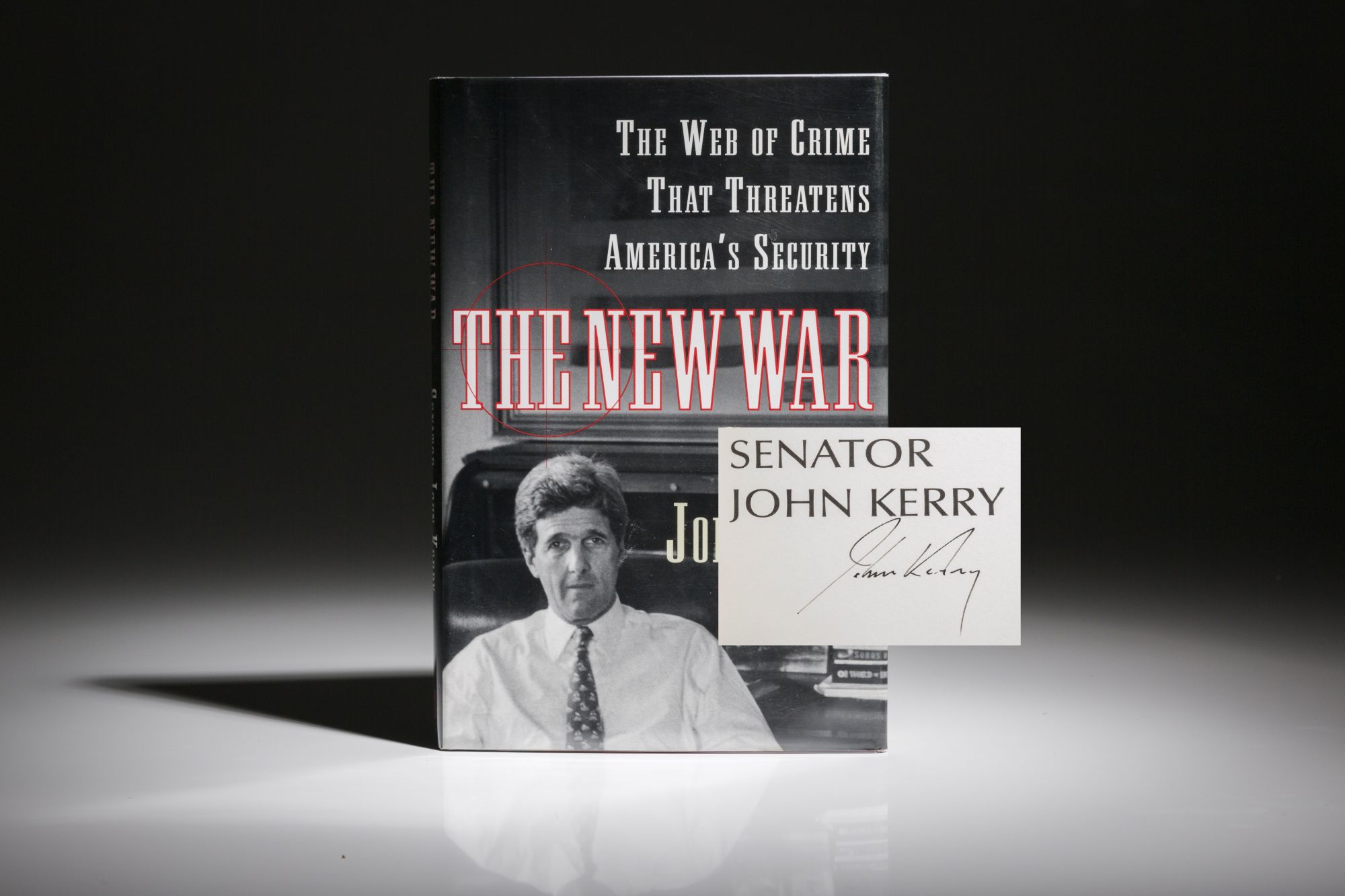
Synopsis
A Senator on the Senate's subcommittee on international crime details how the growing cooperation between global crime organizations is undermining U.S. security and what the United States should do to combat this threat. 35,000 first printing.
Reviews
From one of the nation's top experts on international crime, Senator John Kerry (D-Mass.), comes a fascinating overview of the newest generation of criminals and crimes that threaten America. When average Americans think of a crime syndicate, they probably think of the old-style Italian Mafia of movies like Donnie Brasco. That, plus declining homicide figures nationwide, threatens to lull us into a false sense of security. According to Kerry, who until this year was the chairman of the Senate Subcommittee on Terrorism, Narcotics and International Operations, the menace of global crime is greater than ever before. In a richly anecdotal book drawn from his tenure as an insider in the war against crime, Kerry details the newest quintuplet of dangers, which he calls ``The Big Five'': the Italian Mafia, the Russian mobs, the Japanese Yakuza, the Chinese triads, and the Colombian drug cartels. He devotes chapters to each of these threats and explains their growing influence and the ominous signs of transcontinental cooperation among them. Of their significance, Kerry writes: ``In strategy, sophistication and reach the criminal organizations of the late twentieth century function like transnational corporations and make the gangs of the past look like mom-and-pop operations.'' Other chapters are devoted to modern crimes like terrorism, money laundering, and illegal immigration, which the senator says threaten our very way of life. Kerry outlines a plan for meeting the new dangers, which includes the globalization of law enforcement and a ``reengineering of international law'' to allow countries to work together to fight criminals who ignore borders. At its worst moments, the book smells like a political pitch for the 2000 presidential race; at its best, it is a bold call to arms that Americans should not miss. -- Copyright ©1997, Kirkus Associates, LP. All rights reserved.
Fresh from a hard-fought win over Governor William Weld in the 1996 Massachusetts senatorial race, Kerry pulls together information he gathered as chairman and ranking Democrat on the Subcommittee on Terrorism, Narcotics, and International Operations (1987^-97). "Crime still seems only a local phenomenon to most of us," Kerry notes, but crime has globalized, with international groupings--"the Italian Mafia, the Russian mobs, the Japanese yakuza, the Chinese triads, and the Colombian cartels"--working with smaller, specialized groups in "Nigeria, Poland, Jamaica, and Panama," and banks and businesses that enable such criminal enterprises to handle the vast wealth they generate. Kerry describes this network's key players, spotlighting the drug trade, terrorism, "human contraband," and money laundering, and suggesting globalized law enforcement that would seize global criminals' assets and share them (and criminal intelligence) with nations willing to cooperate. Civil libertarians will resist, but Kerry makes a disturbing case for his position. Mary Carroll
In a cursory overview of international crime, Senator Kerry (D-Mass.) implausibly calls for foreign criminal law to be imported into the United States to prosecute nationals of other countries who plan crimes here then conduct them abroad. His rationale is that weak or corrupt countries cannot effectively prosecute crimes committed within their jurisdictions. At the same time, he suggests that crimes committed against Americans abroad be prosecuted here in "special courts." He also calls for transnational asset forfeiture, in which victimized countries would share in the forfeiture of assets seized in cooperating jurisdictions. While well intentioned, the book is short on specifics and contains no revelations about international crime. For general audiences.?Harry Charles, Attorney at Law, St. Louis, Mo.
Copyright 1997 Reed Business Information, Inc.
"About this title" may belong to another edition of this title.